
Resources
Explore a wide range of valuable resources on GCED to deepen your understanding and enhance your research, advocacy, teaching, and learning.
1,182 Results found
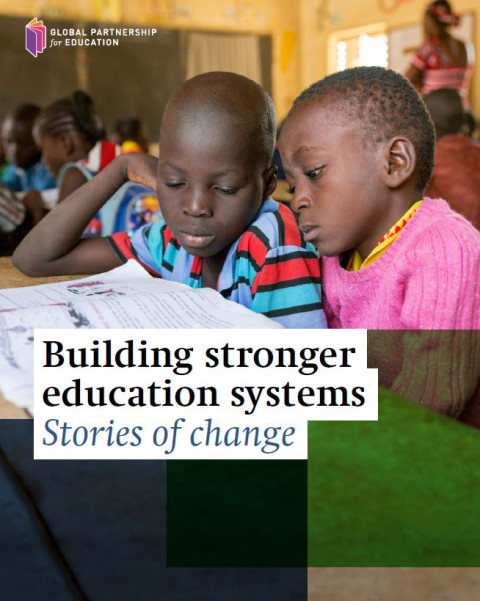 Building Stronger Education Systems: Stories of Change Year of publication: 2019 Corporate author: The Global Partnership for Education (GPE) A compilation of results stories which show the progress that GPE's developing country partners are making in getting more children, especially girls, in school and learning. The brochure includes stories from Afghanistan, Benin, Burkina Faso, Djibouti, Eritrea, Ethiopia, Guyana, Kenya, Pakistan, Papua New Guinea and Sudan. Construire des systèmes éducatifs plus performants : parcours de réussite Year of publication: 2019 Corporate author: The Global Partnership for Education (GPE) Cette brochure présente des parcours de réussite attestant des progrès accomplis par les pays en développement partenaires du PME pour que davantage d’enfants, et en particulier de filles, aillent à l’école et bénéficient d’une éducation de qualité.Elle met en évidence les cas des pays tels que l'Afghanistan, le Bénin, le Burkina Faso, Djibouti, l’Érythrée, l’Éthiopie, le Guyana, le Kenya, le Pakistan, la Papouasie-Nouvelle-Guinée et le Soudan.
  تعزيز التدريس في التعليم العالي: مقاربات جديدة لتحسين تعلم الطلاب Year of publication: 2012 Author: Peter Hartley | Amanda Woods | Martin Bell Corporate author: Al-Obeikan Publishing يضم هذا الكتاب مجموعة من الأفكار المحفزة والتقارير المتحدية المستمدة من محاضري وممارسي التعليم العالي الذين يستخدمون الأساليب البحثية والمتكررة لتحسين تعلم وتدريسه . وهو يوجز ـ حين يعرض وصفًا واقعيًا ومتاحًا للتطورات الجديدة ـ كيفية تطبيق نظرية التعلم والممارسة الفضلى في عملية التدريس اليومية ، ويقدم النصح والمشورة فيما يتعلق بمغالبة مشكلات التنفيذ والأدلة مستمدة من المشروعات المملولة والممارسين المبتكرين في سلسلة واسعة من التخصصات والخلفيات ، وتشمل مجالات تضم مقاربات للتعلم ، والعمل مع الطلاب ، وتعزيز تقدمهم وتطورهم ، ودعم ممارسات محاضرين وتنميتها . يتناول ( تعزيز التدريس في التعليم العالي ) القضايا الرئيسية المتعلقة بالتعلم والتدريس في التعليم العالي هذه الأيام ، وسيكون مصدرًا موثوقًا يعول عليه للنصح والإرشاد والأفكار للمحاضرين الجدد والمتمرسين الذين يريدون تحسين تعلم طلابهم . Strengthening Teaching in Higher Education: New Approaches to Improving Student Learning Year of publication: 2012 Author: Peter Hartley | Amanda Woods | Martin Bell Corporate author: Al-Obeikan Publishing This book includes a collection of motivational ideas and challenging reports from the lecturers and practitioners of higher education who use research methods and repeated to improve learning and teaching.In presenting a realistic and accessible description of new developments, it summarizes how to apply learning theory and best practice in the daily teaching process, and provides advice on overcoming implementation problems.
  FramerSpace Corporate author: Mahatma Gandhi Institute of Education for Peace and Sustainable Development (MGIEP) FramerSpace is an AI-powered digital platform where the curriculum’s content can be implemented in a multi-modal environment, data collected in an open and transparent manner and analysis done with ease and the highest data analytics capabilities in the pursuit of implementing personalised learning plans in a teacher driven setting. From the Content creator’s point of view, FramerSpace offers rich content creation abilities including embedding Audio, Rich Text, Video, Journaling, Games (developed using Unity/Phaser) to name a few. The platform framework design has been made extremely intuitive and powerful to help reduce the learning curve for creators significantly and make it look significantly different than any existing learning system out there. Creators are further armed with the real-time Emotion Analysis insights related to course reviews and related discussions and facilitated dialogues. These insights would help creators identify the emotion shift on pertinent topics and identify influencers by studying context-specific trends. FramerSpace has embedded analytics that helps creators always be mindful of what is working and what is not in terms of the learning outcomes of the respective courses. Predictive analytics within FramerSpace can potentially help creators take pro-active actions, especially in the case of at-risk learners who may be on the verge of dropping out. URL: https://framerspace.com/
  Blended learning for quality higher education: selected case studies on implementation from Asia-Pacific Year of publication: 2016 Author: Lim, Cher Ping | Wang Libing Corporate author: UNESCO Bangkok Together with The Education University of Hong Kong, UNESCO Bangkok gathered experts from higher education institutions in the Asia-Pacific region to explore the potential of blended learning, including its impact on the role of teachers, the relationship between teachers and students, and the nature of educational institutions themselves. Issues about the quality of education are at the heart of the Sustainable Development Goals, which were adopted during the United Nations Sustainable Development Summit in September 2015.
 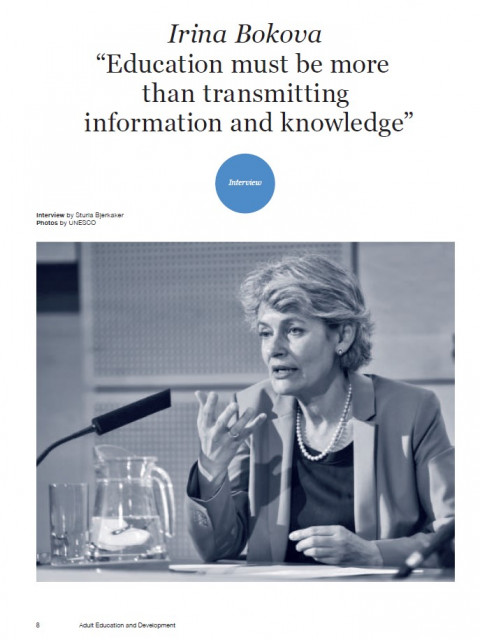 Education must be more than transmitting information and knowledge Year of publication: 2015 Author: Sturla Bjerkaker Corporate author: UNESCO. Director-General, 2009-2017 (Bokova, I.G.) Irina Bokova has been the Director-General of UNESCO since November 2009. She is the first woman to lead the organisation. Ms Bokova has served as Bulgaria’s Secretary of State for European Integration, Minister of Foreign Affairs, Ambassador to France and Monaco and Permanent Delegate to UNESCO, among other positions. She has been actively engaged in international efforts to advance quality education for all, gender equality, human rights, cultural dialogue and scientific cooperation. She also serves as Executive Secretary of the Steering Committee of the UN Secretary-General’s Global Education First Initiative.
 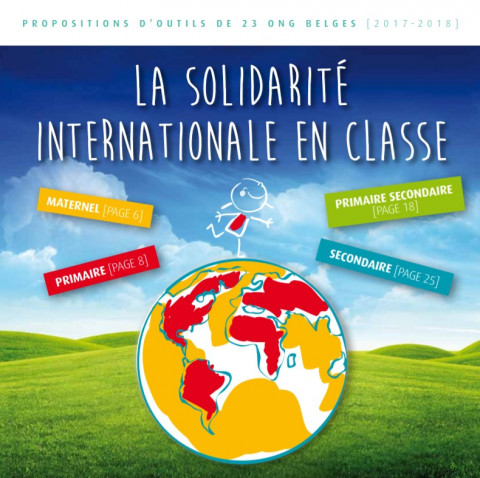 La solidarité internationale en classe: Proposition d'outils pédagogiques de 23 ONG belges Year of publication: 2017 Corporate author: Plan Belgique La solidarité internationale en classe Proposition d'outils pédagogiques de 23 ONG belges Très pratique, ce catalogue recense les outils pédagogiques de 23 ONG destinés à l’enseignement maternel, primaire et secondaire. Un classement thématique permet d’identifier les sujets abordés par chacun de ces outils. En plus des sujets, le catalogue reprend les ONG qui proposent des trajets pour l'ensemble des écoles, comme le font les Partenaires des Ecoles des droits de l'enfant.Très utile pour organiser votre année scolaire, vous retrouverez toutes les informations utiles pour sensibiliser vos élèves à une problématique qui vous tient à coeur.
 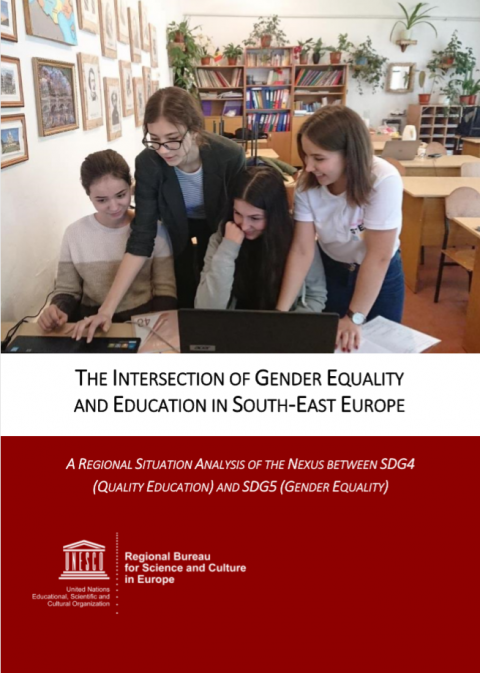 The Intersection of gender equality and education in South-East Europe: a regional situation analysis of the Nexus between SDG4 (Quality Education) and SDG5 (Gender Equality) Year of publication: 2019 Corporate author: UNESCO Venice This report focuses on highlighting both progress and persistent challenges.It does so by analyzing the current situation of gender equality in education, including gender parity in participation, education quality, and outcomes, aswell as issues related to gender equality in which education plays an important role, suchas policies that disproportionately affect women, early and unintended pregnancy, child marriage, and human trafficking. It relies on the most recent available data from the UNESCO Institute of Statistics (UIS), as well as supplemental data including from UNICEF, UN Women, and theOrganization for Economic Cooperation and Development(OECD), to descriptively analyze the rates for females and males, considering also progress over the last decade, and to identify where progress in gender equality has been made and whereactions are needed to ensure gender equality in and through education. La educación no solo debería consistir en transmitir información y conocimientos Year of publication: 2015 Author: Sturla Bjerkaker Corporate author: UNESCO. Director-General, 2009-2017 (Bokova, I.G.) Irina Bokova ha sido Directora General de la UNESCO desde noviembre de 2009. Ha sido la primera mujer al frente de la institución. En el Gobierno de Bulgaria, la señora Bokova ha ocupado, entre otros cargos, el de Secretaria de Estado para la Integración Europea, Ministra de Asuntos Exteriores, embajadora en Francia y Mónaco, al igual que delegada permanente en la UNESCO. Ha participado activamente en las iniciativas internacionales destinadas a promover una educación de calidad para todos, la igualdad entre los géneros, los derechos humanos, el diálogo cultural y la cooperación científica. También es Secretaria General del Comité Directivo de la Iniciativa Mundial “La educación ante todo” del Secretario General de la ONU (Global Education First Initiative - GEFI).