
Resources
Explore a wide range of valuable resources on GCED to deepen your understanding and enhance your research, advocacy, teaching, and learning.
1,727 Results found
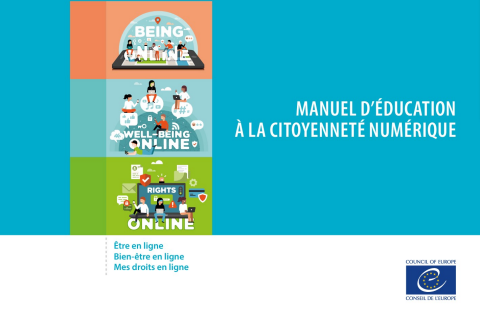 Manuel d'éducation à la citoyenneté Numérique Year of publication: 2020 Author: Janice Richardson | Elizabeth Milovidov Corporate author: Conseil de l'Europe Le manuel se divise en trois chapitres:Chapitre 1: Être en ligne – Quels sont nos modes d’action et d’existence en ligne? Ce chapitre propose une réponse en trois thèmes: accès et inclusion, apprentissage et créativité, éducation aux médias et à l’information.Chapitre 2: Bien-être en ligne – Comment nous sentons-nous en ligne? La réponse se décline là encore en trois thèmes: éthique et empathie, santé et bien-être, présence et communications en ligne.Chapitre 3: Mes droits en ligne – Qui rend compte de quoi sur internet ?Ce chapitre aborde quatre derniers thèmes: participation active, droits etresponsabilités, vie privée et sécurité, sensibilisation des consommateurs. The manual is divided into three chapters: Chapter 1: Being online - How do we act and exist online? This chapter proposes a response in three themes: access and inclusion, learning and creativity, media and information literacy. Chapter 2: Online well-being - How do we feel online? Again, the answer is divided into three themes: ethics and empathy, health and well-being, online presence and communications. Chapter 3: My rights online - Who is accountable for what online? This chapter covers four final themes: active participation, rights and responsibilities, privacy and security, and awareness.
  العنف ضد الأطفال في المجتمع السعودي دراسة اجتماعية من واقع إحصاءات الجمعية الوطنية لحقوق الإنسان Year of publication: 2020 Author: Dr. Faisal bin Abdullah Al-Ruwais The study aimed to identify the reality of violence against children in Saudi society by determining the extent of violence against children by region, identifying patterns of violence against children according to the type of abuse they are exposed to, and identifying the children most exposed to violence by gender, in addition to revealing The most common family members commit violence against children, based on statistics from the National Society for Human Rights. This study is a descriptive and analytical study. The qualitative approach was used by using the content analysis method for the total statistical data for the period from 2014-2018 AD. It has become clear from the statistical data: that the highest percentage of violence against children over the five years occurred in the Riyadh region, followed by the Makkah Al-Mukarramah region, then the Medina region, and that the highest types of abuse to which children are exposed is physical abuse, then deprivation of education, then deprivation of Identification documents indicate that the highest degree of violence against children was committed against females, then males, and that the family member who committed the most violence against children was the father, then the mother, then the stepmother.
  بناء مجتمعات المعرفة في المنطقة العربية: اللغة العربية بوابة للمعرفة Year of publication: 2019 Corporate author: UNESCO Cairo بناء اقتصادات ومجتمعات المعرفة هدف معلن في المنطقة العربية. فمعظم الخطط التنموية في الدول العربية تدعو وبوضوح للعمل على إنتاج، ونقل، وتوطين، وتسخير المعرفة في مختلف الحقول خدمة لمآرب التنمية ا إ لنسانية المستدامة.وللغة العربية دور مهم في هذه العملية التنموية ا أ لساسية، حيث إن إنتاج المعارف واستيعابها ونقلها يكون أكثر فاعلية وأوسع انتشارًا باستخدام اللغة ا أ لم. ولا بد لنا هنا من الوقوف على السؤال ا أ لساسي التالي: إلى أي مدى تشكّل اللغة العربية اليوم بوابة حقيقية للمعرفة في المنطقة العربية؟يسعى هذا التقرير، الذي أعدّته ثلة من الخبراء العرب المميزين وبإدارة وتنسيق من مكتب اليونسكو ا إ لقليمي للعلوم في الدول العربية، إلى البحث في هذا السؤال المركزي من خلال مراجعة وتقييم حال المعرفة في المنطقة العربية من جهة، وإلى تحليل دور اللغة العربية في عمليات إقامة مجتمعات واقتصادات المعرفة في المنطقة العربية من جهة أخرى. ويتناول القسم العام من التقرير قضية المعرفة واللغة على المستوى ا إ لقليمي العربي. كما يتميّز التقرير ببحوث ميدانية تمّت في ثلاث دول عربية )هي السعودية ومصر والمغرب( تدرس حال المعرفة واللغة العربية في تلك البلدان، وتعكس، إلى حد ما، الحال في المناطق العربية الفرعية التي تنتمي إليها." Building Knowledge Societies in the Arab Region: Arabic Language as a Gateway to Knowledge Year of publication: 2019 Corporate author: UNESCO Cairo Building knowledge economies and societies is a professed objective in the Arab region. Most of the development plans in the Arab states clearly call for action to produce, transfer, localise and harness knowledge in various fields, in service of the sustainable human development goals. The Arabic language has an important role to play in this key development process, as the production, assimilation and dissemination of knowledge is more effective and more widely spread when the mother tongue is used. Hereupon, a fundamental question must be addressed: To what extent does the Arabic language today constitute a true gateway to knowledge in the Arab region?This report, prepared by a group of distinguished Arab experts, under supervision and coordination of the UNESCO Regional Bureau for Sciences in the Arab States, seeks to research this central question by reviewing and evaluating the state of knowledge in the Arab region on the one hand, and analysing the role of the Arabic language in the processes of establishing knowledge societies and economies in the Arab region on the other. The general section of the report addresses the question of knowledge and language at the Arab regional level. It also features field research conducted in three Arab states (Saudi Arabia, Egypt and Morocco), that examines the state of knowledge and the Arabic language in those states, and to a certain extent, reflects the situation in the Arab sub-regions to which they belong. Construire les sociétés du savoir dans la région arabe: le rôle de la langue arabe en tant que portail du savoir Year of publication: 2019 Corporate author: UNESCO Cairo La construction des économies et des sociétés du savoir est un objectif déclaré dans la région arabe. La plupart des plans de développement dans les pays arabes appellent clairement à des actions pour produire, transférer, localiser et exploiter des connaissances dans divers domaines au service des objectifs de développement humain durable. La langue arabe a un rôle important à jouer dans ce processus fondamental de développement, car la production, l’assimilation et la diffusion de connaissances sont plus efficaces et plus répandues lorsque la langue maternelle est utilisée. Là-dessus, une question fondamentale devrait être posée : dans quelle mesure la langue arabe constitue-t-elle aujourd’hui un vrai point d’accès au savoir dans la région arabe ?Ce rapport, préparé par un groupe d’éminents experts arabes, sous la supervision et la coordination du Bureau régional de l’UNESCO pour les sciences dans les États arabes, cherche à étudier cette question centrale en examinant et en évaluant la situation de connaissances dans la région arabe d’une part, et en analysant le rôle de la langue arabe dans les processus d’instauration des sociétés et d’économies du savoir dans la région arabe, d’autre part. La section générale du rapport aborde la question de connaissances et de la langue dans la région arabe. Il présente également des recherches de terrain menées dans trois pays arabes (l’Arabie saoudite, l’Égypte et le Maroc), ces recherches examinent la situation de connaissances et de la langue arabe dans ces États et reflètant, en quelque sorte, la situation dans les sous-régions arabes dans lesquelles elles étaient menées.
  العنف ضد المرأة، صوره وآليات الحماية القانونية منه على ضوء القانون رقم 15-19لسنة 2015 Year of publication: 2020 Author: Houbah Abdel Qader,Awad Fateha تناولت الدراسة موضوع العنف ضد المرأة، وكذا مظاهر وآليات الحماية القانونية لها ضد العنف المادي والمعنوي المارس ضدها، وقد فرضت طبيعة الموضوع التطرق إلى أهم ما جاء به المشرع الجنائي الجزائري من نصوص تجرم العنف ضد المرأة بشكل صريح، وخاصة ما تعلق منه بالعنف الجسدي والعنف الجنسي واللفظي ...، حيث تشكل في مجملها مظاهر وأشكال للعنف. وقد كشفت هذه الدراسة أهم النصوص القانونية، التي استحدثها المشرع في التعديل الأخير لقانون العقوبات سنة 2015، حيث تم فيه تجريم بعض صور العنف الممارس ضد المرأة داخل الأسرة وخارجها، أبرزها العنف الجسدي واللفظي، زيادة على العنف المعنوي كالإهمال العائلي والتحرش الجنسي، وغيرها من مظاهر العنف الذي يطال المرأة في المجالين الخاص العام. ولقد شدد المشرع في العقوبة على مرتكبيها في إطار تجسيد الحماية القانونية للمرأة ضد العنف، وذلك من خلال سياسة التجريم والتشديد في العقوبة على مرتكبي أفعال العنف لاسيما المرتكب ضد المرأة. Violence against Women, its forms and Legal Protection Mechanisms against it in light of Law No. 15-19 of 2015 Year of publication: 2020 Author: Houbah Abdel Qader,Awad Fateha Violence against women is a real appearance of a social phenomenon. It has been widespread in recent years since the beginning of this millennium, as violence in its material and moral appearance has become a real threat to all vulnerable groups in societies. Violence against women in all its forms is also considered a crime punishable by law, which requires combating, criminalizing it, and emphasizing its perpetrators. Since violence against women is a crime recognized today locally and internationally, most laws and legislations have come to condemn it. It also recognizes its serious, health and psychological effects on women specifically. This research paper discusses the forms of physical and moral violence practiced against her, and to identify the mechanisms adopted by the criminal Algerian legislator following the recent changes taking place in the Penal Code for the year 2015 in order to combat violence.
  Evaluation of the Effectiveness of Digital Diplomacy in Building Relationships with the Public from the Perspective of International Public Relations Year of publication: 2023 Author: Musab Falih Al-Hasbi Diplomacy has been an indispensable part of global affairs, as it is what makes it about relations between global nations. One easier way to connect with the world is digitally in this age of life including International relations.In this context, the current study seeks to evaluate the effectiveness of digital diplomacy in building relationships with the public from the perspective of international public relations byanalyzing the efforts of the diplomatic mission of the Kingdom of Saudi Arabia in both the United States and the United Kingdom on Twitter The study relied The study relied on a theoretical approach that explains the development of the concept of digital diplomacy and its various functions, presented by researchers Dodd & Collins that illustrates the functions of digital diplomacy through social media platforms. The current study is one of the descriptive studies that relied on the case study approach and the content analysis, by analyzing the content of the tweets, (1181) tweets divided into (730) tweets published through the official account of the Kingdom of Saudi Arabia’s mission to the United States via Twitter, as well as (451) tweets published through the official account of the Kingdom of Saudi Arabia’s mission to the United Kingdom.
  Schools as Hubs for Social and Emotional Learning Year of publication: 2023 Corporate author: Organisation for Economic Co-operation and Development (OECD) Schools are perfect hubs for social and emotional learning, but are they ready for this task? To address this question, this Spotlight reports previously unpublished findings from the OECD’s Survey on Social and Emotional Skills (SSES) and discusses their implications for education policy and practice. Both an active promotion in schools and extensive learning opportunities for teachers on relevant topics provide a fertile ground for an effective social and emotional education. They boost teachers’ self-efficacy and use of active learning pedagogies, as well as quality relationships at school. The Spotlight also points to important differences for teachers of 10- vs. 15-year-old students that can explain higher skills at a younger age. Younger students benefit more often from key elements of an effective social and emotional education in school, i.e. the evaluation of their social and emotional skills and teachers teaming up with parents to reinforce skill promotion. Teachers of 10-year-olds are also more intensively trained and requested to promote social and emotional learning in their work.
  La Securite Alimentaire Et De La Nutrition Dans Le Monde Year of publication: 2022 Corporate author: Food and Agriculture Organization of the United Nations (FAO) Le présent rapport met en lumière de manière récurrente l’intensification des principaux facteurs d’insécurité alimentaire et de malnutrition: les conflits, les phénomènes climatiques extrêmes et les chocs économiques, dont les effets se conjuguent à ceux de l’accroissementdes inégalités. L’enjeu n’est pas de savoir si d’autres épreuves sont à venir ou non; il s'agit plutôt de prendre les choses en main avec plus de courage et de renforcer la résilience face aux chocs futurs.