
Resources
Explore a wide range of valuable resources on GCED to deepen your understanding and enhance your research, advocacy, teaching, and learning.
661 Results found
 Materiales para eliminar el castigo físico y humillante y promover la disciplina positiva Year of publication: 2014 Corporate author: Save the Children Es una caja de herramientas que busca promover la disciplina positiva para eliminar el castigo físico y humillante. Presenta diferentes tipos de materiales: sistematización de experiencias, guías prácticas para familias y docentes, documentos de investigación y materiales de incidencia.
 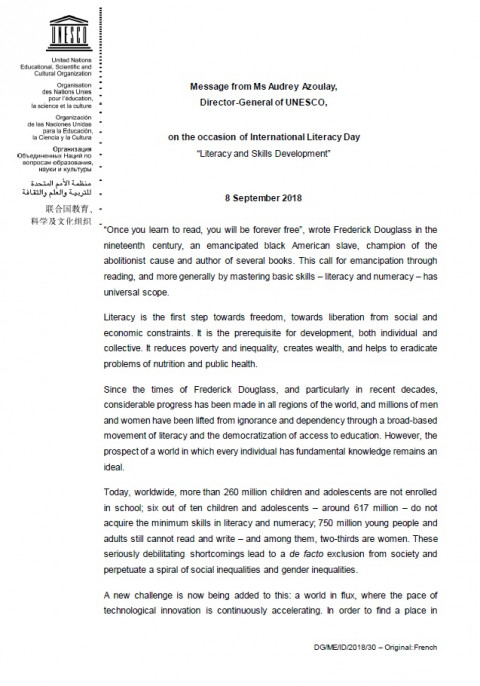 Message from Ms Audrey Azoulay, Director-General of UNESCO, on the occasion of International Literacy Day, 8 September 2018 Year of publication: 2018 Corporate author: UNESCO. Director-General, 2017-2025 (Azoulay, A.) This message was delivered by Audrey Azoulay, Director-General of UNESCO, on the occasion of the International Day of Literacy, on 8 September 2018. 联合国教科文组织总干事奥德蕾·阿祖莱 国际扫盲日致辞:扫盲与能力开发 Year of publication: 2018 Corporate author: UNESCO. Director-General, 2017-2025 (Azoulay, A.) 2018年9月8日,联合国教科文组织总干事奥德蕾·阿祖莱国际扫盲日致辞
 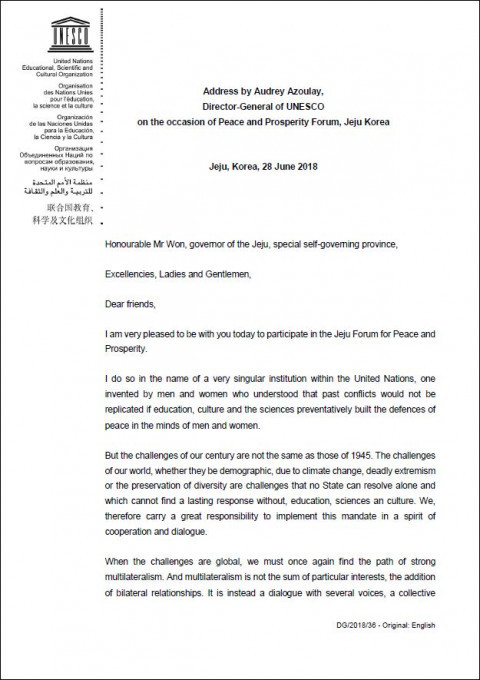 Address by Audrey Azoulay, Director-General of UNESCO, on the occasion of Peace and Prosperity Forum, Jeju Korea Year of publication: 2018 Corporate author: UNESCO. Director-General, 2017-2025 (Azoulay, A.) This address was delivered by Audrey Azoulay, Director-General of UNESCO, on the occasion of Peace and Prosperity Forum Jeju Korea; 28 June 2018.
 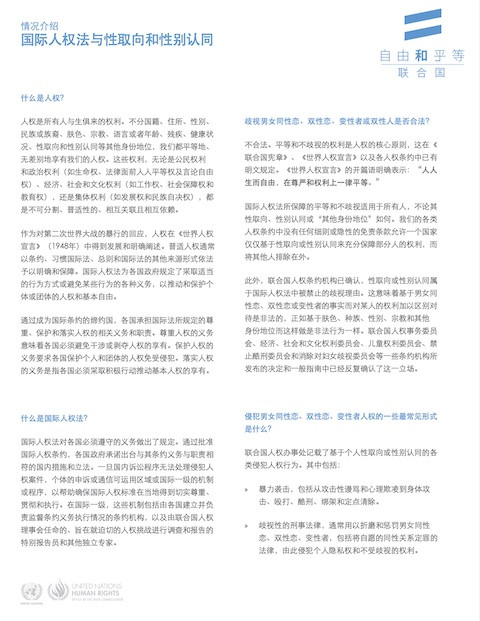 International Human Rights Law & Sexual Orientation & Gender Identity Year of publication: 2017 Corporate author: UN. Office of the United Nations High Commissioner for Human Rights (UN. OHCHR) | United Nations Free & Equal What are human rights? What is international human rights law? Is it ever legal to discriminate against lesbian, gay, bisexual, transgender or intersex people? What are some of the most common forms of human rights violations affecting LGBT people? What have the UN General Assembly and Human Rights Council said on this subject? What practical steps does international law require States to take in order to safeguard the rights of LGBT people? 国际人权法与性取向和性别认同 Year of publication: 2017 Corporate author: UN. Office of the United Nations High Commissioner for Human Rights (UN. OHCHR) | United Nations Free & Equal 什么是人权?什么是国际人权法?歧视男女同性恋、双性恋、变性者或双性人是否合法?侵犯男女同性恋、双性恋、变性者人权的一些最常见形式是什么?联合国大会及人权事务委员会对该主题有何表述?各国在尊重男女同性恋、双性恋和变性者方面有哪些法律义务?
 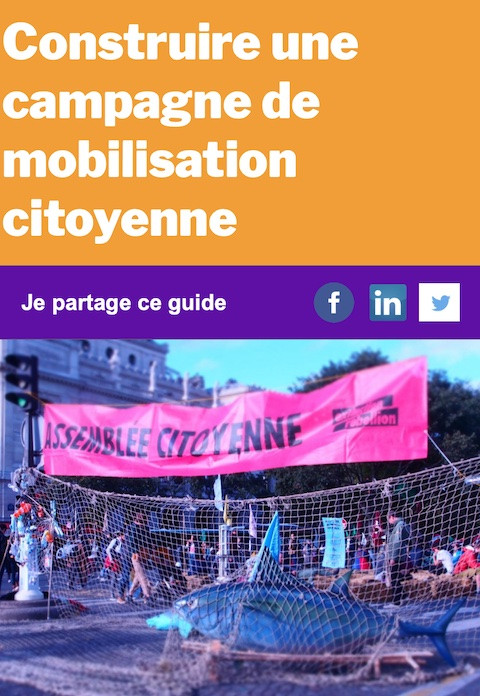 Construire une campagne de mobilisation citoyenne: Je partage ce guide Corporate author: L'accélérateur de la mobilisation (France) Ce kit est pour partager les bases de la création de campagnes de mobilisation citoyenne, générer de l’inspiration et donner l’envie à des groupes de citoyen.ne.s d’aller gagner des victoires concrètes.
 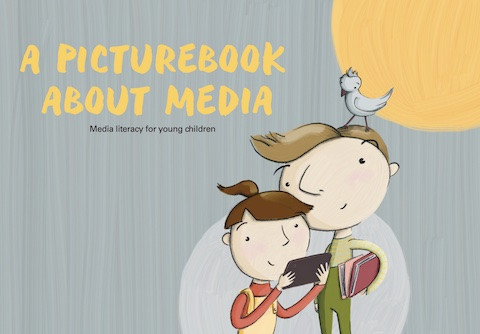 A Picture Book About Media: Media Literacy For Young Children Year of publication: 2018 Author: Alma Čakmazović Corporate author: United Nations Children's Fund (UNICEF) Media literacy helps to form the habit of appraising media contents and to develop the skills of expression necessary for critical thinking. Today, it represents education for life, human values, active citizenship and responsible media practices.This picturebook is devoted to children, parents, foster parents and educators. Its purpose is to give the youngest children the chance to understand media through one of the first lessons in media literacy, one about the difference between the media world and the real world.
 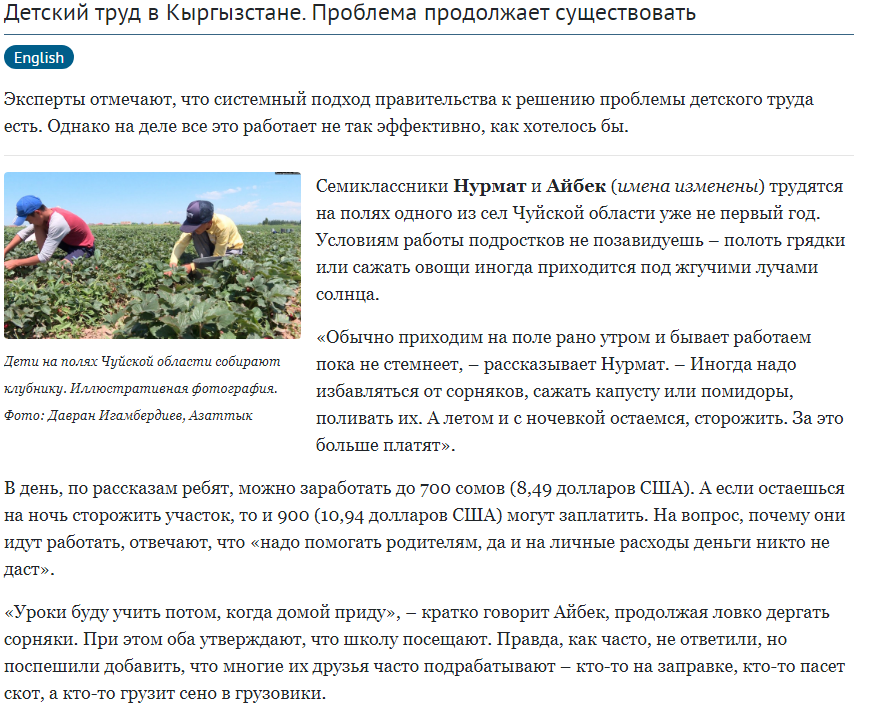 Child Labour in Kyrgyzstan: A Persisting Problem Year of publication: 2022 Corporate author: Central Asian Bureau for Analytical Reporting (CABAR) Experts note that in the presence of a systematic approach of the Kyrgyz Government to solve the problem of child labor, a number of challenges remain in practice. This article examines some of the reasons for the involvement of children in the labor market, including economic instability, mass migration of the population, rising poverty levels, the influence of local customs and traditions. The article also provides an overview of relevant statistical data and some national initiatives aimed at eliminating child labor. Детский труд в Кыргызстане: Проблема продолжает существовать Year of publication: 2022 Corporate author: Central Asian Bureau for Analytical Reporting (CABAR) Эксперты отмечают, что при наличии системного подхода правительства Кыргызстана к решению проблемы детского труда на практике сохраняется ряд вызовов. Данная статья рассматривает некоторые причины вовлечения детей в рынок труда, среди которых экономическая нестабильность, массовая миграция населения, рост уровня бедности, влияние местных обычаев и традиций. В статье также приведен обзор релевантных статистических данных и некоторых национальных инициатив, направленных на искоренение детского труда.