
Resources
Explore a wide range of valuable resources on GCED to deepen your understanding and enhance your research, advocacy, teaching, and learning.
661 Results found
 Message from Ms Audrey Azoulay, Director-General of UNESCO, on the occasion of the International Day of Light, 16 May 2018 Year of publication: 2018 Corporate author: UNESCO. Director-General, 2017-2025 (Azoulay, A.) This message was delivered by Audrey Azoulay, Director-General of UNESCO, on the occasion of the International Day of Light, on 16 May 2018.
 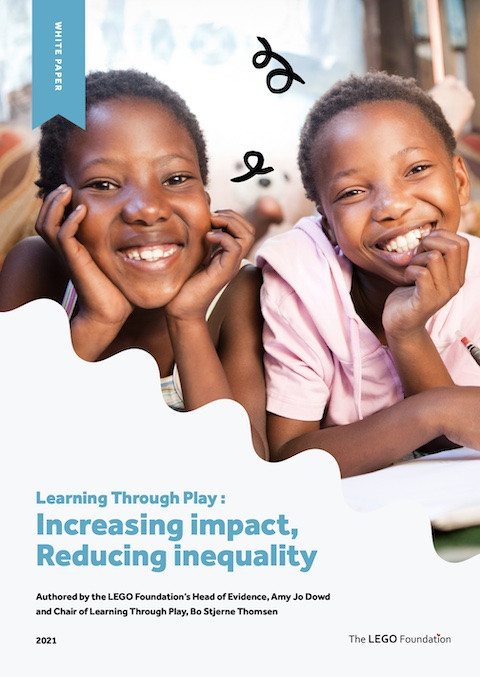 Learning Through Play: Increasing Impact, Reducing Inequality Year of publication: 2021 Author: Amy Jo Dowd | Bo Stjerne Thomsen Corporate author: LEGO Foundation This study explores the role of play in contributing to the effort to promote learning and reduce inequality. Reviews of play’s importance for learning present mostly correlational evidence from small samples in high-income, developed contexts, most often the United States, and often under laboratory conditions. This review expands both the geographic breadth and the scale of this evidence and explores the use of play in early childhood classroom and home-based educational interventions that have demonstrated causal impact on learning and the closing of achievement gaps. By doing so, it aims to understand whether and how the evidence about play and learning relates to tackling the learning crisis, especially in terms of inequality in learning outcomes around the globe.
 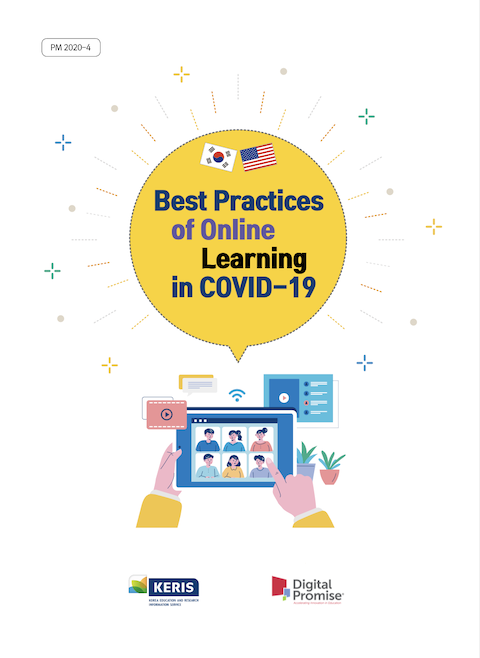 Best Practices of Online Learning in COVID-19 Year of publication: 2020 Author: Odelia Younge | Kristen Franklin | Dan Foreman | John Seylar | Angela Hardy | Windy Lopez-Aflitto | Missy Bellin | Cricket Fuller | My Nguyen | Vicky Masson | Wrendi McDavid | Jordana McCudden | Karin Bradley | Rachael Wilcox | K. D. Meucci | Jessica Bibbs-Fox | Kristy Carter | Grace Angel | Jiyeon Hong | Sanghyeon Choi | Kwonyoung Lee | Seokhyeon Seo | Seungyeon Kim | Gahyeon Jeon | Yooncheol Shin | Myungwoo Cho | Jiwon Lim | Junyoung Kim Corporate author: Digital Promise | Korea Education and Research Information Service (KERIS) This book introduces teaching strategies that developed as a response to the pandemic and provides some example cases from classes in both U.S. and Korea. 한ㆍ미 혁신 선도교사 코로나19 대응 사례집 Year of publication: 2020 Author: 홍지연 | 최상현 | 이권영 | 서석현 | 김승연 | 전가현 | 신윤철 | 조명우 | 임지원 | 김준영 | Odelia Younge | Kristen Franklin | Dan Foreman | John Seylar | Angela Hardy | Windy Lopez-Aflitto | Missy Bellin | Cricket Fuller | My Nguyen | Vicky Masson | Wrendi McDavid | Jordana McCudden | Karin Bradley | Rachael Wilcox | K. D. Meucci | Jessica Bibbs-Fox | Kristy Carter | Grace Angel Corporate author: Digital Promise | 한국교육학술정보원 본 자료는 미국과 대한민국의 팬데믹 상황에 대응하는 수업 방법과 실제 사례를 소개하고 있다.
  Strengthening Democracy Is the Key to Preventing Far-Right Extremism Year of publication: 2021 Author: Cynthia Miller-Idriss This article emphasizes that Disinformation, misinformation and propaganda undermine democratic practices in ways that should be fought not only by trying to shrink or contain the extremist fringe, but also by strengthening democratic values and practices within the mainstream.And also highlights that It is critical to engage proactively and consistently in order to prevent further escalations in far-right extremism and interrupt violent radicalisation at early stages.
 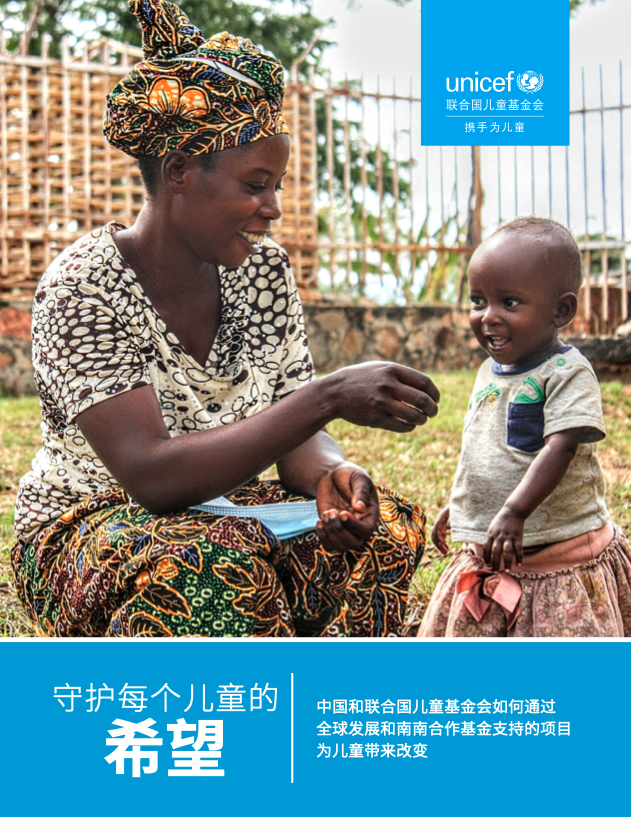 守护每个儿童的希望 Year of publication: 2023 Author: 联合国儿童基金会驻华办事处 联合国儿童基金会和中国政府在中国建立了长期合作伙伴关系,在其他伙伴国家也已开始合作,携手促进世界各地儿童权利保护工作。双方不仅在中国通过连续实施九个国别方案开展合作,自2018年以来,双方还通过南南合作,共同援助中低收入国家最弱势的儿童群体。本案例研究汇编详细介绍了通过全球发展和南南合作基金资助的17个项目,联合国儿童基金会和15个非洲国家的政府如何为儿童的生活带来改变,凸显了中国与联合国儿童基金会在儿童事业方面取得的合作成果。我们希望通过分享相关案例促进学习交流,为合作伙伴和其他相关人士提供参考借鉴,从而为每个孩子的生存和赋权点亮新的希望。
 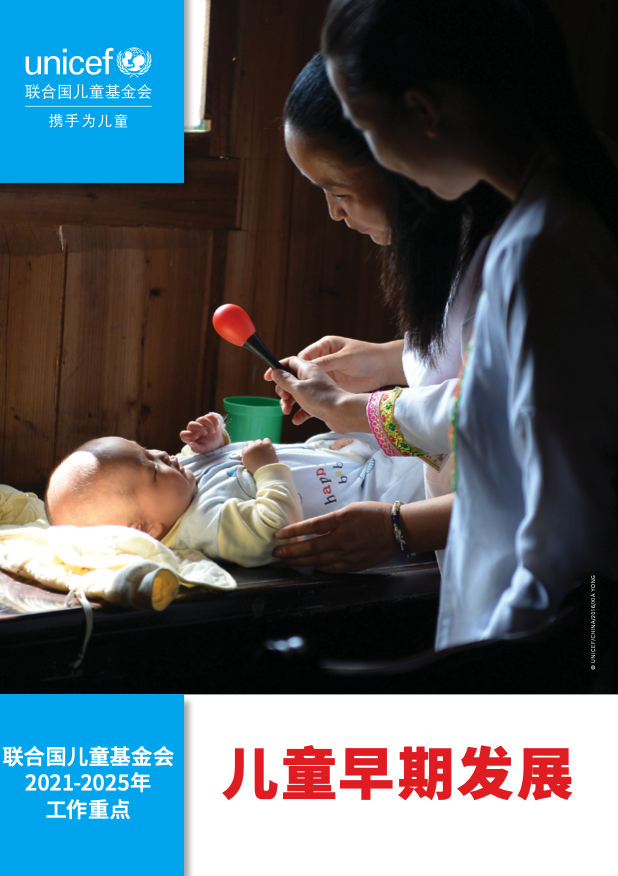 儿童早期发展 Year of publication: 2023 Author: 联合国儿童基金会驻华办事处 从胚胎到三岁这段时期的发展将为儿童一生的健康和学习奠定基础,其重要性不言而喻。在生命的最初几年,大脑发育迅速,每秒钟形成100多万个新的神经元连结。婴儿期内,大脑体积翻倍并不断增长,到三岁时达到成人期的80%左右,到五岁时达到成人的90%,发育几近充分。在儿童生命早期提供优质支持,是一种高效且具有成本效益的措施。儿童早期发展会带来长期收益,不仅能够减少暴力、抑郁和社会阻抑的发生,而且可以改善成年后的健康和学习状况,提高劳动生产力。在中国,近1700万五岁以下儿童无法充分发挥自身潜能,面临早期发展迟缓和残障的风险。弱势群体中的儿童所能获得的照护和卫生保健服务相对有限,获得早期学习、社会福利和保护服务的机会也相对较少,从而可能面临着更大的风险。联合国儿童基金会正携手合作伙伴,致力于加大对儿童早期发展的投入,帮助父母了解儿童早期发展的重要性,并鼓励政府和雇主制定支持儿童早期发展的政策。相关证据显示,当家庭成为支持儿童早期发展的主力时,幼儿获得的益处最多。联合国儿童基金会倡导制定相应政策和项目,增强父母作为主要照护人的能力,促进孩子在0-3岁阶段的健康发展。
  Rapid Gender Assessment: For the COVID-19 Situation in the Republic of Kazakhstan Year of publication: 2020 Corporate author: The Center for Social and Political Studies "Strategy" | United Nations Population Fund (UNFPA) | United Nations Entity for Gender Equality and the Empowerment of Women (UN Women) The Rapid Gender Assessment on COVID-19 in the Republic of Kazakhstan was prepared by the CFSPI "Strategy" for UN Women and the UN Population Fund. It provides important information about gender roles and responsibilities, opportunities and vulnerabilities that have emerged in society in light of the COVID-19 outbreak. Быстрая гендерная оценка (бго): В отношении COVID-19 в республике Казахстан Year of publication: 2020 Author: The Center for Social and Political Studies "Strategy" Corporate author: The Center for Social and Political Studies "Strategy" | United Nations Population Fund (UNFPA) | United Nations Entity for Gender Equality and the Empowerment of Women (UN Women) Быстрая Гендерная Оценка в отношении COVID-19 в Республике Казахстан подготовлена ОФ ЦСПИ «Стратегия» для Структуры «ООН- женщины» и Фонда ООН в области народонаселения. Он предоставляет важную информацию о гендерных ролях и обязанностях, возможностях и уязвимостях, которые появились в обществе в свете вспышки COVID-19.
  Global Citizenship Education and the Crises of Multiculturalism: Comparative Perspectives Year of publication: 2016 Author: Massimiliano Tarozzi, Carlos Alberto Torres The notion of global citizenship education (GCE) has emerged in the international education discourse in the context of the United Nations Education First Initiative that cites developing global citizens as one of its goals. In this book, the authors argue that GCE offers a new educational perspective for making sense of the existing dilemmas of multiculturalism and national citizenship deficits in diverse societies, taking into account equality, human rights and social justice.The authors explore how teaching and research may be implemented relating to the notion of global citizenship and discuss the intersections between the framework of GCE and multiculturalism. They address the three main topics which affect education in multicultural societies and in a globalized world, and which represent unsolved dilemmas: the issue of diversity in relation to creating citizens, the issue of equality and social justice in democratic societies, and the tension between the global and the local in a globalized world.Through a comparative study of the two prevailing approaches – intercultural education within the European Union and multicultural education in the United States – the authors seek what can be learned from each model. Global Citizenship Education and the Crises of Multiculturalism offers not only a unifying theoretical framework but also a set of policy recommendations aiming to link the two approaches. Preface 1. The Priority of Global Citizenship EducationPart One Defference and Citizenship 2. Theoretical Conceptualization: The Challenge of Diversity 3. Multiculturalism: The US Perspective 4. Interculturalism: The European Union Perspective 5. Comparing Intercultural and Multicultural EducationPart Two Justice in Democracies 6. Theoretical Conceptualization: The Challenge of Equlaity 7. From Multiculturalism to Global Citizenship Education 8. ConclusionBibliographyIndex