
Resources
Explore a wide range of valuable resources on GCED to deepen your understanding and enhance your research, advocacy, teaching, and learning.
124 Results found
 Talking about values in the classroom Year of publication: 2015 Author: Don Rowe Corporate author: Citizenship Foundation The publication introduces teachers to a method of working with stories that enable students to develop a range of skills in thinking and talking about moral issues. It aims to expand the pupils' vocabulary concerning moral, values and ethical questions and critical thinking tools. Talking about values in the classroom Year of publication: 2015 Author: Don Rowe Corporate author: Citizenship Foundation Cette publication propose aux enseignants une nouvelle méthode de travail à partir d’histoires permettant aux apprenants de développer de nombreuses compétences de réflexion et de dialogue sur des questions morales. Elle a pour objectif de renforcer le vocabulaire des élèves sur les questions de morale, de valeurs et d’éthique, et de les aider à développer un esprit critique.
 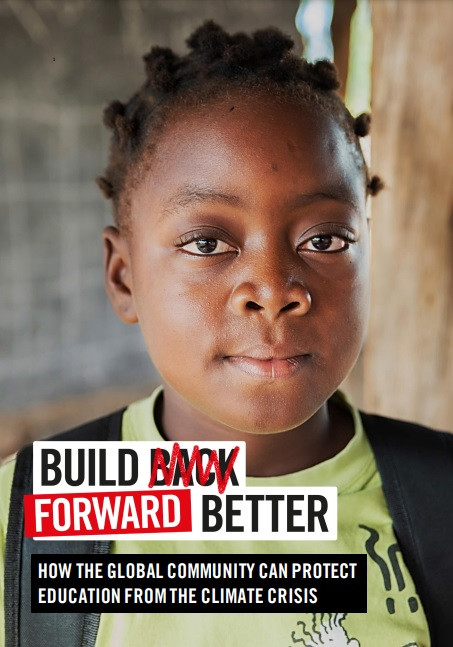 Build Forward Better: How the Global Community Can Protect Education from the Climate Crisis Year of publication: 2021 Author: Anya Cowley | Mathias Slettholm Corporate author: Save the Children Children’s increasing exposure to extreme weather events has serious implications for children’s access to quality education. 75 million children have their education disrupted each year – of which around half are due to environmental threats such as floods and drought. This briefing paper sets out how leaders can protect children’s learning from the impacts of the climate crisis, and the role that education can play in equipping the next generation with the tools they need to protect against its worst impacts.
 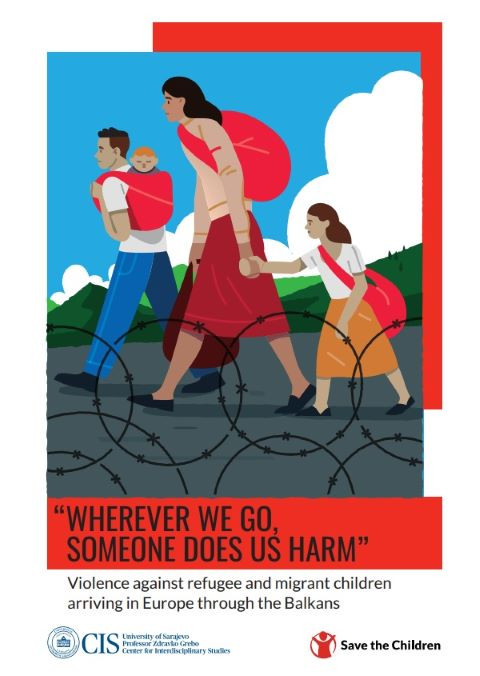 Wherever We Go, Someone Does Us Harm: Violence against Refugee and Migrant Children Arriving in Europe through the Balkans Year of publication: 2022 Author: Anita Burgund Isakov | Dženana Husremović | Bogdan Krasić | Violeta Marković | Nikolina Milic | Tatjana Ristić | Alina Trkulja | Nevenka Žegarac Corporate author: Save the Children Children, including thousands of unaccompanied and separated children, comprise about one-third of all refugees and migrants arriving in Europe. Many of these children come through the Balkans, travelling through countries including Greece, Bulgaria, Serbia, and Bosnia and Herzegovina. These are seen as transit countries by refugees and migrants as they try to continue their way toward Western Europe.In this report, Save the Children and the Center for Interdisciplinary Studies at the University of Sarajevo present in-depth research into the level and types of violence that children experience while attempting to reach Western Europe via the Balkans route, the circumstances of that violence, and the policies and practices that exist to support children. They also make recommendations for governments, NGOs and other stakeholders to strengthen the protection and support available to these children.The research was conducted in Bosnia and Herzegovina and Serbia, key transit countries on the threshold of the European Union and on the way to Western Europe. It is based on in-depth interviews with 48 children aged between 13 and 19 years old. This report also draws on focus group discussions with 27 professionals in Bosnia and Herzegovina and Serbia, mostly field workers who had extensive experience working with refugee and migrant children, and an extensive literature review. The findings of this research were analyzed thematically and interpreted within several keys: using ecological systems theory, an approach based on the rights of the child, and on trauma and resilience-based knowledge.
 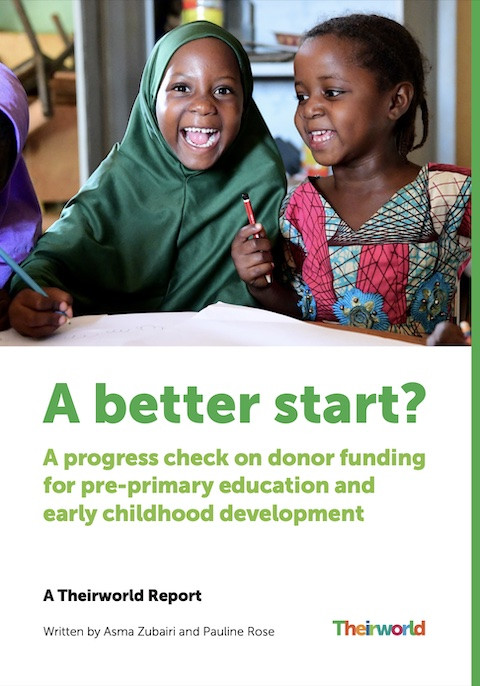 A Better Start?: A Progress Check on Donor Funding for Pre-Primary Education and Early Childhood Development Year of publication: 2021 Author: Asma Zubairi | Pauline Rose Corporate author: Theirworld This report focuses on aid trends to pre-primary education using data reported by donors to the Organisation for Economic Cooperation and Development (OECD) as Overseas Development Assistance. It updates our analysis from our 2019 Leaving the Youngest Behind report, which ranked donors’ performance on pre-primary education and looked at data from 2002 to 2016. The new report tracks whether donors are meeting Theirworld’s recommended target of investing at least 10% of their education aid budget on pre-primary education.
  How to Help Kids Spot Fake News and Misinformation Year of publication: 2020 Corporate author: Internet Matters This video gives practical tips on how to help children spot fake news and avoid being misled into believing something that might impact their wellbeing.
  Online Media Literacy Strategy Year of publication: 2021 Corporate author: Government of the United Kingdom The Online Harms White Paper set out a commitment to develop an Online Media Literacy Strategy ahead of the implementation of the online harms regulator. The aim of the strategy is to educate and empower internet users across the UK to manage their online safety. Over 170 organisations are currently involved in delivering media literacy education in the UK. The Media Literacy Strategy sets out the government’s multi-year plan to bring coordination to the media literacy landscape and outlines a Media Literacy Framework of best practice principles to inform the content and delivery of media literacy education.
  Climate Science Resource Pack: Silver Level Corporate author: British Science Association This is a project-based resource which can lead to a CREST award. Participants receive research and design briefs on topics such as ‘greener cities’ and ‘water scarcity’ and have to design climate- friendly sustainable solutions. 30+ hours of work is required for a Silver Award.
  Pathways Towards Quality Primary Education: Improving Completion and Learning Outcomes Year of publication: 2021 Author: Moizza Binat Sarwar | Susan Nicolai | Diego Benitez Moreno | Olha Homonchuk | Jose Manuel Roche Corporate author: ODI Global This paper explores pathways towards quality primary education by identifying and analysing strategies used in 38 countries that have made faster progress in primary completion rates (PCR) – and, where discernible, learning outcomes – between 2000 and 2017. It further considers which social and economic groups within these countries are being left behind or excluded from the rise in completion rates, why that may be happening and what governments are doing to address those gaps.
  Amnesty International Report 2021/22: The State of the World’s Human Rights Year of publication: 2022 Corporate author: Amnesty International The Amnesty International Report 2021/22 highlights the human rights situation in 154 countries in 2021. It presents Amnesty International’s documented concerns and recommendations for governments and others. From a human rights perspective, 2021 was largely a story of betrayal and hypocrisy in the corridors of power. But hopes for a better post-pandemic world were kept alive by courageous individuals, social movements and civil society organizations. Their efforts and limited hard-won victories should prompt governments to live up to their promises.