
Resources
Explore a wide range of valuable resources on GCED to deepen your understanding and enhance your research, advocacy, teaching, and learning.
3,433 Results found
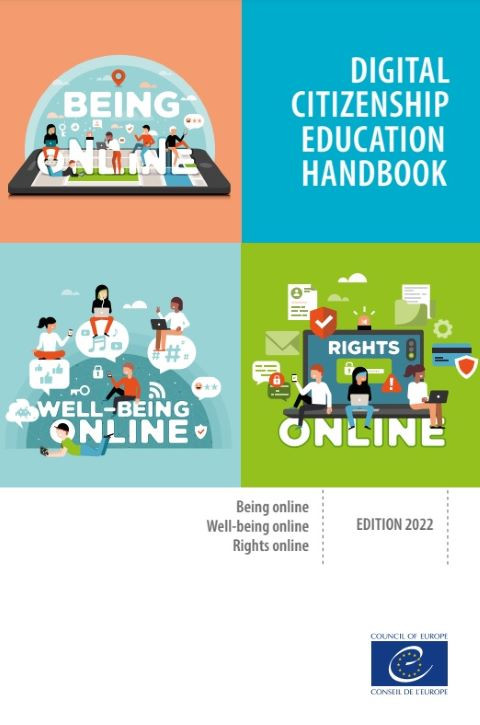 Digital Citizenship Education Handbook (Edition 2022) Year of publication: 2022 Author: Janice Richardson | Elizabeth Milovidov Corporate author: Council of Europe Digital citizenship competences define how we act and interact online. They comprise the values, attitudes, skills and knowledge and critical understanding necessary to responsibly navigate the constantly evolving digital world, and to shape technology to meet our own needs rather than to be shaped by it. The Digital citizenship education handbook offers information, tools and good practice to support the development of these competences in keeping with the Council of Europe’s vocation to empower and protect children, enabling them to live together as equals in today’s culturally diverse democratic societies, both on- and offline.The Digital citizenship education handbook is intended for teachers and parents, education decision makers and platform providers alike. It describes in depth the multiple dimensions that make up each of 10 digital citizenship domains, and includes a fact sheet on each domain providing ideas, good practice and further references to support educators in building the competences that will stand children in good stead when they are confronted with the challenges of tomorrow’s digital world. The Digital citizenship education handbook is consistent with the Council of Europe’s Reference Framework of Competences for Democratic Culture and compatible for use with the Internet literacy handbook.
  Tool for quality assuarance of education for democratic citizenship in schools Year of publication: 2005 Corporate author: Council of Europe This Tool for Quality Assurance of Education for Democratic Citizenship (EDC) in Schools was prepared as a response to the compliance gap between policies and practices of EDC in various countries. While EDC policies are well developed, EDC practices in schools present significant weaknesses. The Tool was also prepared as part of the current interest and implementation of quality assurance in education. This Tool is designed as a reference document. It focuses on education for democratic citizenship and applies the principles and processes of quality assurance to EDC.
 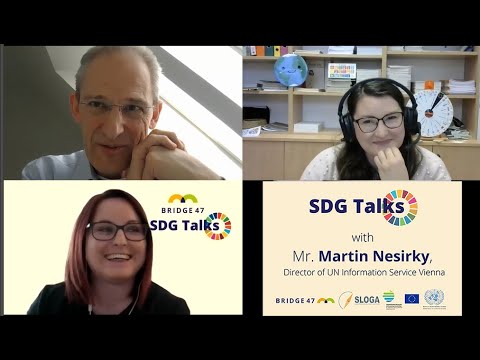 SDG Talk: Mr. Martin Nesirky Year of publication: 2021 Author: Martin Nesirky Corporate author: Sloga Platforma | Bridge 47 SDG Talk with Martin Nesirky, director of UN Information Service Vienna about Sustainable Development Goals, implication od COVID-19 pandemic on education, Global Citizenship Education and more.SDG Talks was prepared in cooperation with the UN Association for Slovenia, as part of the Bridge 47 - Building Global Citizenship project. The project is funded by the European Commission and the Ministry of Foreign Affairs of the Republic of Slovenia, and is implemented by the SLOGA Platform.Content does not reflect positions of the EU or Slovene MFA.
 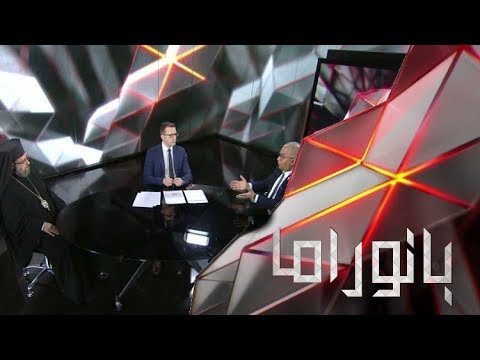 Interfaith Dialogue .. Dialogue of Life and Wise People Year of publication: 2019 Corporate author: RT Arabic Online Through this program, RT channel provides a seminar by hosting speakers to discuss the importance of interfaith dialogue and coexistence between all people from different religions. حوار الأديان .. حوار الحياة وحوار العقلاء Year of publication: 2019 Corporate author: RT Arabic Online تقدم قناة RT من خلال هذا البرنامج ندوة من خلال استضافة المتحدثين لمناقشة أهمية الحوار بين الأديان، والتعايش بين الجميع من مختلف الأديان.
  Difficult Dialogue in the Classroom: Guidance and Activities to Give Teachers the Skills to Manage Difficult Dialogue Year of publication: 2017 Corporate author: Tony Blair Institute for Global Change This book builds on the core curriculum to support educators manage difficult conversations, related to challenging issues and topics. Through practical and easy to use facilitation techniques, educators are able to move young people deeper in dialogue and ensure they learn accountability for what they say. الحوار الصعب في الصف: مورد لمنح المُعلِّمي المهارات إ لدارة الحوار الصعب في الصف Year of publication: 2017 Corporate author: Tony Blair Institute for Global Change يعتمد هذا الكتاب على المنهج الأساسي لدعم المعلمين في إدارة المحادثات الصعبة المتعلقة بالقضايا والمواضيع الصعبة. من خلال تقنيات التيسير العملية وسهلة الاستخدام ، يستطيع المعلمون نقل الشباب إلى عمق أكبر في الحوار والتأكد من أنهم يتعلمون المساءلة عما يقولونه.
  Education sector responses to climate change: background paper with international examples Year of publication: 2012 Corporate author: UNESCO Bangkok Through a review of academic articles and project documents, this paper explores the relationship between the education sector and climate change. It introduces how education is both impacted by and has an impact on this phenomenon, and proposes various sector responses. Different theoretical frameworks for where and how climate change education fits into the education sector are made concrete with case studies from across the globe. An essential introduction to climate change and education, this paper brings together theory, policy and practice. A useful read for those working in either the education sector or on climate change. Les réponses du secteur de l'éducation au changement climatique: document d'information avec des exemples internationaux Year of publication: 2012 Corporate author: UNESCO Bangkok Grâce à un examen des articles universitaires et des documents de projet, cet article explore la relation entre le secteur de l'éducation et le changement climatique. Il introduit comment l'éducation est à la fois touchée par et a un impact sur ce phénomène, et propose diverses réponses du secteur. Différents cadres théoriques pour où et comment le changement climatique l'éducation inscrit dans le secteur de l'éducation sont en béton avec des études de cas à travers le monde. Une introduction essentielle au changement climatique et de l'éducation, ce document rassemble la théorie, la politique et la pratique. Une lecture utile pour ceux qui travaillent soit dans le secteur de l'éducation ou sur le changement climatique. Mudança climática em sala de aula: curso da UNESCO para professores secundários (fundamental II e ensino médio) sobre educação em mudança climática e desenvolvimento sustentável (EMCDS) Year of publication: 2014 Author: David Selby | Fumiyo Kagawa Corporate author: UNESCO Brasilia This course has been created with the goal of bringing climate change education outside the science classroom into the many other subject areas upon which climate change now has an impact, or will impact in the future, such as ethics, social studies, economics, political science, among others. The course materials are organized into four parts: 1. Course Framework and Overview, 2. Teachers’ Education Course daily materials, 3. Regional Resource Packs, 4. Daily Classroom Materials for teachers. These materials are all described in more detail and can be accessed from the Start Menu found on the following pages. This course is designed to enable teachers at the secondary level from diverse subject areas to introduce climate change education for sustainable development (CCESD) across the curriculum. UNESCO has identified the professional development of teachers in education for sustainable development as the top priority in recognition of the transformative role that teachers and teacher educators need to play in re-orienting education to help realize a sustainable future (UNESCO, 2005, p. 19). But good intentions for the professional development of teachers have fallen short in practice. Although taken up by enthusiasts, teacher education for sustainable development has rarely been mainstreamed, and, where there are courses, is often approached within a disciplinary as opposed to an interdisciplinary frame (Wals, A., 2009). If professional development in education for sustainable development is at an adolescent stage, teacher education in climate change education for sustainable development is in its infancy. For instance, according to a 2009 international comparative study on climate change education and sustainable development in ten countries, climate change education has peripheral status in educational research and practice, and when it is addressed it is only within science education (Læssøe,J. Schnack, K., Breiting, S. & Rolls, S., 2009). There is a clear and present need to respond to climate change challenges through systematic teacher education programmes that are not restricted to a single subject area. This teacher education course is an attempt to fill the current gap and is in line with one of UNESCO’s key objectives for climate change education for sustainable development, that is, to support teacher training on climate change for sustainable development (UNESCO, 2010, p. 9). The programme has four distinctive features: 1. It helps teachers to understand the causes, dynamics and impacts of climate change through a holistic approach. 2. Teachers are exposed to, and experience, a range of pedagogical approaches and techniques, that they can use in their own school environment. This includes engagement of themselves and their students in whole school and school-in-community approaches. 3. Teachers will develop their capacities to facilitate students’ community based learning. 4. Teachers will develop future-oriented and transformative capacities in facilitating climate change mitigation, adaptation, and disaster risk reduction learning.