
Resources
Explore a wide range of valuable resources on GCED to deepen your understanding and enhance your research, advocacy, teaching, and learning.
3,376 Results found
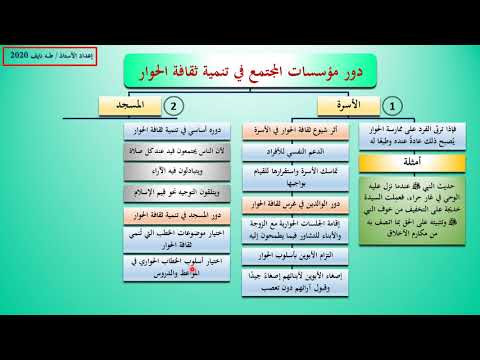 The Fifth Lesson: The Culture of Dialogue Year of publication: 2020 Author: Taha Nayef In this video, the teacher tries to explain to students the concept and etiquette of dialogue. The teacher reviews the roles of the family, educational institutions and other community institutions in the formation of the interlocutor. The lesson is filled with vivid examples of dialogue etiquette from everyday life. شرح الدرس الخامس: ثقافة الحوار Year of publication: 2020 Author: Taha Nayef يحاول المعلم في هذا الفيديو أن يشرح للطلاب مفهوم الحوار وآدابه. يقوم المعلم باستعراض أدوار الأسرة والمؤسسات التربوية وغيرها من مؤسسات المجتمع في تكوين الشخص المحاور. الدرس ملئ بالأمثلة الحية لآداب الحوار من خلال الحياة اليومية.
  Interfaith Dialogue .. Dialogue of Life and Wise People Year of publication: 2019 Corporate author: RT Arabic Online Through this program, RT channel provides a seminar by hosting speakers to discuss the importance of interfaith dialogue and coexistence between all people from different religions. حوار الأديان .. حوار الحياة وحوار العقلاء Year of publication: 2019 Corporate author: RT Arabic Online تقدم قناة RT من خلال هذا البرنامج ندوة من خلال استضافة المتحدثين لمناقشة أهمية الحوار بين الأديان، والتعايش بين الجميع من مختلف الأديان.
  The Socio-Cultural Impact of COVID-19: Exploring the Role of Intercultural Dialogue in Emerging Responses Year of publication: 2020 Author: Fethi Mansouri Corporate author: UNESCO This brief illustrates, proponents and practitioners of ICD were quick to adapt to this crisis situation and shifted much of their activities online in order to mitigate the negative impacts of the pandemic. The shift has ensured that cross-cultural exchange, mutual support and intergroup solidarity, all key dimensions of the ICD approach, can be maintained in safe online contexts and thus continue to play a key role within the socio-cultural response to COVID-19.Through inductive exploration of authentic, local, community responses to the COVID-19 crisis, this brief aims to shed light on the new context in which the ICD agenda is being pursued, complementing the many existing quantitative analyses of the socio-cultural impact of the pandemic.
  Difficult Dialogue in the Classroom: Guidance and Activities to Give Teachers the Skills to Manage Difficult Dialogue Year of publication: 2017 Corporate author: Tony Blair Institute for Global Change This book builds on the core curriculum to support educators manage difficult conversations, related to challenging issues and topics. Through practical and easy to use facilitation techniques, educators are able to move young people deeper in dialogue and ensure they learn accountability for what they say. الحوار الصعب في الصف: مورد لمنح المُعلِّمي المهارات إ لدارة الحوار الصعب في الصف Year of publication: 2017 Corporate author: Tony Blair Institute for Global Change يعتمد هذا الكتاب على المنهج الأساسي لدعم المعلمين في إدارة المحادثات الصعبة المتعلقة بالقضايا والمواضيع الصعبة. من خلال تقنيات التيسير العملية وسهلة الاستخدام ، يستطيع المعلمون نقل الشباب إلى عمق أكبر في الحوار والتأكد من أنهم يتعلمون المساءلة عما يقولونه.
  Dialogue for Social Cohesion Year of publication: 2025 Author: Isaure Vicarini | Euan Mackway-Jones Corporate author: UNESCO In an era where geopolitical power struggles disrupt traditional peacebuilding, where identity and misinformation fuel divisions, and where trust in institutions is eroding, UNESCO’s Intercultural Dialogue for Conflict Transformation briefs series presents an adaptable, culturally grounded, and people-centred approach to peacebuilding. With 89% of conflicts worldwide occurring in countries with limited capacity for intercultural dialogue, this four-part series draws on firsthand experience, country case studies, and expert analysis to demonstrate the transformative potential of dialogue in fragile and conflict-sensitive settings. The Dialogue for Social Cohesion brief—developed in collaboration with the Berghof Foundation and Search for Common Ground—bridges theory and practice to explore the horizontal (community-to-community) and vertical (citizen-to-state) dimensions of social cohesion and highlights how inclusive dialogue can support both. Case studies from Afghanistan, Germany, Somalia, and South Sudan illustrate how dialogue—whether through theatre, education, local governance, or environmental peacebuilding—can cultivate mutual understanding and trust, bridge identity-based divides, and restore, step by step, the social fabric in fractured societies. Through actionable recommendations, this brief equips practitioners, policymakers, and civil society with the essential guidance needed to tailor and embed dialogue in their respective contexts, helping to ensure that peace processes are inclusive, locally driven, and enduring.
  [Video] Whole School Approach to Global Citizenship Year of publication: 2011 Corporate author: Education Scotland Global citizenship brings together education for citizenship, international education and sustainable development education and recognises the common outcomes and principles of these three areas. All curriculum areas can contribute to developing the skills, attributes and knowledge that will create active global citizens. Adult education and development: global citizenship education (no 82, 2015) Year of publication: 2015 Corporate author: DVV International Issue 82/2015 of the international journal Adult Education and Development (AED) explores the topic global citizenship education.In the international debates, we are witnessing a growing interest in the concept of global citizenship education. It is one of the three pillars of the Global Education First Initiative (GEFI) launched by the United Nations Secretary-General in 2012 and is being internationally promoted by the work of UNESCO. According to the GEFI, education that fosters global citizenship “must fully assume its central role in helping people to forge more just, peaceful, tolerant and inclusive societies”. The 2030 Agenda for Sustainable Development, adopted by the United Nations General Assembly in September 2015, refers to global citizenship as one tool to “ensure that all learners acquire the knowledge and skills needed to promote sustainable development”.The ambitions are high, but the concrete understanding of global citizenship education and its implications differ widely. Is it just another abstract concept? What meaning can the word citizenship have if it does not refer to a specific nation? What do people in different parts of the world understand by global citizenship? And how can global citizenship education be put into practice?Adult Education and Development decided to engage in the debate and invited authors from different regions, backgrounds and disciplines to share their thoughts and experiences on the topic and related questions such as identity, migration, peace, the meaning of citizenship, globalisation and sustainable development.Irina Bokova, Director-General of UNESCO, explains the organisation’s understanding of global citizenship education, and why adult education and “learning beyond the classrooms” are crucial when it comes to promoting global citizenship. Canadian author and journalist Doug Saunders (“Arrival City: How the Largest Migration in History Is Reshaping Our World”) talks about the challenges and opportunities of what he refers to as the last great human migration, that from the countryside to the cities, and about the positive role adult education can play during this transition.In the section “Citizens’ voices” people from all over the world talk about what global citizenship means to them and in what ways they see themselves as global citizens. And photographer Viktor Hilitksi travelled through Belarus and captured with his camera how villages rediscover their local traditions and cultures.