
Resources
Explore a wide range of valuable resources on GCED to deepen your understanding and enhance your research, advocacy, teaching, and learning.
1,471 Results found
 Inequalities and Gender Violence in Latin America and the Caribbean Year of publication: 2023 Author: Karina Batthyány Corporate author: Consejo Latinoamericano de Ciencias Sociales (CLACSO) The chapters of this book are the result of the powerful research work carried out within the framework of the call “Inequalities and gender violence in Latin America and the Caribbean", promoted by CLACSO. They seek, as a whole, to outline answers to these questions, through innovative methodologies that redefine conventional tools and give the texts great singularity. The point of view is, in all cases, novel and localized: territorially, but also in terms of theory and epistemology. The reading of This book manages to immerse the reader's gaze in a truly critical approach to the reality of the continent. Desigualdades y violencias de género en América Latina y el Caribe Year of publication: 2023 Author: Karina Batthyány Corporate author: Consejo Latinoamericano de Ciencias Sociales (CLACSO) Los capítulos del presente libro son fruto de los potentes trabajos de investigación realizados en el marco de la convocatoria “Desigualdades y violencias de género en América Latina y el Caribe", promovida por CLACSO. Buscan, en su conjunto, esbozar respuestas a dichos interrogantes, mediante metodologías innovadoras que resignifican herramientas convencionales y dotan a los textos de gran singularidad. El punto de vista es, en todos los casos, novedoso y localizado: territorialmente, pero también en lo que a la teoría y a la epistemología se refiere. La lectura de este libro logra sumergir la mirada de la lectora o el lector a un acercamiento verdaderamente crítico a la realidad del continente.
 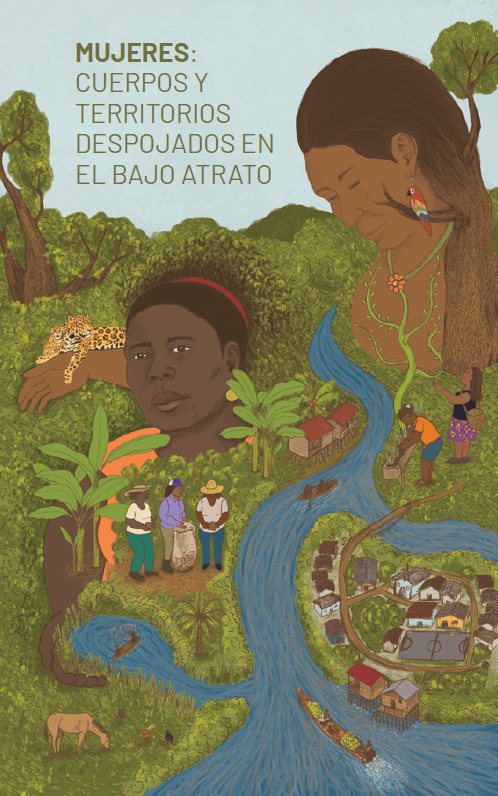 Women: Dispossessed Bodies and Territories in the Bajo Atrato Year of publication: 2022 Author: Magda Rocio Martínez Montoya Corporate author: Centro de Investigación y Educación Popular (CINEP) The violence exerted against the bodies of women is also a violence exerted against the territories. For the black, indigenous and mestizo women of the Bajo Atrato, their bodies are a substantive part of the territories and, from there, they have built and defended it. The rivers, swamps and streams are the extension of their arms and legs, waters in which they remain submerged carrying out daily tasks together with other women, their sons and daughters. In said construction and defense, their body-territories have been severely dispossessed and violated. However, they have fought and resisted, and continue to do so despite enormous risks, serious human rights violations and state abandonment. In Women: dispossessed bodies and territories in the Bajo AtratoAnalytical and contextual elements are presented that help to understand the complex relationship between gender-based violence and the processes of defending the rights to land and territory. With the delivery of this report to the Special Jurisdiction for Peace (JEP), the CINEP/PPP and the Inter-Church Commission for Justice and Peace, within the framework of the Vamos por la Paz project, provide relevant information to case 004, which prioritizes the events that occurred in the region of Urabá, Bajo Atrato and Darién. Mujeres: cuerpos y territorios despojados en el Bajo Atrato Year of publication: 2022 Author: Magda Rocio Martínez Montoya Corporate author: Centro de Investigación y Educación Popular (CINEP) La violencia ejercida contra los cuerpos de las mujeres también es una violencia ejercida contra los territorios. Para las mujeres negras, indígenas y mestizas del Bajo Atrato sus cuerpos son parte sustantiva de los territorios y, desde allí, lo han construido y defendido. Los ríos, ciénagas y quebradas son la extensión de sus brazos y sus piernas, aguas en las que permanecen sumergidas desarrollando labores cotidianas junto a otras mujeres, sus hijos e hijas. En dicha construcción y defensa, sus cuerpos-territorios han sido fuertemente despojados y violentados. Sin embargo, ellas han luchado y resistido, y lo siguen haciendo a pesar de los enormes riesgos, las graves violaciones a los derechos humanos y el abandono estatal. En Mujeres: cuerpos y territorios despojados en el Bajo Atrato se presentan elementos analíticos y contextuales que ayudan a comprender la compleja relación entre las violencias basadas en género y los procesos de defensa de los derechos a la tierra y el territorio. Con la entrega de este informe a la Jurisdicción Especial para la Paz (JEP), el Cinep/PPP y la Comisión Intereclesial de Justicia y Paz, en el marco del proyecto Vamos por la Paz, aportan información relevante al caso 004, que prioriza los hechos ocurridos en la región de Urabá, Bajo Atrato y Darién.
  Lessons Learned for Peace Year of publication: 2019 This resource is part of a collection of resources compiled by UNICEF’s 2012-2016 Peacebuilding, Education and Advocacy Programme (PBEA), known as Learning for Peace, which was funded by the Government of the Netherlands. The purpose of Lessons Learned for Peace is to share UNICEF’s experience in conducting conflict analyses as a prerequisite for social services programming in fragile and conflict-affected contexts. As part of UNICEF’s Peacebuilding, Education and Advocacy programme, supported by the Government of the Netherlands from 2012-2016, UNICEF commissioned conflict analyses in 14 countries that informed education and other social services interventions at the system, institutional, community and individual levels. The challenges, opportunities and lessons-learned of conflict analysis research in fragile and post-conflict contexts are illustrated and discussed.
  Peace Education: A Pathway to a Culture of Peace; Third Edition Year of publication: 2019 Author: Loreta Navarro-Castro | Jasmin Nario-Galace Corporate author: Miriam College. Center for Peace Education This book is based on author's study and research as well as on experiences as teachers and trainers. By writing about what the authors have come to know and experienced. It is their hope that the ideas contained in this book will circulate widely and promote enthusiasm for both education and action for peace.This book is organized into three sections. Part I aims to develop a holistic understanding of peace and peace education; Part II discusses key peace education themes; Part III focuses on the peaceable learning environment. A "vision for the future" is presented in conclusion.
  Education for Social Peace Year of publication: 2018 Author: Idris Sultan Saleh Corporate author: Morocco. Ministry of Awqaf and Islamic Affairs The author reviews the concept of social peace and its importance for individuals and societies. Then he goes on to refer to Islamic religion and its framing of societies with social peace. The article concludes with a discussion of education in the light of social peace. التربية من أجل السلام الاجتماعي Year of publication: 2018 Author: Idris Sultan Saleh Corporate author: Morocco. Ministry of Awqaf and Islamic Affairs يستعرض الكاتب مفهوم السلام ألاجتماعي وأهميته للإفراد والمجتمعات. ومن ثم يستطرد في الاشارة للدين الاسلامي وتأطيره للمجتمعات بالسلام الاجتماعي. ويختم المقال بمناقشة التربية في ضوء السلام الاجتماعي.
  Programs of Peace Education in Pre-University Education on the Light of Some Countries’ Experiences and the Extent of Benefit in Egypt Year of publication: 2014 Author: Amel Ahmed Hassan Mohamed Corporate author: Association of Arab Educators Education for peace has got an international, regional and local interests, in particular, today's world desperately needs more than ever before to face the problems afflicting the human race, and the conflict expected to increase in the coming years. This situation confirms the importance of achieving peace in all dimensions with oneself, family, society, and the environment.This study aimed to investigate the experiences of some countries in the field of education for peace and to draw some benefits from them. For achieving this aim, the study followed the Descriptive-Analytic Approach because of its appropriateness to the nature of the study. The sample of study dealt with three experiments in the field of education for peace in Northern Ireland, Bosnia and Herzegovina, and Sierra Leone, which were chosen after passing through a relatively long period of conflicts and disputes. By analyzing the three experiments, the similarities and differences among countries were reviewed in terms of, period and nature of conflict, foundations, objectives and content of the programs, teacher training. The study achieved some benefits through reviewing literature and analyzing the three experiences. The suggestions of the study were classified under some themes, including: foundations of peace education, its objectives, contents, and teacher training. برامج التربية من أجل السلام بالتعليم قبل الجامعي في بعض الدول وامكانية الاستفادة منها في مصر Year of publication: 2014 Author: Amel Ahmed Hassan Mohamed Corporate author: Association of Arab Educators تحظى التربية من أجل السلام باهتمام دولي وإقليمي ومحلى، ولا سيما أن عالم اليوم أحوج أكثر من ذي قبل لمواجهة المشكلات التي يعاني منها الجنس البشري والصراعات المرتقب زيادتها في السنوات القادمة؛ هذا بالإضافة إلى تنامي معدلات العنف المجتمعي ومظاهره؛ مما يدعم ضرورة السعي لتحقيق السلام بكافة أبعاده مع النفس وفي الأسرة وداخل المجتمع ومع البيئة. لذا هدفت هذه الدراسة إلى رصد تجارب بعض الدول في مجال التربية من أجل السلام وتقديم أوجه الاستفادة منها للارتقاء بمستوى تقديم هذا الاتجاه التعليمي المعاصر بنظام التعليم بمصر. لتحقيق هذا الهدف تم الاستناد إلى المنهج الوصفي التحليلي حيث أنه أكثر ملائمة لطبيعة الدراسة، وقد تكونت عينة الدراسة من ثلاث تجارب في مجال التربية من أجل السلام بالدول الآتية: إيرلندا الشمالية، والبوسنة والهرسك، وسيراليون، والتي تم اختيارها لكونها عاصرت فترة من الصراعات والنزاعات الطويلة نسبياً، تلتها مبادرات لدمج التربية من اجل السلام في النظام التعليمي. وقد تم تحليل التجارب الثلاث في ضوء عدد من المحاور شملت: السياق العام للدولة، والجهود المبكرة للتربية من أجل السلام، وأسسها، وأهدافها، وأليات تضمينها في نظام التعليم، وتدريب المعلمين بكل دولة. وقد توصلت الدراسة إلى عدد من الدروس المستفادة التي تم رصدها من خلال ما ورد من أدبيات عربية وأجنبية، وتجارب الدول الثلاث، والتي تم تصنيفها تحت المحاور الآتية: فترة الصراع وطبيعته، أسس التربية من أجل السلام، وأهدافها، وأليات تضمينها في نظام التعليم، وتدريب المعلمين.