
Resources
Explore a wide range of valuable resources on GCED to deepen your understanding and enhance your research, advocacy, teaching, and learning.
1,471 Results found
 Культура Таджикистана в условиях независимости (опыт, проблемы и перспективы развития) Year of publication: 2017 Author: R. Amirov В статье анализируется состояние и перспективы развития культуры в условиях независимости. В годы независимости Республика Таджикистан внешними силами была втянута в гражданские войны, в результате которых она понесла огромные потери в области экономики и культуры. Нелегко было восстановить мир, сохранить богатую национальную культуру. В эти годы правительством Таджикистана были приняты нормативно-законодательные акты и ряд государственных программ в области культуры, которые способствовали сохранению и защите культурного наследия, а также создали условия для возрождения и развития национальной культуры.
  ورقة معلومات أساسية التناسق بين العمل الإنساني والتنموي في قطاع التعليم: العمل معا في سياق الأزمات Year of publication: 2021 Corporate author: Inter-agency Network for Education in Emergencies (INEE) كما علمتنا جائحة كوفيد ١٩ (كورونا) المستمرة، انه لا يوجد بلد أو نظام تعليمي في مأمن من الأزمة الحالية؛ لذلك، فإن من الأهمية بناء انظمة مرونة والتي بدورها ستشكل مفتاح ليس فقط لتجنب الخسائر ولكن أيضًا للاستمرار والتقدم نحو أهدافنا المشتركة في قطاع التعليم. هناك حاجة ماسة إلى العمل الجماعي عبر قطاعي التنمية والإنسانية لبناء أنظمة تعليمية شاملة، وقابلة للتكيف، معدة للاستجابة للأزمات ولديها القدرة على الاستجابة لها، بحيث تتاح لكل طفل وشاب فرصة الذهاب والبقاء في الفصول الدراسية، وإكمال دورة كاملة من التعليم الابتدائي والثانوي.يعد تناسق بين العمل الإنمائي والإنساني مهمًا لضمان وصول جميع الأطفال إلى تعليم نوعي وجيد ومتواصل، مما يعزز زيادة قدرتهم على التأقلم وتطورهم الكلي. في حين أن التعليم يوفر فوائد كبيرة للأفراد والمجتمعات والدول، فإن إنشاء نظم التعليم المرنة تتطلب التخطيط على مدى سنوات وتنسيق الجهود والاستثمار في قطاع التعليم.الهدف من هذه الورقة هو إزالة الغموض عن مفهوم تناسق الإنمائي الإنساني. نجحت هذه الورقة باستخدام تعريف طرق العمل الجديدة - وهو العمل على مدى سنوات طويلة للوصول لنتائج جماعية بناءً على التمايز النسبي لمختلف الجهات الفاعلة، في تلخيص المفهوم الحاسم لتناسق الإنمائية الإنسانية، وعرض العوائق التي تحول دون الترابط في قطاع التعليم، وتقديم أمثلة توضيحية للعمل يتسم بالتناسق.تقترح الورقة مجموعة من الإجراءات والتوصيات لدعم التناسق بين العمل الإنمائي والإنساني في قطاع التعليم، إلى جانب مبادئ توجيهية للمعنيين بالتعليم للقيام بإجراءات جماعية، كما وتدعو إلى تحسين الترابط بين وكالاتهم وفي كل سياسات وبرامج قطاع التعليم. ايضاً تستهدف الورقة مجموعة واسعة من الجهات الفاعلة في المجال الإنساني والتنموي والحكومي والمجتمع المدني الذين يعملون على ضمان حق جميع الأفراد في الحصول على تعليم جيد وآمن وملائم ومنصف.تم وضع تصور لهذه الورقة من قبل فريق الايني المعني بالعمل التنموي والإنساني، وهو تعاون بين مجموعة عمل سياسة التعليم من الشبكة المشتركة لوكالات التعليم في حالات الطوارئ ومجموعة عمل لمناصرة الشبكة المشتركة لوكالات التعليم في حالات الطوارئ Background paper: Coordination between Humanitarian and Development Work in the Education Sector: Working Together in a Crisis Context Year of publication: 2021 Corporate author: Inter-agency Network for Education in Emergencies (INEE) The education sector is charged with a responsibility to ensure inclusive and equitable quality education and promote lifelong learning opportunities for all, per Sustainable Development Goal 4 (SDG4). The current trend of complex and longer-term crises, whether caused by the climate emergency, violent conflict, or a pandemic, threatens progress toward SDG4 targets. As the ongoing COVID-19 pandemic has taught us, no country or education system is immune from crisis; therefore, building resilience is the key not only to avoiding losses but to sustaining and progressing toward our shared goals in the education sector. Collective action is needed across the humanitarian-development spectrum to build inclusive and adaptable education systems that are prepared for and have the capacity to respond to crises, so that every child and young person has a chance to go to school, stay in school, and complete a full cycle of primary and secondary education.This report is aimed at members of the Inter-agency Network for Education in Emergencies (INEE), which includes a broad range of humanitarian, development, government, and civil society actors who are working to ensure that all individuals have the right to a quality, safe, relevant, and equitable education. The purpose of the report is to demystify the concept of humanitarian-development coherence and to propose a set of actions and recommendations to strengthen such coherence in the education sector. The report also provides guidelines for INEE members and education stakeholders to take collective action, and to advocate for improved coherence within their own agencies and across the education sector’s full spectrum of policy and programming.This report recapitulates the concept of humanitarian-development coherence and why it is critical, provides an overview of barriers to coherence in the education sector, identifies illustrative examples of coherent action, and offers concrete recommendations for improved coherence, as summed up through a “Learn-Convene-Adapt” framework.To explain the concept of humanitarian-development coherence, this paper adopts the New Ways of Working definition, which describes humanitarian-development coherence as working over multiple years toward collective outcomes, based on the comparative advantage of a diverse range of actors (see definitions, p. 6). The paper argues that humanitarian-development coherence is critical to ensuring that all children have access to uninterrupted quality education, which promotes their increased resilience and overall development. While education can provide significant benefits for individuals, communities, and countries, establishing resilient education systems requires multi-year planning, coordination, and investment in the education sector.To unpack the bottlenecks to coherence in education, the paper uses the conceptual framework proposed in the USAID white paper, Education and Humanitarian-Development Coherence (Nicolai et al., 2019). This framework outlines three levels of action that influence conditions for coherence: Norms, Capacities, and Operations. The barriers identified and explored in the paper are the following:
  مدى انتشار الصعوبات النمائية للأطفال العمانيين وفقا لمتغيري الجنس والبرنامج التعليمي Year of publication: 2022 Author: Ali Mahdi Kazem | Sahar Al-Shorbagy | Thuraya S هـدفت الدراسـة الحاليّـة إلـى الكشـف المب ّكـر عـن الصـعوبات النمائيّـة، لـدى أطفـال مـا قبـل المدرسة في محافظة مسقط. وت ّم استخدام قائمة الصـعوبات النمائيّـة للكشـف عـن هـؤلاء الأطفـال، والتي تضمنت ثلاثة محاور: الصعوبات المعرفيّة، والصعوبات اللغويّة، والصعوبات البصريّة الحركيّة. طبقت الدراسة على عيّنة بلغت 365 طفل وطفلة من رياض الأطفال الحكوميّـة والخاّصـة والعالميّـة في محافظة مسقط. وتو ّصلت الدراسة إلى أ ّن مع ّدل انتشار الصعوبات النمائيّة لدى أطفـال الروضـة ف ي م ح ا ف ظ ة م س ق ط ي ب ل غ ح و ا ل ي 6 % ، و أ ّن م ع ّد ل ا لأ ط ف ا ل ا ل م ع ّر ض ي ن ل ص ـ ع و ب ا ت ا ل ـ ت ع لّ م ف ـ ي م ح ا ف ظ ـ ة مسقط بلغ حوالي 13.2%، وأشارت النتائج أيضاً إلى وجود فروق ذات دلالة إحصائيّة في معدل انتشار الصعوبات النمائيّة، تُعزى لمتغيّر النوع لصـالح الـذكور، وفـي متغيّـر البرنـامج التعليمـي لصـالح المدارس العالميّة. Prevalence Rate of the Developmental Disabilities among Omani Children according to Gender and Educational Program Year of publication: 2022 Author: Ali Mahdi Kazem | Sahar Al-Shorbagy | Thuraya S The present study aimed to early identify the developmental isabilities among kindergarten kids in Muscat. To achieve the aim of the study, the researchers used the developmental disabilities Inventory which has three axes: cognitive disabilities, linguistic disabilities and visual motor disabilities. The sample of the study was 365 children from kindergarten in Muscat. Findings indicated that the rate of spreading developmental disabilities of the sample reaches 6% and the rate of children who has risk of learning disabilities reaches 13.2%.The results also mentioned that there were statistically significant differences in the rate of spreading evelopmental disabilities due to the type variable in favour of the males. Also, there were significant differences in the educational program variable in favour of international schools.
 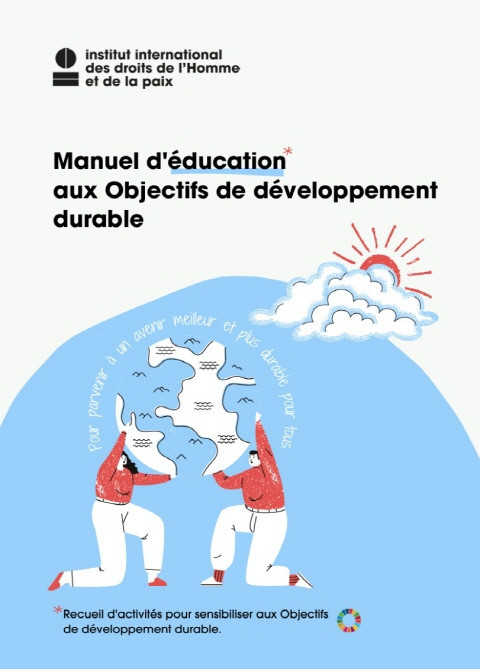 Manuel – Education aux Objectifs de développement durable Year of publication: 2022 Corporate author: Institut international des droits de l’Homme et de la paix (2IDHP) Ce manuel accompagne les enseignants et professionnels de jeunesse qui souhaitent sensibiliser leur public aux Objectifs de développement durable. Les activités proposées dans ce manuel ont été réalisées dans le cadre du programme pédagogique européen Walk the Global Walk mis en œuvre de 2017 à 2021 et du programme pédagogique normand ecHo mis en œuvre depuis 2021.Sous le prisme des trois piliers du développement durable et des droits de l’Homme, les ODD sont au cœur de ce manuel qui, grâce à des activités d’éducation aux droits de l’Homme et à la citoyenneté démocratique participatives et centrées sur l’apprenant, permet de comprendre l’importance d’atteindre les ODD afin de répondre aux enjeux du monde actuel. Migrations, égalité entre les genres, discriminations, discours de haine, participation à la vie citoyenne, inclusion, santé… Une pluralité de thématiques qui feront écho à vos objectifs pédagogiques avec votre groupe et qui s’inscriront parfaitement dans leur éducation citoyenne. This manual accompanies teachers and youth professionals who wish to raise awareness of the Sustainable Development Goals. Activities proposed in this manual were carried out as part of the European educational program Walk the Global Walk implemented from 2017 to 2021 and the Normandy educational program ecHo implemented since 2021.Under the prism of the three pillars of sustainable development and human rights, the SDGs are at the heart of this manual which, through participatory, learner-centered human rights and democratic citizenship education activities, helps to understand the importance of achieving the SDGs in order to meet the challenges of today's world. Migration, gender equality, discrimination, hate speech, civic participation, inclusion, health... A wide range of themes that will echo your pedagogical objectives with your group and fit perfectly into their civic education.
  Cartoonothèque Corporate author: Cartooning for Peace Grâce à la contribution quotidienne de ses 280 membres dessinateurs de presse, originaires de 74 pays à travers le monde, Cartooning for Peace dispose d’une remarquable collection de dessins de presse qui offre une pluralité de perspectives sur les événements internationaux au fil des années.Les 10 galeries thématiques présentent un petit échantillon de cette « cartoonothèque » qui permet à l’association de créer ses expositions, ses outils pédagogiques et de fournir ses partenaires médias, mettant ainsi le dessin de presse à la disposition d’une diversité de publics (grand public, institutions, élèves et étudiants, jeunes sous main de justice, prisonniers, professionnels de l’éducation, journalistes, dessinateurs, etc). Thanks to the daily contribution of its 280 member press cartoonists, from 74 countries around the world, Cartooning for Peace has a remarkable collection of press cartoons that offers a plurality of perspectives on international events over the years.The 10 thematic galleries below present a small sample of this “cartoon library” which allows the organisation to create its exhibitions, its educational tools and to provide its media partners, making press cartoons available for a diversity of audiences (general public, institutions, pupils and students, young people in custody, prisoners, education professionals, journalists, cartoonists etc).
  العنف ضد الأطفال في المجتمع السعودي دراسة اجتماعية من واقع إحصاءات الجمعية الوطنية لحقوق الإنسان Year of publication: 2020 Author: Dr. Faisal bin Abdullah Al-Ruwais The study aimed to identify the reality of violence against children in Saudi society by determining the extent of violence against children by region, identifying patterns of violence against children according to the type of abuse they are exposed to, and identifying the children most exposed to violence by gender, in addition to revealing The most common family members commit violence against children, based on statistics from the National Society for Human Rights. This study is a descriptive and analytical study. The qualitative approach was used by using the content analysis method for the total statistical data for the period from 2014-2018 AD. It has become clear from the statistical data: that the highest percentage of violence against children over the five years occurred in the Riyadh region, followed by the Makkah Al-Mukarramah region, then the Medina region, and that the highest types of abuse to which children are exposed is physical abuse, then deprivation of education, then deprivation of Identification documents indicate that the highest degree of violence against children was committed against females, then males, and that the family member who committed the most violence against children was the father, then the mother, then the stepmother.
  جريـــمة اختطـــــاف الأطفال داخل المجتمع الجزائري Year of publication: 2021 Author: Abish Samir يشهد المجتمع الجزائري خلال السنوات الأخيرة بروز ظواهر اجتماعية غريبة عن ثقافته وعاداته ودخيلة عن سلوكيات أفراده، أرقت مضجعه وشوهت مظهره وزرعت الشك والحيرة في نفوس أبنائه، ولعل أهمها ظاهرة اختطاف الأطفال الصغار، هذه الجريمة التي مافتئت تشهد تناميا غريبا مهددة حياة الطفولة والأسرة والمجتمع عامة ومخلفة لها انعكاسات وآثار سلبية جدا على الفرد والمجتمع ككل، وهو الأمر الذي جعل مؤسسات المجتمع تستنفر جهودها من أجل مواجهة هذه الظاهرة الهجينة والتصدي لها ومحاولة الوصول إلى آليات من شأنها تقديم حلول ناجعة لها. غير أن الوصول إلى آليات مناسبة يمكنها التصدي لظاهرة اختطاف الأطفال وتقديم حلول ناجعة لها لا يمكن أن يمر إلا عبر معرفة الأسباب والعوامل الحقيقية الكامنة وراء تفشي هذه الظاهرة داخل المجتمع الجزائري والعمل على تشخيصها تشخيصا يسمح بإيجاد هذه الآليات، لأن تقديم الدواء المناسب يتوقف دائما على التشخيص السليم والناجع. وإيمانا منا بأن الواقع هو وحده الكفيل بتقديم الصورة الحقيقية للظاهرة، فقد حاولنا العمل على تقصي أشكال وعوامل تفشي ظاهرة اختطاف الأطفال من خلال تحليل عينة من حالات الاختطاف التي وقعت داخل المجتمع الجزائري والوقوف على الأسباب التي أدت إلى حدوثها. الكلمات المفتاح : الأطفال ؛ جريمة؛ اختطاف الأطفال؛ المجتمع الجزائري. The Crime of Child Kidnapping within the Algerian Society Year of publication: 2021 Author: Abish Samir Algerian society has witnessed in recent years the emergence of social phenomena that are alien to its culture and customs, which have left its bed, distorted its appearance and instilled doubt and confusion in the hearts of its children. The most important of these is the phenomenon of kidnapping young children. This crime has witnessed a strange development threatening the life of children, the family and society in general. On the individual and society as a whole, which has made the institutions of the community to intensify their efforts to address this phenomenon hybrid and to address them and try to reach mechanisms that provide effective solutions to them. However, access to appropriate mechanisms that can address the phenomenon of child abduction and provide effective solutions can only go through the knowledge of the real causes and factors underlying the spread of this phenomenon within the Algerian society and work on diagnosing a diagnosis that allows the creation of these mechanisms. Sound and efficient. We believe that reality is the only one that can provide the real picture of the phenomenon. We have tried to investigate the phenomenon of child abduction by analyzing a sample of the cases of kidnapping that took place within Algerian society and to identify the forms and causes that led to them.