
Resources
Explore a wide range of valuable resources on GCED to deepen your understanding and enhance your research, advocacy, teaching, and learning.
1,180 Results found
 Research Models Laying the Foundation for the Unesco Chair: Democracy, Global Citizenship and Transformative Education (DCMÉT) Year of publication: 2018 Author: Paul R. Carr | Gina Thésée Corporate author: Chaire UNESCO Démocratie, citoyenneté mondiale et éducation transformatoire (DCMÉT) The conceptual and theoretical models presented in this document were developed over a roughly twelve-year period, starting in 2005, by the Chair (Paul R. Carr, Université du Québec en Outaouais) and Co-Chair (Gina Thésée, Université du Québec à Montréal) of the UNESCO Chair DCMÉT. These models have been published in diverse academic journals in either English or French, and have been translated and adapted herein to produce an updated and bilingual representation of the Education for Democracy research that Carr and Thésée have produced. In some cases, the models have been refined (and improved) over time, and they are presented as a means of attempting to elucidate, interrogate and highlight the meaning of the three themes that underpin the UNESCO Chair DCMÉT.
  The Contribution of Teachers to the Relevance of Basic Education in West Africa: The Case of Senegal Year of publication: 2016 Author: Thibaut Lauwerier Corporate author: McGill University. Faculty of Education This paper seeks to understand the contribution of teachers to quality basic education in Senegal, with a particular focus on the concept of education “relevance.” After a detour looking at the characterization of the concepts of quality and relevance, we contextualize the situation of teachers in Senegal, then present the benefits of exploring the links between these concepts and the teacher issue. From a methodological point of view, the data mainly come from interviews and observations. It is clear from our analysis that, in general, teachers are not in a position to enable relevant education. However, the research highlights some factors that enhance relevance. La contribution des enseignants à la pertinence de l’éducation de base en Afrique de l’Ouest: le cas du Sénégal Year of publication: 2016 Author: Thibaut Lauwerier Corporate author: McGill University. Faculty of Education Cet article vise à comprendre quelle est la contribution des enseignants à une éducation de base de qualité au Sénégal, avec un accent particulier sur le concept d’éducation « pertinente ». Après avoir fait un détour par la caractérisation des concepts de qualité et de pertinence, nous contextualisons la situation des enseignants au Sénégal, puis nous présentons l’intérêt d’explorer les liens entre ces concepts et la question enseignante. D’un point de vue méthodologique, les données proviennent essentiellement d’entretiens et d’observations. Il ressort de nos analyses que les enseignants de manière générale ne sont pas en capacité de permettre une éducation pertinente. Toutefois, cette recherche met en avant certains facteurs favorables à plus de pertinence.
  Responsibility in Education: Transformations, Ruptures and Contradictions Year of publication: 2015 Author: Claude Gendron | Nancy Bouchard Corporate author: Revue des sciences de l’éducation If education has always been connected with responsibility simply because the word educare by definition involves nourishing, raising, cultivating, the past few years have witnessed, both in Quebec and in Europe, a redefinition in various ways of the sharing of responsibilities among participants in the educational system. This text presents the principal areas concerned by this redefinition (school management, educators, learners) and briefly analyzes certain issues and tensions caused by it in terms of moral responsibility and the main meanings assigned to it in the scientific literature. Moreover, it introduces articles of this special issue that report research analyses and results which eloquently illustrate various contemporary dimensions of responsibility in education. La responsabilité en éducation: transformations, ruptures et contradictions Year of publication: 2015 Author: Claude Gendron | Nancy Bouchard Corporate author: Revue des sciences de l’éducation Si l’éducation a toujours eu partie liée avec la responsabilité, ne serait-ce qu’en raison du fait que le terme educare, de par sa signification, invite à s’engager à nourrir, élever, cultiver, on a pu néanmoins assister ces dernières années, tant au Québec qu’en Europe, à une redéfinition à différents niveaux du partage des responsabilités entre l’ensemble des acteurs du système éducatif. Nous présentons les principaux lieux concernés par cette redéfinition (gouvernance scolaire, éducateurs, apprenants), et analysons succinctement certains enjeux et tensions engendrés par celle-ci sur le plan de la responsabilité morale et des principales significations qui lui sont assignées dans les écrits scientifiques. De plus, nous décrivons brièvement les articles de ce numéro thématique qui font état d’analyses et de résultats de recherches illustrant éloquemment diverses dimensions contemporaines de la responsabilité en éducation.
  Fostering Digital Citizenship through Safe and Responsible Use of ICT: A Review of Current Status in Asia and the Pacific as of December 2014 Year of publication: 2015 Corporate author: UNESCO Bangkok The publication examines various interventions to address issues concerning cybersafety, rights, and wellness. It provides a synthesis of various policy responses, programmes, and initiatives implemented by governments, international organizations, civil society, and the private sector.The report ends with a preliminary set of recommendations with regards to policy, research, education, and partnerships. It is hoped that the report can provide an insight into the current status of digital citizenship in the region and consequently highlight the importance of maintaining a conscious balance of opportunities and risks when dealing with ICT.
 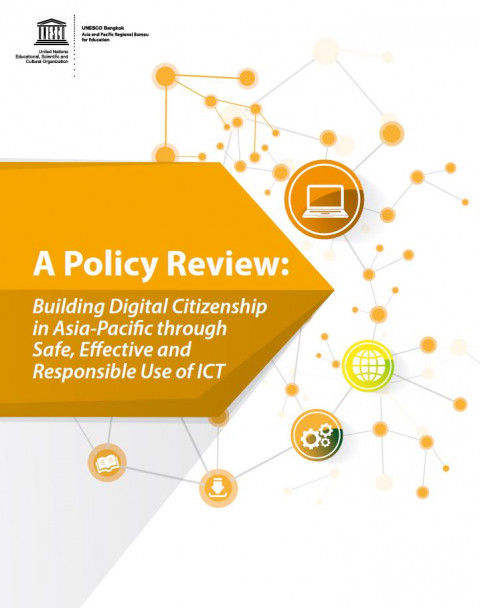 A Policy Review: Building Digital Citizenship in Asia-Pacific through Safe, Effective and Responsible Use of ICT Year of publication: 2016 Corporate author: UNESCO Bangkok This report is a major output of the project. The policy review described in this report took stock of national policies in 22 Member States in the Asia-Pacific region and assessed the capacity of their education sectors to foster digital citizenship among children aged 0-18.It is encouraging to note from the study that surveyed Member States’ policies to promote ICT opportunities mature alongside policies that address potential risks, at varying levels of policy maturity. However, while the surveyed Member States recognize the importance of equipping children with ICT skills and providing basic infrastructure, the findings indicate that there is much to be done for young learners (e.g. early childhood education and lower primary education) in introducing the concept of safe, effective and responsible use of ICT to their national curriculum as well as to their teacher professional development programmes.
 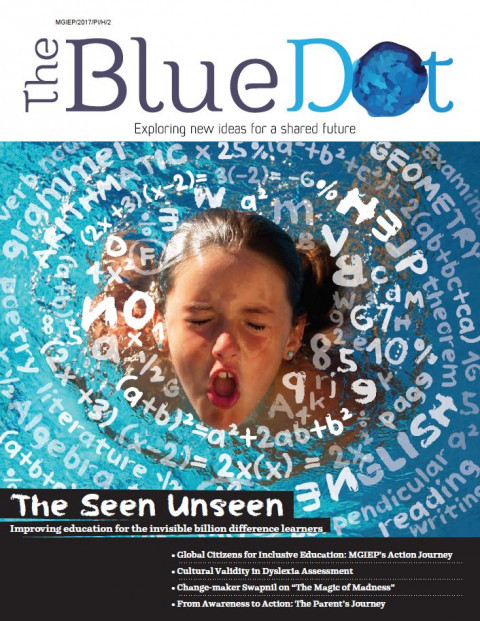 The Seen Unseen: Improving Education for the Invisible Billion Difference Learners (The Blue Dot Issue 5, 2017) Year of publication: 2017 Corporate author: Mahatma Gandhi Institute of Education for Peace and Sustainable Development (MGIEP) MGIEP believes that addressing the needs of children with difference learning offers a unique opportunity to build the competency of understanding, respect and appreciation between the children and the rest of their peers in school.It provides the Institute favorable conditions to put in practice how inclusive education is a necessary condition for building peaceful and sustainable societies. Many of the Information Technology pedagogical tools developed by the Institute lend themselves to children with difference learning.Transforming the education system in such a manner will allow mainstream schools to provide a learning platform that breaks down barriers across learning types and provide the equitable access to education that is a fundamental Sustainable Development Goal.We are, in this issue of The Blue Dot, privileged to read from some of the world’s best experts on the subject describing the challenges at hand and suggesting ways and means of addressing the lacuna present in curricula and policy. As always, we dedicate a special section to reflecting the voices of young people in our discussion. I am especially honoured and delighted to present a foreword from a young entrepreneur who has not allowed his neurobiological dyslexic condition to prevent him from pursuing his dreams to help others.
  Moral Disengagement and Building Resilience to Violent Extremism: An Education Intervention Year of publication: 2014 Author: Anne Aly | Elisabeth Taylor | Saul Karnovsky Corporate author: Taylor & Francis This article reports on the development of an education intervention, the Beyond Bali Education Resource funded by the Australian Governments’ Building Community Resilience Grants of the Federal Attorney General's Department, that applies a conceptual framework grounded in moral disengagement theory. The theory of moral disengagement has been applied to the study of radicalization to violent extremism to explain how individuals can cognitively reconstruct the moral value of violence and carry out inhumane acts. Moral Disengagement and Building Resilience to Violent Extremism: An Education Intervention Year of publication: 2014 Author: Anne Aly | Elisabeth Taylor | Saul Karnovsky Corporate author: Taylor & Francis Dans cet article, il est question du développement d'une approche éducative, the « Beyond Bali Education Resource » financée par « l’Australian Governments’ Building Community Resilience Grants of the Federal Attorney General's Department ». Cette approche utilise un cadre conceptuel fondé sur la théorie du désengagement moral. La théorie du désengagement moral a été appliquée à l'étude de la radicalisation à l'extrémisme violent en vue d’expliquer comment les individus peuvent, du point de vue cognitif, reconsidérer la violence comme une valeur morale et commettre des actes inhumains.