
Resources
Explore a wide range of valuable resources on GCED to deepen your understanding and enhance your research, advocacy, teaching, and learning.
1,473 Results found
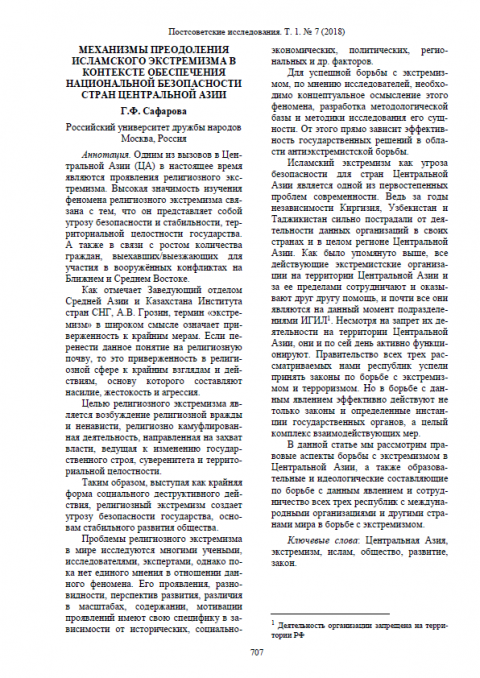 Механизмы преодоления исламского экстремизма в контексте обеспечения национальной безопасности стран Центральной Азии Year of publication: 2018 Author: Gandzina F. Safarova В данной статье мы рассмотрим пра-вовые аспекты борьбы с экстремизмом в Центральной Азии, а также образовательные и идеологические составляющие по борьбе с данным явлением и сотруд-ничество всех трех республик с междуна-родными организациями и другими стра-нами мира в борьбе с экстремизмом.
  Terrorism and religious extremism in Central Asia: problems of perception. Case of Kazakhstan and Kyrgyzstan Year of publication: 2016 Author: Anastasiya Reshetnyak Based on the results of a sociological research, the paper presents a comprehensive analysis of public opinion on the problems of securitization of terrorism and religious extremism in modern Kazakhstan and Kyrgyzstan. The publication is addressed to researchers, teachers and students of social and humanitarian faculties, specializing in international relations, political science, sociology, religious studies, as well as employees of government agencies working in relevant areas. Терроризм и религиозный экстремизм в Центральной Азии: проблемы восприятия. Кейс Казахстана и Кыргызстана Year of publication: 2016 Author: Anastasiya Reshetnyak В этой статье рассматриваются актуальные проблемы межкультурного диалога в странах Центральной Азии. Особое место отводится Кыргызстану как полиэтническому и поликультурному государству на постсоветском пространстве, у которого, по мнению автора, большие возможности участия в процессе культурной интеграции с соседними и дружественными странами бывшего советского государства.
  Central Asia: struggle for the new future Year of publication: 2018 Author: A. Dankov The article discusses the social, economic and political prospects of Central Asia (2019-2024). Prognosis also covers the ethnic changes, migration, cultural and language diversity, urbanization, quality of life. Центральная Азия: борьба за новое будущее Year of publication: 2018 Author: A. Dankov В статье рассматриваются социальные, экономические и политические перспективы Центральной Азии (2019-2024). Прогноз также охватывает этнические изменения, миграцию, культурное и языковое разнообразие, урбанизацию, качество жизни.
 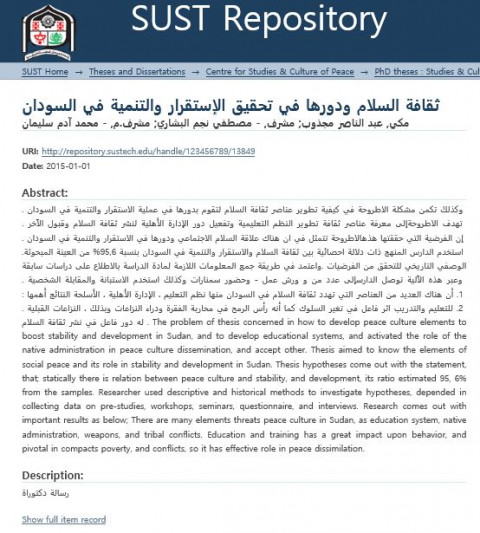 ثقافة السلام ودورها في تحقيق الإستقرار والتنمية في السودان Year of publication: 2015 Author: Abdel Nasser Majzoub Makki Corporate author: Sudan University of Science and Technology تكمن مشكلة الاطروحة في كيفية تطوير عناصر ثقافة السلام لتقوم بدورها في عملية الاستقرار والتنمية في السودان . وكذلك تطوير النظم التعليمية وتفعيل دور الإدارة الأهلية لنشر ثقافة السلام وقبول الآخر . تهدف الاطروحةإلى معرفة عناصر ثقافة السلام الاجتماعي ودورها في الاستقرار والتنمية في السودان . إن الفرضية التي حققتها هذهالاطروحة تتمثل في ان هناك علاقة ذات دلالة احصائية بين ثقافة السلام والاستقرار والتنمية في السودان بنسبة 95,6% من العينة المبحوثة. استخدم الدارس المنهج الوصفي التاريخي للتحقق من الفرضيات .واعتمد في طريقة جمع المعلومات اللازمة لمادة الدراسة بالاطلاع على دراسات سابقة و ورش عمل - وحضور سمنارات وكذلك استخدم الاستبانة والمقابلة الشخصية . وعبر هذه الآلية توصل الدارسإلى عدد من النتائج أهمها : 1. أن هناك العديد من العناصر التي تهدد ثقافة السلام في السودان منها نظم التعليم ، الإدارة الأهلية ، الأسلحة ، النزاعات القبلية . 2. للتعليم والتدريب اثر فاعل في تغير السلوك كما أنه رأس الرمح في محاربة الفقرة ودراء النزاعات وبذلك له دور فاعل في نشر ثقافة السلام . A Culture of Peace and Its Role in Achieving Stability and Development in Sudan Year of publication: 2015 Author: Abdel Nasser Majzoub Makki Corporate author: Sudan University of Science and Technology The problem of thesis concerned in how to develop peace culture elements to boost stability and development in Sudan, and to develop educational systems, and activated the role of the native administration in peace culture dissemination, and accept other. Thesis aimed to know the elements of social peace and its role in stability and development in Sudan. Thesis hypotheses come out with the statement, that; statically there is relation between peace culture and stability, and development, its ratio estimated 95, 6% from the samples. Researcher used descriptive and historical methods to investigate hypotheses, depended in collecting data on pre-studies, workshops, seminars, questionnaire, and interviews. Research comes out with important results as below; There are many elements threats peace culture in Sudan, as education system, native administration, weapons, and tribal conflicts. Education and training has a great impact upon behavior, and pivotal in compacts poverty, and conflicts, so it has effective role in peace dissimilation.
 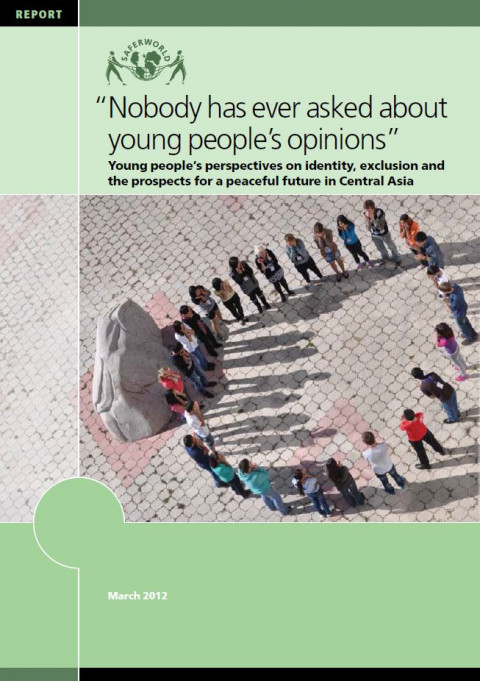 “Nobody Has Ever Asked About Young People’s Opinions”: Young People’s Perspectives on Identity, Exclusion and the Prospects for a Peaceful Future in Central Asia Year of publication: 2012 Corporate author: Saferworld This report offers a number of recommendations for the governments of Central Asian countries, as well as for international donor organizations that provide financial assistance to these states. Recommendations include suggestions priorities and approaches related to institutional and state construction; proposals on creating favorable conditions for enhancing youth participation in political processes; suggestions on how to instill in young people the skills necessary to participate in democratic processes; how to strengthen social unity through building intercommunal dialogue and intergenerational dialogue; as well as how to fight extremism. «Никто и никогда не спрашивал мнения молодежи»: Взгляды молодых людей на вопросы идентичности, изоляции и перспектив мирного будущего в Центральной Азии Year of publication: 2012 Corporate author: Saferworld Данный отчет предлагает ряд рекомендаций для правительств стран Центральной Азии, а также для международных донорских организаций, которые предоставляют финансовую помощь этим государствам. Рекомендации включают предложения приоритетов и подходов, связанных с институциональным и государственным строительством; предложения по вопросам создания благоприятних условий для активизации участия молодежи в политических процессах; предложения как привить молодым людям навыки, необходимые для участия в демократических процессах; как усилить социальное единство через построение межобщинного диалога и диалога между поколениями; а также как бороться с экстремизмом.
 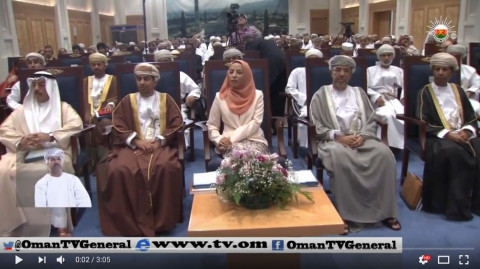 انطلاق ملتقى "المواطنة الإنسانية ودورها في التقارب والوئام الإنساني" Year of publication: 2015 Corporate author: OmanTvGeneral أقام مركز السلطان قابوس العالي للثقافة والعلوم الملتقى العلمي المواطنة الإنسانية ودورها في التقارب والوئام الإنساني، وذلك في إطار فعاليات أسبوع التقارب والوئام الإنساني الرابع، حيث يعد الملتقىى فرصة سانحة لجميع المشاركين للاطلاع على تجربة السلطنة الرائدة في الحوار الحضاري ودعم قيم التسامح والتعاون والتعايش السلمي وفق الثوابت التي أرسى مبادئها حضرة صاحب الجلالة السلطان قابوس بن سعيد المعظم ـ حفظه الله ورعاه.