
Resources
Explore a wide range of valuable resources on GCED to deepen your understanding and enhance your research, advocacy, teaching, and learning.
3,790 Results found
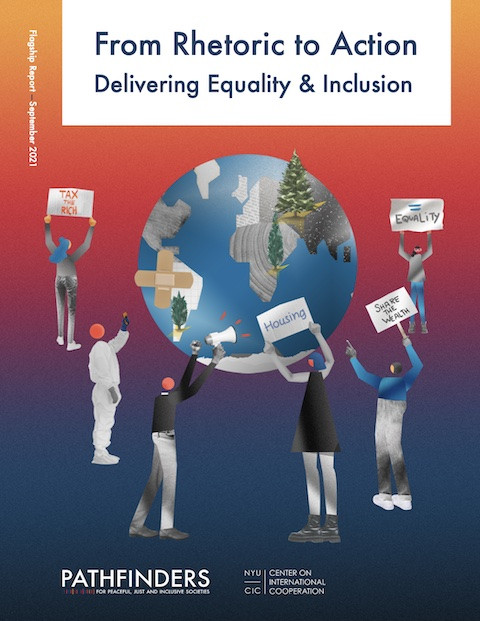 From Rhetoric to Action: Delivering Equality & Inclusion Year of publication: 2021 Author: Faiza Shaheen | Alexander Bossakov | Avner Cohen | Amanda Lenhardt | Nendirmwa Noel | Paula Sevilla Núñez | Paul von Chamier Corporate author: Pathfinders for Peaceful, Just and Inclusive Societies, NYU. Center on International Cooperation This flagship report of the Pathfinders Grand Challenge on Inequality and Exclusion is about the solutions that will deliver equality and inclusion.The report constructs a bridge between the rhetoric of “build back better” and action: a bridge between promise and progress. It underlines the need for renewed social contracts between citizens, civil society, the private sector, and governments, as well as between high and low- and middle-income countries. These social contracts must be built to serve future generations, to guard against climate breakdown and pandemics while delivering respect, opportunity, and justice for all.This report should serve as a practical handbook for policymakers and influencers; as a source of possibility for the public; and, as a call to all political leaders to act.
  Pedagogies of Media and Information Literacies Year of publication: 2012 Author: Suvi Tuominen Corporate author: UNESCO Institute for Information Technologies in Education (IITE) UNESCO has been actively involved in developing foundations for media and information literacy to assist Member States in pursuing the achievement of the objectives of the Grünwald Declaration (1982), the Alexandria Declaration (2005) and the UNESCO Paris Agenda (2007) related to MIL.The UNESCO Institute for Information Technologies in Education commissioned this Handbook, which is intended to become a useful tool that would equip teacher training institutions and facilitate teaching media and information literacy in teacher training, to the Finnish Society on Media Education. This Handbook should help teachers to enhance their media and information literacy and encourage them to take up media education in the classroom. The main target group is teachers of secondary schools who are either in training or in service. The Handbook provides teachers with basic knowledge on media and information literacy, and the way these skills can be taught.The Finnish Society on Media Education (www.mediaeducation.fi – FSME), founded in 2005 by Finnish researchers and practitioners in media education, is an association operating nation-wide in two main languages (Finnish and Swedish). The goal of FSME activities is to support and develop the field of research and practices concerning media education, contribute to the public debate and provide opportunities to share media educational experiences online and offline. Педагогические аспекты формирования медийной и информационной грамотности Year of publication: 2012 Author: Suvi Tuominen Corporate author: UNESCO Institute for Information Technologies in Education (IITE) ЮНЕСКО активно участвует в разработке основ формирования медийной и информационной грамотности и оказывает поддержку странам-членам в достижении целей, сформулированных в Грюнвальдской декларации ЮНЕСКО по медиаобразованию (1982), Александрийской декларации об информационной грамотности и образовании на протяжении всей жизни «Маяки информационного общества» (2005) и Парижской повестки ЮНЕСКО (2007).Настоящий учебник, разработанный в сотрудничестве с Финским обществом медиаобразования, является практическим пособием для педагогических вузов, отражающим передовые тенденции и современный подход к преподаванию медийной и информационной грамотности. Учебник, целевой группой которого являются учителя средних школ, содержит сведения о современных медиа и основных навыках медийной и информационной грамотности.С помощью данного учебника учителя смогут не только повысить собственную медийную и информационную грамотность, но и использовать предложенные в нем материалы для формирования медийной и информационной грамотности своих учеников.Финское общество по медиаобразованию (www.mediaeducation.fi) было основано в 2005 г. исследователями и практиками в области медиаобразования. Цель деятельности Общества заключается в поддержке и развитии исследований в области медийной грамотности и применения полученных результатов в педагогической практике, участие в общественных дебатах и обмен опытом в области медиаобразования.
  Human Rights: Handbook for Parliamentarians N° 26 Year of publication: 2016 Corporate author: Inter-Parliamentary Union (IPU) The Human Rights Handbook for Parliamentarians is based on the conviction that parliaments and their members can play a key role in delivering concretely on human rights. It is a joint initiative of the IPU and the Office of the United Nations High Commissioner for Human Rights. With brief presentations of the international human rights legal framework and international mechanisms which oversee its implementation at the national level, the Handbook looks at how parliaments can contribute to greater human rights protection. Derechos Humanos: Manual para Parlamentarios N° 26 Year of publication: 2016 Corporate author: Inter-Parliamentary Union (IPU) El Manual de Derechos Humanos está dirigido a parlamentarios que quieran familiarizarse con el marco que ha sido establecido desde 1945 por las Naciones Unidas y las organizaciones regionales para proteger y promover los derechos humanos. Presenta la noción de derechos humanos y los contenidos centrales de los derechos consagrados en la Declaración Universal de Derechos Humanos. Especifica las obligaciones de los Estados de proteger y promover los derechos humanos y contiene sugerencias sobre las acciones que los parlamentos y sus miembros pueden tomar para contribuir a su implementación. Droits de l’homme: Guide à l’usage des parlementaires N° 26 Year of publication: 2016 Corporate author: Inter-Parliamentary Union (IPU) Le Guide des droits de l’homme à l’usage des parlementaires repose sur la conviction que les parlements et leurs membres peuvent jouer un rôle capital en obtenant des résultats concrets en matière de droits de l’homme. C’est une initiative conjointe de l’UIP et du Haut-Commissariat des Nations Unies aux droits de l’homme. Après avoir présenté brièvement le cadre juridique des droits de l’homme et les mécanismes internationaux qui veillent à sa mise en oeuvre au niveau national, l’ouvrage expose la manière dont les parlements peuvent contribuer à une meilleure protection des droits de l’homme. 국회의원을 위한 인권 핸드북 Year of publication: 2016 Corporate author: Inter-Parliamentary Union (IPU) 본 자료는 국제인권규범의 일반적 원칙과 국가의 의무, 국제인권기구들의 기능 소개, 인권 및 국제인권규범에 대한 유용한 지식과 실질적인 적용에 관한 내용, 그리고 인권보호를 위한 국회의원의 역할 등을 제시하면서 국회와 의원들의 인권보호 및 증진에 관한 의정활동을 수행하는데 도움을 주고자 발간되었다.
 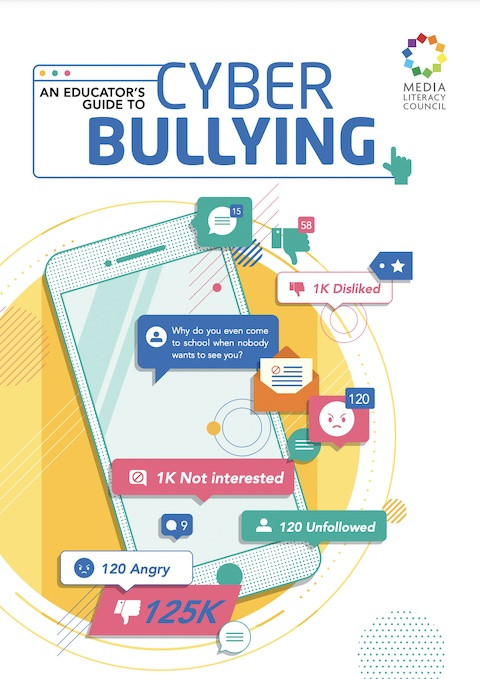 An Educator’s Guide to Cyber-Bullying Year of publication: 2018 Corporate author: Media Literacy Council (MLC) Cyber-bullying is an increasingly worrying problem in schools across Singapore, affecting students of all ages. This Guide gives you supplementary materials - such as information about the issue and lesson plans for lower primary to pre-university - to help you teach and guide your students through this problem.
  التربية من أجل المواطنة البيئية التربية من أجل المواطنة البيئية: كتيب للمعلمين لأفكار عملية من أجل تطبيق التربية للمواطنة البيئية Year of publication: 2019 Corporate author: European Network for Environmental Citizenship (ENEC) تم تأسيس الشبكة األوروبية للمواطنة البيئية (ENEC (كشبكة مخصصة للتعاون العلمي تم تمويلها كفعالية لمنظمة التعاون األوروبي في العلوم والتكنولوجيا (2020 Horizon-CA16229 (COST – حيث تجمع أكثر من 120 خبير من 38 دولة بهدف تحسين فهم ممارسة وتقييم المواطنة البيئية في اوروبا والدول المشاركة. تعتبر المواطنة البيئية مفهوما مؤثرا في العديد من المجاالت المختلفة مثل االقتصاد، السياسة، الفلسفة، االدارة التظيمية والتسويق، باالضافة الى ذلك من الممكن استغاللها وتطويرها أكثر في المجال التربوي. األزمة البيئية المعاصرة مع تغير المناخ، فقدان التنوع البيئي، تلوث الهواء، وجميع المشاكل البيئية المحلية والعالمية تتطلب تربية قاد ًرة على انشاء وتمكين المواطنين البيئيين. تلعب التربية دورا اساسيا في بلورة مواطنين بيئيين مستقبليين. ان المنهج التعليمي من أجل التربية للمواطنة البيئية هو اقتراح يشير في هذا االتجاه. اعتما ًدا على المشكلة البيئية قيد الدراسة ، ومستوى التعليم )مثل التعليم االبتدائي أو الثانوي( واإلعدادات التعليمية )على سبيل المثال ، رسمية أو غير رسمية( ، يمكن إجراء الفروق والتعديالت الالزمة. يوصي هذا النهج باتخاذ عناصر محددة كمراحل وخطوت، اال أنه ليس من الضروري اتباعها كلها أو أن تتم على نحو تسلسلي معين, فان األمر منوط بالمشكلة البيئية المدروسة، مستوى التربية )مثال: التعليم االبتدائي أو التعليم الثانوي( واالطر التربوية )مثال: رسمي أو غير رسمي(، ووفقا لها يتم القيام بالمالئمات والتعديالت المالئمة. Education for Environmental Citizenship in Focus: A Booklet for Teachers With Practical Ideas for Implementation of Education for Environmental Citizenship Year of publication: 2019 Corporate author: European Network for Environmental Citizenship (ENEC) The European Network for Environmental Citizenship (ENEC) – funded as a COST Action (CA16229-Horizon 2020) – brings together more than 130 experts from 38 countries with the objective to improve the understanding, the practice and the assessment of Environmental Citizenship in Europe and the participating countries. Environmental Citizenship has been an influential concept in many different arenas such as economy, policy, philosophy, organizational and corporation management and marketing and could be better exploited and established furthermore in the field of education as well. The contemporary environmental crisis with climate change, biodiversity loss, air pollution and all other local and global environmental problems demand an education that is capable of empowering environmental citizens. Education plays a key role in shaping future environmental citizens. The Education for Environmental Citizenship pedagogical approach is a proposal that points in this direction. The approach recommends specific elements as stages and steps, but it is not mandatory to follow all of them, or to apply them in a particular linear order. Depending on the environmental problem under study, the level of education (e.g., primary or secondary) and the educational settings (e.g. formal or non-formal), the necessary differentiations and amendments can be made.