
Resources
Explore a wide range of valuable resources on GCED to deepen your understanding and enhance your research, advocacy, teaching, and learning.
124 Results found
 Global Education Digest 2015-2017: Compiled by the Development Education Research Centre Year of publication: 2018 Corporate author: Development Education Research Centre (DERC) This is the first edition the Global Education Digest, a bibliography of recent published academic and research material relevant to the field of global education. This Digest has been compiled by Development Education Research Centre (DERC) on behalf of Global Education Network Europe (GENE) in the framework of ANGEL activities. ANGEL (Academic Network on Global Education & Learning) is the academic network of global education researchers and academics. The Digest is divided into eight themes/ areas of work, and within each we have identified policy reports, books, academic articles and doctoral research related to global education. Items for inclusion were found through keyword searches of Scopus, Web of Science, Google Scholar, and British Library (including ETHOS and Proquest) databases, as well as through informal discussions with colleagues in the field. The core focus of the Digest is on literature on global education. Selected literature with a focus on related concepts, such as global citizenship, environmental education, and education for sustainable development, has also been included where these have clear links to concerns in global education.
 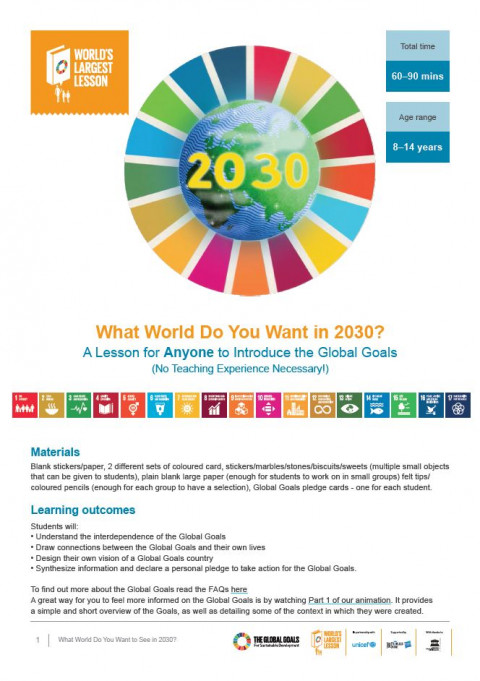 What World Do You Want in 2030?: A Lesson for Anyone to Introduce the Global Goals Year of publication: 2018 Corporate author: World’s Largest Lesson MaterialsBlank stickers/paper, 2 different sets of coloured card, stickers/marbles/stones/biscuits/sweets (multiple small objects that can be given to students), plain blank large paper (enough for students to work on in small groups) felt tips/coloured pencils (enough for each group to have a selection), Global Goals pledge cards - one for each student. Learning outcomesStudents will:• Understand the interdependence of the Global Goals• Draw connections between the Global Goals and their own lives• Design their own vision of a Global Goals country• Synthesize information and declare a personal pledge to take action for the Global Goals.
 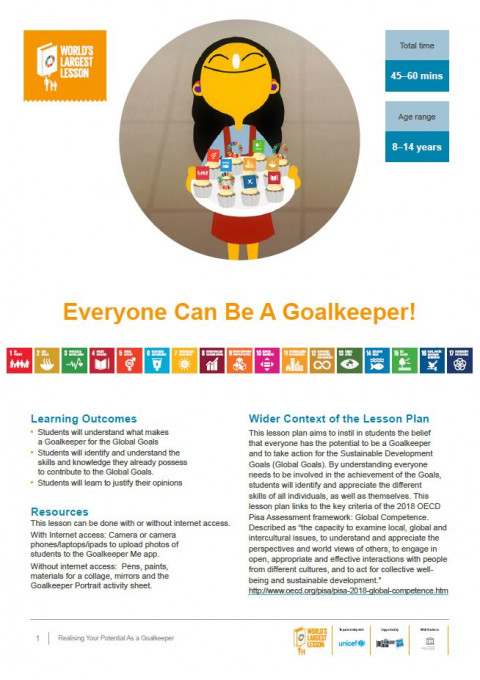 Everyone Can Be a Goalkeeper! Corporate author: World’s Largest Lesson Learning Outcomes• Students will understand what makes a Goalkeeper for the Global Goals• Students will identify and understand the skills and knowledge they already possess to contribute to the Global Goals.• Students will learn to justify their opinions Resources This lesson can be done with or without internet access.With Internet access: Camera or camera phones/laptops/ipads to upload photos of students to the Goalkeeper Me app.Without internet access: Pens, paints, materials for a collage, mirrors and the Goalkeeper Portrait activity sheet. Wider Context of the Lesson PlanThis lesson plan aims to instil in students the belief that everyone has the potential to be a Goalkeeper and to take action for the Sustainable Development Goals (Global Goals). By understanding everyone needs to be involved in the achievement of the Goals, students will identify and appreciate the different skills of all individuals, as well as themselves. This lesson plan links to the key criteria of the 2018 OECD Pisa Assessment framework: Global Competence.Described as “the capacity to examine local, global and intercultural issues, to understand and appreciate the perspectives and world views of others, to engage in open, appropriate and effective interactions with people from different cultures, and to act for collective wellbeing and sustainable development.”
 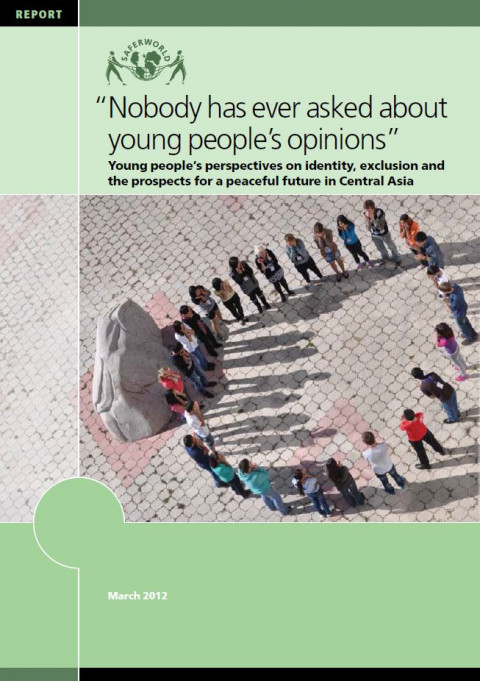 “Nobody Has Ever Asked About Young People’s Opinions”: Young People’s Perspectives on Identity, Exclusion and the Prospects for a Peaceful Future in Central Asia Year of publication: 2012 Corporate author: Saferworld This report offers a number of recommendations for the governments of Central Asian countries, as well as for international donor organizations that provide financial assistance to these states. Recommendations include suggestions priorities and approaches related to institutional and state construction; proposals on creating favorable conditions for enhancing youth participation in political processes; suggestions on how to instill in young people the skills necessary to participate in democratic processes; how to strengthen social unity through building intercommunal dialogue and intergenerational dialogue; as well as how to fight extremism. «Никто и никогда не спрашивал мнения молодежи»: Взгляды молодых людей на вопросы идентичности, изоляции и перспектив мирного будущего в Центральной Азии Year of publication: 2012 Corporate author: Saferworld Данный отчет предлагает ряд рекомендаций для правительств стран Центральной Азии, а также для международных донорских организаций, которые предоставляют финансовую помощь этим государствам. Рекомендации включают предложения приоритетов и подходов, связанных с институциональным и государственным строительством; предложения по вопросам создания благоприятних условий для активизации участия молодежи в политических процессах; предложения как привить молодым людям навыки, необходимые для участия в демократических процессах; как усилить социальное единство через построение межобщинного диалога и диалога между поколениями; а также как бороться с экстремизмом.
 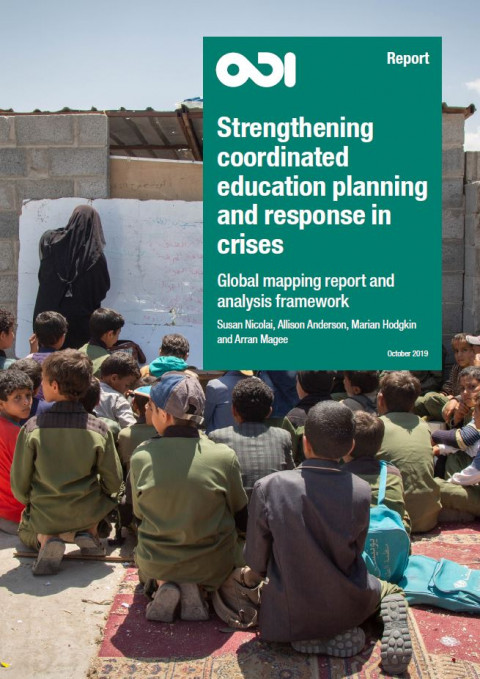 Strengthening Coordinated Education Planning and Response in Crises: Global Mapping Report and Analysis Framework Year of publication: 2019 Author: Susan Nicolai | Allison Anderson | Marian Hodgkin | Arran Magee Corporate author: Overseas Development Institute (ODI) This report presents a framework for analysis of formal coordination approaches for education planning and response in emergencies and protracted crises. It reviews concepts and definitions of coordination, approaches and structures for coordinated planning and response, and expected outcomes of these processes, with a focus on humanitarian structures across the humanitarian–development nexus.It is part of a set of publications produced in partnership with the Global Education Cluster, the Inter-Agency Network for Education in Emergencies and UNHCR – the UN Refugee Agency – with funding from the Education Cannot Wait Fund. The conceptual framework and set of research questions that emerge from this report is applied to six country case studies, which will be published in December 2019.
  Education for All: Meeting the Challenges of the 21st Century Year of publication: 2017 Corporate author: Global Partnership for Education (GPE) In this speech at the London School of Economics on May 22 2017, Julia Gillard, Board Chair of the Global Partnership for Education, described the global education crisis that the world is facing, and how investing in inclusive, quality education is urgently needed to achieve sustainable development.
 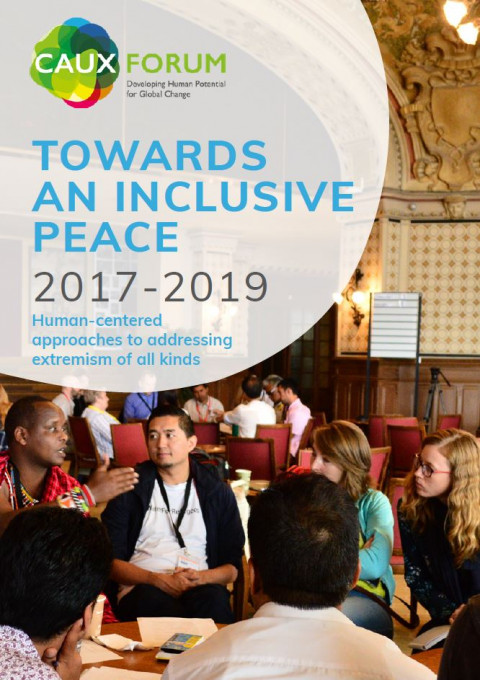 Towards an Inclusive Peace, 2017-2019: Human-centered Approaches to Addressing Extremism of All Kinds Year of publication: 2018 Author: Eliana Jimeno | Johannes Langer Corporate author: Initiatives of Change Switzerland Current approaches to violent extremism which excessively focus on counter terrorism and increasing military capacity, have failed to either stop violence or create peace. On the contrary, they have led to distrust in government institutions and alienation of large sections of the population.Doubling down on these past approaches will not resolve the issue. A new approach is needed and Towards an Inclusive Peace can offer it. Come and learn about human-centred approaches that prioritize sustainable peace, while dealing with root causes, advancing human rights, strengthening communities and enabling development.
 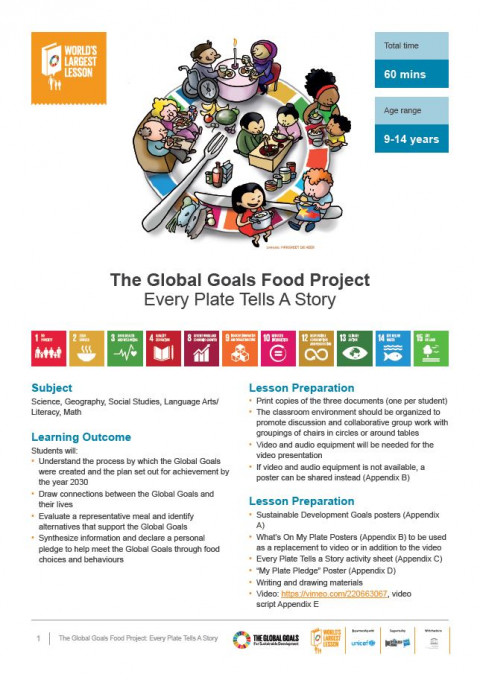 The Global Goals Food Project: Every Plate Tells a Story Year of publication: 2017 Corporate author: World’s Largest Lesson This lesson plan, “Every Plate Tells a Story,” provides a guided activity for teachers and students to work together in efforts to bring the Global Goals to classrooms and learning.The lesson begins by broadly introducing the term “goal” and invites students to make personal connections to people, places, and environments by considering goals in their lives. Learners build knowledge as they integrate understanding of the Global Goals and the processes in which they were designed.During the lesson, students will engage in a process of inquiry through dialogue, collaboration, and research and will establish concrete realizations of the sustainability of the food they eat. Multiple sources of evidence/formative assessments can be used throughout the lesson to document learning, guide conversation, and inform future instruction.
  Resilience, violent extremism and religious education Year of publication: 2013 Author: Joyce Miller Cet article essaie d'apporter une justification éducative au projet REsilience financé par le gouvernement anglais, et dont l'objet est de traiter de sujets controversés par l'éducation religieuse (RE). Ce projet est mené par le Conseil d'éducation religieuse de l'Angleterre et du pays de Galles. La présence de l’extrémisme violent d’inspiration religieuse au sein des programmes scolaires, dans les définitions mais aussi aux niveaux politique et éducatif, soulève un certain nombre de problèmes.