
Resources
Explore a wide range of valuable resources on GCED to deepen your understanding and enhance your research, advocacy, teaching, and learning.
2,193 Results found
 지속가능발전교육 지도자료: 중학교 1~3학년 교사용 안내서 Year of publication: 2020 Corporate author: 서울특별시교육청 교육혁신과 기후위기시대, 생태환경에 대한 인식을 제고하고 감수성을 기르기 위한 《2020 지속가능발전교육 중학교 교사용 지도자료》로 교과, 동아리, 자유학기 활동 등 학교 생태전환교육에 활용가능하다. 또한 각 단원별로 지속가능발전목표 17개를 적용할 수 있는 내용으로 구성하였다.
  교사가 실천하는 지속가능발전교육: 미래 세대와 동행하기 Year of publication: 2011 Author: 최돈형 | 조성화 | 안재정 | 홍현진 | 정국초 Corporate author: 서울특별시교육청 | 유네스코한국위원회 이 책은 21세기 환경교육이 지향해야 할 지속가능발전교육(ESD)을 수행할 수 있는 환경교육 분야의 전문가를 양성하고자 국제적으로 활용되고 있는 유네스코 TLSF 프로그램의 27개 모듈을 한국어로 번안하고, 여기에 한국적 맥락의 사례를 추가해 한국 상황에서의 적합성 및 활용 가능성을 제고했다. 이 책은 27개의 모듈을 교육과정 이론(Curriculum Rationale), 교육과정에서의 지속가능발전(Sustainable Development Across the Curriculum), 현시대 쟁점들(Contemporary Issues), 교수 ․ 학습 전략(Teaching and Learning Strategies) 등 4개의 영역으로 분류, 약 120시간 분량으로 구성되어 있다.
 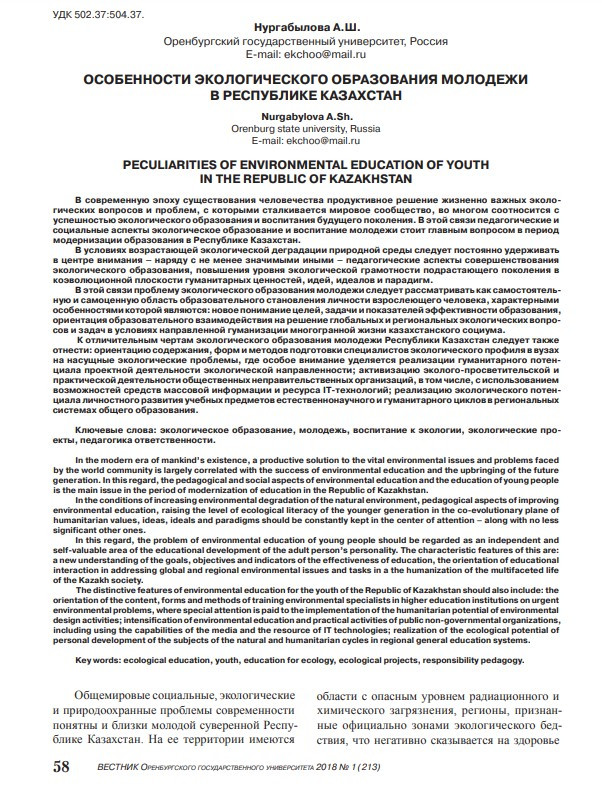 Peculiarities of Environmental Education of Youth in the Republic of Kazakhstan Year of publication: 2018 Author: Agila Sh. Nurgabylova In the modern era of mankind’s existence, a productive solution to the vital environmental issues and problems faced by the world community is largely correlated with the success of environmental education and the upbringing of the future generation. In this regard, the pedagogical and social aspects of environmental education and the education of young people is the main issue in the period of modernization of education in the Republic of Kazakhstan. Особенности экологического образования молодежи в республике Казахстан Year of publication: 2018 Author: Agila Sh. Nurgabylova В современную эпоху существования человечества продуктивное решение жизненно важных экологических вопросов и проблем, с которыми сталкивается мировое сообщество, во многом соотносится с успешностью экологического образования и воспитания будущего поколения. В этой связи педагогические и социальные аспекты экологическое образование и воспитание молодежи стоит главным вопросом в период модернизации образования в Республике Казахстан.
  풀무원재단 환경교육 가이드라인 Year of publication: 2023 Author: 풀무원재단 이 가이드라인은 환경교육 프로그램을 통해 유아, 초등 학습자의 환경 소양(environmental literacy)을 증진시키고자 할 때 참고할 수 있는 안내서입니다.
  Natural disaster preparedness and education for sustainable development Year of publication: 2007 Corporate author: UNESCO Bangkok Natural Disaster Preparedness and Education for Sustainable Development provides details of the development of culturally appropriate and locally relevant educational material for natural disaster preparedness that targets key stakeholder groups and integrates Education for Sustainable Development (ESD) principles and strategies. It is expected to develop and strengthen a regional network to implement and further ESD initiatives throughout the region by promoting education for natural disaster preparedness as well as ESD. This will underpin an identified key area of the Hyogo Framework for Action 2005-2015: Building the Resilience of Nations and Communities to Disasters. The publication articulates the lessons learned by the four in-country project teams (i.e., the Maldives, Thailand, Indonesia and India) and two collaborating organizations (i.e., Asia/Pacific Cultural Centre for UNESCO and Bangladesh Red Crescent Society) in developing materials in collaboration with community groups in the Asia-Pacific region. It provides insights into effective techniques to develop locally relevant educational materials, and highlights some of the challenges in that field.
  Guide de mise en œuvre écoles éducation à l'environnement primaire et secondaire Year of publication: 2005 Corporate author: China. Ministry of Environmental Protection L'ONU a proposé le développement durable et l'éducation environnementale dans l'Agenda 21 comme un objectif d'éducation pour le XXIe siècle. Dans de nombreux pays développés, l'éducation environnementale est devenue une partie importante de l'éducation qui est compatible avec le développement social. La Chine est également confrontée à de graves problèmes environnementaux qui font plus de demandes pour le mode de développement économique et le niveau de protection de l'environnement. Depuis les années 1980, bien que l'éducation environnementale a été effectuée dans les écoles primaires et secondaires, sa concentration était plus que la transmission des connaissances de l'environnement. Afin de nourrir l'idée de développement durable pour les étudiants et les encourager à prendre des mesures pour un avenir durable, le Ministère de l'éducation de la RPC a officiellement intégré l'éducation environnementale dans le cadre de la fondation des écoles primaires et secondaires. Ce guide vise à fournir des conseils concrets pour les enseignants et autres éducateurs à organiser des activités pour favoriser la compréhension globale du système environnemental des élèves et de développer leurs capacités à prendre des responsabilités pour la protection de l'environnement dans la vie sociale. Il donne également des conseils pour les services administratifs de l'école pour gérer et soutenir ces activités, d'exploiter et de développer de multiples ressources en éducation à l'environnement, et d'appliquer des méthodes et des stratégies pour l'éducation environnementale. En outre, il fournit des méthodes d'évaluation de l'éducation environnementale en tant que point de départ pour ajuster et améliorer la mise en œuvre de l'éducation environnementale. 中小学环境教育实施指南 Year of publication: 2005 Corporate author: China. Ministry of Environmental Protection The UN proposed sustainable development and environmental education in Agenda 21 as an educational goal for the twenty-first century. In many developed countries, environmental education has become an important part of education that is compatible with social development. China is also facing serious environmental problems that make more demands for mode of economic development and level of environment protection. Since the 1980s, although environmental education has been carried out in primary and secondary schools, its concentration was no more than imparting environmental knowledge. In order to nurture the idea of sustainable development for students and encourage them to take action for a sustainable future, the Ministry of Education of PRC has formally incorporated environmental education in the foundation course of primary and secondary schools. This guide aims to provide concrete advice for teachers and other educators to organize activities to foster students’ comprehensive understanding of the environmental system and develop their capacities to take responsibilities for environment protection in social life. It also gives advice for the school’s administrative departments to manage and support these activities, to exploit and develop multiple environmental education resources, and to apply different methods and strategies to environmental education. In addition, it provides methods of evaluating environmental education as a starting point to adjust and improve the implementation of environmental education.
  Экологическое образование как составная часть содержания высшего образования (Международный журнал гуманитарных и естественных наук; № 5-2 (92), 2024) Year of publication: 2024 Author: Жээнбек Сейталиевич Абдиев В статье автор особо подчеркивает, что экологическое образование и воспитание не может быть эффективным, не формируя соответствующим образом экологического мировоззрения. В этом контексте главной парадигмой экологического образования и воспитания в Кыргызстане является формирование экологической культуры населения.
  Engineering for Sustainable Development: Delivering on the Sustainable Development Goals Year of publication: 2021 Corporate author: UNESCO | International Centre for Engineering Education (ICEE) The report highlights the crucial role of engineering in achieving each of the 17 SDGs. It shows how equal opportunities for all is key to ensuring an inclusive and gender balanced profession that can better respond to the shortage of engineers for implementing the SDGs. It provides a snapshot of the engineering innovations that are shaping our world, especially emerging technologies such as big data and AI, which are crucial for addressing the pressing challenges facing humankind and the planet. It analyses the transformation of engineering education and capacity-building at the dawn of the Fourth Industrial Revolution that will enable engineers to tackle the challenges ahead. It highlights the global effort needed to address the specific regional disparities, while summarizing the trends of engineering across the different regions of the world.By presenting case studies and approaches, as well as possible solutions, the report reveals why engineering is crucial for sustainable development and why the role of engineers is vital in addressing basic human needs such as alleviating poverty, supplying clean water and energy, responding to natural disasters, constructing resilient infrastructure, and bridging the development divide, among many other actions, leaving no one behind.It is hoped that the report will serve as a reference for governments, engineering organizations, academia and educational institutions, and industry to forge global partnerships and catalyse collaboration in engineering so as to deliver on the SDGs.