
Resources
Explore a wide range of valuable resources on GCED to deepen your understanding and enhance your research, advocacy, teaching, and learning.
2,772 Results found
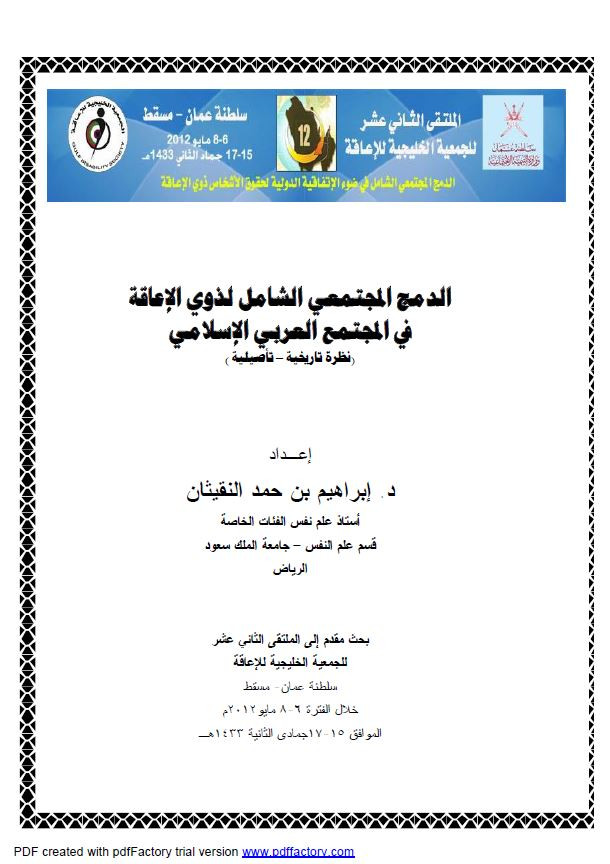 الدمج المجتمعي الشامل لذوي الإعاقة في المجتمع العربي الإسلامي (نظرة تاريخية-تأصيلية) Year of publication: 2012 Author: Ibrahim Alnuqythan Corporate author: Gulf Society for Diability الملف عبارة عن ورقة بحثية تناقش الدمج الشامل للمعوقين في الوطن العربي والإسلامي. وتسعى الورقة للإجابة عن الأسئلة التالية:- هل كان للمعوقين في الحضارة العربية الإسلامية دمج شامل في المجتمع؟- ما النماذج على هذا الدمج في الحضارة العربية الإسلامية؟ولقد ناقشت الورقة وتطرقت لنماذج حية تظهر واقع ادماج المعوقين في المجتمع.
 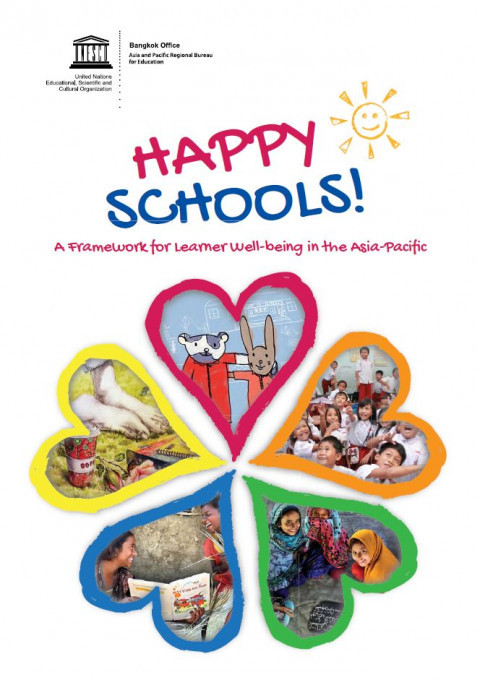 Happy Schools!: A Framework for Learner Well-being in the Asia-Pacific Year of publication: 2016 Corporate author: UNESCO Bangkok The Happy Schools Project was launched in June 2014 in the aim of promoting learner well-being and holistic development. It follows on the findings of UNESCO Bangkok’s research on ‘Learning to Live Together’, which examined the ways in which education systems can promote peace through education in the Asia-Pacific region. While the concept of ‘Learning to Live Together’ is often reflected at policy level, there is little evidence as to how it is implemented in practice. Therefore, the Happy Schools Project aims to identify and recognize proven practices at school level that integrate this concept. Écoles Heureux: Un cadre pour l'apprenant Bien-être dans la région Asie-Pacifique Year of publication: 2016 Corporate author: UNESCO Bangkok Le projet Bonne écoles a été lancé en Juin 2014, le but de promouvoir l'apprenant le bien-être et le développement holistique. Il en résulte sur les résultats de la recherche de l'UNESCO à Bangkok sur «Apprendre à vivre ensemble», qui a examiné la manière dont les systèmes éducatifs peuvent promouvoir la paix par l'éducation dans la région Asie-Pacifique. Bien que le concept de «Apprendre à vivre ensemble» se traduit souvent au niveau politique, il y a peu de preuves quant à la façon dont il est mis en œuvre dans la pratique. Par conséquent, des écoles Heureux vise à identifier et reconnaître les pratiques éprouvées au niveau des écoles qui intègrent ce concept. Счастливые школы: Основа благополучия учащихся в Азиатско-Тихоокеанском регионе Year of publication: 2016 Corporate author: UNESCO Bangkok Этот региональный доклад был подготовлен Региональным бюро ЮНЕСКО по образованию в Азиатско-Тихоокеанском регионе (ЮНЕСКО, Бангкок). В нем представлены результаты исследования проведенного в рамках проекта «Счастливые школы». Этот отчет, основанный на результатах серии мероприятий, проводимых в рамках проекта «Счастливые школы», признает важную взаимосвязь между счастьем и качеством образования. Он объединяет эти два элемента и призывает системы образования выходить за рамки традиционных областей обучения, чтобы охватить разнообразие талантов и умений, признавая ценности, сильные стороны и компетенции, которые способствуют как повышению счастья, так и благополучию учащихся, но также и их процветать и праздновать свои достижения.
  Happy Schools Art E-Exhibition Year of publication: 2016 Corporate author: UNESCO Bangkok Happy Schools Art E-Exhibition What does a Happy School look like to you? A happy learner is more likely to be a thriving one – better able to solve problems and apply critical thinking skills, more self-confident and likelier to form and foster positive relationships with others. Happy learners require Happy Schools, those that ensure the holistic development and well-being of students and the wider school community. In today’s rapidly changing world, we are faced with increasing mobility, life stress, competition, information overload, inequalities and environmental concerns. As these symptoms of ‘unhappiness’ begin to emerge, the Happy Schools Project calls for the need for education systems to reposition the school as more than a service for educational instruction, but rather, an environment which allows for social and emotional growth and development for learners to contribute to a more peaceful, just and equitable world. As part of UNESCO Bangkok’s Happy Schools Project, the Happy Schools team hosted an art contest in early 2016 in an effort to capture actions, moments and ideas that are promoting happiness in schools. All residents of the Asia-Pacific region were invited to submit images of any kind (photos, drawings, cartoons, paintings, graphics, and posters) along with a caption/description that captures the concept of Happy Schools. Thirty winners were selected from the pool of entries for the Happy Schools Art Exhibition and Report Launch (of the Happy Schools: A Framework for Learner Well-being in the Asia-Pacific report. The artwork will be on display for the Happy Schools Art Exhibition from 25 March to 3 April, 2016 at The Commons in Bangkok, Thailand, and available to view here as an e-exhibition. Écoles Heureux Art E-Exhibition Year of publication: 2016 Corporate author: UNESCO Bangkok Heureux Écoles d'art E-Exposition, qu'est-ce qu'une école heureux ressemble pour vous? Un apprenant heureux est plus susceptible d'être une entreprise florissante un - mieux à même de résoudre les problèmes et appliquer la pensée critique, plus confiant et plus susceptibles de former et de favoriser des relations positives avec les autres. Apprenants Heureux exigent l’écoles Heureux, ceux qui assurent le développement holistique et le bien-être des élèves et la communauté scolaire. Dans le monde en évolution rapide d'aujourd'hui, nous sommes confrontés à la mobilité croissante, le stress de la vie, la concurrence, la surcharge d'information, les inégalités et les préoccupations environnementales. Comme ces symptômes de «malheur» commencent à émerger, le projet Bonne écoles appelle à la nécessité pour les systèmes éducatifs pour repositionner l'école comme plus qu'un service pour l'enseignement de l'éducation, mais plutôt, un environnement qui favorise la croissance et le développement social et affectif pour apprenants de contribuer à un monde plus pacifique, juste et équitable. Dans le cadre du projet Écoles heureux de l'UNESCO à Bangkok, l'équipe Ecoles Heureux a organisé un concours d'art au début de 2016 dans le but de capturer des actions, des moments et des idées qui font la promotion du bonheur dans les écoles. Tous les résidents de la région Asie-Pacifique ont été invités à soumettre des images de toute nature (photos, dessins, bandes dessinées, peintures, graphiques et affiches) avec une légende / description qui capture le concept des écoles Heureux. Trente gagnants ont été sélectionnés à partir du pool d'entrées pour les écoles Bonne Exposition Art et Rapport de lancement (des écoles Heureux:. Un cadre pour l'apprenant le bien-être dans le rapport Asie-Pacifique, l'œuvre sera exposée pour l'Exposition Heureux Ecoles d'Art du 25 Mars au 3 Avril, 2016 au The Commons à Bangkok, en Thaïlande et à la disposition de la considérer comme un e-exposition)
  Russian regions for sustainable development: education and culture of peoples in Russian Federation; proceedings of the international conference Year of publication: 2010 Author: Ilona Graf | Natalia Dulepova | Nikolai Lyakhov | Vera Markova | Vladimir Sobyanin | Victoria Shatrova Corporate author: Novosibirsk State University The publication gives careful consideration to RF regional efforts to contribute undertaking a survey of educational contents and methods promoting cultural diversity, including traditional modes of transmission, in Siberia as a vast territory involving three greatest regions of Russian Federation. The mainstream of this recognition and accommodation of Siberian cultural diversity – efforts to create opportunities and facilities for culture-specific learning in each region, adapting teaching methods to the requirements of the everyday life of learners with the support of educational policymakers, educational professionals at all levels and local communities. The goal of publication is contributing to raising the awareness of Siberian population in recognizing the cultural dimension as a central pillar of the UNESCO decade «Education for Sustainable Development» (2005-2014). The publication is aimed at teachers, ethnologists, sociologists, linguists, philosophers, those researching the education and culture of peoples in Russia, government specialists, representatives of national-cultural communities of indigenous peoples and ethnic minorities. Régions russes pour le développement durable: l'éducation et la culture des peuples de la Fédération de Russie; Actes de la Conférence internationale Year of publication: 2010 Author: Ilona Graf | Natalia Dulepova | Nikolai Lyakhov | Vera Markova | Vladimir Sobyanin | Victoria Shatrova Corporate author: Novosibirsk State University La publication donne une attention particulière aux efforts régionaux RF pour contribuer d'entreprendre une enquête sur les contenus et les méthodes pédagogiques favorisant la diversité culturelle, y compris les modes traditionnels de transmission, en Sibérie comme un vaste territoire impliquant trois plus grandes régions de la Fédération de Russie. Le courant dominant de cette reconnaissance et d'hébergement de Sibérie diversité culturelle - des efforts pour créer des opportunités et des installations pour spécifiques à la culture d'apprentissage dans chaque région, en adaptant les méthodes d'enseignement aux exigences de la vie quotidienne des apprenants avec le soutien des décideurs éducatifs, professionnels de l'éducation du tout les niveaux et les communautés locales. Le but de la publication contribue à la sensibilisation de la population sibérienne dans la reconnaissance de la dimension culturelle comme un pilier central de l'UNESCO décennie «Education pour le développement durable» (2005-2014). La publication est destinée aux enseignants, ethnologues, sociologues, linguistes, philosophes, ces recherches sur l'éducation et la culture des peuples en Russie, les spécialistes du gouvernement, des représentants des communautés culturelles nationales des peuples autochtones et des minorités ethniques.
 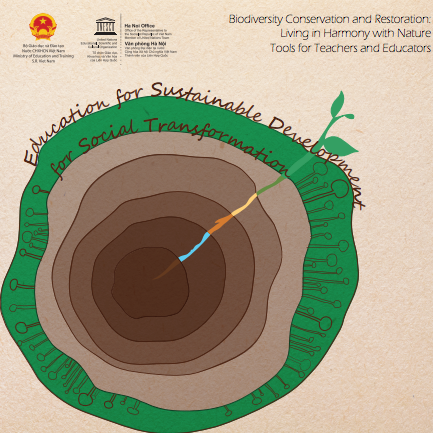 Education for sustainable development for social transformation Year of publication: 2017 Corporate author: UNESCO Hanoi | Viet Nam. Ministry of Education and Training This course on Education for Sustainable Development for Social Transformation explains the connection between sustainable development, education and the successful implementation of national and international policies and initiatives on Sustainable Development, such as the Education for Sustainable Development Framework, Global Citizenship Education and the post-2015 Development Agenda. A particular focus is placed on Viet Nam's implementation of these initiatives, including MOET's Action Plan to Implement the National Strategy on Natural Disaster Prevention, Control and Mitigation in the Education Sector in the 2011-2020 Period.The courses promote creative thinking and a holistic approach to some of our planet's most pressing issues. A contribution to sustainable development will be made by encouraging students, families, schools and communities to be bioliterate. Education for sustainable development for social transformation Year of publication: 2017 Corporate author: UNESCO Hanoi | Viet Nam. Ministry of Education and Training This course on Education for Sustainable Development for Social Transformation explains the connection between sustainable development, education and the successful implementation of national and international policies and initiatives on Sustainable Development, such as the Education for Sustainable Development Framework, Global Citizenship Education and the post-2015 Development Agenda. A particular focus is placed on Viet Nam's implementation of these initiatives, including MOET's Action Plan to Implement the National Strategy on Natural Disaster Prevention, Control and Mitigation in the Education Sector in the 2011-2020 Period.The courses promote creative thinking and a holistic approach to some of our planet's most pressing issues. A contribution to sustainable development will be made by encouraging students, families, schools and communities to be bioliterate.