
Resources
Explore a wide range of valuable resources on GCED to deepen your understanding and enhance your research, advocacy, teaching, and learning.
2,657 Results found
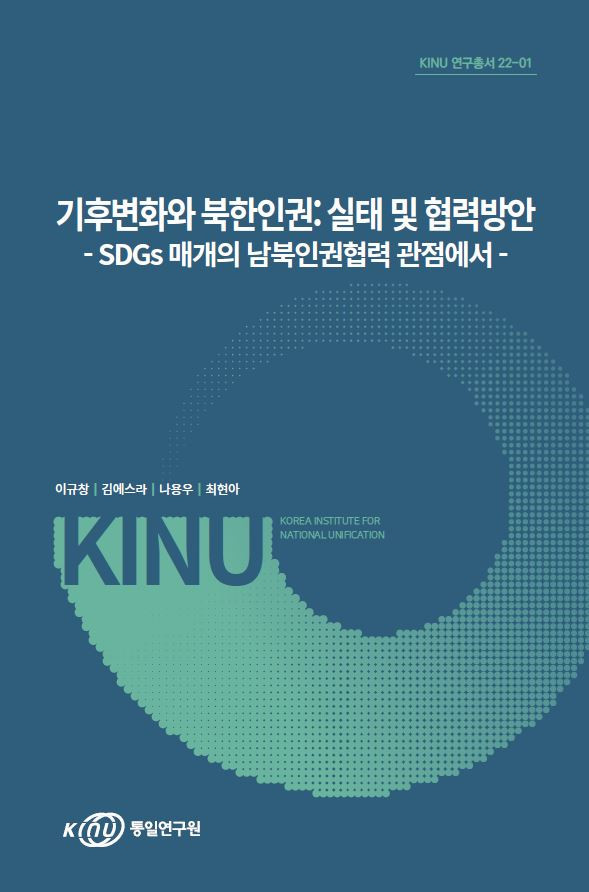 기후변화와 북한인권: 실태 및 협력방안 - SDGs 매개의 남북인권협력 관점에서 - Year of publication: 2022 Author: 이규창 | 김에스라 | 나용우 | 최현아 Corporate author: 통일연구원 글로벌 이슈인 기후변화는 생태계 및 환경뿐만 아니라 건강, 감염병, 경제, 주거, 식수 등 인간 삶의 상당한 영역에 영향을 미치고 있다. 기후변화는 재해‧ 재난의 빈도 및 강도의 증대로 이어져 최근에는 기후위기라는 용어가 회자되고 있으며 더 나아가 기후재앙이라는 용어도 사용되고 있다. 국제사회는 기후변화가 인권에 미치는 영향을 주목하고 이에 대응하기 위하여 노력을 기울이고 있다. 그 모습은 유엔인권최고대표사무소 (OHCHR)의 ‘기후변화와 인권의 관계에 관한 보고서’ 발표, 유엔 인권이사회의 ‘인권과 기후변화’ 결의 채택, ‘기후변화 맥락에서의 인권증진 및 보호에 관한 특별보고관’ 임명 등으로 나타나고 있다. 이 같은 배경에서 본 연구보고서는 기후문제가 북한인권에 미치는 영향과 실태 및 남북협력방안을 연구 내용으로 다루고 있다. 본 저작물은 통일연구원에서 2022년 작성하여 공공누리 제4유형으로 개방한 '기후변화와 북한인권: SDGs 매개의 남북인권협력 관점에서(작성자:이규창 외)'를 이용하였으며, 해당 저작물은 통일연구원 홈페이지(https://www.kinu.or.kr/)에서 무료로 내려받으실 수 있습니다.
 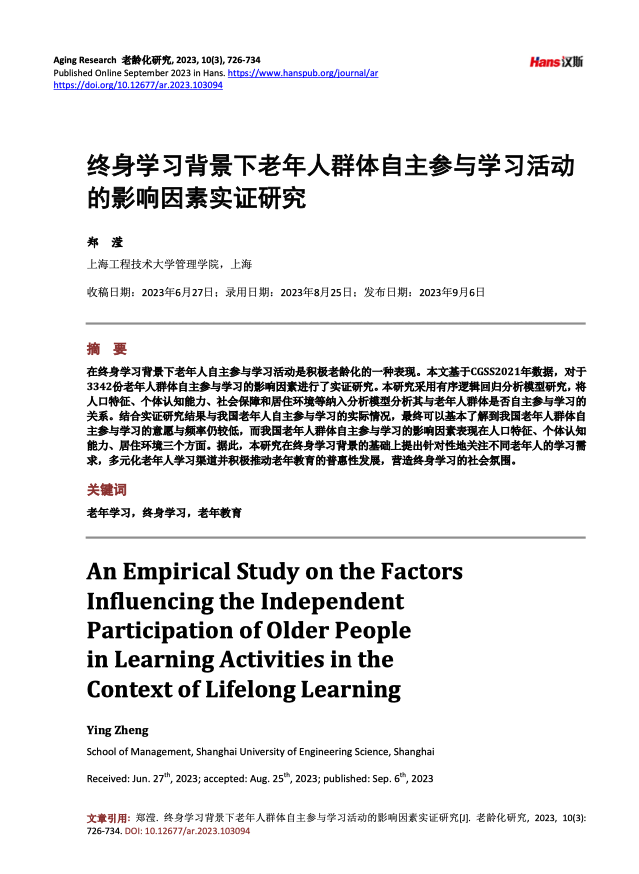 终身学习背景下老年人群体自主参与学习活动的影响因素实证研究 (老龄化研究 第10卷 第3期) Year of publication: 2023 Author: 郑滢 在终身学习背景下老年人自主参与学习活动是积极老龄化的一种表现。本文基于CGSS2021年数据,对于3342份老年人群体自主参与学习的影响因素进行了实证研究。本研究采用有序逻辑回归分析模型研究,将人口特征、个体认知能力、社会保障和居住环境等纳入分析模型分析其与老年人群体是否自主参与学习的关系。结合实证研究结果与我国老年人自主参与学习的实际情况,最终可以基本了解到我国老年人群体自主参与学习的意愿与频率仍较低,而我国老年人群体自主参与学习的影响因素表现在人口特征、个体认知能力、居住环境三个方面。据此,本研究在终身学习背景的基础上提出针对性地关注不同老年人的学习需求,多元化老年人学习渠道并积极推动老年教育的普惠性发展,营造终身学习的社会氛围。
 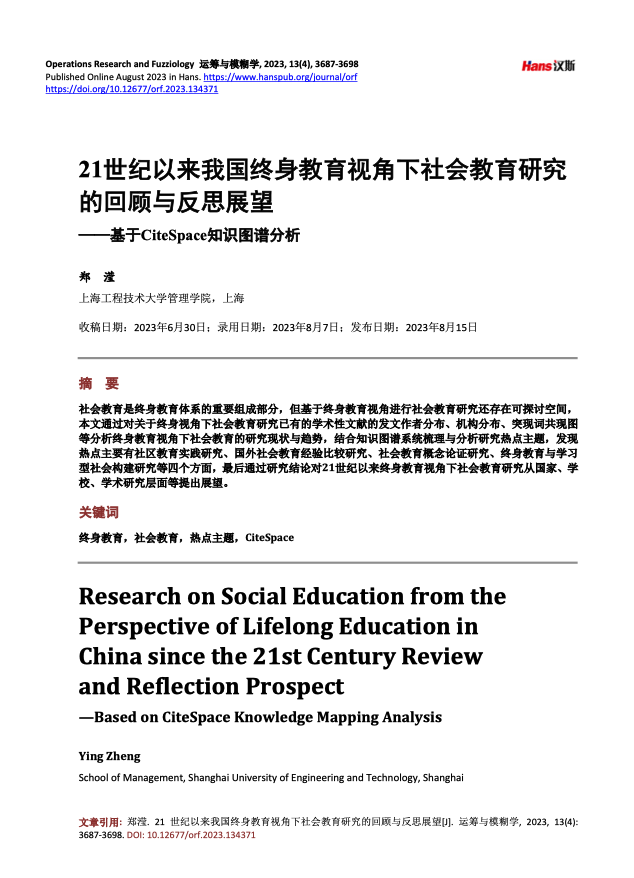 21世纪以来我国终身教育视角下社会教育研究的回顾与反思展望 : 基于CiteSpace知识图谱分析 (运筹与模糊学 第13卷 第4期) Year of publication: 2023 Author: 郑滢 社会教育是终身教育体系的重要组成部分,但基于终身教育视角进行社会教育研究还存在可探讨空间,本文通过对关于终身视角下社会教育研究已有的学术性文献的发文作者分布、机构分布、突现词共现图等分析终身教育视角下社会教育的研究现状与趋势,结合知识图谱系统梳理与分析研究热点主题,发现热点主要有社区教育实践研究、国外社会教育经验比较研究、社会教育概念论证研究、终身教育与学习型社会构建研究等四个方面,最后通过研究结论对21世纪以来终身教育视角下社会教育研究从国家、学校、学术研究层面等提出展望。
 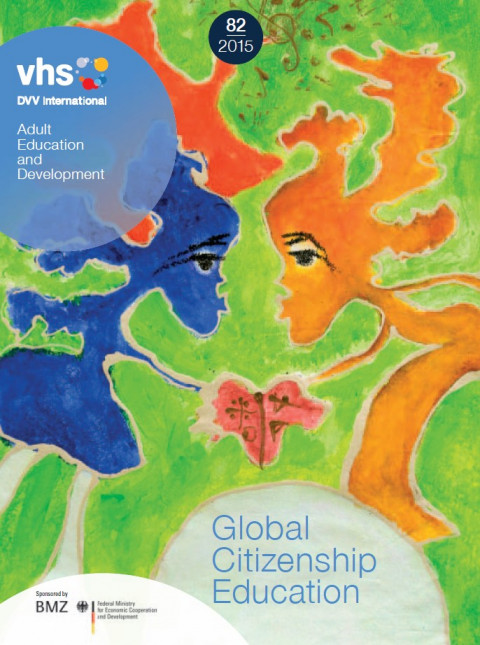 Adult education and development: global citizenship education (no 82, 2015) Year of publication: 2015 Corporate author: DVV International Issue 82/2015 of the international journal Adult Education and Development (AED) explores the topic global citizenship education. In the international debates, we are witnessing a growing interest in the concept of global citizenship education. It is one of the three pillars of the Global Education First Initiative (GEFI) launched by the United Nations Secretary-General in 2012 and is being internationally promoted by the work of UNESCO. According to the GEFI, education that fosters global citizenship “must fully assume its central role in helping people to forge more just, peaceful, tolerant and inclusive societies”. The 2030 Agenda for Sustainable Development, adopted by the United Nations General Assembly in September 2015, refers to global citizenship as one tool to “ensure that all learners acquire the knowledge and skills needed to promote sustainable development”. The ambitions are high, but the concrete understanding of global citizenship education and its implications differ widely. Is it just another abstract concept? What meaning can the word citizenship have if it does not refer to a specific nation? What do people in different parts of the world understand by global citizenship? And how can global citizenship education be put into practice? Adult Education and Development decided to engage in the debate and invited authors from different regions, backgrounds and disciplines to share their thoughts and experiences on the topic and related questions such as identity, migration, peace, the meaning of citizenship, globalisation and sustainable development. Irina Bokova, Director-General of UNESCO, explains the organisation’s understanding of global citizenship education, and why adult education and “learning beyond the classrooms” are crucial when it comes to promoting global citizenship. Canadian author and journalist Doug Saunders (“Arrival City: How the Largest Migration in History Is Reshaping Our World”) talks about the challenges and opportunities of what he refers to as the last great human migration, that from the countryside to the cities, and about the positive role adult education can play during this transition. In the section “Citizens’ voices” people from all over the world talk about what global citizenship means to them and in what ways they see themselves as global citizens. And photographer Viktor Hilitksi travelled through Belarus and captured with his camera how villages rediscover their local traditions and cultures. Éducation des adultes et développement: L'éducation à la citoyenneté mondiale (ECM) (no 82, 2015) Year of publication: 2015 Corporate author: DVV International Le numéro 82/2015 de la revue internationale l’Éducation des Adultes et Développement(AED) explore le sujet de l'éducation à la citoyenneté mondiale. Dans les débats internationaux, nous assistons à un intérêt croissant pour le concept d'éducation à la citoyenneté mondiale. Il est l'un des trois piliers de l'Initiative Mondiale pour l'Éducation Avant Tout (GEFI) lancé par le Secrétaire général des Nations Unies en 2012 et est promu à l'échelle internationale par le travail de l'UNESCO. Selon le GEFI, l'éducation qui favorise la citoyenneté mondiale "doit assumer pleinement son rôle central en aidant les gens à forger plus justes, des sociétés pacifiques, tolérantes et inclusives". L'Agenda 2030 pour le développement durable, adoptée par l'Assemblée générale des Nations Unies en Septembre 2015, se réfère à la citoyenneté mondiale comme un outil pour «faire en sorte que tous les apprenants à acquérir les connaissances et les compétences nécessaires pour promouvoir le développement durable». Les ambitions sont grandes, mais la compréhension concrète de L'éducation à la citoyenneté mondiale(ECM) et ses implications diffèrent largement. Est-il juste un autre concept abstrait? Quel sens le mot citoyenneté peut avoir si elle ne se réfère pas à une nation spécifique? Qu'est-ce que les gens dans les différentes parties du monde comprennent par la citoyenneté mondiale? Comment l'éducation à la citoyenneté mondiale(ECM) peut-elle être mise en pratique? Education des adultes et développement ont décidé de participer au débat et a invité les auteurs de différentes régions, milieux et disciplines à partager leurs réflexions et expériences sur le sujet et les questions connexes telles que l'identité, la migration, la paix, le sens de la citoyenneté, la mondialisation et le développement durable. Irina Bokova, Directrice générale de l'UNESCO, explique la compréhension de l'organisation de l'éducation à la citoyenneté mondiale, et pourquoi l'éducation des adultes et de «l'apprentissage au-delà des salles de classe" sont cruciales en matière de promotion de la citoyenneté mondiale. L'auteur et journaliste canadien Doug Saunders ( «La ville d'arrivée: comment la plus grande migration dans l'histoire remodèle notre monde») parle des défis et des opportunités de ce qu'il appelle la dernière grande migration humaine, celle des campagnes aux villes et Sur le rôle positif que l'éducation des adultes peut jouer au cours de cette transition. Dans la section «La voix des citoyens», des gens du monde entier parlent de ce que la citoyenneté mondiale signifie pour eux et de la manière dont ils se perçoivent comme des citoyens du monde. Et le photographe Viktor Hilitksi a parcouru la Biélorussie et a capturé avec sa caméra comment les villages redécouvrent leurs traditions et cultures locales.
  Éducation des adultes et développement: l’éducation à la citoyenneté mondiale (no 82, 2015) Year of publication: 2015 Corporate author: DVV International Issue 82/2015 of the international journal Adult Education and Development (AED) explores the topic global citizenship education. In the international debates, we are witnessing a growing interest in the concept of global citizenship education. It is one of the three pillars of the Global Education First Initiative (GEFI) launched by the United Nations Secretary-General in 2012 and is being internationally promoted by the work of UNESCO. According to the GEFI, education that fosters global citizenship “must fully assume its central role in helping people to forge more just, peaceful, tolerant and inclusive societies”. The 2030 Agenda for Sustainable Development, adopted by the United Nations General Assembly in September 2015, refers to global citizenship as one tool to “ensure that all learners acquire the knowledge and skills needed to promote sustainable development”. The ambitions are high, but the concrete understanding of global citizenship education and its implications differ widely. Is it just another abstract concept? What meaning can the word citizenship have if it does not refer to a specific nation? What do people in different parts of the world understand by global citizenship? And how can global citizenship education be put into practice? Adult Education and Development decided to engage in the debate and invited authors from different regions, backgrounds and disciplines to share their thoughts and experiences on the topic and related questions such as identity, migration, peace, the meaning of citizenship, globalisation and sustainable development. Irina Bokova, Director-General of UNESCO, explains the organisation’s understanding of global citizenship education, and why adult education and “learning beyond the classrooms” are crucial when it comes to promoting global citizenship. Canadian author and journalist Doug Saunders (“Arrival City: How the Largest Migration in History Is Reshaping Our World”) talks about the challenges and opportunities of what he refers to as the last great human migration, that from the countryside to the cities, and about the positive role adult education can play during this transition. In the section “Citizens’ voices” people from all over the world talk about what global citizenship means to them and in what ways they see themselves as global citizens. And photographer Viktor Hilitksi travelled through Belarus and captured with his camera how villages rediscover their local traditions and cultures.
  User Empowerment through Media and Information Literacy Responses to the Evolution of Generative Artificial Intelligence (GAI) Year of publication: 2024 Author: Divina Frau-Meigs Corporate author: UNESCO Key messages Artificial Intelligence and Generative AI are having a significant impact on people’s engagement with information, digital technology, and media. This raises concerns about control human agency and autonomy over information, decision making, gender equality, and freedoms in general. User empowerment through Media and Information Literacy (MIL) as a response to GAI, which is still in its infancy, needs to be fully deployed and public policy makers should be concerned in developing it well from the outset. MIL is necessary to build people’s ethical use of synthetic media, i.e. video, text, image or voice content fully or partially generated by AI-systems. The societal opportunities being deepened by GAI include: access to information, participation, employability, creativity, lifelong learning and creative industries. The societal potential risks being deepened by GAI include: disinformation, loss of data privacy, threats to integrity of elections, surveillance, lack of source reliability, discrimination, including gender-based and racial stereotypes, and copyrights violations. Building on familiarity in the face of urgency, AI literacy can be embedded in MIL to teach and train all sorts of communities (educators, librarians, youth workers, women networks, etc.). Ensuring explainable AI is key to both the design of MIL curricula and to the design of policy and governance around GAI. To build trust in information and education, source reliability needs to be revised to encompass the different types of “evidence” provided by GAI. MIL can train informed people from outside the technology industry to participate in the design, implementation and regulation of AI, in a manner that remains human-centered, gender-responsive and mindful of the public interest. Training for MIL is within the remit of governments and institutions of higher education, which have a duty to ensure MIL policy actions are sustained and strengthened over time, to be future-proof, in the face of an ever-evolving AI/GAI. L’autonomisation des utilisateurs grâce aux réponses apportées par l’éducation aux médias et à l’information à l’évolution de l’intelligence artificielle générative (IAG) Year of publication: 2024 Author: Divina Frau-Meigs Corporate author: UNESCO Messages clés L’intelligence artificielle et l’IA générative influent grandement sur les rapports des indivi- dus à l’information, aux technologies numériques et aux médias. Mais cela ne va pas sans inquiétudes quant à leur contrôle, au pouvoir d’action et à l’autonomie dont disposent les utilisateurs vis-à-vis de l’information, à la prise de décisions, à l’égalité des genres et aux libertés en général. . Pour constituer une réponse à l’IAG, technologie qui en est à ses balbutiements, l’autonomisation des utilisateurs grâce à l’éducation aux médias et à l’information (EMI) doit être pleinement déployée, et les autorités publiques doivent s’efforcer de la promouvoir dès le début. L’EMI est indispensable pour garantir une utilisation éthique des médias synthétiques, c’est-à-dire des vidéos, textes, images et sons totalement ou partiellement créés à l’aide de systèmes d’IA. L’IAG offre de nombreuses opportunités sociales dans différents domaines, dont l’accès à l’information, la participation, l’employabilité, la créativité, l’apprentissage tout au long de la vie et les industries créatives, entre autres. Il existe cependant des risques sociaux potentiels aggravés par l’IA générative, dont : la désinformation, la perte de contrôle sur la confidentialité des données, les menaces pour l’intégrité des élections, la surveillance, le manque de fiabilité des sources, la discrimination notamment fondée sur le genre et les stéréotypes raciaux et les violations des droits d’auteur. Pour mettre à profit la familiarité face à l’urgence, la maîtrise de l’IA pourrait être intégrée dans les programmes d’EMI afin d’éduquer et de former des communautés très diverses (éducateurs, bibliothécaires, animateurs pour la jeunesse, réseaux de femmes, etc.). Pour bien concevoir non seulement les programmes d’EMI mais aussi la gouvernance de l’IAG et les politiques connexes, l’IA explicable joue un rôle essentiel. Pour renforcer la confiance dans l’information et l’éducation, la fiabilité des sources doit être réexaminée pour englober tous les différents types de « preuves » fournies par l’IAG. L’EMI peut former des acteurs éclairés n’appartenant pas au secteur de la technologie afin qu’ils contribuent à la conception, à la mise en œuvre et à la réglementation de l’IA d’une manière qui reste centrée sur l’humain, sensible au genre et soucieuse de l’intérêt public. La formation dans le cadre de l’EMI relève des gouvernements et des établissements d’enseignement supérieur, qui doivent veiller à ce que les actions politiques en la matière soient soutenues et renforcées dans la durée, pour s’adapter aux évolutions constantes de l’IA/IAG.
  International Day of Education 2025: Artificial Intelligence and Education: Preserving Human Agency in a World of Automation Year of publication: 2025 Corporate author: UNESCO International Day for Education 2025 aims to: Examine new possibilities offered by AI, especially for teaching, learning, assessment and educational administration. Promote the development of critical AI literacies by equipping educators and learners with the competencies needed to understand, use and influence AI technologies, in line with the UNESCO AI competency frameworks for teachers and students. Ensure that AI complements, rather than replaces, the essential human elements of learning, including the cultivation of in-person relationships and emotional intelligence. Journée internationale de l’éducation 2025 : L’intelligence artificielle et l’éducation : préserver l’autonomie dans un monde automatisé Year of publication: 2025 Corporate author: UNESCO La Journée internationale de l’éducation 2025 vise à : Examiner les nouvelles possibilités offertes par l’IA, en particulier pour l’enseignement, l’apprentissage, l’évaluation et l’administration éducative. Promouvoir le développement de compétences critiques en matière d’IA en dotant les éducateurs et les apprenants des aptitudes nécessaires pour comprendre, utiliser et influencer les technologies d’IA, conformément aux cadres de compétences en IA de l’UNESCO pour les enseignants et les élèves. Veiller à ce que l’IA complète, plutôt qu’elle ne remplace, les éléments humains essentiels de l’apprentissage, notamment le développement des relations en présentiel et de l’intelligence émotionnelle.