
Resources
Explore a wide range of valuable resources on GCED to deepen your understanding and enhance your research, advocacy, teaching, and learning.
1,443 Results found
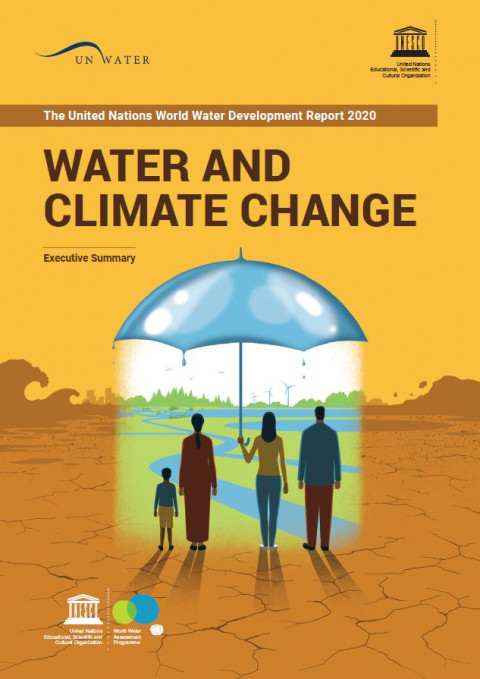 [Summary] The United Nations World Water Development Report 2020: Water and Climate Change; Executive Summary Year of publication: 2020 Corporate author: UNESCO World Water Assessment Programme (WWAP) The 2020 edition of the United Nations World Water Development Report (WWDR) addresses the critical linkages between water and climate change in the context of the broader sustainable development agenda. The report is not meant to be a purely technical examination of the impacts of climate change on the hydrological cycle. Rather, the report focuses on the challenges, opportunities and potential responses to climate change – in terms of adaptation, mitigation and improved resilience – that can be addressed through improving how water resources are management and used, while providing water supply and sanitation services for all in a sustainable manner. In doing so, the report tackles two of the most critical crises the world will continue facing over the next several decades: Water (in)security and climate change. [Résumé] Rapport mondial des Nations Unies sur la mise en valeur des ressources en eau 2020: l'eau et les changements climatiques; résumé Year of publication: 2020 Corporate author: UNESCO World Water Assessment Programme (WWAP) L’édition 2020 du Rapport mondial sur la mise en valeur des ressources en eau (WWDR) montre les liens essentiels entre l’eau et les changements climatiques dans le cadre plus large du programme de développement durable. Le rapport n’est pas un examen purement technique des effets des changements climatiques sur le cycle de l’eau. Il s’agit plutôt d’énoncer les difficultés, les possibilités et les réponses potentielles aux changements climatiques – adaptation, atténuation et résilience renforcée – pouvant être abordées en améliorant la gestion et l’utilisation des ressources en eau et en offrant des services d’approvisionnement en eau et d’assainissement pour tous et de manière durable. Ce faisant, le rapport s’adresse à deux des plus graves crises que le monde continuera de subir au cours des prochaines décennies : la sécurité (ou insécurité) de l’eau et les changements climatiques. [Резюме] Всемирный доклад Организации Объединенных Наций о состоянии водных ресурсов, 2020 г.: водные ресурсы и изменение климата, Рабочее резюме Year of publication: 2020 Corporate author: UNESCO World Water Assessment Programme (WWAP) В Докладе Организации Объединенных Наций о состоянии водных ресурсов мира (WWDR) за 2020 год рассматриваются критически важные связи между водными ресурсами и изменением климата в контексте более широкой повестки дня в области устойчивого развития. Отчет не предназначен для чисто технического изучения воздействия изменения климата на гидрологический цикл. Скорее, в докладе основное внимание уделяется проблемам, возможностям и потенциальным ответным мерам на изменение климата — с точки зрения адаптации, смягчения последствий и повышения устойчивости, — которые можно решить путем улучшения управления и использования водных ресурсов при обеспечении услуг водоснабжения и санитарии для всех. устойчивым образом. При этом в отчете рассматриваются два наиболее серьезных кризиса, с которыми мир будет сталкиваться в течение следующих нескольких десятилетий: водная (не)безопасность и изменение климата.
  Envision 4.7: Bridge 47 Global Event; Helsinki, Finland 5–7 November 2019: Report Year of publication: 2019 Corporate author: Bridge 47 | Frinland. Ministry of Education and Culture | Finland. Ministry for Foreign Affairs Global event Envision 4.7 was held in Helsinki in November 2019. The event brought around 200 people together to discuss ways to take the SDG Target 4.7 forward. In this report you can find summaries of all the speeches, panel discussions, workshops and working groups that were held at the event, together with a summary of discussions around all the different topics. You can also find pictures and drawings from the event at the report.
  2023 평생학습, 교육의 미래 콘퍼런스 자료집 Year of publication: 2023 Corporate author: 국가평생교육진흥원 교육부가 주최하고 국가평생교육진흥원에서 주관하여 2023. 9.18(월)~9. 19(화) 제주한라대학교 컨벤션센터에서 개최되었던 2023 평생학습, 교육의 미래 콘퍼런스의 자료집으로 국가평생교육진흥원 홈페이지 자료실(https://www.nile.or.kr/)에서 다운로드하실 수 있습니다.
  Ensuring Well-Being through Social-Emotional Learning in the Digital World Year of publication: 2023 Corporate author: Mahatma Gandhi Institute of Education for Peace and Sustainable Development (MGIEP) This document aims to identify the important elements addressed during the various TAGe discussions (social media discussion and live event) in addition to offering key recommendations for decision-makers. Concretely, this document has sought to highlight two social and emotional challenges faced today by youth, with a third issue present in each of them –(1) educational and employment disparities (economic exclusion),(2) poor civic engagement, and(3) the impact of the digital divide and misuse of social media platforms– in addition to showing how SEL competencies can be a tool to address the social and emotional challenges that may be encountered, supported by technological tools.
 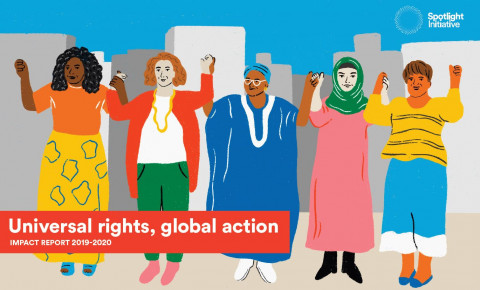 Universal Rights, Global Action: Impact Report 2019-2020 Year of publication: 2020 Corporate author: Spotlight Initiative Universal rights, global action is a shortened, visual adaptation of the 2019 Global Annual Narrative Progress Report. The Spotlight Initiative is a global, multi-year partnership between the European Union and the United Nations to eliminate all forms of violence against women and girls by 2030. This report outlines the Spotlight Initiative’s key signature results from 2019.The 32-page document highlights the ways the Spotlight Initiative country and regional programmes have meaningfully reached women and girls, including those facing multiple and intersecting forms of discrimination.
  Gender Violence in Childhood and Adolescence: Challenges and Realities Year of publication: 2022 Corporate author: Red Papaz In this space, the guests talk about the challenges that girls face in their daily lives and how the school and the family together can build strategies to respond to them. In addition, they will invite us to reflect on the important role of boys and men in the consolidation of protective environments free of gender-based violence. Las violencias de género en la infancia y la adolescencia: retos y realidades Year of publication: 2022 Corporate author: Red Papaz En este espacio los invitados conversan sobre los retos a los que se enfrentan las niñas en sus cotidianidades y cómo la escuela y la familia en conjunto pueden construir estrategias para responder ante ellos. Además, nos invitarán a reflexionar sobre el papel importante de los niños y hombres para la consolidación de entornos protectores libres de violencias de género.
  Education, Identity and Rising Extremism: From Preventing Violent Extremism to Promoting Peace, Resilience, Equal Rights and Pluralism (PREP) Year of publication: 2017 Author: Sanam Anderlini Corporate author: International Civil Society Action Network In November 2016, during ICAN’s fifth annual Women, Peace and Security forum, members of the Women’s Alliance for Security Leadership (WASL) and other women-led organizations in over 30 countries analyzed the role of formal and informal education in contributing to enabling conditions and mitigating extremist violence. They also highlighted their own practical experiences and lessons learnt in providing education to prevent violent extremism by fostering peace, resilience, equal rights and pluralism (PREP) in formal and informal spaces, including through the teachings of alternative religious narratives. Their experiences, combined with desk research on the state of current policy and practice, and the first multi-stakeholder Global Solutions Exchange (GSX) meeting on the nexus of education, gender and extremism held at the UNESCO headquarters in Paris in March 2017, inform the findings of this report.