
Resources
Explore a wide range of valuable resources on GCED to deepen your understanding and enhance your research, advocacy, teaching, and learning.
3,376 Results found
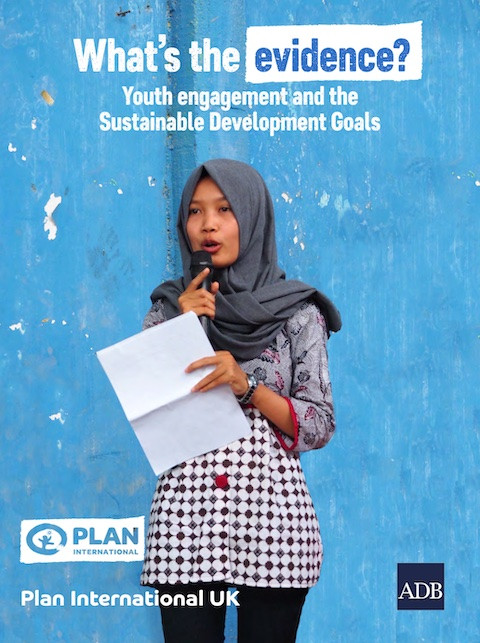 What’s the Evidence?: Youth Engagement and the Sustainable Development Goals Year of publication: 2018 Corporate author: Asian Development Bank (ADB) | Plan International UK This study represents an encouraging body of evidence, both primary and secondary, which will inform future practice and policymaking with regard to young women and men’s contributions towards the Sustainable Development Goals (SDGs). The learnings from this study provide important insight that will support the design and implementation of youth programming. It examines five programs across three youth-focused or youth-led organisations: Plan International UK, the Asian Development Bank (ADB), and AIESEC.
 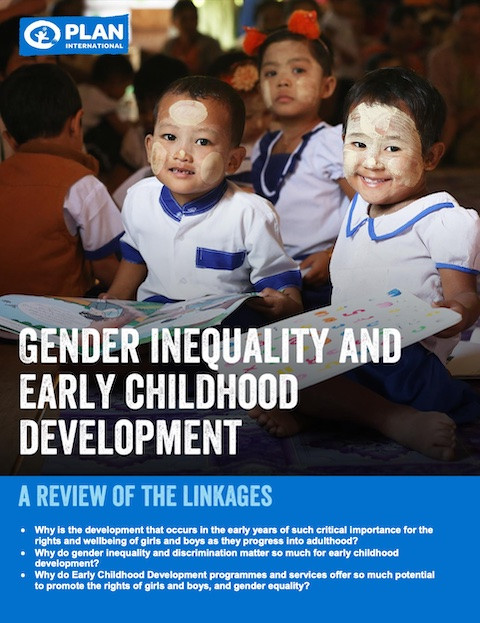 Gender Inequality and Early Childhood Development: A Review of the Linkages Year of publication: 2017 Corporate author: Plan International This paper aims to respond to the fact that Early Childhood Development initiatives and programmes, both internal and external, often appear to give limited attention to gender inequality and discrimination. Furthermore, initiatives to promote girls’ rights and gender equality often pay little attention to early childhood, instead focusing on older girls and adolescents.
 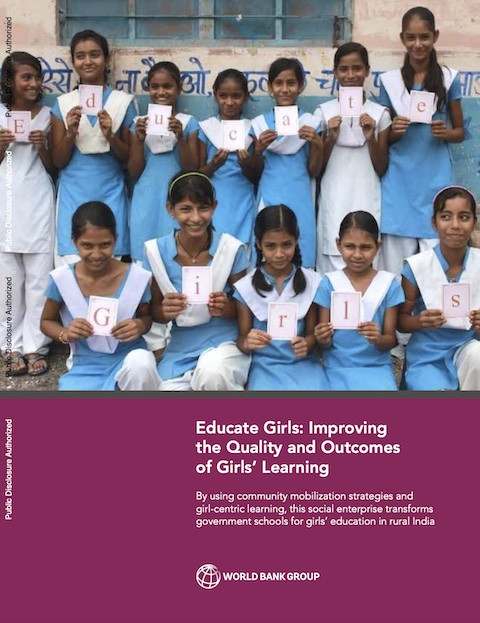 Educate Girls: Improving the Quality and Outcomes of Girls’ Learning Year of publication: 2017 Corporate author: World Bank In India, women and girls, especially in rural areas, are particularly affected by the country’s illiteracy problem, since they face discrimination based on their sex and need for childbearing. In Rajasthan, the north- western Indian state that borders Pakistan, 9 out of 26 districts have the worst gender gap in India for girls’ education.Established in 2007, Educate Girls is holistically tackling issues at the root cause of gender inequality in India’s education system that has helped to ensure over 90% enrollment and significantly higher attendance for all girls as well as improved school infrastructure, quality of education and learning outcomes for all children.As a result of Educate Girls’ efforts to date, an army of “girls champions” has been created to combat cultural issues and support systemic change. More than 150,000 out-of-school girls have been enrolled in school and the program has benefitted around 3.8 million of beneficiaries. Continuing to address the social and cultural barriers in girls’ education can bring about real transformation, such as improvement in health, income levels, and overall livelihoods in rural populations.
  Secondary Education and Skills Year of publication: 2020 Corporate author: Generation Unlimited | Global Initiative on Decent Jobs for Youth All young people need access to quality education and learning that would help them develop the skills, knowledge, attitudes and values they need to find and retain productive work, to make informed decisions, and to positively engage in their communities. However, millions of young people remain out of school or do not have access to quality learning opportunities. The COVID-19 pandemic and the resulting economic downturn have made the challenges facing young people even more pressing, as shrinking labour markets leave low-skilled young people with fewer choices, and render them more vulnerable to exploitation.There is a need for a radical re-think of what works, seeking a radical improvement in traditional curricula, the number of trained professional teachers, student–teacher ratios, and the teaching methods and strict school timetables that have become less relevant to the current needs of young people.The aim of this guide is to support the Generation Unlimited strategic priorities, and to inform policy makers and social partners, so as to guide action on investment, policy change and delivery, increasing the likelihood of successful outcomes and decent jobs for young people.
  Positioning ICT in Education to Achieve the Education 2030 Agenda in Asia and the Pacific: Recommendations for a Regional Strategy Year of publication: 2018 Author: Hyojeong So | Kyungsim Yeon | Kyungsim Yeon | Jian Xi Teng Corporate author: UNESCO Bangkok This regional study is an important document for Asia-Pacific Member States as it consolidates data related to the effective use of ICT in education. One highlight of this study is the five priority areas for the use of ICT towards achieving SDG4 and Education 2030 that were identified based on a synthesis of the data:ICT for transforming and expanding TVET and higher education ICT for improving teacher qualityICT for improving access to and quality of secondary education ICT for enabling inclusive and equitable learningICT for monitoring and evaluation
 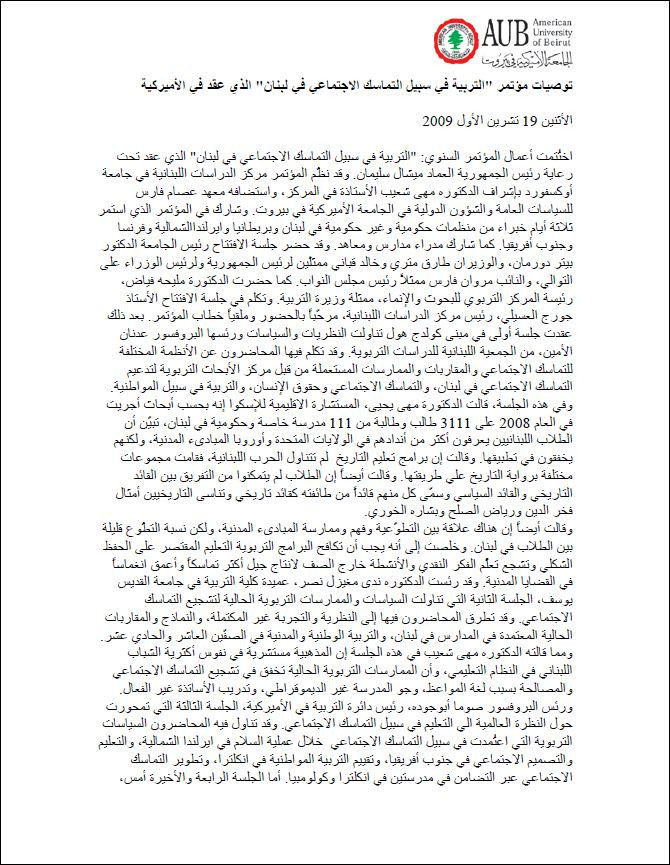 توصيات مؤتمر " التربية في سبيل التماسك الاجتماعي في لبنان " Year of publication: 2009 Corporate author: American University of Beirut الملف عبارة عن التوصيات التي خرج بها مؤتمر "التربية والتماسك الاجتماعي في لبنان"، والذي أقيم بالجامعة الامريكية في بيروت. التوصيات تتعاطى مع تحديات التماسك الاجتماعي في لبنان باختلاف طوائفه ومكوناته العرقية. أستمر هذا المؤتمر ثلاث أيام وحضرها مجموعة من المشاركين من لبنان وخارجه. Recommendations of the Conference on "Education for Social Cohesion in Lebanon" Year of publication: 2009 Corporate author: American University of Beirut The file is a summary of the recommendations that came out of the "Education and Social Cohesion in Lebanon" conference, which was held at the American University in Beirut. The recommendations deal with the challenges of social cohesion in Lebanon with its different sects and ethnic components. This conference lasted for three days and was attended by a group of participants from Lebanon and abroad.
 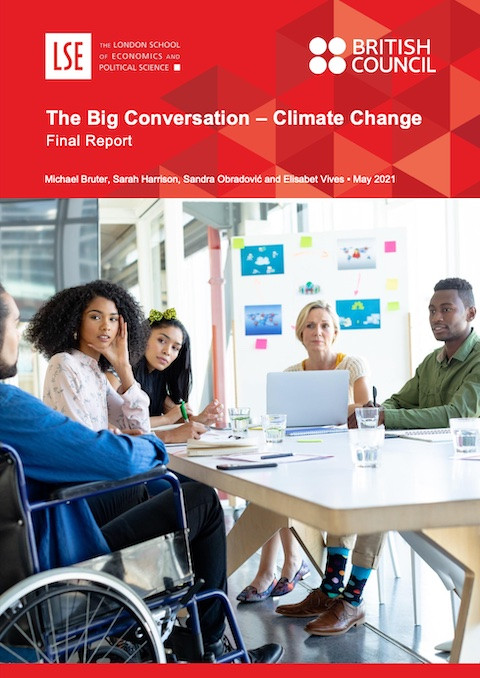 The Big Conversation: Climate Change; Final Report Year of publication: 2021 Author: Michael Bruter | Sarah Harrison | Sandra Obradović | Elisabet Vives Corporate author: British Council | London School of Economics and Political Science This research draws on experience from the field of international cultural relations as well as the latest academic research on values, behaviours and norms to understand more about how we can create the conditions for co-operation on shared global challenges.It delivers new insight on values and attitudes towards climate change among the populations of China, India, Japan and Mexico – selected to represent a diverse range of major world economies who are also important players in the global climate change debate.The research also draws on the experience of international cultural relations experts to provide new insight on how to strengthen international cooperation on climate change and the important role that cultural relations can play in supporting that.
  Gender-Responsive Education: Toolkit for Teachers, Teacher Educators, School Managers and Curriculum Developers in Africa Year of publication: 2020 Author: Dawit Mekonnen | Haregewoin Cherine Corporate author: UNESCO International Institute for Capacity-Building in Africa (IICBA) This GRE Toolkit is intended to address gender equality in education through intervention across the whole education sector. More specifically, the toolkit contributes to the enhancement of institutional capacities to develop gender responsive curricula, evaluate teaching-learning materials, organize/create gender responsive classroom interaction, eliminate stereotypes in teaching and learning materials, support improvement of the teaching methods and learning assessment techniques in schools and Teacher Training Institutes.The Toolkit is a guide for educators who plan to facilitate gender-responsive education. As such it consists of activities, tools and notes to the facilitators in addition to presenting conceptual discussions and relevant data.
 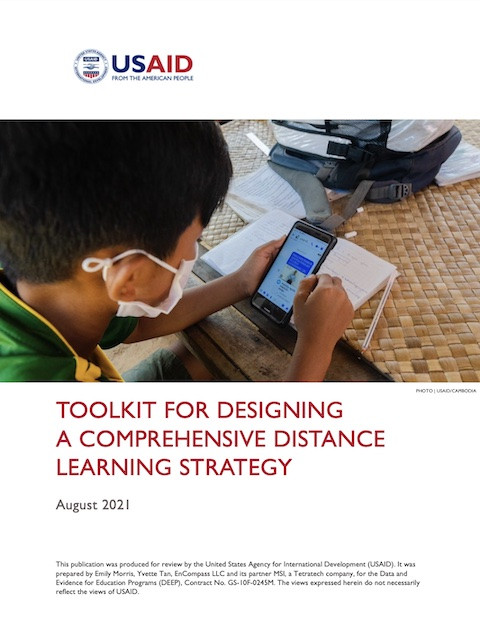 Toolkit for Designing a Comprehensive Distance Learning Strategy Year of publication: 2021 Author: Emily Morris | Yvette Tan Corporate author: United States Agency for International Development (USAID) The purpose of this toolkit is to provide practical guidance (tools, examples, and resources) for designing a comprehensive distance learning strategy that covers an entire education sector or system.