
Resources
Explore a wide range of valuable resources on GCED to deepen your understanding and enhance your research, advocacy, teaching, and learning.
884 Results found
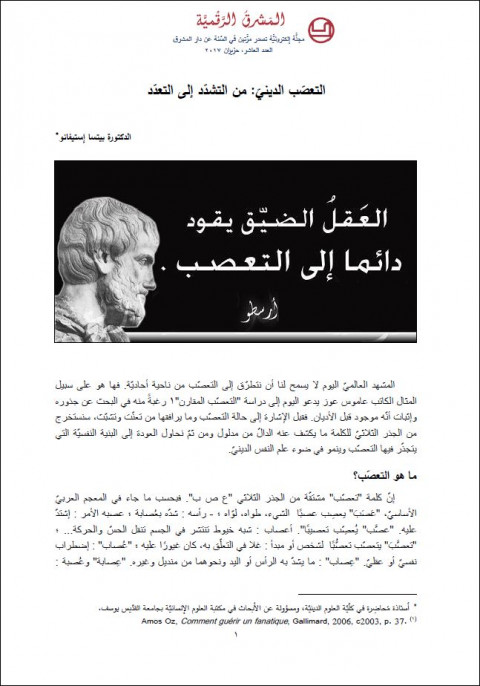 Religious Fanaticism: From Extremism to Pluralism Year of publication: 2017 Author: Pitsa Stefano Corporate author: Al-Machriq Digital Mgazine This article discusses the concept of intolerance in a modern way. The author tries to present to the reader the concept of intolerance through a comparison between pluralism and extremism.
 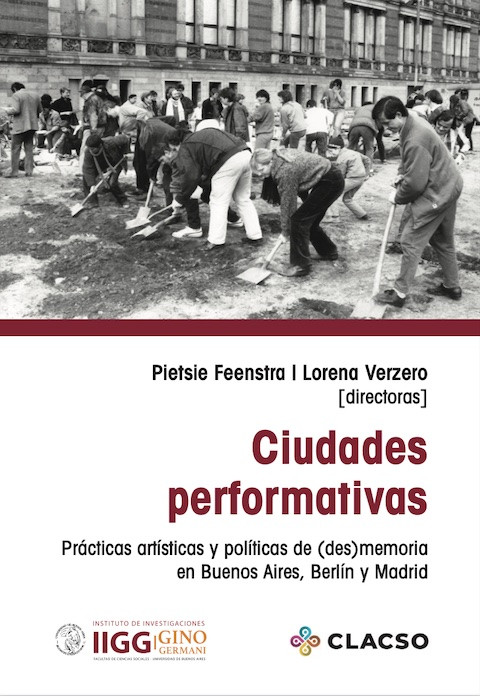 Ciudades performativas: Prácticas artísticas y políticas de (des)memoria en Buenos Aires, Berlín y Madrid Year of publication: 2021 Author: Pietsie Feenstra | Lorena Verzero Corporate author: Instituto de Investigaciones Gino Germani | Consejo Latinoamericano de Ciencias Sociales (CLACSO) En este volumen colectivo nos abocamos a la complejidad de la construcción de memorias en Argentina, Alemania y España a través de las prácticas artísticas producidas en sus ciudades capitales. Buenos Aires, Berlín y Madrid han experimentado cada una un quiebre sísmico en el siglo XX: la última dictadura cívico-militar en Argentina (1976-1983), el franquismo en España (1939-1975) y la división en Alemania con la construcción del muro en 1961 y su caída en 1989.Reconocidas investigadoras e investigadores de universidades de Europa y América Latina estudian las construcciones de memorias en estas ciudades a través de las prácticas culturales y artísticas (cine, teatro, literatura, arte contemporáneo). Las múltiples dimensiones de estas ciudades en sus relaciones con el arte y las memorias nos han llevado a definir el concepto de “ciudad performativa”, que cada capítulo indaga desde una perspectiva específica
  Feminisms of Abya Yala Ideas and Proposals of the Women Of 607 Peoples In Our America Year of publication: 2013 Author: Francesca Gargallo Calentani Compilation of dialogues between women from various Guatemalan native peoples. Exposes here the strength of indigenous women who have suffered physical and emotional violence who speak of repression and genocide. Stories that allow us to process the ancestral pains of the Ixiles of the Mayan peoples of Guatemala. It refers us to whitewashed feminism and the difficulties it represents to listen to these women because of their vision drawn by the culture, which does not listen to their demands and does not know their history of struggle and the validity of their ideas. It evidences the importance of getting off the place of power conferred by the university, the institutionalized power and the political norms of the nation in order to establish a genuine dialogue. Feminismos de Abya Yala ideas y proposiciones de las mujeres de 607 pueblos en nuestra América Year of publication: 2013 Author: Francesca Gargallo Calentani Recopilación de dialogos entre mujeres de diversos pueblos originarios guatemaltecos. Expone aquí la fuerza de las mujeres indigenas que han sufrido violencia fisica y emocional quienes hablan de represión y genocidio. Relatos que permiten procesar los dolores ancestrales de las Ixiles de los pueblos mayas de Guatemala. Nos remite al feminismo blanquizado y las dificultades que representa para escuchar a estas mujere por su visión trazada por la cultura,que no escucha sus demandas y no concoe su historia de lucha y la validez de sus ideas. Evidencia la importancia de bajarse del lugar de poder que confiere la universidad, el poder institucionaizado y las normas políticas de la nación para poder entablar un dialogo genuino.
  School Online Safety - Self review tool Year of publication: 2016 Corporate author: South West Grid for Learning Trust (SWGfL) The Self Review Tool is intended to help schools to review their current online safety policy and practice. It provides management information and stimulus that can influence the production or review of online safety policies and develop good practice and process for identifying strengths and weaknesses. It also focuses on opportunities for commitment and involvement from the whole school as well as a continuum for schools to discuss how they might move from a basic level provision for online safety to practice that is aspirational and innovative. School Online Safety - Self review tool Year of publication: 2016 Corporate author: South West Grid for Learning Trust (SWGfL) Le Self Review Tool a pour objectif d'aider les écoles à réviser leurs politiques de sécurité en ligne et leurs pratiques actuelles. Cet outil contient des informations et des conseils de gestion qui peuvent influer sur la production ou la révision des politiques de sécurité en ligne et sur le développement de bonnes pratiques et processus permettant d’identifier les points forts et les faiblesses de ces systèmes. Il étudie également les possibilités d’engagement et d’implication pour l’ensemble de l’école, et la mise en place d’un espace de discussion en vue de passer d’une politique basique à des pratiques ambitieuses et innovantes.
 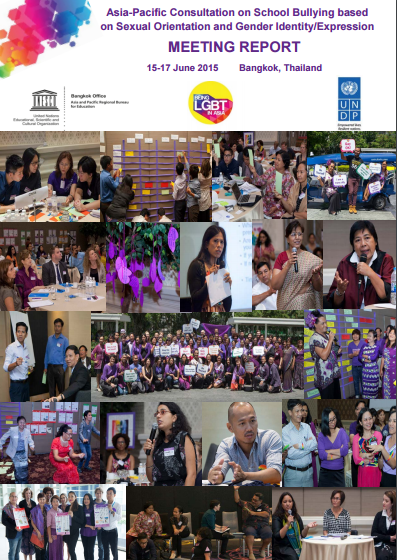 Asia-Pacific Consultation on School Bullying Based on Sexual Orientation and Gender Identity/Expression Year of publication: 2015 Corporate author: UNESCO Bangkok This report documents the presentations and discussions made during the Asia-Pacific Consultation on School Bullying based on Sexual Orientation and Gender Identity/Expression held from 15-17 June 2015 at the Pullman King Power Hotel in Bangkok, Thailand.
 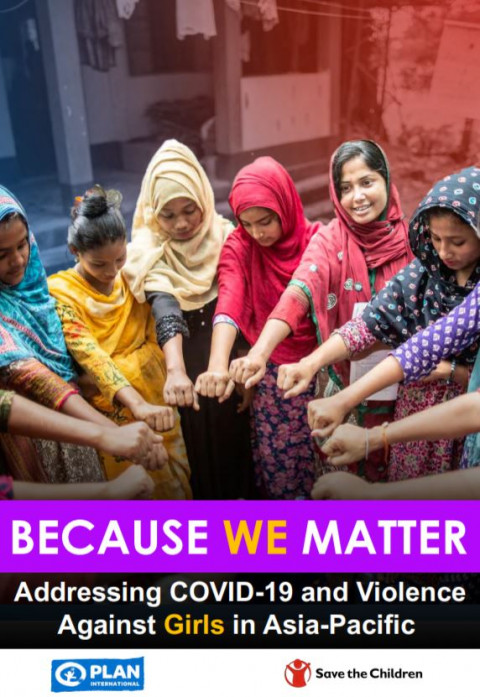 Because We Matter: Addressing COVID-19 and Violence Against Girls in Asia-Pacific Year of publication: 2020 Corporate author: Save the Children | Plan International This thematic policy brief aims to seek and secure commitment from regional and national leaders to urgently prioritize and invest consistently in the protection of girls, who are disproportionately exposed to multitude forms of violence and their devastating consequences. It provides evidence and raises concerns of girls’ vulnerability to combined and complex risks that are further intensified by the COVID-19 pandemic.This brief is primarily intended for regional policy-makers and duty-bearers responsible for regulating, planning and resourcing protection of There is no definition of what it means to be a girl. It offers a set of recommendations to guide policy and investments across the Asia Pacific region to ensure gender-responsive, effective and well-resourced measures to protect all children, and particularly girls.
 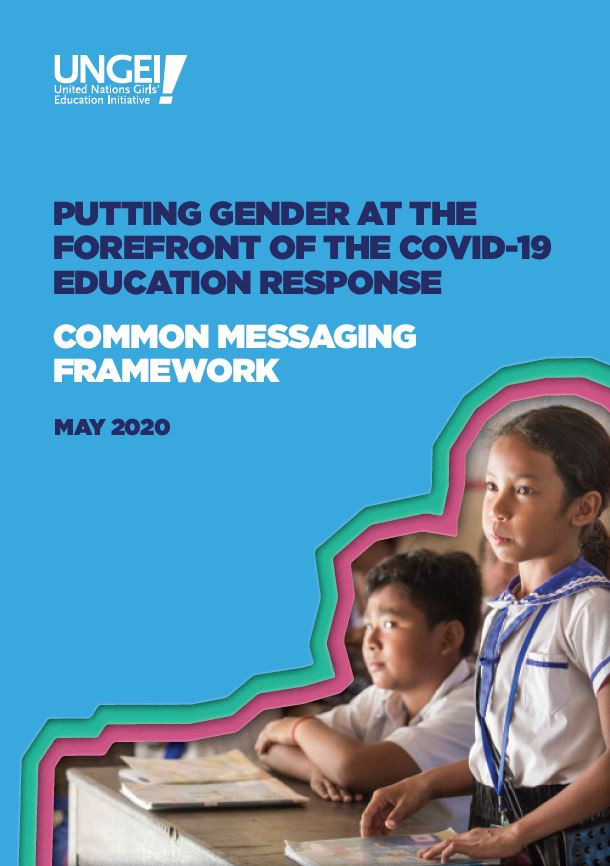 Putting Gender at the Forefront of the COVID-19 Education Response: Common Messaging Framework Year of publication: 2020 Corporate author: United Nations Girls' Education Initiative (UNGEI) Nationwide school closures as part of measures to prevent the spread of COVID-19 have disrupted the education of an entire generation of children and youth. Previous health emergencies demonstrate that girls are disproportionately affected, with the effects of gender inequality and unequal power structures exacerbated in times of crisis. This Common Messaging Framework, developed with UNGEI partner and ally organisations, can be used as an advocacy tool to leverage the power of collective action to position gender at the forefront of the COVID-19 response and enhance coherence in advocacy and communications efforts. Mettre le genre au premier plan de la réponse éducative au COVID-19: Cadre de messagerie commun Year of publication: 2020 Corporate author: United Nations Girls' Education Initiative (UNGEI) Les fermetures d’écoles à l’échelle nationale dans le cadre des mesures visant à prévenir la propagation du COVID-19 ont perturbé l’éducation de toute une génération d’enfants et de jeunes. Les urgences sanitaires antérieures démontrent que les filles sont touchées de manière disproportionnée, les effets de l’inégalité entre les sexes et des structures de pouvoir inégales étant exacerbés en temps de crise.En tant que partenariat mondial dédié à la promotion de l’égalité des sexes dans et à travers l’éducation, nous devons tirer parti de la puissance de l’action collective pour placer le genre au premier plan de la réponse COVID-19 et renforcer la cohérence dans le plaidoyer et la communication entre les organisations partenaires et alliées.Cette initiative de messagerie commune représente une opportunité stratégique pour favoriser le dialogue et attirer l’attention sur les impacts sexospécifiques de COVID-19, plaider en faveur de stratégies pour répondre aux dimensions sexospécifiques de cette crise et envisager la réouverture en toute sécurité des écoles à travers une perspective sexospécifique.