
Resources
Explore a wide range of valuable resources on GCED to deepen your understanding and enhance your research, advocacy, teaching, and learning.
1,180 Results found
 코로나19 대응: 한국의 온라인개학 - 미래교육을 위한 도전 Year of publication: 2020 Corporate author: Korea R. Ministry of Education 대한민국 교육부가 한국의 온라인 개학을 통한 교육분야의 코로나19 대응을 해외에 소개하고 경험을 공유하기 위해 발간한 자료로 원격교육과 온라인 교육의 사례와 미래교육이 당면한 도전과제에 대해서 다루고 있다. 코로나19는 세계가 함께 극복해 나가야 할 공동 과제로서 모든 국가가 상호 연대와 협력을 통해 난관을 극복하고 도약할 수 있을 것이라고 전망한다.
 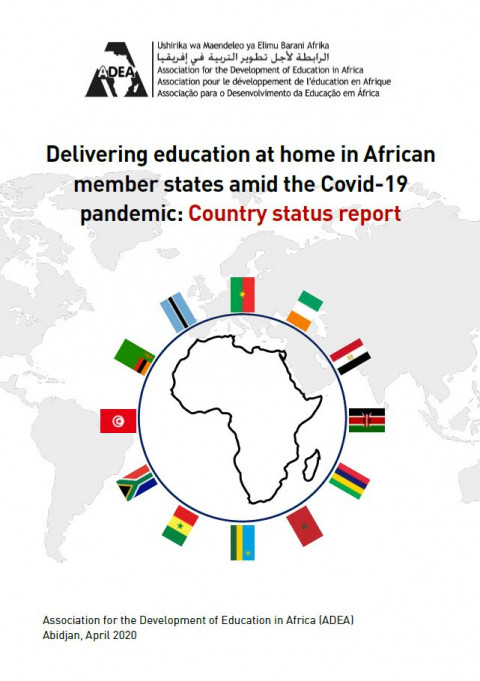 Assurer l’éducation à domicile dans les États membres africains dans le contexte de la pandémie de COVID-19 : rapport sur la situation dans les pays Year of publication: 2020 Corporate author: Association for the Development of Education in Africa (ADEA) Depuis son émergence à la fin de 2019, la maladie à coronavirus 2019 (COVID-19) est devenue une pandémie, affectant fortement la vie de milliards de personnes à travers le monde, avec un impact énorme prévu sur l'économie mondiale et l'Afrique en particulier. L'éducation est l'un des secteurs les plus touchés, la fermeture des établissements d'enseignement dans de nombreux pays africains risquant d'affecter négativement la qualité de l'éducation.Afin d'obtenir une vision plus claire de l'état de l'apprentissage au cours de cette période et de mieux soutenir les pays dans l'immédiat, à court et à long terme, l'ADEA a engagé en mars 2020 certains des pays africains les plus touchés pour schématiser la situation nationale du secteur de l'éducation. Ce qui précède est un résumé des commentaires reçus par l'Afrique du Sud, le Burkina Faso, la Côte d'Ivoire, l'Égypte, le Ghana, le Kenya, l’île Maurice, le Maroc, le Rwanda, le Sénégal, la Tunisie et la Zambie en termes de stratégies nationales, de plateformes, d'outils ou d'applications d’apprentissage, de lacunes et défis, d’engagement des partenaires, de bonnes pratiques et d’enseignements tirés avec quelques recommandations.
  Bank of Actions for Global Citizens Year of publication: 2020 Corporate author: Global Citizens Award The Bank of Actions guide can be used by anyone looking for creative inspiration to take action as global citizens. It is designed as a toolkit for engaging the public in global justice issues in meaningful ways that can help bring about positive change in our world.The Bank of Actions has been designed in the context of returned international volunteers participating in the Global Citizen Award programme.
  유럽 개발교육 혁신공모전 수상작 모음집 Year of publication: 2019 Corporate author: KOICA ODA 교육원 GENE(유럽 개발교육 네트워크)은 개발교육 혁신공모전을 통해 개발교육 혁신 사례를 시상하고 널리 알린다. 본 공모전은 긍정적 변화를 촉진하고 사람들이 자신이 사는 지역은 물론 전 세계가 마주한 현실에 눈과 마음을 열게 만드는 개발교육 프로젝트를 시상한다. 개발교육 혁신공모전은 창의성, 참여, 실천, 시너지, 혁신을 통해 변화를 현실화하는 개발교육, 궁극적으로 공공정책에 영향을 줄 수 있는 개발교육을 장려한다.2017년과 2018년의 개발교육 혁신공모전은 해당 연도 기준으로 진행 중이거나 막 끝난 유럽 내 개발교육 프로젝트들을 집중 조명한다. 본 공모전에는 혁신의 모범 사례이면서 그 과정에서 얻은 교훈을 유럽 전역의 정책결정자들에게 전파할 수 있는 이니셔티브들이 선정되었다.GENE은 개발교육 혁신공모전을 통해 유럽의 개발교육 프로그램들로부터 교훈과 반성의 기회를 얻는 데 기여하고자 한다. 다양한 접근법과 배경을 고려해 선정된 이니셔티브들이 개발교육의 기금 후원자 및 정책 개발자들에게 새로운 사고, 창의성, 영감의 기회가 되기를 희망한다. Delivering Education at Home in African Member States Amid the Covid-19 Pandemic: Country Status Report Year of publication: 2020 Corporate author: Association for the Development of Education in Africa (ADEA) Since its emergence in late 2019, the coronavirus disease 2019 (COVID-19) has evolved into a pandemic, heavily affecting the lives of billions of people across the world with an anticipated huge impact on the global economy and Africa in particular. Education is one of the sectors heavily affected, with the closure of learning institutions in many African countries likely to negatively affect the education quality.In order to obtain a clearer view of the status of learning during this period, and to better support countries in the immediate, short and long term, ADEA engaged some of the most affected African countries in March 2020 to map the national situation in the education sector. The foregoing is a synopsis of the feedback from Burkina Faso, Côte d’Ivoire, Egypt, Ghana, Kenya, Mauritius, Morocco, Rwanda, Senegal, South Africa, Tunisia, and Zambia in terms of national strategies, platforms and tools or applications, gaps and challenges, partner engagement, good practices and lessons learnt with some recommendations.
 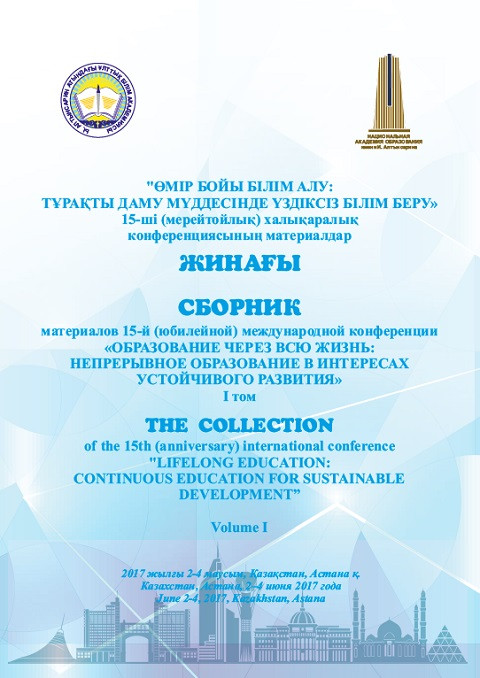 Lifelong Education: Continuous Education for Sustainable Development; The Collection of the 15th International Conference Year of publication: 2017 Corporate author: National Academy for Education (NAE) This edition of the proceedings of international cooperation presents the reports of the participants of the first stage of the 15th (anniversary) international conference “Education Throughout Life: Continuing Education for Sustainable Development”, which was held in Astana, Republic of Kazakhstan. The conference participants focused on the issues of training competent specialists, models, methods, technologies and organizational forms of continuing education used in pedagogical practice. The authors paid special attention to new pedagogical and organizational strategies for continuing education of adults, people with disabilities and the "third age", as well as spiritual, moral, ethical and democratic values in the context of upbringing in continuing education. Образование через всю жизнь: непрерывное образование в интересах устойчивого развития; Сборник материалов 15-й международной конференции Year of publication: 2017 Corporate author: National Academy for Education (NAE) В настоящем выпуске трудов международного сотрудничества представлены доклады участников первого этапа 15-й (юбилейной) международной конференции «Образование через всю жизнь: Непрерывное образование в интересах устойчивого развития», которая проходила в Астане, Республика Казахстан. В центре внимания участников конференции были вопросы подготовки компетентных специалистов, применяемые в педагогической практике модели, методики, технологии и организационные формы непрерывного образования. Особое внимание авторы уделили новым педагогическим и организационным стратегиям непрерывного образования взрослых, людей с ограниченными возможностями и «третьего возраста», а также вопросам духовно-нравственных, этических и демократических ценностей в контексте воспитания в непрерывном образовании.
 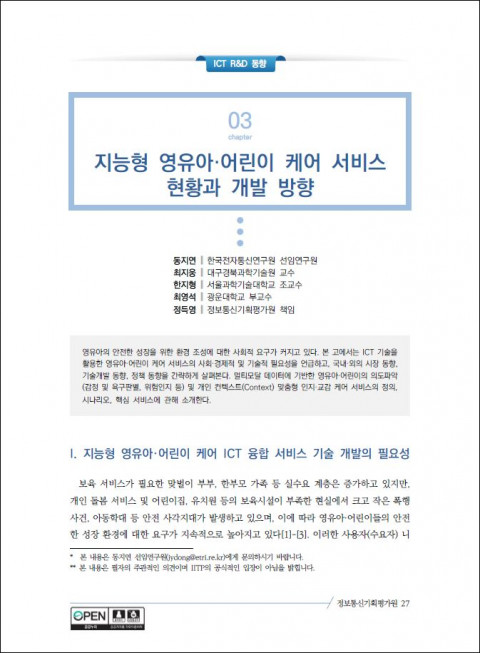 지능형 영유아·어린이 케어 서비스 현황과 개발 방향 Year of publication: 2019 Author: 동지연 | 최지웅 | 한지형 | 최영석 | 정득명 Corporate author: 정보통신기획평가원 영유아의 안전한 성장을 위한 환경 조성에 대한 사회적 요구가 커지고 있다. 본 고에서는 ICT 기술을 활용한 영유아·어린이 케어 서비스의 사회·경제적 및 기술적 필요성을 언급하고, 국내·외의 시장 동향, 기술개발 동향, 정책 동향을 간략하게 살펴본다. 멀티모달 데이터에 기반한 영유아·어린이의 의도파악 (감정 및 욕구판별, 위험인지 등) 및 개인 컨텍스트(Context) 맞춤형 인지·교감 케어 서비스의 정의, 시나리오, 핵심 서비스에 관해 소개한다.
 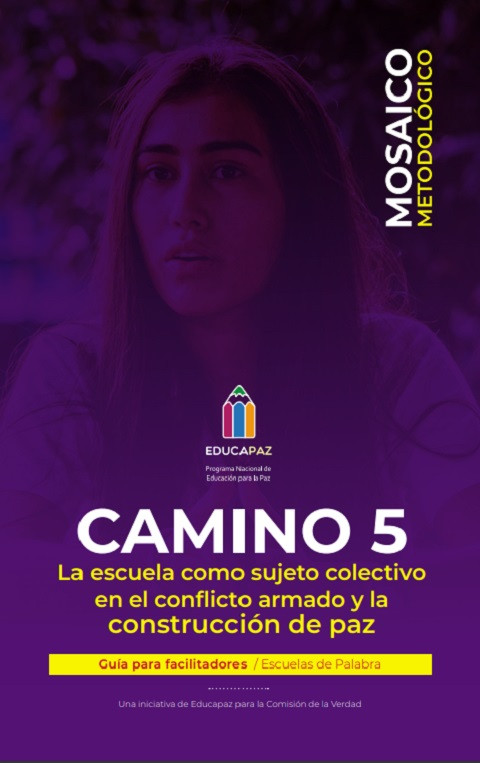 Mosaico Metodológico: Camino 5; La escuela como sujeto colectivo en el conflicto armado y la construcción de paz Year of publication: 2019 Corporate author: EDUCAPAZ Esta publicación recoje el trabajo desarrollado por el Programa Nacional de Educación para la Paz EDUCAPAZ y a Comisión de la Verdad en Colombia, para el trabajo pedagógico en escuelas que quieran reflexionar sobre el valor de la verdad en la reconstrucción de la memoria, el perdón y la reconciliación. Este módulo explora la relación de la escuela con el conflicto armado.
  Fostering national and global citizenship: an example from South Africa (Social Studies and the Young Learner, vol 21, no. 1, september/october 2008) Year of publication: 2008 Author: Omiunota Nelly Ukpokodu Corporate author: National Council for the Social Studies Multicultural and global scholars urge that we prepare the young for national and global democratic citizenship given the increasing interdependence and challenging realities for today. Young people desire to be a part of the solution to global problems, but they must be educated about what those problems are and how solutions can be arrived at. As has been seen in the U.S. presidential campaign, young people care about their communities, country, and planet, and they are volunteering and voting at record rates. We must take responsibility to plant the seeds of critical citizenship if we are to foster a more sustainable, peaceful, just, and prosperous world. Educator Sheldon Berman sums it up by writing: It is important for teachers to tell young people about the success stories of others, students who have reclaimed forests, cleaned up rivers, improved their school environment, helped the homeless. They need to hear about the Mother Teresas and the Martin Luther Kings, of course, but also about the people who live down the street who are doing what they can to improve the neighbourhood and about the many organizations that make a difference in our communities. We must put students in touch with these people and organizations so that they can see how deeply people care about their world and how worthwhile it is to participate in creating change.