
Resources
Explore a wide range of valuable resources on GCED to deepen your understanding and enhance your research, advocacy, teaching, and learning.
1,407 Results found
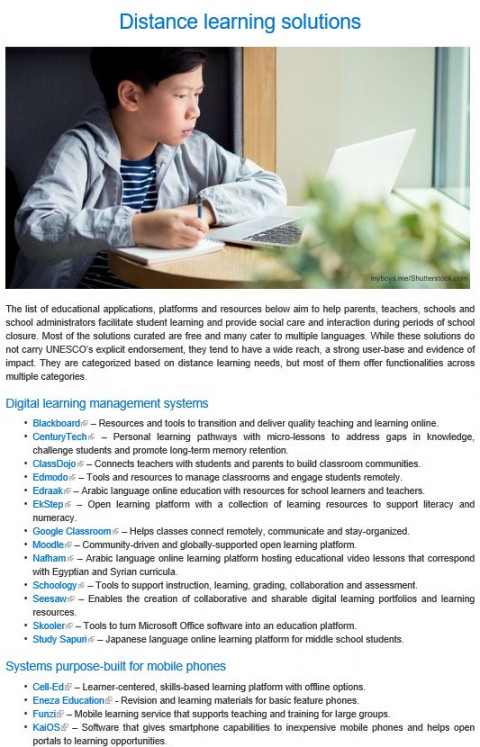 Solutions d’apprentissage à distance Year of publication: 2020 Corporate author: Organisation des Nations Unies pour l'éducation, la science et la culture (UNESCO) La liste d’applications et de plates-formes éducatives ci-dessous vise à aider parents, enseignants, établissements et responsables pédagogiques à faciliter l’apprentissage des élèves et à assurer des interactions et des services sociaux pendant la fermeture des écoles. La plupart des solutions sont gratuites et plusieurs sont multilingues. Bien qu’elles ne soient pas explicitement soutenues par l’UNESCO, ces solutions ont généralement une large portée, de nombreux utilisateurs et une efficacité avérée. Elles sont classées par type de besoin pédagogique mais la plupart présente des fonctionnalités relevant de plusieurs catégories.
  A Guide for Gender Equality in Teacher Education Policy and Practices Year of publication: 2015 Author: María C. Arango Restrepo | Esther Corona-Vargas Corporate author: UNESCO Transforming the culture of teacher education institutions and making them gender-sensitive entities is a daunting task. However, it is not an impossible task. Understanding gender and applying gender mainstreaming are critical foundations for fostering social cohesion that goes beyond teacher education institutions and the school. Teachers are increasingly expected to play crucial roles in preparing young people to face the future with confidence, purpose, responsibility and gender sensitivity. Teacher education institutions must be ready to provide the enabling environment and training and continuing education for the development of knowledge, values, skills and gender-responsive practices that the teachers need in the 21st century.This Guide, through its ten Modules, takes the reader through step by step on how gender can be mainstreamed in all areas of teacher education and training: from policy and planning, administration and management, gender-responsive budgeting, social services, the environment, curriculum, pedagogy, research, and to advocacy. Through this Guide, teacher educators are also reminded what teachers must know and be able to do in order to promote gender equality through education. The Modules can be used individually or comprehensively depending on the situation and context of countries.This Guide is dedicated to all teacher educators, whose intellectual rigour and tireless efforts to foster enabling environments for inclusive and gender sensitive education, are indispensable for success in continuing education. Guide pour l'égalité des genres dans les politiques et les pratiques de formation des enseignants Year of publication: 2015 Author: María C. Arango Restrepo | Esther Corona-Vargas Corporate author: Organisation des Nations Unies pour l'éducation, la science et la culture (UNESCO) Transformer la culture des institutions de formation des enseignants pour en faire des entités sensibles aux genres est une tâche ardue. Cependant, elle n’est pas impossible. Comprendre les problématiques liées aux genres et savoir comment appliquer l’égalité des sexes se révèlent être des aspects essentiels afin de favoriser une cohésion sociale allant au-delà des institutions de formation des enseignants et de l’école. Les enseignants sont de plus en plus appelés à jouer un rôle crucial dans la préparation des jeunes à faire face à l’avenir avec confiance, décision, responsabilité et sensibilité aux notions de genre. Ainsi, les institutions de formation des enseignants doivent être prêtes à fournir un environnement favorable et une formation continue pour le renforcement des capacités, des valeurs, des compétences et des pratiques sensibles au genre dont les enseignants ont besoin au 21e siècle.À travers ses dix modules, ce guide explique comment intégrer la notion de genre dans tous les domaines de l’éducation et de la formation des enseignants : politiques et planification, gestion et administration, budgétisation sensible au genre, services sociaux, environnement, programmes, pédagogie, recherche et plaidoyer. Ce guide vise à rappeler également aux formateurs d’enseignants ce que ces derniers devraient savoir et être en mesure de faire afin de promouvoir l’égalité des genres à travers l’éducation. Les modules peuvent être utilisés individuellement ou dans leur totalité en fonction de la situation et du contexte des pays.Ce guide est dédié à tous les formateurs d’enseignants, dont la rigueur intellectuelle et les efforts inlassables en vue de favoriser un environnement propice à l’éducation inclusive sensible aux genres, sont indispensables à la réussite de la formation continue. Guía para la igualdad de género en las políticas y prácticas de la formación docente Year of publication: 2015 Author: María C. Arango Restrepo | Esther Corona-Vargas Corporate author: Organización de las Naciones Unidas para la Educación, la Ciencia y la Cultura (UNESCO) La Guía para la Igualdad de Género en las Políticas y Prácticas de la Formación Docente, ha sido concebida como una herramienta práctica para impulsar una cultura organizacional con perspectiva de género en los centros de formación docente. Su objetivo es fortalecer las capacidades de los formadores de docentes, directores y estudiantes de pedagogía para reconocer y modificar en sus prácticas cotidianas los elementos que alientan la desigualdad de género.Asimismo, la guía busca contribuir a una mayor comprensión conceptual de la perspectiva de género y sirve de ayuda para identificar necesidades y opciones de cambio en las políticas institucionales, planes, estrategias y prácticas, según las características particulares de cada contexto.Esta guía está estructurada en torno a algunos de los aspectos críticos de la formación docente y el desarrollo temático destaca, en cada caso, las cuestiones de género. Tiene una organización modular y los módulos pueden ser consultados individualmente para una formación específica según la necesidad o el interés particular en un determinado momento. Sin embargo, dada la interconexión entre los temas de género debe considerarse, también, una interrelación entre los diferentes módulos.
 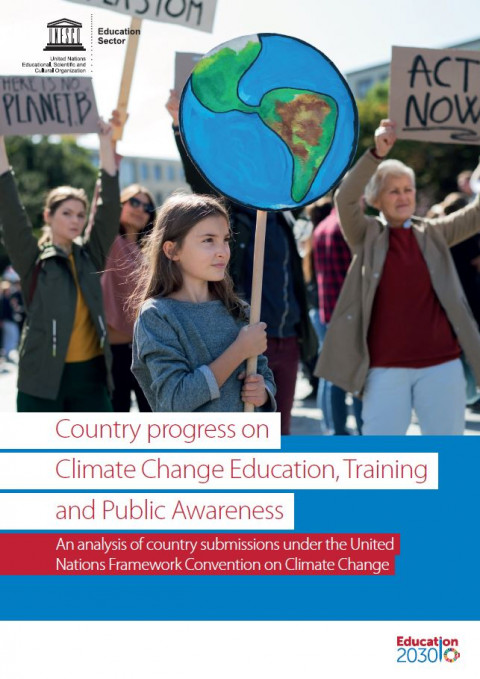 Country Progress on Climate Change Education, Training and Public Awareness: An Analysis of Country Submissions Under the United Nations Framework Convention on Climate Change Year of publication: 2019 Corporate author: UNESCO Since its entry into force, the 1992 United Nations Framework Convention on Climate Change (UNFCCC) in Article 6 has recognised the importance of ‘education, training and public awareness’ in mitigating ‘dangerous human interference with the climate system’. Article 12 of the Paris Agreement (2015) reaffirms this recognition.This document provides a status report on the implementation of climate change education in countries. It outlines key findings from an analysis of country submissions to the UNFCCC Secretariat as part of UNFCCC reporting processes and highlights achievements and remaining gaps in the area of climate change education.The analysis shows that almost all countries include some reference to climate change education in their country submissions under the UNFCCC reporting processes. This shows a certain level of commitment, which provides a good basis to further scale up educational responses to climate change. However, important gaps remain. Addressing them will be crucial in order to fully mobilize the power of education in response to this greatest challenge of our times. Progrès nationaux en matière d'éducation, de formation et de sensibilisation du public aux changements climatiques: Analyse des comptes rendus nationaux au titre de la Convention-cadre des Nations Unies sur les changements climatiques Year of publication: 2019 Corporate author: Organisation des Nations Unies pour l'éducation, la science et la culture (UNESCO) Depuis son entrée en vigueur, la Convention-cadre des Nations Unies sur les changements climatiques (CCNUCC, 1992) reconnaît, dans son article 6, l’importance de l’éducation, de la formation et de la sensibilisation du public pour atténuer toute perturbation anthropique dangereuse du système climatique. L’article 12 de l’Accord de Paris (2015) réaffirme cette prise de conscience.Le présent document dresse un état des lieux de la mise en place de l’éducation aux changements climatiques dans les pays. Il souligne les principaux résultats issusde l’analyse des comptes rendus nationaux présentés au Secrétariat de la CCNUCC dans le cadre du processus d’établissement des communications à ce titre. Il met en lumière les réalisations accomplies et les lacunes à combler dans le domaine de l’éducation aux changements climatiques.L’analyse démontre que pratiquement tous les pays mentionnent l’éducation aux changements climatiques dans leurs comptes rendus nationaux soumis dans le cadre du processus d’établissement des communications au titre de la CCNUCC. Cela démontre un certain niveau d’engagement, garantie d’une bonne base pour renforcer les actions éducatives face aux changements climatiques. Cependant, d’importantes disparités persistent. Il sera crucial de les résorber afin de mobiliser le plein potentiel de l’éducation pour affronter le plus grand défi de notre époque.
 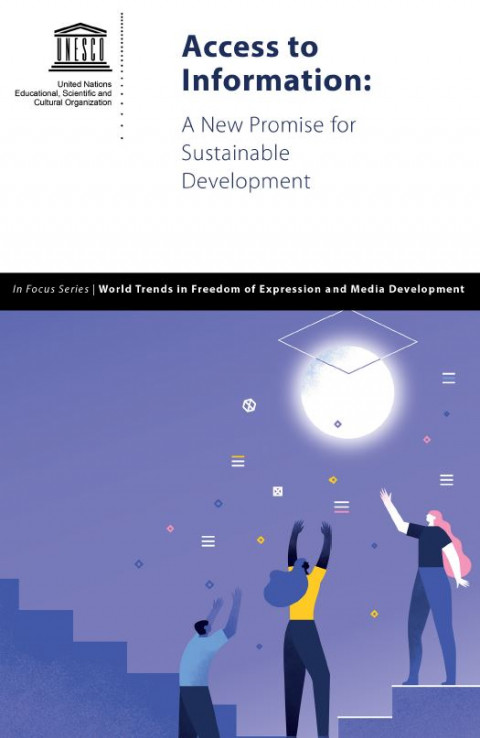 Access to Information: A New Promise for Sustainable Development Year of publication: 2019 Corporate author: UNESCO The central aim of this study is to unpack the major trends in the field of ATI laws and their implementation. In order to understand the trends, the report examines the activities of trendsetters. It focuses on awareness-raising by UNESCO, Member State recommendations in the Universal Periodic Review, the commitments of the Open Government Partnership, actions of civil society organizations, and the standard-setting activities of such regional intergovernmental organizations as the Council of Europe, the African Union and the Organization of American States.
 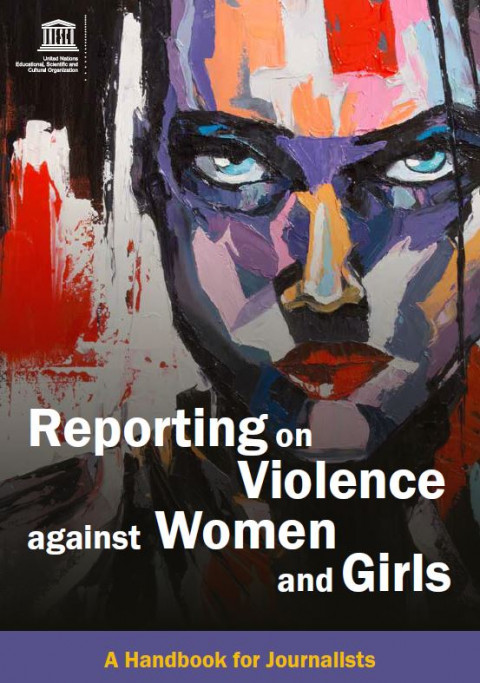 Reporting on Violence against Women and Girls: A Handbook for Journalists Year of publication: 2019 Author: Anne-Marie Impe Corporate author: UNESCO Ethical journalism is inseparable from fact-based journalism that seeks to promote gender equality in and through the media. This handbook aims to support media professionals in their coverage of the various types of violence against girls and women.It provides advice, benchmarks and resources to help journalists and reporters ensure quality media coverage that is accurate, regular, engaged and respectful of the fundamental principles of the profession.By adopting these principles, the media has the power to shed light on the extent and implications of violence against women and girls, and to inform victims about available resources for support. This can, in turn, influence public opinion and help stop violence against girls and women through collective awareness-raising of the human rights at stake. Informer sur les violences à l’égard des filles et des femmes: manuel pour les journalistes Year of publication: 2019 Author: Anne-Marie Impe Corporate author: Organisation des Nations Unies pour l'éducation, la science et la culture (UNESCO) Tout journalisme éthique est inséparable d’un journalisme basé sur les faits et qui vise à promouvoir l’égalité des genres dans et à travers les médias.Destiné aux professionnels des médias, ce manuel est conçu pour accompagner les médias dans leur traitement journalistique des divers types de violences faites aux filles et aux femmes.Il offre des conseils, des repères et des ressources afin d’aider les journalistes et reporters à assurer une couverture médiatique de qualité : précise, fréquente, engagée et respectueuse des principes fondamentaux du métier.En reprenant ces principes, les médias ont le pouvoir d’éclairer sur l’étendue de ces violences et de leurs implications, ainsi que d’informer les victimes sur les recours existants. Ainsi, ils peuvent influer sur l’opinion publique et contribuer à arrêter les violences à l’égard des filles et des femmes par le biais d’une prise de conscience collective des droits humains en péril.
 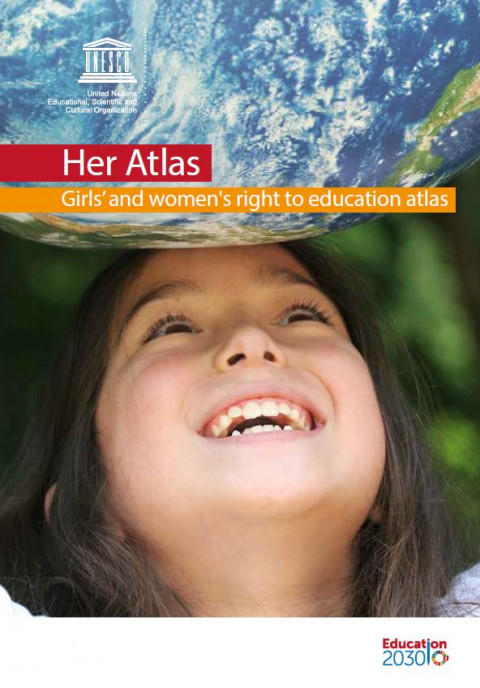 Her Atlas: Girls’ and Women's Right to Education Atlas Year of publication: 2019 Corporate author: UNESCO Her Atlas, the online atlas of girls’ and women’s right to education, is developed as part of Her education, our future, UNESCO’s initiative to accelerate action for girls’ and women’s education by leveraging political and financial commitments. Her Atlas aims to enhance public knowledge and monitor the status of national constitutions, legislation and regulations related to girls’ and women’s education rights in order to encourage countries to improve their legal and policy frameworks.