
Resources
Explore a wide range of valuable resources on GCED to deepen your understanding and enhance your research, advocacy, teaching, and learning.
661 Results found
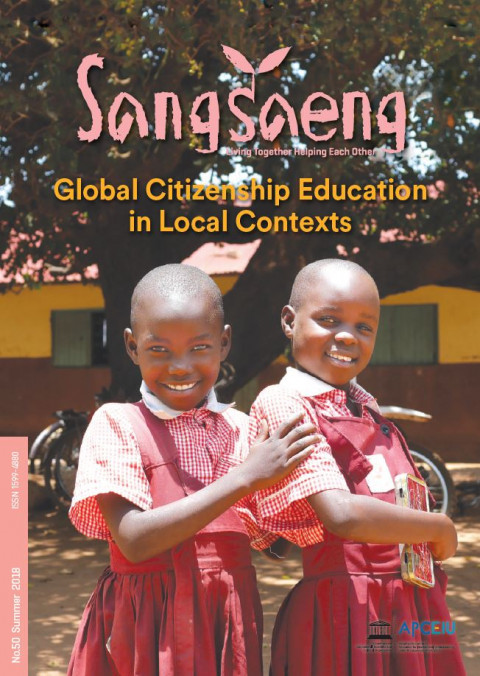 지역적 맥락 속에서의 세계시민교육 (상생 제50호 2018년 여름호) Year of publication: 2018 Corporate author: 유네스코 아시아태평양 국제이해교육원 3 발간사4 스페셜 칼럼: 학습자들의 머리와 마음을 사로잡는 교육8 포커스: 지역적 맥락 속에서 이루어지는 세계시민교육8 난관 속에서 세계시민교육을 수용하기12 교사들에게 가르치는 세계시민교육15 세계시민교육을 통해 제정된 캄보디아 역사교육과정19 미래의 지도자들의 마음 속에 평화의 방벽 쌓기 22 스페셜 리포트: 왜 학교에서 만화를 활용하는 것일까?26 모범사례26 좀비 재앙을 넘어서30 공간을 뜻깊은 배움의 장소로 탈바꿈하다34 인터뷰: 카메라 렌즈를 거쳐, 아프리카로부터 우리의 마음에게38 APCEIU에 보내는 편지 : 세계시민교육을 통해 친환경적이고, 평화롭고, 정의로운 세상으로 나아가기 40 유스 네트워크: 배우고, 주고 받고, 성장하고, 행동하는 청년들43 내 기억 속의 평화: 자기 땅에서 환영 받지 못하는 국가47 아시아-태평양 국가 지역 이해하기: 타투 : 태평양 지역에서의 여정50 교육원 활동
 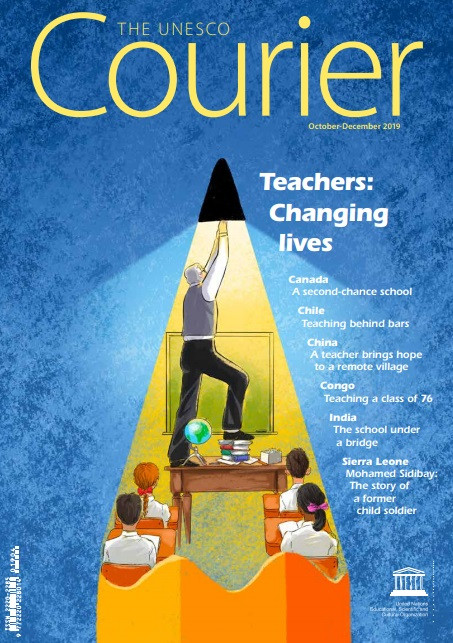 Teachers: changing lives (The UNESCO Courier no. 4, October-December 2019) Year of publication: 2019 Corporate author: UNESCO Certainly, everyone recognizes the key role teachers play. On a personal level, we can all name at least one teacher who made a difference – sometimes to such an extent that it redirected our whole lives. At the international level, the United Nations Sustainable Development Goals (SDGs), Goal 4 in particular, recognize the importance of teachers in the implementation of the Sustainable Development Agenda by 2030. Yet, the profession is being undermined. The development of cognitive neuroscience and the many applications of new technologies in the field of education are forcing the profession to adapt and reinvent itself. Ces profs qui changent le monde (Le Courrier de l'UNESCO 4, octobre-décembre 2019) Year of publication: 2019 Corporate author: UNESCO Certes, tout le monde reconnaît le rôle clé que jouent les enseignants. À titre personnel, chacun peut citer le nom d’au moins un professeur qui a compté, parfois au point de réorienter une vie entière. Sur le plan international, les Objectifs de développement durable (ODD) des Nations Unies, en particulier l’Objectif no 4, reconnaissent l’importance des enseignants dans la mise en œuvre du Programme de développement durable à l’horizon 2030. Pourtant, la profession est mise à mal. Le développement des neurosciences cognitives, les multiples applications des nouvelles technologies dans le domaine de l’éducation obligent la profession à s’adapter, se réinventer. Docentes que cambian el mundo (El Correo de la UNESCO 4, Octubre-Diciembre 2019) Year of publication: 2019 Corporate author: Organización de las Naciones Unidas para la Educación, la Ciencia y la Cultura (UNESCO) Sin duda, todo el mundo reconoce la función esencial que desempeñan los docentes. A título individual, cada uno de nosotros puede mencionar el nombre de al menos un maestro que le influyó decisivamente, a veces hasta el punto de reorientar toda su vida. En el ámbito internacional, los Objetivos de Desarrollo Sostenible (ODS) de las Naciones Unidas, en particular el ODS 4, destacan la importancia del profesorado en la consecución de la Agenda 2030 de desarrollo sostenible.Y, sin embargo, la profesión docente está en crisis. El desarrollo de la neurociencia cognitiva y las múltiples aplicaciones de las nuevas tecnologías en el sector educativo imponen al magisterio la necesidad de adaptarse, de reinventarse.
  Casebook on human dignity and human rights Year of publication: 2011 Corporate author: UNESCO Article 3 of the Declaration reads as follows:1. Human dignity, human rights and fundamental freedoms are to be fully respected.2. The interests and welfare of the individual should have priority over the sole interest of science or society
 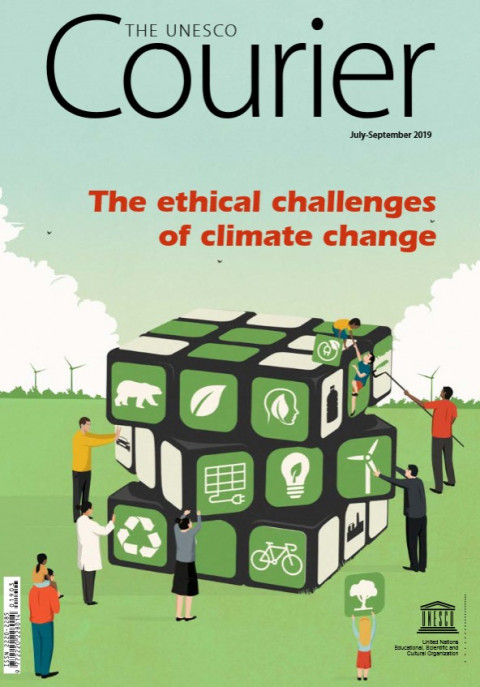 Cambio climático y desafíos éticos (El Correo de la UNESCO 3, July-September 2019) Year of publication: 2019 Corporate author: UNESCO El cambio climático no solo pone en peligro nuestros ecosistemas; también quebranta los cimientos de nuestros derechos fundamentales, agrava la desigualdad y genera nuevas injusticias. La adaptación al cambio climático y la atenuación de sus efectos no es únicamente un asunto de conocimientos científicos y voluntad política, sino que exige además una perspectiva amplia sobre una situación compleja. Con el fin de ayudar a los Estados y demás entidades pertinentes en la toma de las decisiones apropiadas y la ejecución de políticas eficaces en materia de desarrollo sostenible, adaptación al cambio climático y mitigación de sus consecuencias adversas, la UNESCO aprobó en noviembre de 2017 una Declaración de principios éticos en relación con el cambio climático.La ética determina la esencia de todo compromiso. Su capacidad de movilización permite orientar la acción, establecer arbitrajes, decidir entre intereses contradictorios y fijar prioridades. La ética facilita la articulación de la teoría con la práctica, de los principios generales con la voluntad política, y de la toma de conciencia de ámbito mundial con la aplicación de medidas a escala local. The ethical challenges of climate change (The UNESCO Courier no. 3, July-September 2019) Year of publication: 2019 Corporate author: UNESCO Climate change not only threatens our ecosystems, it undermines the foundation of our fundamental rights, deepens inequalities and creates new forms of injustice. Adapting to climate change and trying to mitigate its impacts are not just a matter of scientific knowledge and political will; they also demand a broader view of a complex situation. In order to help Member States and other stakeholders to make appropriate decisions and implement effective policies for sustainable development, adaptation to climate change and the mitigation of its negative effects, UNESCO adopted a Declaration of Ethical Principles in relation to Climate Change in November 2017.Ethics constitute the substantial core of any commitment. As a mobilizing force, ethics can steer action, facilitate arbitration, resolve conflicting interests, and establish priorities. Ethics have the capacity to connect theory with practice, general principles with political will, and global awareness with local actions. Défis climatiques, défis éthiques (Le Courrier de l'UNESCO 3, July-September 2019) Year of publication: 2019 Corporate author: UNESCO Le changement climatique ne met pas seulement en péril nos écosystèmes : il ébranle le socle de nos droits fondamentaux, il creuse les inégalités et crée de nouvelles injustices. S’adapter au changement climatique et tenter d’en atténuer les effets n’est pas seulement affaire de connaissance scientifique et de volonté politique; cela implique une vue d’ensemble sur une situation complexe. Afin d’aider les États et les autres acteurs concernés à prendre des décisions appropriées et à mener des politiques efficaces en matière de développement durable, d’adaptation au changement climatique et d’atténuation de ses effets néfastes, l’UNESCO a adopté, en novembre 2017, une Déclaration de principes éthiques en relation avec le changement climatique.L’éthique constitue le cœur substantiel de tout engagement. Grâce à sa force mobilisatrice, elle permet d’orienter l’action, de faire des arbitrages, de trancher entre des intérêts contradictoires, de fixer des priorités. L’éthique permet d’articuler la théorie et la pratique, les principes généraux et la volonté politique, la prise de conscience globale et les actions locales.
 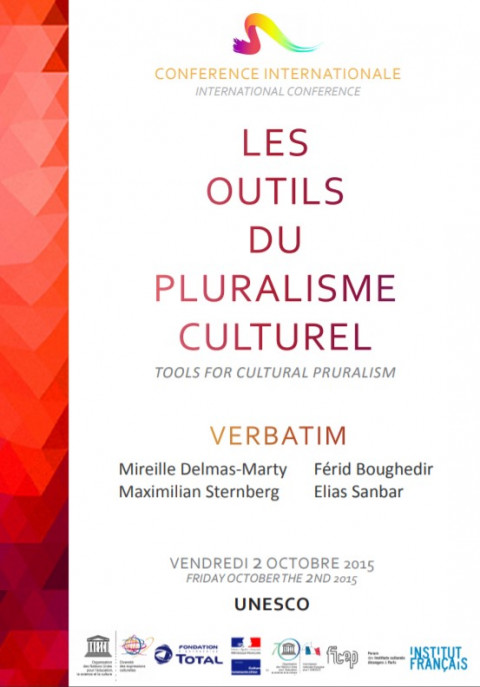 LES OUTILS DU PLURALISME CULTUREL Year of publication: 2015 Corporate author: UNESCO Face aux formes persistantes de xénophobie et d’exclusion sociale, face aux actes spectaculaires d’intolérance dont nos sociétés peuvent être le théâtre, la Convention de l’UNESCO de 2005, par laquelle les États parties s’engagent à développer des politiques publiques pour la promotion et la protection de la diversité des expressions culturelles, s’avère plus que jamais actuelle : elle incite à mieux prendre en compte le rôle de la culture au profit du partage, du respect et de la reconnaissance de l’autre, au-delà des appartenances sociales et culturelles.A l’occasion du 10e anniversaire de la Convention de 2005 de l’UNESCO, désormais ratifiée par 138 États et l’Union européenne et dans le cadre de la Décennie internationale du rapprochement des cultures (2013-2022, ONU), la Commission nationale française pour l’UNESCO, en partenariat avec le Secrétariat de l’Organisation et avec le soutien du ministère français de la Culture et de la Communication, a organisé deux conférences internationales au siège de l’UNESCO.Première de ces deux conférences internationales, Les outils du pluralisme culturel, le vendredi 2 octobre 2015 à l’UNESCO, pendant la Semaine des Cultures Étrangères organisée par le Forum des Instituts Culturels Étrangers à Paris, a offert un état des lieux, à un niveau européen élargi, des initiatives de promotion de la diversité des expressions culturelles comme outils du vivre-ensemble.
  Рекомендация об обучении и образовании взрослых Year of publication: 2016 Corporate author: Организация Объединенных Наций по вопросам образования, науки и культуры (UNESCO) | UNESCO Institute for Lifelong Learning (UIL) Рекомендация об обучении и образовании взрослых была принята на 38-й сессии Гене-ральной конференции ЮНЕСКО в ноябре 2015 г. Данная рекомендация направлена на поддержку осуществления рамочной программы действий «Образование-2030», она учитывает глобальные тенденции и будет способствовать трансформации обучения и образования взрослых и расширению равных возможностей в этой области.Рекомендация 2015 г. подходит к ООВ комплексно и системно и определяет три основные области обучения и приобретения навыков: грамотность и базовые навыки, непрерывное повышение образовательных и профессиональных навыков и либеральное, народное и общинное образование и гражданские навыки. В ней также описываются пять сквозных направлений деятельности: политика, управление, финансирование, участие, инклюзивность и равенство, а также качество. Данные области деятельности уже представлялись международному сообществу в Беленских рамках действий, принятых на КОНФИНТЕА в 2009 г. в качестве инструмента для содействия государствам-членам в совершенствовании ООВ. Такой комплексный и согласованный подход к ООВ поможет государствам-членам обеспечить всеохватное и справедливое качественное образование и поощрение возможности обучения на протяжении всей жизни для всех (цель 4 в области устойчивого развития).