
Resources
Explore a wide range of valuable resources on GCED to deepen your understanding and enhance your research, advocacy, teaching, and learning.
3,229 Results found
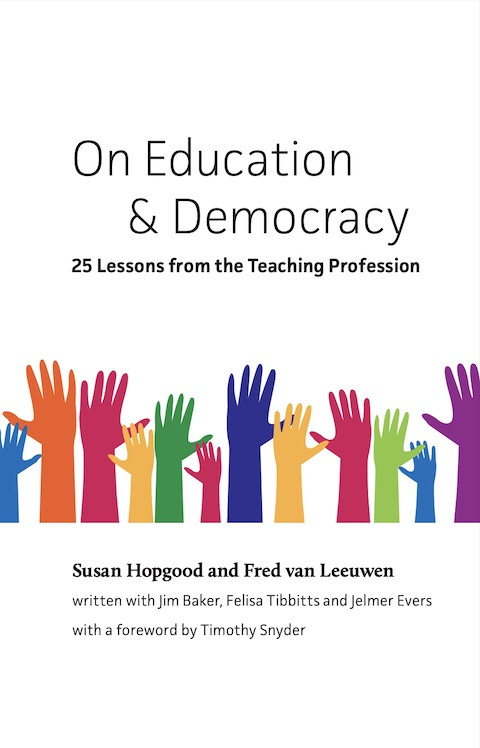 Sobre la educación y la democracia: 25 lecciones de la profesión docente Year of publication: 2019 Author: Susan Hopgood | Fred van Leeuwen Corporate author: Education International (EI) Con motivo del 25o aniversario de la Internacional de la Educación, que actualmente reúne a los sindicatos de la educación de 170 países, que representan a 32,5 millones de docentes y personal de apoyo educativo, hemos seleccionado 25 lecciones sobre la educación y la democracia que el personal docente y sus organizaciones han aprendido a lo largo de la historia. Nuestras lecciones ofrecen una serie de recomendaciones destinadas a todo el personal docente que trabaja en todos los niveles de nuestros sistemas educativos y en sus sindicatos de la educación. Estas lecciones son una invitación a posicionarse en favor de la democracia y sus instituciones y a analizar las contribuciones que el profesorado, las escuelas, las universi- dades y las organizaciones que los representan pueden aportar para consolidar y hacer progresar la vida democrática. Éducation & démocratie: 25 leçons de la profession enseignante Year of publication: 2019 Author: Susan Hopgood | Fred van Leeuwen Corporate author: Education International (EI) À l’occasion du 25e anniversaire de l’Internationale de l’Éducation, qui regroupe actuellement les syndicats nationaux de l’éducation de 170 pays représentant 32,5 millions d’éducateur·rice·s et de membres des personnels de soutien à l’éducation, les auteurs ont sélectionné 25 leçons que les éducateur·rice·s et leurs organisations ont tirées sur l’éducation et la démocratie au long de l’histoire. Ces leçons établissent une série de recommandations destinées à tou·te·s les enseignant·e·s travaillant à tous les niveaux de nos systèmes éducatifs et de leurs syndicats d’ensei- gnement. Les leçons sont une invitation à prendre position en faveur de la démocratie et de ses institutions et à examiner les contributions que les enseignant·e·s, les écoles, les universités et les organisations représentatives peuvent apporter pour consolider et faire avancer la vie démocratique.
 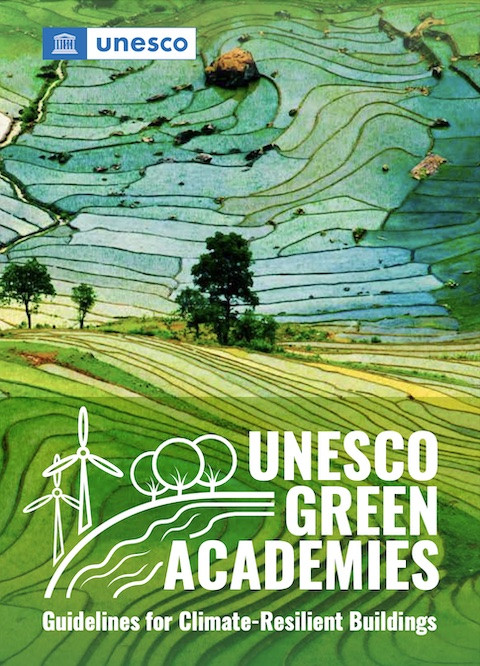 联合国 教科文组织 绿色学院: 气候适应型学校指南 Year of publication: 2019 Corporate author: UNESCO Bangkok 本手册鼓励社区进行能力建设,并朝着适应气候变化的方向 过渡。它以科学知识为基础,按照“人与生物圈计划”的规 定改善人与环境之间的关系。
 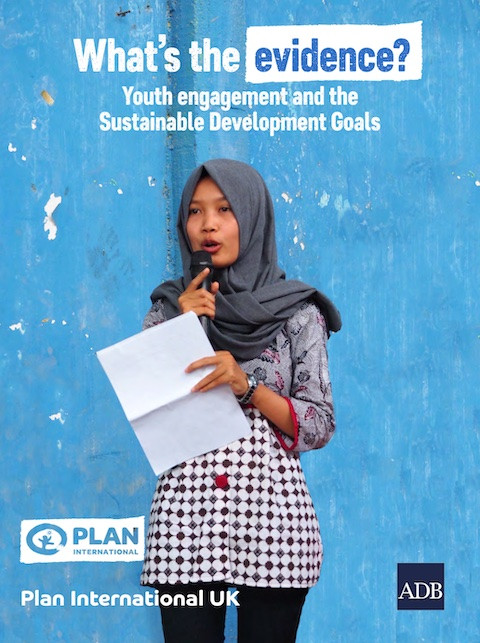 What’s the Evidence?: Youth Engagement and the Sustainable Development Goals Year of publication: 2018 Corporate author: Asian Development Bank (ADB) | Plan International UK This study represents an encouraging body of evidence, both primary and secondary, which will inform future practice and policymaking with regard to young women and men’s contributions towards the Sustainable Development Goals (SDGs). The learnings from this study provide important insight that will support the design and implementation of youth programming. It examines five programs across three youth-focused or youth-led organisations: Plan International UK, the Asian Development Bank (ADB), and AIESEC.
 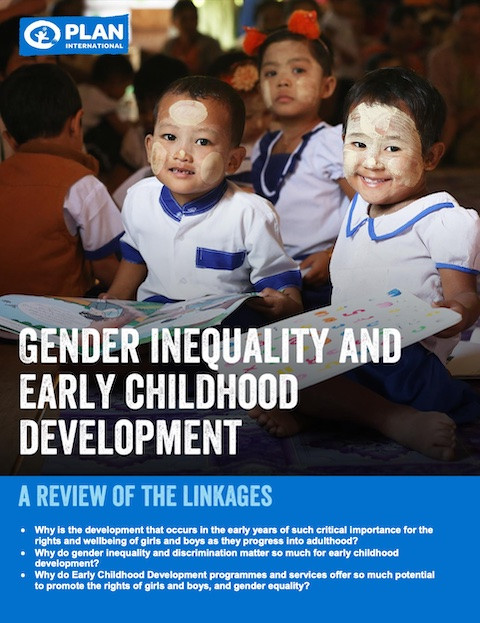 Gender Inequality and Early Childhood Development: A Review of the Linkages Year of publication: 2017 Corporate author: Plan International This paper aims to respond to the fact that Early Childhood Development initiatives and programmes, both internal and external, often appear to give limited attention to gender inequality and discrimination. Furthermore, initiatives to promote girls’ rights and gender equality often pay little attention to early childhood, instead focusing on older girls and adolescents.
 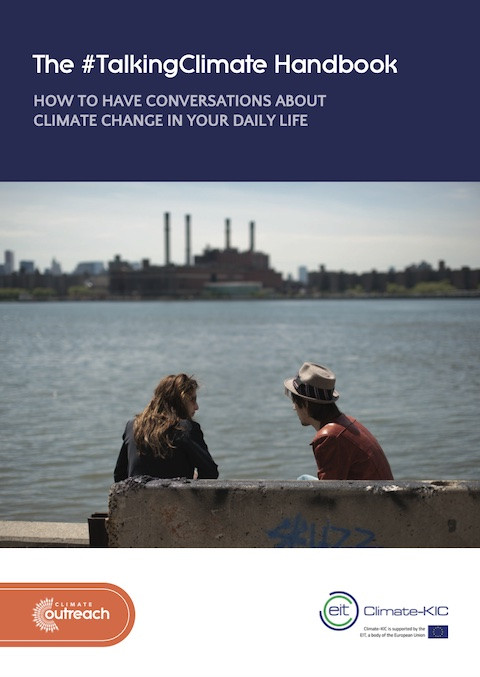 The #Talking Climate Handbook: How to Have Conversations About Climate Change in Your Daily Life Year of publication: 2019 Author: Robin Webster | George Marshall Corporate author: Climate Outreach | EIT Climate-KIC This handbook is for anyone who wants to have constructive day-to-day conversations about the climate crisis. It provides pragmatic and evidence-based guidance on how to talk about climate change with friends and family, acquaintances and strangers - on the bus, at work, at a sports event or at home over dinner. The handbook is informed by the idea that you don’t have to be a scientist, or live in a certain place, to care about and want to talk about climate change. It is a topic for everybody, whoever and wherever we are.
 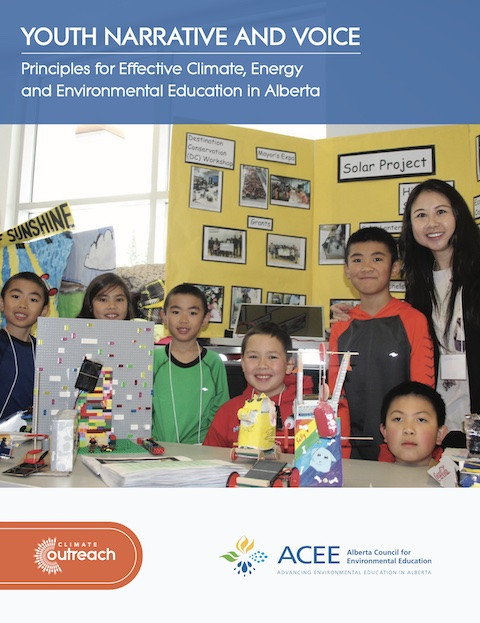 Youth Narrative and Voice: Principles for Effective Climate, Energy and Environmental Education in Alberta Year of publication: 2020 Author: Christopher Shaw | Amber Bennett | Susie Wang Corporate author: Climate Outreach | Alberta Council for Environmental Education (ACEE) This report provides educators with 10 principles for developing new energy and climate change education resources in Alberta, and example narratives and language to engage students. The findings and recommendations are drawn primarily from a series of workshops with Alberta students held during the fall of 2019. A survey of Alberta youth conducted by Leger, a literature review and interviews with Alberta teachers provided additional insights that deepened, broadened and ‘sense checked’ the workshop results.
 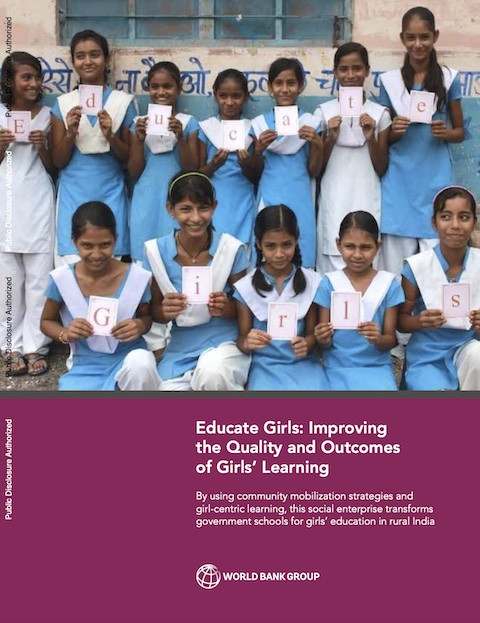 Educate Girls: Improving the Quality and Outcomes of Girls’ Learning Year of publication: 2017 Corporate author: World Bank In India, women and girls, especially in rural areas, are particularly affected by the country’s illiteracy problem, since they face discrimination based on their sex and need for childbearing. In Rajasthan, the north- western Indian state that borders Pakistan, 9 out of 26 districts have the worst gender gap in India for girls’ education.Established in 2007, Educate Girls is holistically tackling issues at the root cause of gender inequality in India’s education system that has helped to ensure over 90% enrollment and significantly higher attendance for all girls as well as improved school infrastructure, quality of education and learning outcomes for all children.As a result of Educate Girls’ efforts to date, an army of “girls champions” has been created to combat cultural issues and support systemic change. More than 150,000 out-of-school girls have been enrolled in school and the program has benefitted around 3.8 million of beneficiaries. Continuing to address the social and cultural barriers in girls’ education can bring about real transformation, such as improvement in health, income levels, and overall livelihoods in rural populations.
 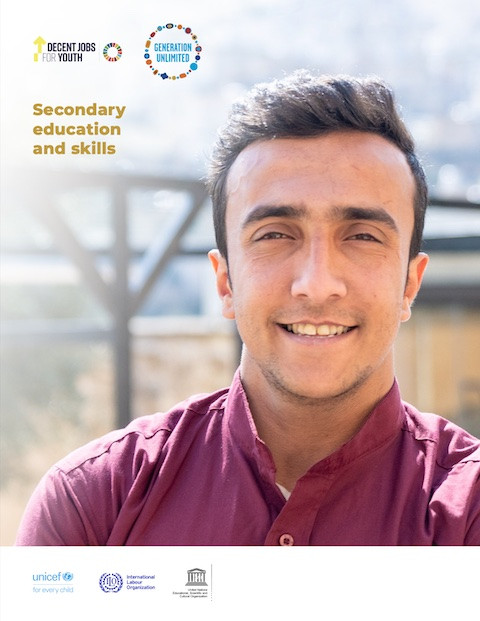 Secondary Education and Skills Year of publication: 2020 Corporate author: Generation Unlimited | Global Initiative on Decent Jobs for Youth All young people need access to quality education and learning that would help them develop the skills, knowledge, attitudes and values they need to find and retain productive work, to make informed decisions, and to positively engage in their communities. However, millions of young people remain out of school or do not have access to quality learning opportunities. The COVID-19 pandemic and the resulting economic downturn have made the challenges facing young people even more pressing, as shrinking labour markets leave low-skilled young people with fewer choices, and render them more vulnerable to exploitation.There is a need for a radical re-think of what works, seeking a radical improvement in traditional curricula, the number of trained professional teachers, student–teacher ratios, and the teaching methods and strict school timetables that have become less relevant to the current needs of young people.The aim of this guide is to support the Generation Unlimited strategic priorities, and to inform policy makers and social partners, so as to guide action on investment, policy change and delivery, increasing the likelihood of successful outcomes and decent jobs for young people.
  Positioning ICT in Education to Achieve the Education 2030 Agenda in Asia and the Pacific: Recommendations for a Regional Strategy Year of publication: 2018 Author: Hyojeong So | Kyungsim Yeon | Kyungsim Yeon | Jian Xi Teng Corporate author: UNESCO Bangkok This regional study is an important document for Asia-Pacific Member States as it consolidates data related to the effective use of ICT in education. One highlight of this study is the five priority areas for the use of ICT towards achieving SDG4 and Education 2030 that were identified based on a synthesis of the data:ICT for transforming and expanding TVET and higher education ICT for improving teacher qualityICT for improving access to and quality of secondary education ICT for enabling inclusive and equitable learningICT for monitoring and evaluation