
Resources
Explore a wide range of valuable resources on GCED to deepen your understanding and enhance your research, advocacy, teaching, and learning.
684 Results found
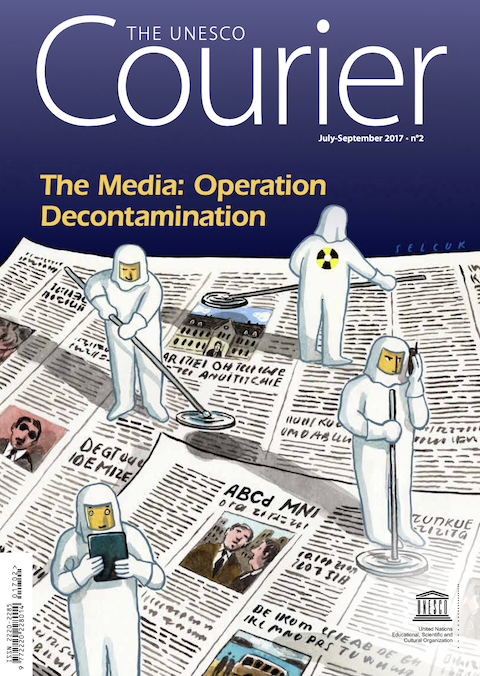 The Media: Operation Decontamination (The UNESCO Courier no. 2; July-September 2017) Year of publication: 2017 Corporate author: UNESCO The plurality of enlightened opinions is a prerequisite of the democratic development of our societies. The quality of the information disseminated by the media – traditional or new – is decisive when it comes to shaping public opinion. This is why UNESCO puts special emphasis on education about media and information, which it considers a fundamental skill for citizens in the twenty-first century.Freedom of expression and the free movement of ideas by words and images are among the constitutive principles of UNESCO and at the core of the 2030 Agenda for Sustainable Development. UNESCO supports the work of dedicated journalists and activists who defend fundamental freedoms, like the journalist Dawit Isaak, winner of the 2017 UNESCO/ Guillermo Cano World Press Freedom Prize, whose story appears in this issue of the UNESCO Courier.Over the last decade, more than 800 journalists have been victims of crimes aimed at muzzling freedom of expression. Only one murder out of ten ended with a conviction. This impunity is unacceptable and further fuels the spiral of violence in the future. This is why UNESCO is committed to putting an end to these crimes against the press, on all continents, as an indispensable condition for peaceful societies that are all the more robust for being better informed.In this “post-truth” era, the role of UNESCO is more important than ever, and this issue of the Courier is a wonderful opportunity to renew our founding commitment to support information and communication to build peace in the minds of men and women. Médias: Opération décontamination (Le Courrier de l'UNESCO no. 2; Juillet-Septembre 2017) Year of publication: 2017 Corporate author: Organisation des Nations Unies pour l'éducation, la science et la culture (UNESCO) La pluralité d’opinions éclairées est une condition sine qua non du développement démocratique de nos sociétés. La qualité des informations diffusées par les médias – traditionnels et nouveaux – est déterminante dans la formation de l’opinion publique. C’est pourquoi l’UNESCO met un accent tout particulier à l’éducation aux médias et à l’information qu’elle considère comme une compétence citoyenne fondamentale du XXIe siècle.La liberté d’expression et la libre circulation des idées par les mots et l’image font partie des principes constitutifs de l’UNESCO et sont au cœur de l’Agenda 2030 pour le développement durable. L’UNESCO soutient le travail des journalistes et militants déterminés qui défendent ces libertés fondamentales, comme le journaliste Dawit Isaak, lauréat du Prix mondial de la liberté de la presse UNESCO/Guillermo Cano 2017, dont on peut découvrir le portrait dans ce numéro du Courrier de l’UNESCO.Au cours de cette dernière décennie, plus de 800 professionnels des médias ont été victimes de crimes visant à museler la libre expression. Seul un meurtre sur dix a donné lieu à un jugement. Cette impunité est inacceptable et alimente encore la spirale de la violence dans le futur. C’est pourquoi l’UNESCO s’engage de toutes ses forces pour y mettre un terme, sur tous les continents, comme une condition indispensable de sociétés pacifiques et d’autant plus robustes qu’elles sont mieux informées.À l’ère de la « post-vérité », le rôle de l’UNESCO est plus important que jamais, et ce nouveau numéro du Courrier est une belle occasion de renouveler notre engagement fondateur à soutenir l’information et la communication pour construire la paix dans l’esprit des hommes et des femmes.
  Global Education Monitoring Report 2021/2: Non-state Actors in Education; Who Chooses? Who Loses? Year of publication: 2021 Corporate author: UNESCO Non-state actors’ role extends beyond provision of schooling to interventions at various education levels and influence spheres. Alongside its review of progress towards SDG 4, including emerging evidence on the COVID-19 pandemic’s impact, the 2021/2 Global Education Monitoring Report urges governments to see all institutions, students and teachers as part of a single system. Standards, information, incentives and accountability should help governments protect, respect and fulfill the right to education of all, without turning their eyes away from privilege or exploitation. Publicly funded education does not have to be publicly provided but disparity in education processes, student outcomes and teacher working conditions must be addressed. Efficiency and innovation, rather than being commercial secrets, should be diffused and practiced by all. To that end, transparency and integrity in the public education policy process need to be maintained to block vested interests. The report’s rallying call – Who chooses? Who loses? – invites policymakers to question relationships with non-state actors in terms of fundamental choices: between equity and freedom of choice; between encouraging initiative and setting standards; between groups of varying means and needs; between immediate commitments under SDG 4 and those to be progressively realized (e.g. post-secondary education); and between education and other social sectors. 全球教育监测报告摘要, 2021/2年: 教育领域的非国家行为体:谁能主动选择?谁将错失机会? Year of publication: 2021 Corporate author: 联合国教科文组织 (UNESCO) 本文件是2021/2022年全球教育检测报告的摘要,主要聚焦教育领域的非国家行为体,包括私人办学、宗教办学等力量,并探讨了与非国家行为体对教育的影响与存在问题。
  Медийно и информационно грамотные граждане: мыслите критически, кликайте с умом! Year of publication: 2021 Author: Alton Grizzle | Carolyn Wilson | Ramon Tuazon | C.K. Cheung | Jesus Lau | Rachel Fischer | Dorothy Gordon | Kwame Akyempong | Jagtar Singh | Paul R. Carr | Kristine Stewart | Samy Tayie | Olunifesi Suraj | Maarit Jaakkola | Gina Thésée | Curmira Gulston Corporate author: UNESCO Можем ли мы улучшить общество, в котором живем, кликая с умом?Поставщики информации, такие как библиотеки, архивы, музеи, медиа и компании, занимающиеся цифровой коммуникацией, могут содействовать инклюзивному и устойчивому развитию. Однако они не всегда соответствуют этому идеалу, что создает определенные трудности для их пользователей. Поставщики информации всех типов располагают широким спектром возможностей для реализации непрерывного обучения, но, в то же время, оказываются связаны с такими проблемными явлениями, как распространение дезинформации и некорректной информации, пропаганда ненависти, нарушение неприкосновенности частной жизни и др.Медийная и информационная грамотность представляет собой набор компетенций, которые помогают людям максимально использовать указанные преимущества и минимизировать возможный вред. Компетенции, составляющие МИГ, позволяют критически и эффективно взаимодействовать с разнообразным контентом, теми акторами и структурами, которые этот контент создают и распространяют, с цифровыми технологиями. Такие возможности необходимы всем людям, вне зависимости от их возраста или рода занятий.Данная Учебная программа содержит структурированную модель компетенций в области медийной и информационной грамотности и учебные модули для преподавателей и учащихся, охватывающие широкий диапазон компетенций, которые необходимы для того, чтобы ориентироваться в современной коммуникационной экосистеме. В программе также показано, как медийная и информационная грамотность связана с рядом актуальных вопросов и проблем, таких как искусственный интеллект, образование в области цифрового гражданства, образование в интересах устойчивого развития, формирование культурной грамотности, экспоненциальный рост дезинформации и некорректной информации. Эффективное использование Программы может помочь каждому значительно повысить свой уровень медийной и информационной грамотности, а также стать преподавателем этого вида грамотности.
  الدراية الإعلامية والمعلوماتية للمواطنين Year of publication: 2023 Author: Alton Grizzle | Carolyn Wilson | Ramon Tuazon | C.K. Cheung | Jesus Lau | Rachel Fischer | Dorothy Gordon | Kwame Akyempong | Jagtar Singh | Paul R. Carr | Kristine Stewart | Samy Tayie | Olunifesi Suraj | Maarit Jaakkola | Gina Thésée | Curmira Gulston Corporate author: UNESCO ملخص قصيرهل يمكننا تحسين مجتمعاتنا من خلال النقر بحكمة؟يمكن لمزودي المحتوى مثل المكتبات، ودور المحفوظات، والمتاحف، ووسائل الإعلام وشركات الاتصالات الرقمية تمكين التنمية الشاملة والمستدامة. ومع ذلك، فإنها لا ترقى دائمًا إلى مستوى هذه المثاليات، مما يخلق تحديات لمستخدمي هذه الخدمات. يفتح موفرو المحتوى من جميع الأنواع فرصًا جديدة للتعلم مدى الحياة، ولكن في الوقت نفسه، فإنها تؤدي إلى تحديات مثل المعلومات الخاطئة والمضللة، وخطاب الكراهية، وانتهاك الخصوصية على الإنترنت، من بين أمور أخرى.الدراية الإعلامية والمعلوماتية هي مجموعة من الكفاءات التي تساعد الناس على تعظيم المزايا وتقليل الأضرار. تغطي الدراية الإعلامية والمعلوماتية الكفاءات التي تمكن الناس من المشاركة بشكل نقدي وفعال مع محتوى الاتصالات، والمؤسسات التي تسهل هذا المحتوى، واستخدام التقنيات الرقمية. القدرات في هذه المجالات لا غنى عنها لجميع المواطنين بغض النظر عن أعمارهم أو خلفياتهم.يقدم هذا المنهاج الرائد إطار كفاءات شامل لوسائل الإعلام والدراية المعلوماتية ويقدم للمعلمين والمتعلمين اقتراحات تربوية منظمة. ويضم مكونات مفصلة مختلفة تغطي مجموعة من الكفاءات المطلوبة للتمكن من النظام البيئي للاتصالات اليوم. يربط هذا المورد الدراية الإعلامية والمعلوماتية بالقضايا الناشئة مثل الذكاء الاصطناعي، وتعليم المواطنة الرقمية، والتعليم من أجل التنمية المستدامة، والدراية الثقافية، والارتفاع الهائل في المعلومات الخاطئة والمضللة. من خلال الاستخدام الفعال لهذا المنهاج، يمكن للجميع أن يصبحوا متعلمين ومثقفين إعلاميًا ومعلوماتيًا، وكذلك معلمي أقران في هذا المجال.
  미디어 정보 리터러시 갖춘 시민 되기: 비판적으로 사고하고 현명하게 클릭하기! Year of publication: 2022 Author: Alton Grizzle | Carolyn Wilson | Ramon Tuazon | C.K. Cheung | Jesus Lau | Rachel Fischer | Dorothy Gordon | Kwame Akyempong | Jagtar Singh | Paul R. Carr | Kristine Stewart | Samy Tayie | Olunifesi Suraj | Maarit Jaakkola | Gina Thésée | Curmira Gulston Corporate author: 한국언론진흥재단 | 유네스코한국위원회 도서관을 비롯한 아카이브, 박물관, 미디어와 디지털 통신 회사 같은 콘텐츠 제공자는 모든 이를 포용하고 지속가능한 개발을 이루어낼 역량을 지니고 있다. 하지만, 콘텐츠 제공자가 그와 같은 이상에 근거해서만 움직이는 것은 아니기 때문에 서비스 사용자들은 어려움을 겪게된다. 모든 콘텐츠 제공자는 평생학습의 기회를 열어 주기도 하지만 동시에 잘못된 정보나 허위정보, 혐오 표현, 온라인 프라이버시 침해 등과 같은 과제도 안겨 준다.미디어 정보 리터러시란 사람들이 취할 수 있는 혜택은 최대로 얻고, 입을 수 있는 피해는 최소화할 수 있도록 하는 일련의 역량을 의미한다. 미디어 정보 리터러시는 커뮤니케이션 콘텐츠와 해당 콘텐츠를 제공하는 기관 및 디지털 기술을 비판적이고 효과적으로 이용할 수 있는 역량이다. 이는 나이, 배경과 관계없이 모든 시민이 필수적으로 갖추어야 하는 능력이다.이 선구적인 커리큘럼은 미디어․정보 리터러시 역량의 종합적인 프레임워크를 제공하며, 교육자와 학습자가 활용할 수 있는 체계적인 교육적 방안을 제안한다. 또한 다양한 모듈을 제시하여 오늘날의 커뮤니케이션 생태계를 이해하는 데 필수적인 역량 범위를 상세하게 다루고 있다. 이 자료에서 미디어․정보 리터러시는 지금 우리 사회에서 새롭게 부상하고 있는 문제들, 즉 인공 지능을 비롯해 디지털 시민 교육, 지속가능 발전 교육, 문화 리터러시 및 허위정보와 잘못된 정보의 급증 등과 연계하여 다루어진다. 본 컴리큘럼을 효과적으로 활용한다면 누구나 미디어 정보 리터러시를 갖춘 시민은 물론, 미디어․정보 리터러시의 동료 교육자도 될 수 있을 것이다.
  어린이와 미디어 리터러시 Year of publication: 2022 Author: 이원섭 | 조재희 | 최지선 Corporate author: 한국언론진흥재단 본 연구에서는 초등학생들의 미디어 이용에 대한 전반적인 특징을 진단하고 해외 사례 분석과 부모와 교사, 미디어 강사와의 심층인터뷰, 전문가 자문, 학생과 부모 대상의 설문조사를 통해 어린이의 미디어 리터러시 향상을 위한 정책 방안을 제시하고자 한다. 본 저작물은 한국언론진흥재단에서 2022년 작성하여 공공누리 제4유형으로 개방한 '어린이와 미디어 리터러시(작성자:이원섭, 조재희, 최지선)'를 이용하였으며, 해당 저작물은 한국언론진흥재단 홈페이지(https://www.kpf.or.kr/)에서 무료로 내려받으실 수 있습니다.
  Communication and Information Programme Year of publication: 2021 Corporate author: UNESCO UNESCO is the UN specialized agency building peace in the minds of people through education, the sciences, culture, communication and information. Our mission is to foster intercultural dialogue and sustainable development, by promoting the free flow of ideas.By adopting a multi-disciplinary and inclusive approach, UNESCO works with both duty-bearers and rights-holders across the world to develop and implement targeted actions that are born out of local needs, which ensures a holistic and results-based approach for sustainable change.In the field of communication and information, UNESCO defends and promotes freedom of expression, media independence and pluralism, and the building of inclusive knowledge societies underpinned by universal access to information and the innovative use of digital technologies.Through capacity-building, policy advice, international cooperation, monitoring and foresight in the fields of freedom of expression, access to information, and digital transformation, UNESCO will continue to empower key actors with a view to ensuring that fundamental freedoms are guaranteed online and offline, in line with international standards.This is all the more relevant to ensure the ethical development and use of emerging technologies, which have a growing impact on all aspects of the world’s societies. Citizens will also be empowered to enjoy these fundamental freedoms through the development of 21st century skills and the fostering of enabling environments for media pluralism and diversity.
  Getting the Message Across: Reporting on Climate Change and Sustainable Development in Asia and the Pacific; A Handbook for Journalists Year of publication: 2018 Corporate author: UNESCO Getting the Message Across, Reporting on Climate Change and Sustainable Development in Asia and the Pacific: A Handbook for Journalists has been customized for journalists to tell the climate change story specific to the region. It explores the essential aspects of climate change, including its injustices to vulnerable communities, especially women and girls and least developed countries, and provides examples of best practices and stories of hope unique to the region. It can be used as a resource for journalists to understand the science of climate change, as well as helping journalists to improve their reporting of the environmental, social, economic ̧ political, technological and other angles of the story.