
Resources
Explore a wide range of valuable resources on GCED to deepen your understanding and enhance your research, advocacy, teaching, and learning.
661 Results found
 How Can a Lifelong Learning Perspective Enhance the Relevance and Impact of the 1974 Recommendation?: Thematic Paper Year of publication: 2022 Corporate author: UNESCO Institute for Lifelong Learning (UIL) Lifelong learning is rooted in the integration of learning with participation in society. It includes learning activities for people of all ages, in all life-wide contexts and spaces (family, school, community, workplace and more), and through a variety of modalities (formal, non-formal and informal).The purpose of this background paper is to propose ways in which the significance of lifelong learning can be reflected in the revision of the 1974 Recommendation concerning Education for International Understanding, Cooperation and Peace and Education relating to Human Rights and Fundamental Freedoms. It does this by recalling previous international contributions to the promotion of lifelong learning, including the landmark publications Learning to Be: The World of Education Today and Tomorrow (Faure et al., 1972) and Learning: The Treasure Within (Delors et al., 1996), which show the benefits of lifelong learning not only for employment but for the whole life of an individual and their participation in society.
  Lifelong learning for health in cities: a guide, enacting the Yeonsu Declaration for Learning Cities Year of publication: 2023 Author: Jourdan, Didier | Gray, Nicola | Howells, Alex | Valdés-Cotera, Raúl Corporate author: UNESCO Institute for Lifelong Learning (UIL) <Executive summary> The COVID-19 health crisis has led all cities in the world to put public health issues at the top of their agendas. The pandemic has highlighted that one cannot implement public health measures without, or indeed against, the goodwill of the population. The population is not the ‘problem’. Rather, it is part of the solution to the health crisis. Cities play a major role in developing the population’s capacity to promote individual and collective health.Education and learning are at the very core of what makes ‘health for all’ possible. The crisis, therefore, has been an eye-opener regarding the importance and need for lifelong health education. Instituting such a place-based lifelong learning culture could play a key role in building resilience for individuals, communities and cities.In Yeonsu, Republic of Korea, the fifth International Conference on Learning Cities was convened from 27 to 30 October 2021. Attending in person or online were: mayors, deputy mayors, officials, representatives from 229 learning cities in 64 countries worldwide, education executives, education experts, representatives of United Nations agencies, the private sector, and regional, international and civil society organizations. At the end of the conference, a declaration was issued. It includes a set of commitments to build healthy and resilient cities.This guide aims to assist municipal teams in the concrete development of a policy that promotes lifelong learning for health within the framework of the Yeonsu Declaration. It is intended not only for cities already identified as learning cities or healthy cities – which may use the guide to integrate a lifelong learning for health dimension into existing city policies and projects – but also for all cities that wish to implement a policy promoting lifelong learning for healthThis guide proposes a three-step process for enacting such a policy: 1. raising awareness of the role of cities in lifelong learning for health; 2. developing a policy that promotes a healthy and resilient city; and 3. implementing the policy.The lifelong learning for health policy can be formalized through the creation of a learning for health pathway. The pathway makes explicit – and simultaneously formalizes – the content, the learning approaches and learning outcomes of the learning opportunities offered throughout people’s lives. It focuses on building individual capacities for awareness and understanding of complex health issues, critical judgment and action. The pathway also has a communication purpose by making what is being done to promote health in the city explicit to citizens, partners and professionals. It is based on four key action principles: ‘valuing, sharing, aligning and improving’. This approach seeks, first, to demonstrate the value of the educational work carried out in formal, non-formal and informal settings of the urban environment; then to make this known among stakeholders and to make the pathway coherent; and, finally, to identify the gaps and take the necessary initiatives to fill them.The guide can be used in different ways depending on the context, means and objectives of the individual cities. It is not always necessary to read the whole guide. And we expect that a large proportion of readers and users will simply pick and choose from the various sections of the guide elements that are of particular interest to them. Nonetheless, we hope that everyone will find something to contribute to their city’s efforts and actions for implementing an inclusive policy for promoting lifelong learning for health.
  2022년 평생교육통계 자료집 Year of publication: 2022 Corporate author: 대한민국 교육부 | 한국교육개발원 「2022 평생교육통계 자료집」은 17개 시도, 4,869개의 평생교육기관을 조사하여 우리나라의 평생교육시설을 진단할 수 있는 기초자료를 종합하였습니다.본 저작물은 교육부에서 2022년 작성하여 공공누리 제3유형으로 개방한 '2022년 평생교육통계 자료집'을 이용하였으며, 해당 저작물은 교육부 누리집(https://www.moe.go.kr/)과 교육통계 서비스 누리집(https://kess.kedi.re.kr/index) 에서 무료로 내려받으실 수 있습니다.
  Recommendation on Adult Learning and Education, 2015 Year of publication: 2016 Corporate author: UNESCO | UNESCO Institute for Lifelong Learning (UIL) The Recommendation on Adult Learning and Education was adopted at the 38th Session of the UNESCO General Conference in November 2015. The Recommendation supports the Education 2030 Framework for Action, reflects global trends, and will guide the transformation and expansion of equitable learning opportunities for youth and adults. The 2015 Recommendation takes a comprehensive and systematic approach to ALE, defining three key domains of learning and skills: literacy and basic skills; continuing education and vocational skills; as well as liberal, popular and community education and citizenship skills.It also describes five transversal areas of action: policy; governance; financing; participation, inclusion and equity; and quality. These areas of action were already introduced to the international community in the Belém Framework for Action, adopted at CONFINTEA in 2009 as a means of guiding Member States in improving ALE. This integrative and consistent approach to ALE will help Member States to ensure inclusive and equitable quality education and promote lifelong learning opportunities for all (Sustainable Development Goal 4).
 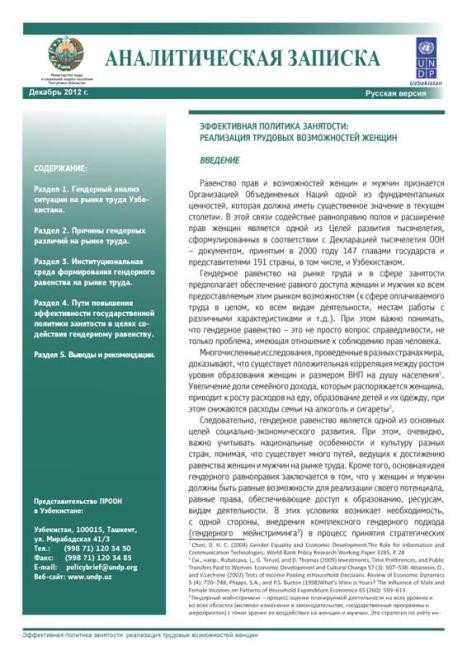 Effective Employment Policy: Realizing Women's Work Opportunities Year of publication: 2013 Author: Inna Maltseva | Alexandr Navotniy | Yana Chicherina | Gulnora Marufova | Jamoliddin Ismailov | Sherzod Kudbiev | Khaydar Tashmuradov Corporate author: UNDP Uzbekistan The analytical report aims to analyze the current situation of women and men in the field of employment, to identify the key causes of gender differences in the labor market of the country and to develop proposals for improving the effectiveness of employment policies to promote the employment opportunities of women. Эффективная политика занятости: реализация трудовых возможностей женщин Year of publication: 2013 Author: Инна Мальцева | Александр Навотный | Яна Чичерина | Гульнора Маруфова | Жамолиддин Исмаилов | Шерзод Кудбиев | Хайдар Ташмурадов Corporate author: UNDP Узбекистан Целью аналитического доклада является анализ существующего положения женщин и мужчин в сфере занятости, выявление ключевых причин гендерных различий на рынке труда страны и разработка предложений по повышению эффективности политики в сфере занятости в целях содействия реализации трудовых возможностей женщин.
 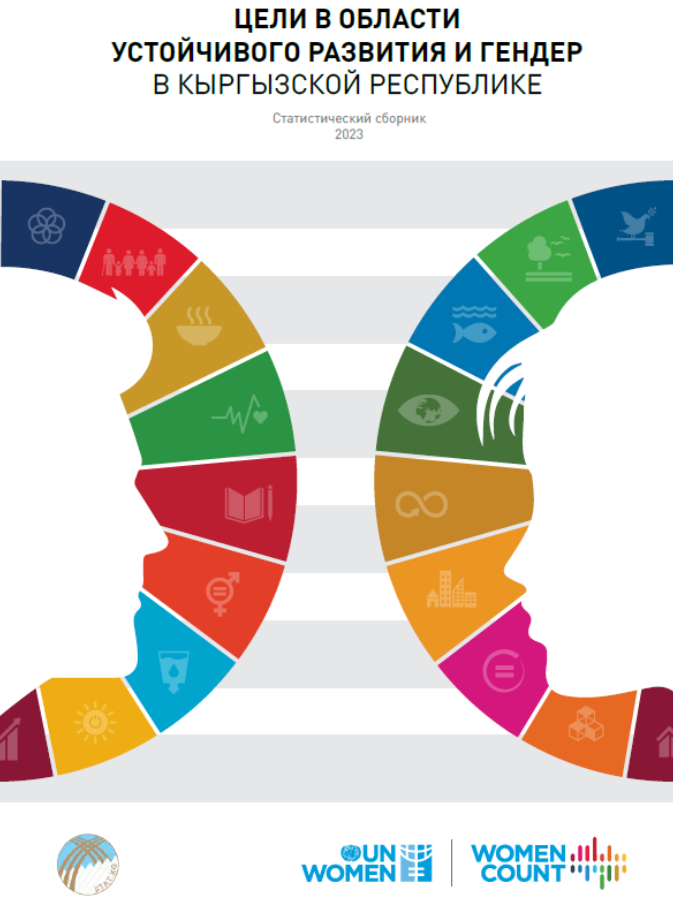 "Sustainable Development Goals and Gender in Kyrgyzstan" New Statistical Publication Year of publication: 2023 Corporate author: National Statistical Committee of the Kyrgyz Republic | United Nations Entity for Gender Equality and the Empowerment of Women (UN Women) This publication is intended to inform the public and government officials about the current status and progress towards achieving sustainable development in Kyrgyzstan, promote informed policy and management decisions, and help identify further priority steps to achieve the SDGs and women’s empowerment. Статистический сборник "Цели в области устойчивого развития и гендер в Кыргызской Республике" Year of publication: 2023 Corporate author: National Statistical Committee of the Kyrgyz Republic | United Nations Entity for Gender Equality and the Empowerment of Women (UN Women) Целью настоящего издания является информирование общественности и работников государственного управления о текущем состоянии и прогрессе в достижении устойчивого развития в Кыргызской Республике, а также для принятия обоснованных политических и управленческих решений и содействия в определении дальнейших приоритетных шагов для достижения успеха в реализации ЦУР и расширения прав и возможностей женщин.
 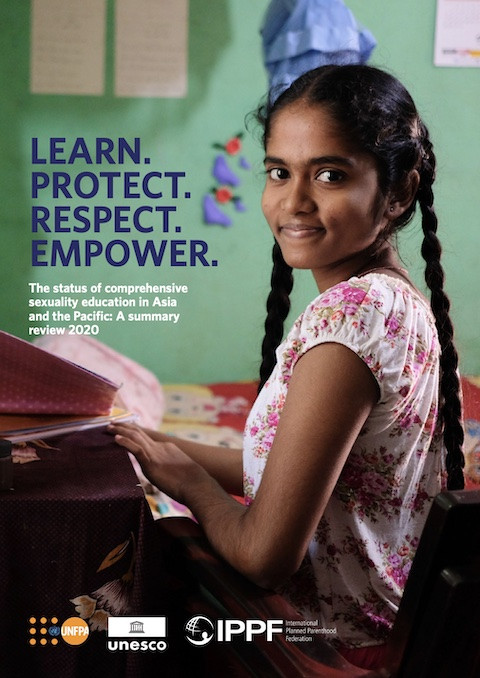 Learn, Protect, Respect, Empower: The Status of Comprehensive Sexuality Education in Asia and the Pacific; A Summary Review 2020 Year of publication: 2021 Corporate author: United Nations Population Fund (UNFPA) | UNESCO | International Planned Parenthood Federation (IPPF) More than half of the world’s 1.8 billion young people aged 10–24 live in the Asia and Pacific region1 and a majority of them live in low and middle-income countries. In spite of their diverse socio-economic contexts, young people across this vast region commonly face limited access to sexual and reproductive health and rights (SRHR) information and services, including age-appropriate comprehensive sexuality education. Of the 13 million adolescent girls globally with an unmet need for contraception, approximately half live in Asia-Pacific, leading to an estimated 3.7 million births to adolescent girls in the region annually. In addition, around 82,000 young people are infected with HIV each year in the region. As adolescents transition through to adulthood, it is crucial that they are equipped with the necessary knowledge, attitudes and skills to support their health and wellbeing, regardless of age, sex, marital status, socioeconomic status, ethnicity, sexual orientation or gender identity. School-based and age-appropriate comprehensive sexuality education (CSE) is an effective means of reaching a large population of children and young people, particularly where rates of school participation are high. This overview of the status of in-school CSE in Asia and the Pacific provides a strong evidence base on the reach and impact of this across the region. Importantly, post COVID-19 we need to build back CSE programmes that are better and stronger to meet the social and emotional needs of our young people.
 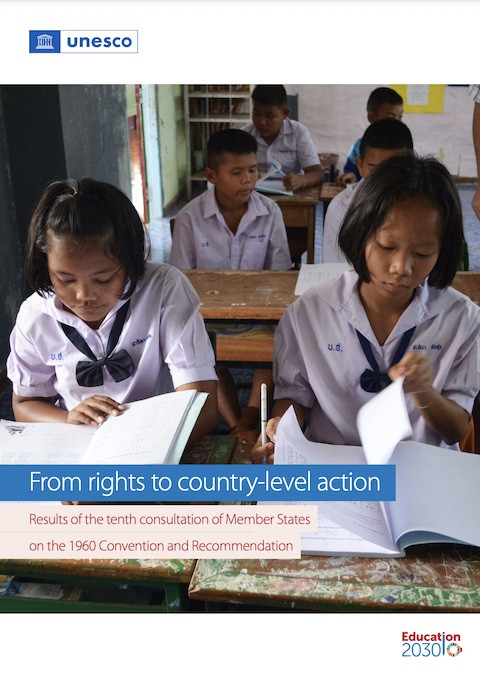 From Rights to Country-Level Action: Results of the Tenth Consultation of Member States on the 1960 Convention and Recommendation Year of publication: 2022 Author: Rolla Moumné | Sharlene Bianchi Corporate author: UNESCO The year 2020 marked a turning point for education worldwide. The impact of the COVID-19 pandemic not only amplified the difficulties and revealed existing weaknesses, but also brought the unpreparedness and lack of resilience of national education systems to the fore.The tenth consultation on the 1960 Convention against Discrimination in Education was conducted in precisely this context.Providing a valuable opportunity for States to take stock of the progress made in implementing Convention and sharing interesting national practices, the Consultation revealed continuous and new challenges the education sector faces. The unique timing of the consultation also created an opportunity to report on actions taken to faceadverse effects of the pandemic. This report analyzes and presents the Consultation findings, draws trends, and provides guidance for action. It shows how, by implementing the provisions of the Consultation, States can accelerate progress towards achieving Sustainable Development Goal 4, while invites a reflection on possibly reviewing the framework of the right to education to further respond to new challenges and put an end to increased inequalities worldwide.