
Resources
Explore a wide range of valuable resources on GCED to deepen your understanding and enhance your research, advocacy, teaching, and learning.
1,473 Results found
 Peut-on enseigner le vivre-ensemble ? Year of publication: 2013 Author: Maxime Plante Corporate author: McGill University. Faculty of Education La nécessité de former au vivre-ensemble témoigne du caractère problématique de celui-ci. Pourquoi le vivre-ensemble est-il problématique sinon parce qu’il sous-entend qu’il nous faut à tout prix coexister, soi et l’autre, c’est-à-dire vivre ensemble dans la différence ? Le respect d’une telle injonction grâce au support de l’éducation est-il possible ? Deux écueils à éviter tracent la voie à emprunter. Celui, d’une part, d’une éducation dont l’herméneutique ne peut que violer le principe de respect de l’altérité au moment même où elle prétend l’enseigner. De l’autre, celui de considérer l’éthique simplement comme ouverture totale à la différence. Entre ces deux écueils, une voie difficile à négocier, celle d’une responsabilité face à des choix éducatifs immanquablement voués à trahir l’Autre.
  Éducation à la citoyenneté Corporate author: Vedura La citoyenneté est le lien social qui réunit une personne et l'Etat, et qui permet à cette personne d'accomplir ses droits civiques et politiques. Être citoyen, c'est accomplir ses droits et devoirs civiques, mais également être responsable, individuellement et collectivement. Le citoyen contribue à donner un sens à la société dans laquelle il vit. L'éducation à la citoyenneté s'inscrit pleinement dans l'éducation au développement durable : c'est l'apprentissage de connaissances, de comportements, et de gestes citoyens à accomplir au quotidien qui vont dans le sens des valeurs du développement durable. De nombreuses thématiques intègrent l'éducation à la citoyenneté : la démocratie la paix les droits de l'homme les devoirs citoyens l'éco-citoyenneté l'éducation à la santé la prévention des conduites à risque l'égalité homme-femme la lutte contre les discriminations le développement durable l'éco-citoyenneté ... L'éducation à la citoyenneté concerne tous les publics, et fait l'objet d'une attention particulière de l'Education Nationale : "les compétences sociales et civiques inscrites dans le socle commun de connaissances et de compétences, défini par le décret n°2006-830 du 11 juillet 2006 doivent pouvoir s’appuyer sur le développement d’un "parcours civique" qui permet à l’élève de prendre conscience de son statut de citoyen, de ses droits et devoirs et du lien indissociable entre la liberté et la responsabilité. Ce parcours se fonde, entre autres, sur les événements et activités qui permettent de mettre en œuvre dans les écoles et les établissements scolaires un ensemble d'itinéraires de citoyenneté."
  World Development Report 2018 and Its Policy Implications for Education Development in China Year of publication: 2018 Author: Liu Ji 2018 comprehensively describes a crisis that is looming worldwide: Schooling does not equalize learning. Drawing on key insights from the report, this study provides a high—level summary and relates the findings to common and critical issues that China is today. Specifically, this study highlights five important policy implications for education development in China: Education quality monitoring, adaptive policies, evidence-based decision, expanding human capital investments, and building stronger ties with international organizations. 如何应对全球学习危机——世界银行((2018世界发展报告》述评 Year of publication: 2018 Author: Liu Ji 作为世界银行最重要的旗舰报告,《世界发展报告》四十年来首次以教育为题,深入探讨如何应对全球学习危机、提高教育质量、优化人力资本结构、应对人类发展重要难题。从政策理念上看,世行教育策略的革新代表着世行在人力资本政策上较大的方向性改变:由关注教育投入转向教育产出和学习结果。同时,《2018世界发展报告》总结了适用于各教育阶段的大量实证研究和国际成功政策经验,对全球教育政策具有风向标的重要意义、对我国发展新时期的教育与人才策略有积极启示。本文通过对报告结论详细梳理,结合我国国情提出五点政策建议。
 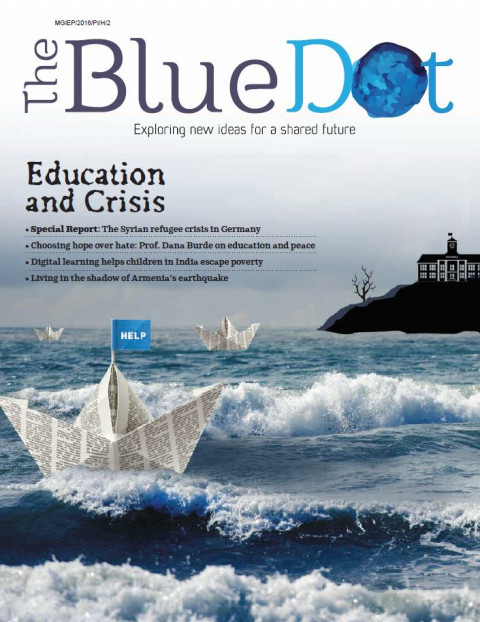 Education and Crisis (The Blue Dot Issue 3, 2016) Year of publication: 2016 Corporate author: Mahatma Gandhi Institute of Education for Peace and Sustainable Development (MGIEP) In this third issue of The Blue Dot, we have chosen to focus on the often forgotten aspect of education in the context of crises. While relief efforts tend to focus on emergency responses such as providing food and shelter, more often than not rebuilding schools and ensuring that students continue to attend their classes are not considered priorities. At UNESCO MGIEP, we believe that when education is relegated to the side-lines, there is little hope for a country and its citizens to recover.In this issue, we have brought together expert contributors from academia and the field—from countries such as Afghanistan, Nepal and South Sudan—and have dedicated a large section to the ongoing civil conflict in Syria, which will soon enter its fifth year. With almost half of Syria’s population living as refugees or as internally displaced persons, an entire generation of young people risks losing out on stability and a better future. Our Syria Section explores how these young people, with a particular focus on those who have sought refuge in Germany, are faring and what their hopes are for the future.In other parts of the magazine, we focus on technology and on how modern information and communications technologies (ICTs) can help students access a better education. From impoverished communities in Calcutta using Skype to connect with teachers around the world, to new interactive platforms built for young people to discuss global issues, we hope the stories and experiences we have collected for our readers will give a new and fresh perspective on what it means for education when a crisis hits. We also hope that you enjoy our photo contest, which drew more than 100 entries from young people around the world on what “education and crisis” means to them.
 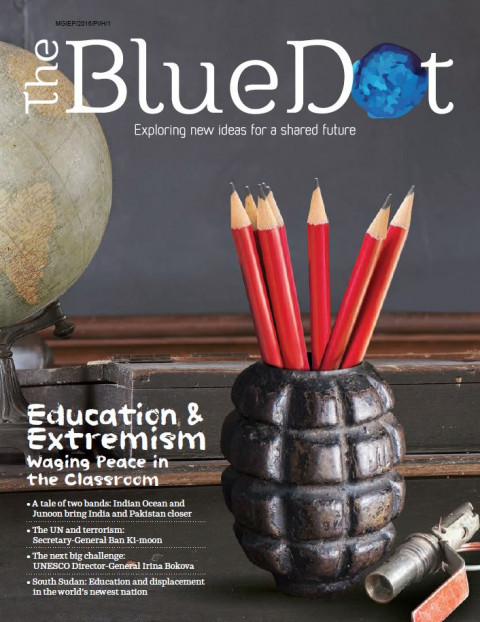 Education & Extremism: Waging Peace in the Classroom (The Blue Dot Issue 4, 2016) Year of publication: 2016 Corporate author: Mahatma Gandhi Institute of Education for Peace and Sustainable Development (MGIEP) In this fourth issue of The Blue Dot, we have decided to focus on education as a tool for both preventing violent extremism and—sometimes—even propagating extremist ideologies. This issue reflects UNESCO MGIEP’s commitment to advancing the fundamental role of education as a means to changing mindsets and, ultimately, bringing about more peaceful societies.From an interview with award-winning social entrepreneur Prof. Sugata Mitra on the role of technology in revolutionizing education, to a foreword by Secretary-General Ban Ki-moon on the UN’s response to violent extremism, our contributors come from a host of different countries and backgrounds. What brings them together, however, is a call for changing current education systems. This is espoused even more clearly in a piece by Prof. K.P. Mohanan, who uses inquiry-driven approaches to prompt youth to question blind faith in any form of ideology or indoctrination.In this issue we also discuss UNESCO MGIEP’s activities in raising awareness of the strong link between education and radicalization and violent extremism, including our flagship Talking Across Generations (TAG) event which brought together policymakers and young people in an open discussion in Delhi this February. The outcome was a statement calling for greater inclusiveness and more space for young people to shape the policies that ultimately affect them.Just like our events, The Blue Dot is a platform for individuals from different backgrounds and walks of life who might have divergent ideologies, beliefs, and values, all of which may have prevented them from coming together to debate some of the most pressing issues of our time—including the global concern surrounding the rise in violent extremism. When individuals feel free to discuss, share ideas and question their beliefs, they can begin to think creatively and critically about the world and their surrounding environment. The challenge is to avoid lecturing or preaching to young people, but to provide youth with a safe space to discuss contentious issues in an open, inclusive and transparent manner.An open dialogue on violent extremism is a step towards providing young people with opportunities to ask questions and to reflect on their own beliefs, assumptions, and values, including animosities, prejudices, hatred and intolerance. At UNESCO MGIEP we believe that individuals who feel connected to others across political, religious or cultural divides also share a sense of responsibility for the world in which they live.
 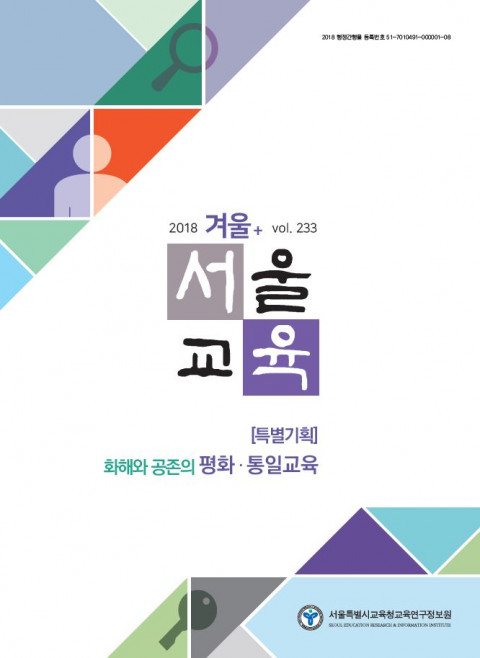 서울교육 2018년 겨울호 (제60권 통권 233호) Year of publication: 2018 Corporate author: 서울특별시교육청 교육연구정보원 권두칼럼:통일교육 패러다임 전환 키워드: #평화특별기획:평화시대를 여는 새로운 통일교육 – 평화와 민주시민교육을 담는 통일교육으로 –화해로 나아가는 평화와 공존의 통일교육한반도 대변혁기의 학교 평화·통일교육 방향 – 통일교육연구학교 운영사례를 중심으로 –해외교육:독일 통일교육이 한국 통일교육에 주는 시사점통일독일의 동독청소년 사회통합을 통해 보는 21세기 통일한국의 청소년 사회통합 정책연구:평화에 대한 비판적 공부: 평화학 출처 URL:http://www.serii.re.kr/photo/viw.do?method=getView&mcode=S029a&seq=1081
  Cultural space of Central Asia: unity in diversity Year of publication: 2010 Corporate author: Swiss Agency for Development and Cooperation (SDC) The report is the proceedings of the "Cultural space of Central Asia: unity in diversity" regional forum held in Dushanbe, Tajikistan in 2010. Культурное пространство Центральной Азии: единство в многообразии Year of publication: 2010 Corporate author: Swiss Agency for Development and Cooperation (SDC) Доклад представляет собой материалы регионального форума «Культурное пространство Центральной Азии: единство в разнообразии», состоявшегося в Душанбе, Таджикистан в 2010 году.
  Central Asian integration in the context of a single cultural and civilizational space Year of publication: 2013 Author: Erkin Baydarov The article discusses the prospects for regional integration in Central Asia, the need to understand the unity of the historical, cultural and civilizational heritage of the region.