
Resources
Explore a wide range of valuable resources on GCED to deepen your understanding and enhance your research, advocacy, teaching, and learning.
1,447 Results found
 Global Citizenship and Youth Participation in Europe Year of publication: 2016 Author: Douglas Bourn Corporate author: Oxfam | Oxfam Italia | UCL Institute of Education | CARDET | Pah Global Citizenship has been recognized as an important component of education by UNESCO through the Sustainable Development Goals launched in 2015 and the recent Global Education Congress in Croatia.While there has been considerable activity across Europe in encouraging youth engagement in democratic institutions, this report suggests that insufficient attention has been given to the linkages young people make between their outlook on the world, their personal and social identity and the ways they use tools such as social networking to engage in societies.The report also suggests to teachers that they need to address and respond to the interests of young people in issues such as refugees and migration, climate change and global terrorism by equipping them with the knowledge and skills to effectively engage in these debates.
  Youth Participation for Active Global Citizenship: Future Youth School Forums Project Report Year of publication: 2018 Author: Anna Jarkiewicz | Joanna Leek Corporate author: Oxfam GB | University of S odz (Poland) The Future Youth School Forums (FYS-Forums) project took place in Cyprus, Italy, Poland, Lithuania and the UK from 2015 to 2018 and was funded by EU Erasmus+. Its aim was to show how creating a group of engaged young global participants requires the engagement of teachers in activities to promote global citizenship – and to provide teachers and young people with the tools to promote effective and inclusive youth leadership across formal and informal education through global citizenship forums.This report on the project looks at the role of teachers and partnerships with students in raising critical awareness of global citizenship.
 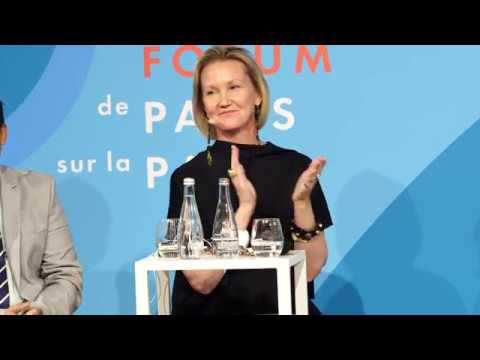 How Can Pluralism Strengthen Peace?: Global Centre for Pluralism at the 2019 Paris Peace Forum Year of publication: 2019 Author: Meredith P. Mcghie | Aung K. Moe | Bojana Dujkovic Corporate author: Global Pluralism Award Many of the most intractable challenges we face today − from entrenched poverty to conflict-driven migration − stem from the exclusion and resentment of groups defined as “the other”.Group-based grievances arising from inequality, exclusion and feelings of injustice increase the risk of instability and conflict. Pluralism is the choice to see diversity contribute to the common good. Making this choice is essential to building more secure, peaceful and resilient societies.Meredith Preston McGhie, the Secretary General of the Global Centre for Pluralism, was joined by two winners of the 2019 Global Pluralism Award to discuss how history education and community-based reconciliation can help strengthen pluralism, sustain peace and prevent conflict in diverse societies. Comment le pluralisme peut-il renforcer la paix?: Centre mondial du pluralisme au Forum de la paix de Paris 2019 Year of publication: 2019 Author: Meredith P. Mcghie | Aung K. Moe | Bojana Dujkovic Corporate author: Global Pluralism Award Plusieurs des épineux défis auxquels nous faisons face aujourd’hui – de l’appauvrissement endémique à la migration causée par des conflits – découlent de l’exclusion de groupes définis comme « l’autre » et du ressentiment à leur égard.Les griefs collectifs résultant de l’inégalité, de l’exclusion et de sentiments d’injustice augmentent le risque d’instabilité et de conflit. Le pluralisme est une option pour que la diversité contribue au bien commun. Il est essentiel de faire ce choix pour bâtir des sociétés plus sécuritaires, pacifiques et résilientes.Meredith Preston McGhie, secrétaire générale du Centre mondial du pluralisme, était accompagnée de deux lauréats du Prix mondial du pluralisme 2019 pour aborder la manière dont l’enseignement de l’histoire et la réconciliation à l’échelle communautaire peuvent aider à renforcer le pluralisme, entretenir la paix et prévenir l’éclatement de conflits dans les sociétés diversifiées.
 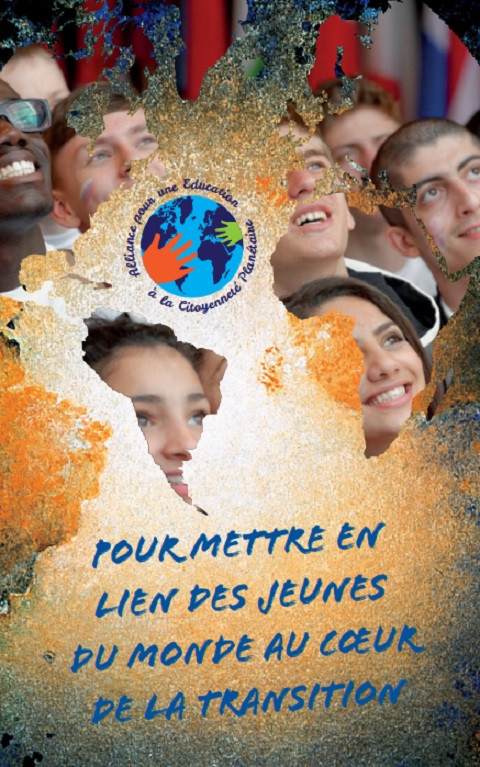 Pour mettre en lien des jeunes du monde au coeur de la transition Year of publication: 2017 Author: Maryse Clary | Jacqueline Charron Corporate author: Alliance pour une Éducation à la Citoyenneté Planétaire (AECP) | Les Amis de Circée Ce groupe d’initiative, en tant qu’experts dans le domaine de l’éducation, anime le réseau, conduit le projet de recherche et se veut porte-parole auprès des instances éducatives. Il est intervenu lors du sommet « Climate Chance » à Nantes en septembre 2016 et suite à la COP 21, intervient à Marrakech lors de la journée éducation du 14 novembre 2016. Il a le soutien des autres membres fondateurs, des signataires de la charte et des partenaires que sont le World Environmental Education Congress (WEEC), le réseau Climates et l’Alliance pour les sociétés responsables et durables. Les équipes de 12 pays sont membres actifs du réseau, comme acteurs de terrain. Elles mettent les jeunes au cœur du système éducatif, sont à leur écoute, travaillent en partenariat réel sur des projets concrets en prise directe avec leur territoire. Ensemble, les experts, et les équipes montrent que les résultats de tous ces projets au Nord comme au Sud visent un changement des systèmes éducatifs pour répondre aux défis du développement durable et du changement climatique.Cette publication relate les données d’expériences innovantes, en propose une capitalisation et une analyse afin de permettre des échanges entre équipes en vue d’une amélioration des pratiques. Ce réseau, fort de sa diversité culturelle, du nombre de jeunes impliqués et de son engagement dans les valeurs de citoyenneté planétaire, souhaite jouer un rôle de lobbying auprès des autorités éducatives pour faire évoluer positivement les systèmes éducatifs.
 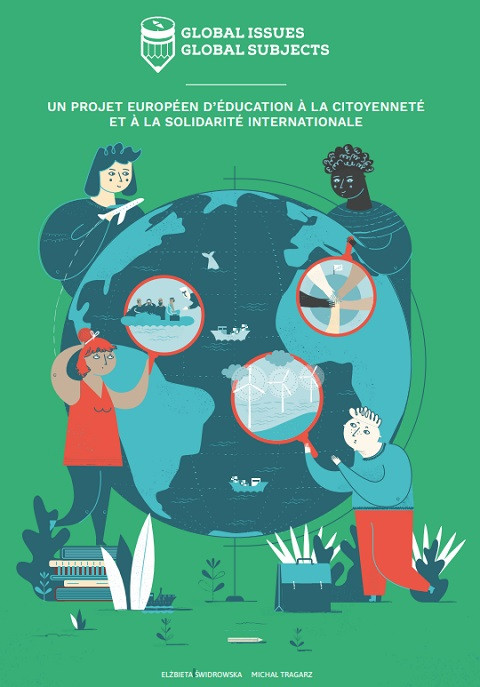 Un projet européen d’éducation à la citoyenneté et à la solidarité internationale Year of publication: 2020 Author: Elżbieta Swidrowska | Michał Tragarz Corporate author: Le Partenariat | Global Issues, Global Subjects (GIGS) | Union européenne Cette brochure nous permet de prendre conscience de l’importance d’une démarche citoyenne ayant pour but de favoriser une solidarité entre les territoires, les générations, les groupes sociaux et d’agir pour la construction d’un monde solidaire.
  Creativity, Resilience and Global Citizenship: Activity Toolkit Year of publication: 2015 Corporate author: CIT Crawford College of Art and Design | Youth Work Ireland This publication is a step by step guide to a range of activities exploring the themes of Creativity, Resilience & Global Citizenship through a wide range of workshops, sharing creative methods and tools. It has been co-developed by the Fast Forward training programme which brought together young people and youth workers from Ireland, Hungary, Italy and UK in Cork, Ireland in January 2015. It was developed with thirty young people: youth workers, artists and educators who are passionate about supporting young people to grow as global citizens. It is useful to provide a context for anyone engaging others in the creative activities presented in this toolkit.
 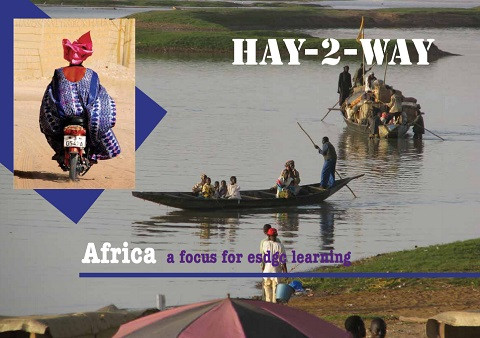 HAY-2-WAY: Africa; A Focus for ESDGC learning Year of publication: 2014 Author: Scott Sinclair Corporate author: Hay 2 Timbuktu This resource describes the education work that was part of the Two Towns One World project. It makes the case for an Africa focus as a significant theme in Education for Sustainable Development and global citizenship learning (ESDGC).The Two Towns One World project had two main strands: Locally in the Hay-on-Wye area with the Gwernfed cluster of schools and Nationally in Wales through a series of workshops and conferences.The scope of the work was enhanced through partnership with other initiatives on the themes ‘Unpacking Africa’ and ‘Debating Development’. A conference in Llandrindod Wells in November 2013 brought the strands of work together and provided the main narrative of this publication.
 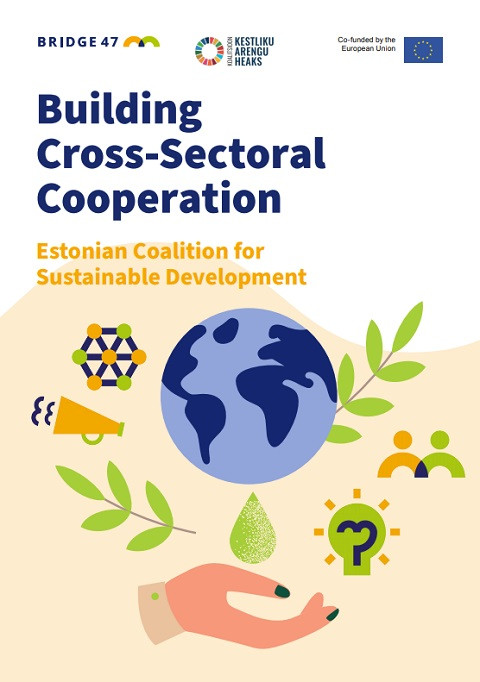 Building Cross-Sectoral Cooperation: Estonian Coalition for Sustainable Development Year of publication: 2020 Corporate author: Estonian Roundtable for Development Cooperation (AKÜ) | Bridge 47 | European Union (EU) This publication presents the members of Estonian Coalition for Sustainable Development, examples of their actions towards a more sustainable future and also some of the activities that the partnerships together have carried over the past few years. It is a great example of a cross-sectoral cooperation and a way of sharing knowledge.
 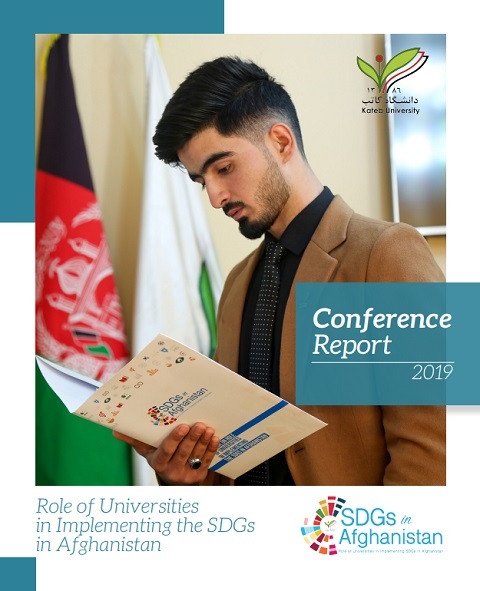 Role of Universities in Implementing the SDGs in Afghanistan: Conference Report (2019) Year of publication: 2019 Corporate author: Kateb University On August 29, 2019, Kateb University, in partnership with the Sustainable Development Solutions Network (SDSN) and Ministry of Economy of Afghanistan (MoEC), UNDP, and Afghanistan Research and Evaluation Unit (AREU), organized a one-day conference titled ‘Role of Universities in Implementation of the SDGs in Afghanistan’. The event was held at Government Media and Information Center with over 250 participants from different universities, CSOs, Development Organizations and the government organizations. They came together to discuss the current status quo of the SDGs in Afghanistan and to discuss the role universities can play in achieving the SDGs in Afghanistan. The conference was a gateway for further cooperation among universities in Afghanistan to play their roles in the fields of Teaching and Learning, Research, External Leadership and Operation and Governance. This report provides a summary of the key issues discussed at the conference and abstracts every presentation.