
Resources
Explore a wide range of valuable resources on GCED to deepen your understanding and enhance your research, advocacy, teaching, and learning.
1,322 Results found
 Политика в сфере высшего образования в Центральной Азии и Афганистане Year of publication: 2019 Author: Emma Sabzalieva Corporate author: University of Central Asia (UCA) Данный отчет преследует две цели. Первая – рассмотреть сферу высшего образования в Центральной Азии, делая особый акцент на Кыргызстане, Таджикистане и Афганистане. Вторая цель – предложить политические решения, способные помочь этим государствам сделать их системы высшего образования более инновационными с опорой на науку и технологии.
  Global Citizenship and Youth Participation in Europe Year of publication: 2016 Author: Douglas Bourn Corporate author: Oxfam | Oxfam Italia | UCL Institute of Education | CARDET | Pah Global Citizenship has been recognized as an important component of education by UNESCO through the Sustainable Development Goals launched in 2015 and the recent Global Education Congress in Croatia.While there has been considerable activity across Europe in encouraging youth engagement in democratic institutions, this report suggests that insufficient attention has been given to the linkages young people make between their outlook on the world, their personal and social identity and the ways they use tools such as social networking to engage in societies.The report also suggests to teachers that they need to address and respond to the interests of young people in issues such as refugees and migration, climate change and global terrorism by equipping them with the knowledge and skills to effectively engage in these debates.
  Youth Participation for Active Global Citizenship: Future Youth School Forums Project Report Year of publication: 2018 Author: Anna Jarkiewicz | Joanna Leek Corporate author: Oxfam GB | University of S odz (Poland) The Future Youth School Forums (FYS-Forums) project took place in Cyprus, Italy, Poland, Lithuania and the UK from 2015 to 2018 and was funded by EU Erasmus+. Its aim was to show how creating a group of engaged young global participants requires the engagement of teachers in activities to promote global citizenship – and to provide teachers and young people with the tools to promote effective and inclusive youth leadership across formal and informal education through global citizenship forums.This report on the project looks at the role of teachers and partnerships with students in raising critical awareness of global citizenship.
  The Education of Core Values Among Contemporary Youth Students: Based on the Enlightenment From American Citizen Core Values Education (Journal of Liaoning University, Philosophy and Social Sciences Edition; Vol. 45, No. 4) Year of publication: 2017 Author: Ji Huibin | Wang Ping Corporate author: Liaoning University Civic Education is a key task for modern nation states around the world, among which the education of core values among youth students is the most important issue. The US has its own experience and practice in civic education and core values education. An analysis of the US experience can provide reference and enlightenment for the promotion and practice of core socialist values among youth students. 当代青年学生的核心价值观教育: 基于美国公民核心价值观教育的启示 (辽宁大学学报, 哲学社会科学版; Vol. 45, No. 5) Year of publication: 2017 Author: Ji Huibin | Wang Ping Corporate author: Liaoning University 公民教育是当今世界现代民族国家都面临的重要任务。其中,青年的核心价值观教育是公民教育中最为核心的问题。美国在其公民教育和核心价值观教育方面有着独到的历史经验和实践逻辑,通过整理和分析这些经验,为我国青年学生弘扬和践行社会主义核心价值观提供借鉴和启示。
 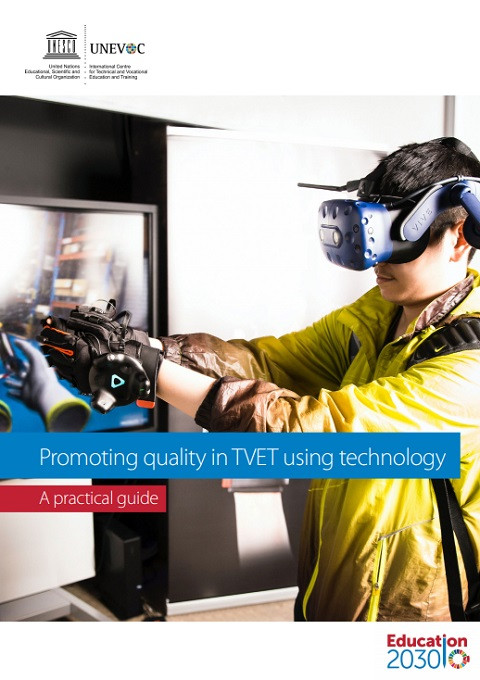 Promoting Quality in TVET Using Technology: A Practical Guide Year of publication: 2020 Corporate author: UNESCO International Centre for Technical and Vocational Education and Training (UNEVOC) Technology has altered many aspects of life, including education and training. As a result of technological developments, technical and vocational education and training (TVET) has become more accessible to students, and the quality of education and training has improved too. Teachers and trainers can use digital tools to manage their tasks effectively and engage learners in digital rich environments. Learners can also use technology to learn new skills and to collaborate and interact with teachers and trainers. The COVID-19 pandemic has however underlined the current difficulties in effectively integrating technologies in the delivery of education and training. Institutions need to make constant assessments of their capacity and readiness to provide technology-rich environment for learning. At the same time, teachers’ and trainers’ readiness is also of particular importance to adopt appropriate pedagogic approaches with technology. This practical guide addresses institutions and teachers and trainers. It helps TVET institutions to understand the organizational plans to build up their capacity to stimulate digital learning. It also guides teachers that want to develop their competencies, improve their pedagogical strategies with use of technology, and learn from existing practice. By showing how technology is used in an integrated instruction model and providing helpful resources, this guide helps teachers and trainers to effectively plan their own tasks and delivery of instruction with the right technology tools.
  감염병 재난 극복을 위한 영유아 심리방역 매뉴얼 Year of publication: 2020 Author: 조숙인 | 송하나 | 김연수 | 김주련 | 김문정 Corporate author: 육아정책연구소 2020년도 수시과제 '재난 극복을 위한 영유아 정신건강 지원 매뉴얼 개발(조숙인, 송하나, 김연수, 김주련, 김문정)'의 일환으로 개발한 자료집이다. [목차]01. 감염병 재난이란?02. 감염병 재난은 왜 스트레스일까요?03. 감염병 재난 스트레스 반응 알아보기04. 영유아 부모와 교사를 위한 감염병 재난 기본 대응 방법05. 영유아 발달 특성에 따른 감염병 재난 스트레스 반응 이해하기06. 영유아에게 감염병 재난 설명하기07. 재난 후 영유아가족 적응 돕기08. 사례를 통해 배우는 영유아 감염병 재난 스트레스 대응 방법09. 기타 재난 스트레스 대응 방법10. 영유아와 함께 하는 마음 도닥이기 활동
  رسم بياني للتقدم املحرز يف تحقيق أهداف التنمية املستدامة لعام 2020 Year of publication: 2020 Corporate author: United Nations (UN) قدم الرسم البياين للتقدم احملرز يف حتقيق أهداف التنمية املستدامة لعام 2020 حملة عما حتقق من تقدم على املستويني العاملي واإلقليمي حبلول هناية عام 2019 .وهو يغطي غايات خمتارة يف إطار األهداف الـ 17 خلطة التنمية املستدامة لعام 2030 .وقد ً إىل إجياد حلول عاجلة من قبل احلكومات الوطنية واحمللية ومنظمات اجملتمع املدين والقطاع اخلاص لتحقيق أهداف التنمية املستدامة حبلول عام 2030 .ويبني الرسم البياين مدى ما أطلق األمني العام لألمم املتحدة، ببداية عام 2020 ،عقد العمل، داعيا ُ ٍ ظهر أن معدل التقدم يف معظم األهداف كان غري كاف، وأن هناك حاجة إىل تسريع كبري. ً. كما ي ً عاجال ُربز اجملاالت اليت تتطلب اهتماما بلغناه من تقدم يف حتقيق التزاماتنا، وي Sustainable Development Goals Progress Chart 2020 Year of publication: 2020 Corporate author: United Nations (UN) The Sustainable Development Goals Progress Chart 2020 presents a snapshot of global and regional progress by the end of 2019. It covers selected targets under the 17 Goals of the 2030 Agenda for Sustainable Development. At the beginning of 2020, the Secretary-General launched the Decade of Action, calling for accelerated solutions by national and local governments, civil society organizations and the private sector to achieve the Sustainable Development Goals by 2030. The progress chart shows how far we have come in realizing our commitments, and which areas require urgent attention. It also shows that, for most Goals, the pace of progress has been insufficient and substantial acceleration is needed. Gráfico de Progreso de los Objetivos de Desarrollo Sostenible 2020 Year of publication: 2020 Corporate author: United Nations (UN) El gráfico de progreso de los Objetivos de Desarrollo Sostenible para 2020 representa una imagen general del progreso a nivel mundial y regional para fines del año 2019. Abarca metas seleccionadas de los 17 objetivos de la Agenda 2030 para el Desarrollo Sostenible. A principios de 2020, el Secretario General de las Naciones Unidas puso en marcha el Decenio de Acción, en el que exhortó a los gobiernos nacionales y locales, las organizaciones de la sociedad civil y el sector privado soluciones aceleradas para poder alcanzar los Objetivos de Desarrollo Sostenible para el año 2030. El gráfico de progreso representa los logros alcanzados en el cumplimiento de nuestros compromisos y las áreas que requieren atención urgente. También muestra que, para la mayoría de los objetivos, el ritmo del progreso ha sido insuficiente y se requiere una aceleración sustancial.