
Resources
Explore a wide range of valuable resources on GCED to deepen your understanding and enhance your research, advocacy, teaching, and learning.
1,448 Results found
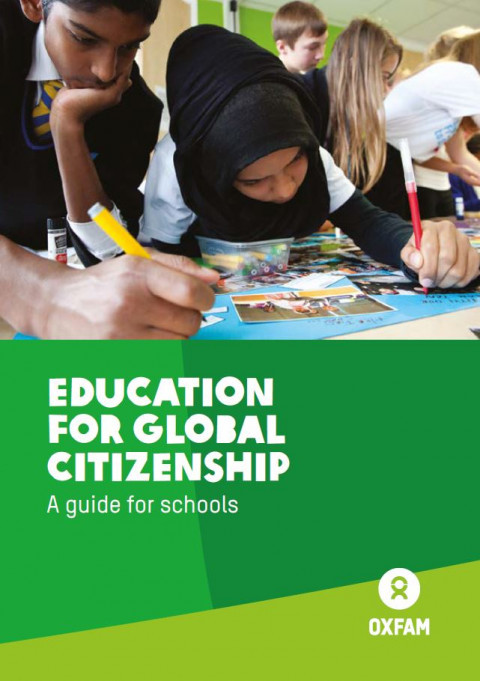 Education for Global Citizenship: A Guide for Schools Year of publication: 2015 Corporate author: Oxfam GB Education for global citizenship supports young people to explore and question the world around them. It promotes critical thinking, advocates social justice and encourages learners to apply their learning to real-world issues.This guide is packed with practical information for mapping global citizenship across different subject areas and age groups. It also includes inspiring case studies from schools that take a global citizenship approach to teaching and learning.
 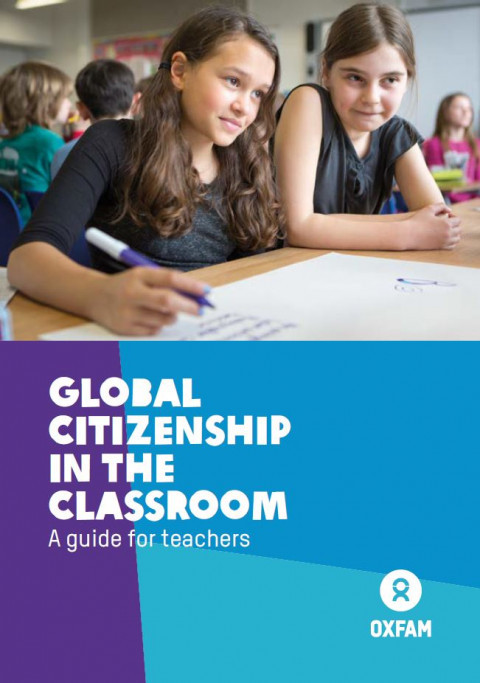 Global Citizenship in the Classroom: A Guide for Teachers Year of publication: 2015 Corporate author: Oxfam GB This guide is packed with practical tools and advice for teachers wanting to embed global citizenship in their classrooms. Learn how to effectively bring a global lens into your teaching with our handy planning framework, participation methods, and tools to assess learning.Develop your teaching practice with both innovative and tried-and-tested approaches. Help your learners ask questions, make connections, and take action as active global citizens.
 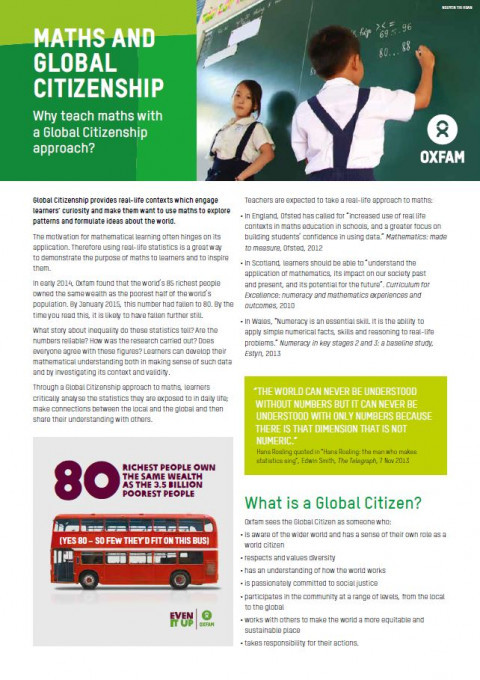 Maths and Global Citizenship Corporate author: Oxfam GB Maths can help your learners better understand different people, places and patterns in the world. Teaching it with a global angle can also give an insight into how maths can be applied and used to address and inform real-world issues.This guide includes creative ideas for how global citizenship can be utilised in core areas of the curriculum like ratios and fractions, probability and number. It's also filled with innovative resources for use in your classroom.
 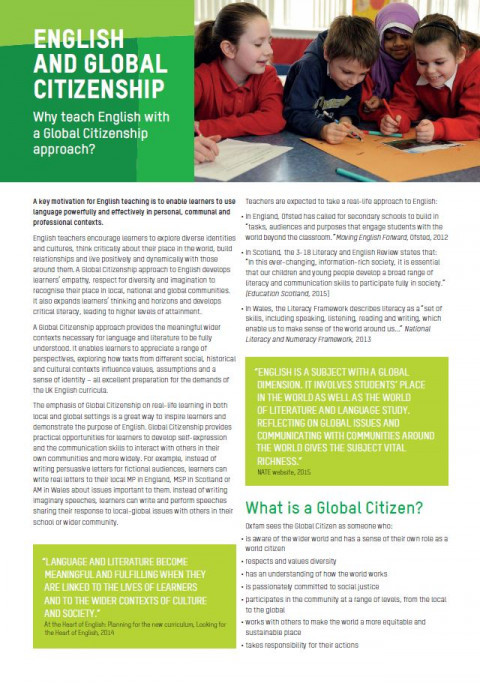 English and Global Citizenship Corporate author: Oxfam GB English lessons are an opportunity for your learners to explore new and diverse cultures, hone their language skills and develop empathy.This guide includes ideas for learning about the world whilst improving speaking and listening, reading, writing and media literacy skills. It also contains handy links to further resources and ideas for books which can help capture your learners' imaginations.
 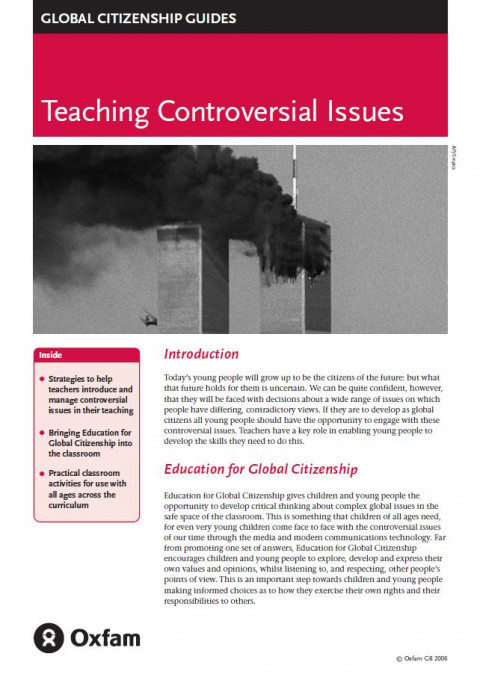 Global Citizenship Guides: Teaching Controversial Issues Year of publication: 2006 Corporate author: Oxfam GB This guide aims to demonstrate how, by enhancing young people’s ability to handle controversial issues, teachers can support and develop them as global citizens.This guide explores:what controversial issues arewhy controversial issues should be taughtwhy some issues are, or can become, controversialwhat guidance exists for handling controversial issuesclassroom strategies for handling and exploring controversial issuessome practical activities for teaching controversial issues.
 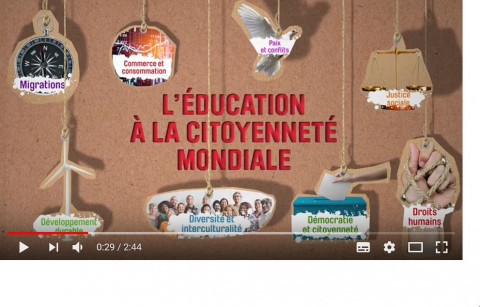 [Vidéo] Pédagogie du projet et éducation à la citoyenneté mondiale Year of publication: 2018 Corporate author: Annoncer la Couleur (ALC) Quels sont les avantages de la pédagogie du projet ? En quoi cette pédagogie est particulièrement propice pour faire de l'éducation à la citoyenneté mondiale ?
  [Vidéo] L'éducation à la citoyenneté au Sud Year of publication: 2016 Corporate author: ONG Défi Belgique Afrique (DBA) Un projet d'éducation au développement de la jeuness africaine
  [Vidéo] L'école apprend la citoyenneté Year of publication: 2016 Corporate author: Mission laïque française Organisé au Maroc en mai 2016, le congrès du réseau d'enseignement français à l'étranger mlfmonde a réuni 300 personnes autour du thème "l'école apprend la citoyenneté", élément central du projet éducatif de la Mission laïque française.
 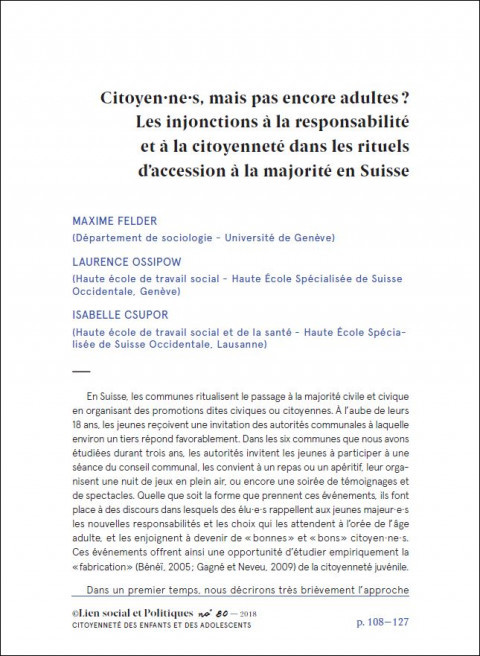 Citizens but not Adults? Injunction to be Responsible and Citizens in Official Coming of Age Rituals in Switzerland Year of publication: 2018 Author: Maxime Felder | Laurence Ossipow | Isabelle Csupor Corporate author: Lien social et Politiques Swiss municipalities organize ceremonies for their residents reaching the official age of full citizenship. In the six studied municipalities, local authorities invite them to a municipal council’s meeting, offer them a dinner or an aperitif, or organize them a show and a debate with role models. Speeches are central to these ceremonies, and authority representatives encourage their audience to be “good” citizens. Call to vote is the leitmotiv, but discourses reveal broader definitions of citizenship, insisting sometimes on a local commitment and volunteering, and sometimes on the necessity to fight climate change and inequalities. Comparing officials’ speeches to statements of young people participating in these events reveals “tensions”. Indeed, authority representatives address young citizens without considering them as fully adult, and they do not consider themselves as such neither. However, some of them are already involved in forms of vernacular citizenship, and are progressively leaving the municipality to study, work or travel. Ultimately, these ceremonies allow officials to stage their interest in the youth, which they consider as both uncompleted and essential to the renewal of democracy. Citoyen·ne·s, mais pas encore adultes ? Les injonctions à la responsabilité et à la citoyenneté dans les rituels d’accession à la majorité en Suisse Year of publication: 2018 Author: Maxime Felder | Laurence Ossipow | Isabelle Csupor Corporate author: Lien social et Politiques Les communes suisses organisent un rituel pour célébrer l’accession à la majorité civile et civique de leurs résident·e·s qui atteignent l’âge de dix-huit ans. Dans les six communes que nous avons étudiées, les autorités invitent les jeunes à participer à une séance du conseil communal, les convient à un repas ou un apéritif, ou leur organisent une soirée de témoignages, de spectacle ou encore de jeux en plein air. Ces événements font place à des discours dans lesquels des représentant·e·s des autorités enjoignent les jeunes à être de « bonnes » et « bons » citoyens. Si l’appel au vote est toujours le leitmotiv, les discours se centrent aussi sur des définitions plus larges de la citoyenneté, insistant tantôt sur l’engagement associatif et local, tantôt sur la nécessité d’agir pour l’écologie ou contre les inégalités. Le croisement de ces analyses avec celles des entretiens menés avec de jeunes participant·e·s fait émerger des tensions. En effet, les autorités s’adressent à des jeunes qu’elles ne considèrent pas tout à fait comme des adultes (et qui ne se considèrent pas non plus comme tel·le·s), qui sont pour certain·e·s déjà engagé·e·s dans ces formes de citoyenneté vernaculaire, et qui s’apprêtent à quitter leur commune pour étudier ou voyager. Ces promotions citoyennes permettent ainsi de mettre en scène l’intérêt des élu·e·s pour les jeunes, considéré·e·s comme des citoyen·ne·s en apprentissage dont dépend le renouvellement de la démocratie.