
Resources
Explore a wide range of valuable resources on GCED to deepen your understanding and enhance your research, advocacy, teaching, and learning.
1,447 Results found
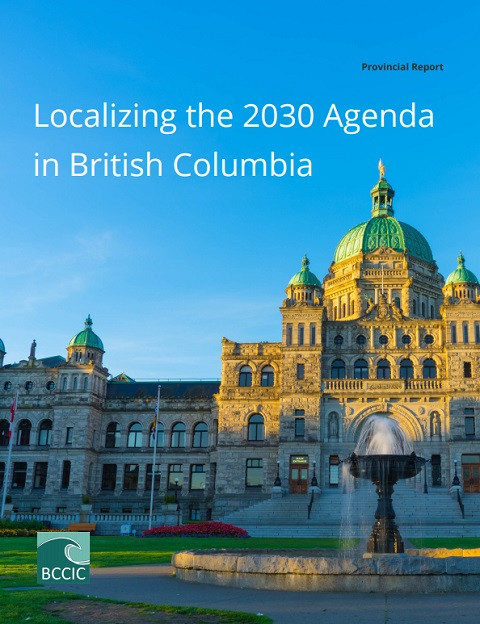 Localizing the 2030 Agenda in British Columbia Year of publication: 2020 Author: Zosa De Sas Kropiwnicki-Gruber | Dan Harris Corporate author: British Columbia Council for International Cooperation (BCCIC) This report details a British Columbian civil society response to the Government of Canada’s current interim national Sustainable Development Goals strategy. The report provides feedback on the interim strategy and Canada’s engagement with the United Nations Sustainable Development Goals (SDGs) including recommendations linked to the interim strategy’s key actions. At this time it represents the only provincial scale civil society consultation on the strategy in Canada. The report begins by introducing the origin of the interim national SDG strategy and the rationale for holding the consultation. While the following section on “What we heard” captures common themes on how to improve the strategy and Canada’s engagement with the SDGs, the report then concludes with recommendations synthesized from these suggestions on the ways in which we can strengthen and enact the interim national SDG strategy.
 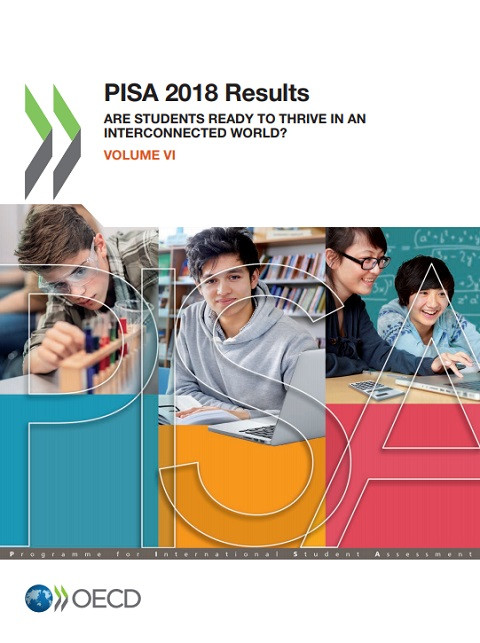 PISA 2018 Results (Volume VI): Are Students Ready to Thrive in an Interconnected World? Year of publication: 2020 Corporate author: Organisation for Economic Co-operation and Development (OECD) The OECD Programme for International Student Assessment (PISA) examines what students know in reading, mathematics and science, and what they can do with what they know. It provides the most comprehensive and rigorous international assessment of student learning outcomes to date. Results from PISA indicate the quality and equity of learning outcomes attained around the world, and allow educators and policy makers to learn from the policies and practices applied in other countries. This is one of six volumes that present the results of the PISA 2018 survey, the seventh round of the triennial assessment. Volume VI: Are Students Ready to Thrive in an Interconnected World? explores students’ ability to examine issues of local, global and cultural significance; understand and appreciate the perspectives and worldviews of others; engage in open, appropriate and effective interactions across cultures; and take action for collective well-being and sustainable development. The volume explores students’ outcomes on the cognitive test and corresponding questionnaire in addition to their experiences of global and intercultural learning at school and beyond.
  Policy Recommendations on Global Citizenship Education (GCE): Boosting Global Citizenship Education Using Digital Storytelling Year of publication: 2018 Author: Alessandra Accogli | Barbara Quarta Corporate author: Brights Project | European Union (EU) | European Commission This document summarizes the experience gained from implementing the BRIGHTS methodology and curriculum for GCE and provides policy recommendations for their adoption in formal and non-formal educational contexts.
  Youth Participation and Global Citizenship: Challenges and Recommendations for Future Youth School Forums Year of publication: 2016 Author: Anna Jarkiewicz | Joanna Leek Corporate author: Oxfam GB | University of S odz (Poland) The overall purpose of this report is to identify the needs of the Future School Youth Forums on youth participation and global citizenship education. The study synthesizes information from Cyprus, Italy, Lithuania, Poland and the United Kingdom in order to understand similarities and differences, and compare them with wider European trends to understand transversal needs across Europe. It discusses in greater detail the current application of global citizenship youth forums and global citizenship/youth participation in each of the 5 countries – and therefore across 7 national systems (as Wales and Scotland have their own systems), and also transversally across Europe. The report will help Partners to better understand the project’s needs, so that they can design project outputs more effectively.
  Time to Reach for the Moon: The EU Needs to Step up Action and Lead the Transformation to Sustainability; Civil Society SDG Monitoring Report Year of publication: 2020 Author: Sylvia Beales | George Gelber Corporate author: SDG Watch Europe | Make Europe Sustainable for All This report explains why the EU’s SDG reporting creates an illusion of sustainability and makes concrete proposals for meaningful monitoring to become a stronger foundation for transformative policies. The report flags up serious gaps, bringing them to life with 17 individual stories. It also offers 17 solutions, real-life examples of progressive policies, innovative initiatives and truly sustainable business models.
  Aboriginal Worldviews and Perspectives in the Classroom: Moving Forward Year of publication: 2015 Corporate author: Province of British Columbia This resource presents how the BC Ministry of Education is embedding Aboriginal perspectives into all parts of the curriculum in a meaningful and authentic manner. It will also help educators to move ahead with transformative practice in relation to Aboriginal education. Visions du monde et perspectives autochtones dans la salle de classe : Aller de l’avant Year of publication: 2015 Corporate author: Province of British Columbia Cette ressource présente comment le Ministère de l’Éducation de la Colombie-Britannique se propose d’intégrer, de manière significative et authentique, des perspectives autochtones à toutes les parties du programme d’études. Cela aidera également les éducateurs à essayer des pratiques transformatrices en matière d’éducation autochtone.
  Référentiel de compétences harmonisé: Deuxième phase de la recherche-action sur la mesure des apprentissages des bénéfi ciaires des programmes d'alphabétisation Year of publication: 2020 Author: Madina Bolly | Hakima Megherbi Corporate author: Institut de l’UNESCO pour l’apprentissage tout au long de la vie (UIL) Le Référentiel de compétences harmonisé constitue un guide pour l’élaboration des programmes d’alphabétisation et un outil formatif novateur destiné aux 12 pays de la Recherche-action sur la mesure des apprentissages des bénéficiaires des programmes d’alphabétisation (RAMAA). Résultant d’une mise en commun des compétences (littératie et numératie), des connaissances, et de leurs niveaux de maitrise, éléments pris en compte dans les différents programmes d’alphabétisation, il a été développé et validé par l’ensemble des pays de la RAMAA et est aujourd’hui utilisé dans ces derniers par les directions chargées de l’alphabétisation des ministères de l’Éducation et par les organisations de la société civile. Moyennant des adaptations, le référentiel de la RAMAA peut servir de point de départ pour d’autres pays qui ne sont pas encore dotés d’un tel instrument mais souhaitent cependant standardiser leurs offres de formation et en améliorer la qualité.
  Национальный добровольный обзор достижений Целей устойчивого развития в Кыргызской Республике 2020 Year of publication: 2020 Corporate author: Kyrgyzstan. Ministry of Economy | United Nations (UN) Данный добровольный обзор содержит в себе информацию по выполнению Кыргызской Республикой целей устойчивого развития 2030, задачи и направления дальнейшей деятельности. Отдельное внимание уделено ЦУР 4 "Образование", где приоритетом является повышение качества и охвата образованием на всех уровнях, а также развитие системы непрерывного образования. Voluntary National Review on the Implementation of the Sustainable Development Goals in the Kyrgyz Republic 2020 Year of publication: 2020 Corporate author: Kyrgyzstan. Ministry of Economy | United Nations (UN) This voluntary review contains information on the implementation of the 2030 Sustainable Development Goals by the Kyrgyz Republic, objectives and directions for further activities. Special attention is paid to SDG 4 "Education", where the priority is to improve the quality and coverage of education at all levels, as well as the development of the lifelong education system.