
Resources
Explore a wide range of valuable resources on GCED to deepen your understanding and enhance your research, advocacy, teaching, and learning.
3,223 Results found
 우리나라 지역별 기후변화 전망과 적응정책 차원의 시사점 (환경포럼 제26권 통권 263호) Year of publication: 2022 Author: 심창섭 | 문준기 | 한지현 | 서지현 | 송영일 | 홍재우 | 유명수 Corporate author: 한국환경연구원 지역 차원의 기후변화 적응을 위해서는 지역 차원의 기후변화 특징을 파악하고 고해상도의 미래 기후전망이 필요하다. 본고에서는 우리나라의 과거 기상관측 및 다종의 기후 시나리오 앙상블을 기반으로 지역별 기후변화 양상과 전망에 대해 논의하였다. 본 저작물은 한국환경연구원에서 2022년 작성하여 공공누리 제4유형으로 개방한 '우리나라 지역별 기후변화 전망과 적응정책 차원의 시사점(작성자: 심창섭)'을 이용하였으며, 해당 저작물은 한국환경연구원 홈페이지(https://www.kei.re.kr/)에서 무료로 내려받으실 수 있습니다.
  Global Education Guidelines 2019: Concepts and Methodologies on Global Education for Educators and Policy Makers Year of publication: 2019 Corporate author: North-South Centre of the Council of Europe | Council of Europe The Global Education Guidelines are an initiative of the Global Education Programme of the North South Centre of the Council of Europe, and answer a need expressed by the North-South Centre’s (NSC) network of global education practitioners – the Global Education network - to have a common tool, built on experience gained by the network and other partners, to support educators to comprehend and successfully design, implement and carry out global education initiatives and learning activities. This updated edition of the Guidelines includes novelties and responds to the challenge of being a user-friendly handbook, by (i) introducing the concept of competence-based learning, with the Council of Europe Reference Framework of Competences for Democratic Culture and the OECD concept of global competences, and explains in detail and with practical examples and user friendly tools how global education can make use of competence-based learning to empower learners; (ii) has broadened the content of the chapter on methodology and methods, with step by step guides for the daily work of practitioners, educators and facilitators, and further exemplifying the competence-based learning concept; and (iii) by including a new chapter on media literacy to support practitioners and learners to navigate today’s communication and digital challenges. Guide Pratique sur l’Éducation à la Citoyenneté Mondiale 2019: Concepts et méthodologies en matière d’éducation à la citoyenneté mondiale à l’usage d’éducateurs et de responsables politiques Year of publication: 2019 Corporate author: North-South Centre of the Council of Europe | Conseil de l'Europe Ce guide pratique sur l’éducation à la citoyenneté mondiale répond à un besoin exprimé par les praticiens du réseau de la Semaine de l’éducation à la citoyenneté mondiale du Centre Nord-Sud du Conseil de l’Europe (CNS), lesquels ont manifesté leur désir de disposer d’un instrument commun, façonné à la lumière de l’expérience acquise par le réseau et d’autres partenaires, susceptibles d’aider les éducateurs à concevoir et à mener à bien des initiatives en matière d’ECM. La présente édition mise à jour du Guide inclut des nouveautés et répond aux défis inhérents à la rédaction d’un manuel facile à utiliser en : (i) introduisant le concept d’apprentissage fondé sur les compétences, conformément au Cadre de référence des compétences pour une culture démocratique du Conseil de l’Europe et au concept de compétence globale de l’OCDE, et en recourant à des exemples pratiques détaillés et à des outils conviviaux pour expliquer comment l’éducation à la citoyenneté mondiale peut utiliser l’apprentissage fondé sur les compétences pour autonomiser les apprenants; (ii) élargissant le contenu du chapitre sur la méthodologie et les méthodes par le biais d’un guide étape par étape conçu pour aider les praticiens, les éducateurs et les facilitateurs dans leur travail quotidien et d’une meilleure illustration des avantages inhérents au concept d’apprentissage fondé sur les compétences; et (iii) en incluant un nouveau chapitre sur l’éducation aux médias pour aider les praticiens et les apprenants à relever les défis actuels associés à la communication et au numérique.
  UNESCO Framework for Culture and Arts Education: Implementation Guidance Year of publication: 2025 Corporate author: UNESCO Culture and the arts are integral to inclusive, equitable and quality education. They nurture creativity, critical thinking, and respect for cultural diversity, empowering learners to engage meaningfully with the world and to build more just, sustainable and peaceful societies. Yet, countries have not systematically incorporated culture and arts education across all levels of education. This Implementation guidance for the UNESCO Framework for Culture and Arts Education is a collective invitation to reimagine education by placing culture and the arts at its heart and advancing a transformative vision of education for all.Through a holistic approach, the Guidance supports the integration of culture and the arts across formal, non-formal and informal education, throughout life. It offers practical orientations to help Member States fulfil the commitment enshrined in the UNESCO Framework for Culture and Arts Education, adopted by Ministers of Culture and Education in 2024. With a global perspective, this Guidance will equip policy-makers, educators and cultural actors in developing inclusive, context-relevant policies, curricula and learning environments.The Guidance is a milestone on a shared journey, inviting countries to harness their cultural strengths, respond to emerging challenges, and work together towards a more inclusive education for all. Pautas para una Educación Global: Manual para que las y los educadores entiendan e implementen una educación global Year of publication: 2019 Corporate author: North-South Centre of the Council of Europe | Council of Europe Esta guía práctica para la educación para la ciudadanía mundial responde a una necesidad expresada por los profesionales de la red de la Semana de Educación para la Ciudadanía Mundial del Centro Norte-Sur (CNS) del Consejo de Europa, quienes expresaron su deseo de tener un instrumento común, configurado a la luz de la experiencia adquirida por la red y otros socios, que pueden ayudar a los educadores a diseñar y llevar a cabo iniciativas en GCED. Esta guía práctica para la educación para la ciudadanía mundial responde a una necesidad expresada por los profesionales de la red de la Semana de Educación para la Ciudadanía Mundial del Centro Norte-Sur (CNS) del Consejo de Europa, quienes expresaron su deseo de tener un instrumento común, configurado a la luz de la experiencia adquirida por la red y otros socios, que pueden ayudar a los educadores a diseñar y llevar a cabo iniciativas en GCED.
  COUNCIL OF EUROPE CONTRIBUTION TO THE UNITED NATIONS 2030 AGENDA FOR SUSTAINABLE DEVELOPMENT Corporate author: Council of Europe On 1 January 2016, the World started implementing the “UN 2030 Agenda for Sustainable Development”, an ambitious and universal vision, based on 17 Sustainable Development Goals (SDGs) and 169 associated targets, which are all integrated, indivisible and interlinked. They apply universally to all and are highly relevant for the Council of Europe; countries are expected to take ownership and establish national frameworks for the achievement of the 17 goals. Most, if not all, of the Council of Europe’s activities are relevant and contribute to the implementation of the UN 2030 Agenda and the achievement of the SDGs. Recognising the intrinsic links between sustainable development and the protection of human rights, the Council of Europe is committed to working with and supporting its 47 member states in implementing the UN 2030 Agenda through a wide range of actions. CONTRIBUTION DU CONSEIL DE L'EUROPE AU PROGRAMME DE DÉVELOPPEMENT DURABLE A L’HORIZON 2030 DE L’ONU Corporate author: Conseil de l'Europe Le 1er janvier 2016, le monde a entrepris la mise en œuvre du «Programme de développement durable de l’ONU à l’horizon 2030», vision ambitieuse et universelle axée sur 17 Objectifs de Développement Durable (ODD) assortis de 169 cibles intégrées, indissociables et intimement liées. Les objectifs ont une application universelle et sont très pertinents pour le Conseil de l'Europe ; les États s’engagent à se les approprier et à définir des cadres nationaux de réalisation des 17 objectifs. La plupart des activités du Conseil de l'Europe, sinon toutes, peuvent contribuer à la mise en œuvre du Programme 2030 de l’ONU et à la réalisation des ODD. Reconnaissant les liens intrinsèques entre développement durable et protection des droits de l’homme, le Conseil de l'Europe s’attache à travailler avec ses 47 États membres et à les soutenir dans la mise en œuvre du Programme 2030 pour toute une série de mesures.
 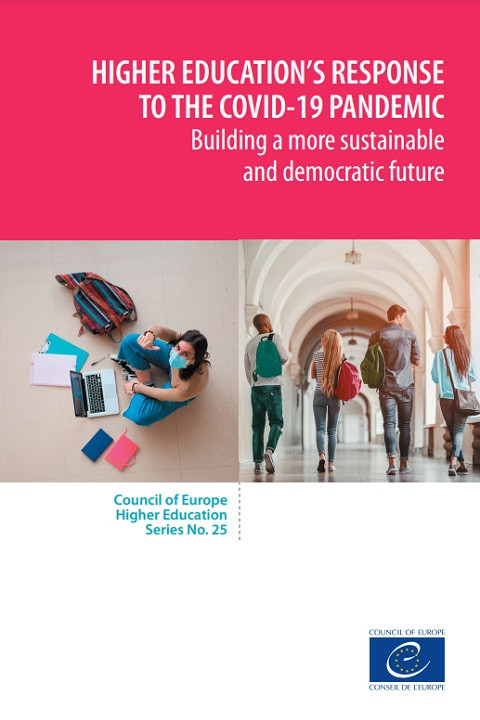 Higher Education's Response to the COVID-19 Pandemic: Building a More Sustainable and Democratic Future (Council of Europe Higher Education Series; No. 25) Year of publication: 2021 Author: Sjur Bergan | Tony Gallagher | Ira Harkavy | Ronaldo Munck | Hilligje van’t Land Corporate author: Council of Europe Public health was the immediate concern when the Covid-19 pandemic struck in Asia, then in Europe and other parts of the world. The response of our education systems is no less vital. Higher education has played a major role in responding to the pandemic and it must help shape a better, more equitable and just post-Covid-19 world. This book explores the various responses of higher education to the pandemic across Europe and North America, with contributions also from Africa, Asia and South America.The book describes the various ways in which higher education is facing the Covid-19 pandemic. It is designed to help universities, specifically their staff and students as well as their partners, contribute to a more sustainable and democratic future.
 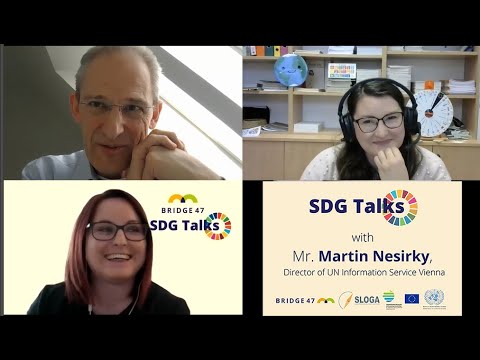 SDG Talk: Mr. Martin Nesirky Year of publication: 2021 Author: Martin Nesirky Corporate author: Sloga Platforma | Bridge 47 SDG Talk with Martin Nesirky, director of UN Information Service Vienna about Sustainable Development Goals, implication od COVID-19 pandemic on education, Global Citizenship Education and more.SDG Talks was prepared in cooperation with the UN Association for Slovenia, as part of the Bridge 47 - Building Global Citizenship project. The project is funded by the European Commission and the Ministry of Foreign Affairs of the Republic of Slovenia, and is implemented by the SLOGA Platform.Content does not reflect positions of the EU or Slovene MFA.
  Astrolabe: a guide to education for sustainable development coordination in Asia and the Pacific Year of publication: 2011 Corporate author: UNESCO Bangkok An astrolabe is an ancient instrument used to measure the position of the sun and stars. In the past it was used for a number of purposes, such as determining the time of day or night and measuring one’s current position in relation to the north and south poles. A mariner’s astrolabe was used to determine the latitude of a ship at sea and guide its direction. Similar to the mariner’s astrolabe, the Asia-Pacific Education for Sustainable Development (ESD) Astrolabe aims to assist UNESCO Member States in determining the current position of ESD in their country and guiding education and learning in a desired direction, so as to support the advancement of sustainable development in the national context. The ESD Astrolabe is also intended to complement ongoing efforts to enhance the quality of education throughout the Asia-Pacific region.