
Resources
Explore a wide range of valuable resources on GCED to deepen your understanding and enhance your research, advocacy, teaching, and learning.
2,775 Results found
 ¿Cómo convivir (con culturas diferentes) sin morir en el intento? Year of publication: 2022 Corporate author: CuriosaMente Este video presenta una perspectiva sobre las diferencias culturales, cómo es posible identificarlas, comprenderlas y adaptarse a las mismas. Responde las preguntas ¿Qué es la interculturalidad? ¿Cómo podemos vivir entre diferentes culturas?
 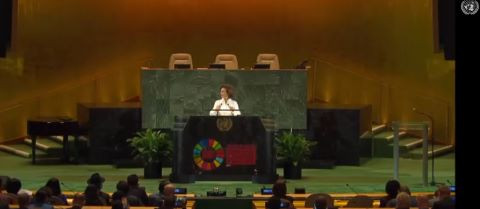 Audrey Azoulay (UNESCO) at the Transforming Education Summit Year of publication: 2022 Corporate author: United Nations (UN) This video shows the remarks made by Director-General of UNESCO Audrey Azoulay at the Opening segment of the UN Transforming Education Summit.
 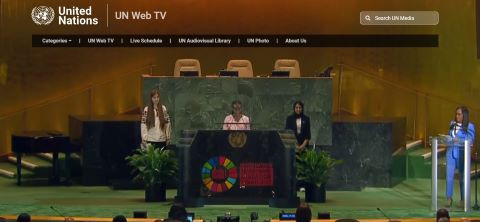 Vanessa Nakate (Climate Justice activist), Yelizaveta Posivnych (Student), Somaya Faruqi (Activist ) at the Transforming Education Summit (Leaders Day) Year of publication: 2022 Corporate author: United Nations (UN) Remarks by Vanessa Nakate, Climate Justice activist and UNICEF Goodwill Ambassador, Yelizaveta Posivnych, Student, Saint George Academy, New York; and Somaya Faruqi, Activist and former Captain of the Afghan Girls Robotics Team, on the rights of women and girls - Joint call to action, at the Youth Segment: The imperative for education transformation, at the transforming Education Summit (Leaders Day) - Opening segment.
 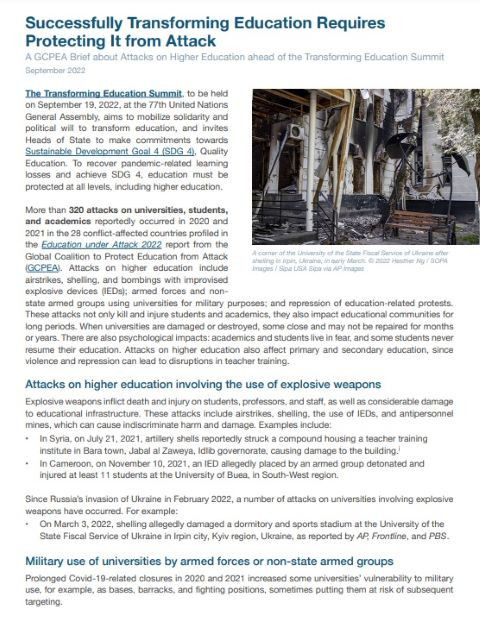 Successfully Transforming Education Requires Protecting It from Attack Year of publication: 2022 Corporate author: Global Coalition to Protect Education from Attack (GCPEA) The Transforming Education Summit, to be held on September 19, 2022, at the 77th United Nations General Assembly, aims to mobilize solidarity and political will to transform education, and invites Heads of State to make commitments towards Sustainable Development Goal 4 (SDG 4), Quality Education. To recover pandemic-related learning losses and achieve SDG 4, education must be protected at all levels, including higher education.
  The European Benchmark for Refugee Integration: A Comparative Analysis of the National Integration Evaluation Mechanism in 14 EU Countries Year of publication: 2019 Author: Alexander Wolffhardt | Carmine Conte | Thomas Huddleston Corporate author: National Integration Evaluation Mechanism (NIEM) The National Integration Evaluation Mechanism (NIEM) has published its baseline study presenting a comparative, indicator-based assessment of the refugee integration frameworks of 14 EU countries. The study’s results point out concrete steps that policymakers need to take to build a refugee integration framework in line with international and European standards.The report evaluates governments’ responses to the challenge of long-term integration of refugees and beneficiaries of subsidiary protection. The study considers several dimensions of integration and uses scores to assess relevant provisions at the national level.
 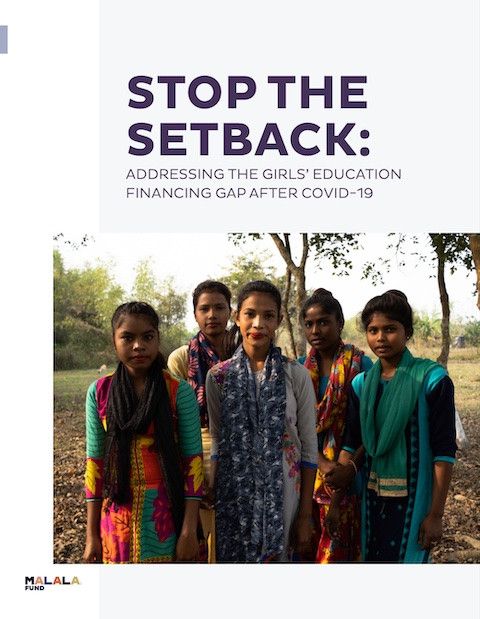 Stop the Setback: Addressing the Girls’ Education Financing Gap After COVID-19 Year of publication: 2021 Corporate author: Malala Fund Decades of research show that investing in girls’ education is one of the best investments we can make in the future peace, prosperity and sustainability of our planet. By taking the steps for girls’ education outlined in this report, leaders can build a better world in the pandemic’s wake — not just for girls, but for everyone.
 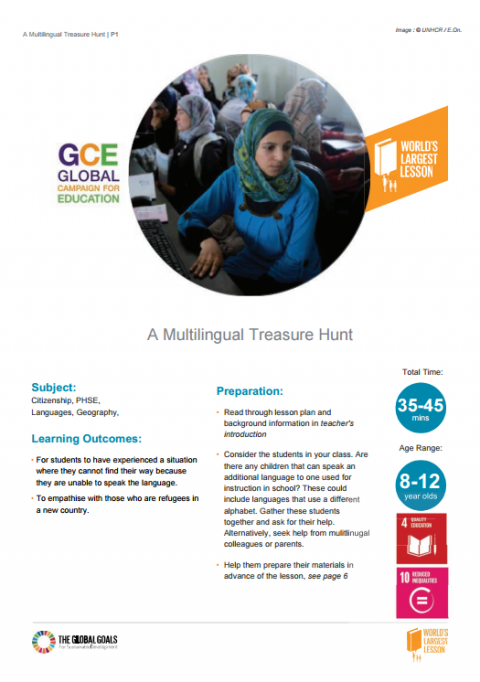 A Multilingual Treasure Hunt Corporate author: United Nations Children's Fund (UNICEF) World’s Largest Lesson is a collaborative education project to support the announcement of the United Nations Global Goals for Sustainable Development. Learning outcomes of the project: • For students to have experienced a situation where they cannot find their way because they are unable to speak the language. • To empathise with those who are refugees in a new country.
 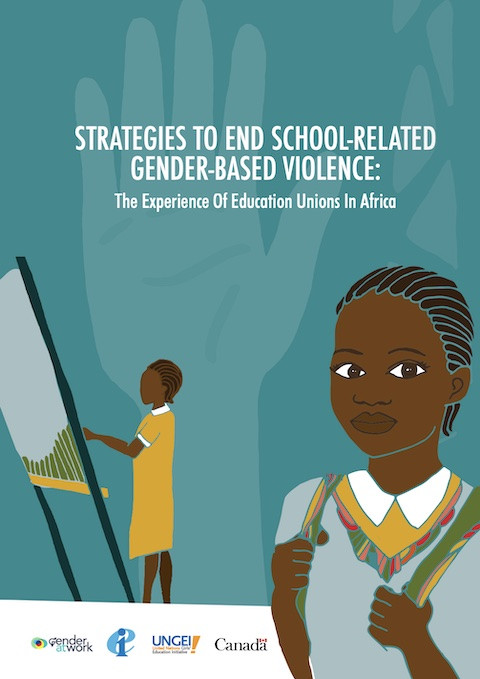 Strategies to End School-Related Gender-Based Violence: The Experience of Education Unions in Africa Year of publication: 2019 Author: Rex Fyles Corporate author: Education International (EI) | United Nations Girls' Education Initiative (UNGEI) | Gender at Work This document draws on the experience of nine EI member organisations in seven African countries committed to combatting SRGBV in their contexts. It presents the wide range of actions and strategies education unions can initiate to confront the challenges SRGBV poses to their students, members, organisations and societies. This collection of union experiences is intended to inform and inspire education unions and their members to test their own approaches to eliminating SRGBV. The document will also inform other stakeholders in the education sector interested in learning more about the unique strengths and specific roles education unions can play as partners in collective efforts to end SRGBV.The document is divided into two parts. The first section focuses on actions these unions have taken internally to adapt decision- making structures, update policies and deploy resources to empower their members to act. The second section looks at how education unions have reached out to other stakeholders – legislators, ministries, civil society organisations, traditional leaders, parents, media and learners – to pursue coordinated strategies for change. Estrategias para poner fin a la violencia de género en el ámbito escolar: La experiencia de los sindicatos de la educación en África Year of publication: 2019 Author: Rex Fyles Corporate author: Education International (EI) | United Nations Girls' Education Initiative (UNGEI) | Gender at Work Este documento se basa en la experiencia de nueve organizaciones afiliadas de la IE en siete países africanos comprometidos a combatir la VGAE en sus contextos. Presenta una amplia gama de acciones y estrategias que los sindicatos pueden iniciar para afrontar los desafíos que plantea la VGAE a sus estudiantes, miembros, organizaciones y sociedades. El propósito de esta colección de experiencias sindicales es informar e inspirar a los sindicatos de la educación y sus miembros para que pongan a prueba sus propias iniciativas para eliminar la VGAE. El documento también informará a otros grupos, del sector educación, interesados en aprender más sobre las fortalezas únicas y el papel específico que los sindicatos de la educación pueden desempeñar como socios en los esfuerzos colectivos para acabar con la VGAE.El documento está dividido en dos partes. La primera sección se enfoca en acciones que estos sindicatos han emprendido internamente para adaptar las estructuras de toma de decisiones, actualizar las políticas y desplegar recursos para empoderar a los y las miembros para actuar. La segunda sección da una mirada a cómo los sindicatos de la educación han llegado a otros grupos de interés – legisladores, ministerios, organizaciones de la sociedad civil, líderes tradicionales, padres, medios de comunicación y estudiantes – para desarrollar estrategias coordinadas hacia el cambio. Stratégies pour éradiquer la violence fondée sur le genre en milieu scolaire : L’éxperience des syndicats de l’éducation en afrique Year of publication: 2019 Author: Rex Fyles Corporate author: Education International (EI) | United Nations Girls' Education Initiative (UNGEI) | Gender at Work Le présent document puise dans l’expérience de neuf organisations membres de l’IE dans sept pays africains engagés dans la lutte contre la VGMS dans leur contexte particulier. Il présente la large gamme d’actions et de stratégies que peuvent mettre en œuvre les syndicats de l’enseignement pour relever le défi que la VGMS pose à leurs membres et à leurs élèves, à leurs organisations et à leurs sociétés. Ce recueil d’expériences syndicales est destiné à informer et à encourager les syndicats de l’enseignement et leurs membres à tester leurs propres démarches pour éliminer la VGMS. Il éclairera également les autres acteurs de l’enseignement qui souhaitent en savoir davantage sur les forces uniques et les rôles spécifiques que peuvent jouer les syndicats de l’enseignement dans les efforts collectifs pour mettre fin à la VGMS.Ce document est organisé en deux parties. La première section examine les mesures prises par ces syndicats à l’interne pour adapter leurs structures décisionnelles, mettre à jour leurs politiques et déployer les ressources nécessaires pour permettre à leurs membres d’agir. La seconde section étudie la façon dont les syndicats de l’enseignement ont amorcé le dialogue avec d’autres parties prenantes (législateurs, ministères, organisations de la société civile, responsables traditionnels, parents, médias et élèves) pour mettre en œuvre des stratégies de changement coordonnées.