
Resources
Explore a wide range of valuable resources on GCED to deepen your understanding and enhance your research, advocacy, teaching, and learning.
2,660 Results found
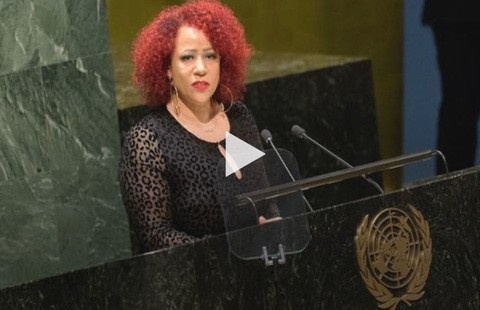 Remembering the Tragic History of Slavery in America is About Real Reconciliation - Interview with Hannah Jones, New York Times Year of publication: 2022 Corporate author: United Nations (UN) This audio is a UN News interview with New York Times reporter Hannah Jones, looking back at the history of slavery in the United States and highlighting the need to reflect on this history in order to address social problems such as the issue of racism today. 铭记美国奴隶制惨痛历史是为了实现真正和解——专访《纽约时报》记者汉娜-琼斯 Year of publication: 2022 Corporate author: United Nations (UN) 本音频是联合国新闻对《纽约时报》记者汉娜 · 琼斯的专访,回顾了美国奴隶制的历史,强调反思这段历史对解决当下种族主义等社会问题的必要性。
  Situation Analysis on the Rights of Persons with Disabilities in Uzbekistan Year of publication: 2021 Corporate author: UNICEF Uzbekistan | United Nations Population Fund (UNFPA) | United Nations Development Programme (UNDP) | UN. Office of the United Nations High Commissioner for Human Rights (UN. OHCHR) This study is based on the results of a situation analysis of children and adults with disabilities conducted in 2019. The ambition of this Situation Analysis is not merely to point at problems but to lay ground for solutions by identifying the opportunities and catalytic forces emerging today. The report looks at the necessary preconditions for realisation of human rights of persons with disabilities, particularly women, girls, and boys with disabilities, such as a robust equality and non-discrimination framework, availability of inclusive and accessible services in the community, disability inclusive financial and coordination mechanisms, transparent monitoring and accountability systems and meaningful participation of persons with disabilities. Анализ ситуации по обеспечению прав лиц с инвалидностью в Узбекистане Year of publication: 2021 Corporate author: UNICEF Uzbekistan | United Nations Population Fund (UNFPA) | United Nations Development Programme (UNDP) | UN. Office of the United Nations High Commissioner for Human Rights (UN. OHCHR) Данное исследование основывается на результатах ситуационного анализа детей и взрослых с инвалидностью, проведенного в 2019 г. Цель данного анализа – не в том, чтобы указать на проблемы, а в том, чтобы заложить основу для их решения путем выявления возможностей и сил содействия, возникающих сегодня. В отчете рассматриваются необходимые предпосылки для реализации прав человека людей с инвалидностью, особенно женщин, девочек и мальчиков с инвалидностью, такие как надежная система обеспечения равенства и недискриминации, наличие инклюзивных и доступных услуг в сообществе, финансовые и координационные механизмы, учитывающие интересы людей с инвалидностью, прозрачные системы мониторинга и отчетности, а также значимое участие людей с инвалидностью.
 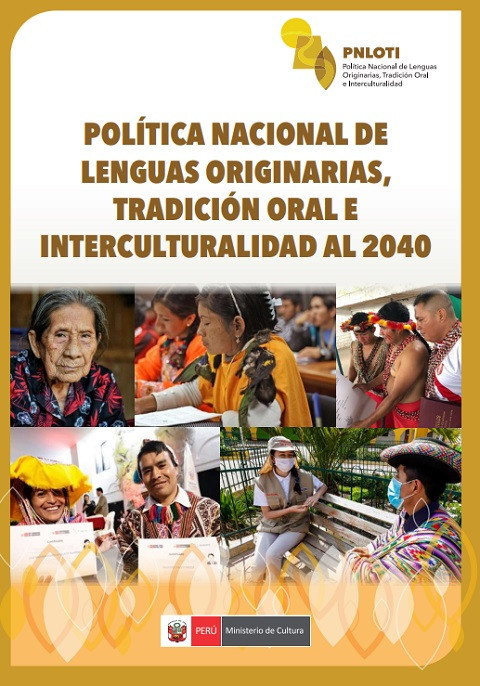 National Policy on Native Languages, Oral Tradition and Interculturality by 2040 Year of publication: 2021 Corporate author: Ministry of Culture of Peru The Ministry of Culture, in coordination with the different sectors of the State, has carried out the process of updating the National Policy on Native Languages, Oral Tradition and Interculturality by 2040 (PNLOTI), which will be the main instrument of guidance and attention in subject of indigenous languages. Seeking to guarantee the participation of citizens in public decisions, the Ministry of Culture makes the PNLOTI proposal for 2040 available to them, with the aim that they can access it and learn about the 41 services declared in charge of the different sectors. In this way, the PNLOTI ensures the full exercise of the linguistic rights of the more than 4 million citizens who speak one of the 48 indigenous or native languages of the country. Política nacional de lenguas originarias, tradición oral e interculturalidad al 2040 Year of publication: 2021 Corporate author: Ministry of Culture of Peru El Ministerio de Cultura, en coordinación con los diferentes sectores del Estado, han llevado a cabo el proceso de actualización de la Política Nacional de Lenguas Originarias, Tradición Oral e Interculturalidad al 2040 (PNLOTI), que será el principal instrumento de orientación y atención en materia de lenguas indígenas. Buscando garantizar la participación de la ciudadanía en las decisiones públicas, el Ministerio de Cultura pone a su disposición la propuesta de la PNLOTI al 2040, con el objetivo de que puedan acceder a él y conocer los 41 servicios declarados a cargo de los diferentes sectores. De esta manera, la PNLOTI asegura el ejercicio pleno de los derechos lingüísticos de los más de 4 millones de ciudadanos y ciudadanas hablantes de alguna de las 48 lenguas indígenas u originarias del país.
  Gender Bias, Citizen Participation, and AI (Policy Research Working Papers; Planet; RRR; 11046) Year of publication: 2025 Author: Jose Antonio Cuesta Leiva | Natalia Gisel Pecorari Corporate author: World Bank This paper investigates the role of gender bias in artificial intelligence–driven analyses of citizen participation, using data from the 2023 Latinobarómetro Survey. The paper proposes that gender bias—whether societal, data driven, or algorithmic—significantly affects civic engagement. Using machine learning, particularly decision trees, the analysis explores how self-reported societal bias (machismo norms) interacts with personal characteristics and circumstances to shape civic participation. The findings show that individuals with reportedly low levels of gender bias, who express political interest, have high levels of education, and align with left-wing views, are more likely to participate. The paper also explores different strategies to mitigate gender bias in both the data and the algorithms, demonstrating that gender bias remains a persistent factor even after applying corrective measures. Notably, lower machismo thresholds are required for participation in more egalitarian societies, with men needing to exhibit especially low machismo levels. Ultimately, the findings emphasize the importance of integrated strategies to tackle gender bias and increase participation, offering a framework for future studies to expand on nonlinear and complex social dynamics.
  Countering and addressing online hate speech: a guide for policy makers and practitioners Year of publication: 2023 Corporate author: UN. Office on Genocide Prevention and the Responsibility to Protect Online hate speech remains a critical challenge to advancing the objectives set out in the UN Strategy and Plan of Action on Hate Speech and the pillars of the United Nations work, namely Peace and Security, Human Rights and Sustainable Development. The recommendations outlined in this policy paper, provide a framework for countering hate speech, in line with international human rights norms and standards. The recommendations are based on three years of consultations and dialogue, including with the technology and social media companies, experts, the UN Working Group on Hate Speech and civil society. Their implementation should be part of broader efforts to address hate speech globally, including its root causes and impact offline, in line with the UN Strategy and Plan of Action. The pursuit of these recommendations should also prioritize participation and engagement directly with the victims of hate speech, underpinned by the principles of non-discrimination and leaving no one behind.
  United Nations Global Principles for Information Integrity : Recommendations for Multi-stakeholder Action Year of publication: 2024 Corporate author: United Nations (UN) Technological advances have revolutionized communications, connecting people on a previously unthinkable scale. They have supported communities in times of crisis, elevated marginalized voices and helped mobilize global movements for racial justice and gender equality. Yet these same advances have enabled the spread of misinformation, disinformation and hate speech at an unprecedented volume, velocity and virality, risking the integrity of the information ecosystem. New and escalating risks stemming from leaps in AI technologies have made strengthening information integrity one of the urgent tasks of our time. This clear and present global threat demands coordinated international action. The United Nations Global Principles for Information Integrity show us another future is possible. Principes mondiaux des Nations Unies pour l’intégrité de l’information: Recommandations pour une action multipartite Year of publication: 2024 Corporate author: United Nations (UN) Les avancées technologiques ont révolutionné les communications, connectant les personnes à une échelle autrefois inimaginable. Elles ont soutenu les communautés en temps de crise, amplifié les voix marginalisées et contribué à la mobilisation mondiale pour la justice raciale et l’égalité des genres. Pourtant, ces mêmes avancées ont également favorisé la propagation de la désinformation, des informations fallacieuses (ou « fake news ») et des discours de haine à une vitesse, une ampleur et une viralité sans précédent, menaçant ainsi l’intégrité de l’écosystème informationnel. Les risques émergents et croissants liés aux progrès rapides de l’intelligence artificielle font du renforcement de l’intégrité de l’information l’un des défis les plus urgents de notre époque. Cette menace mondiale, claire et actuelle, exige une action internationale coordonnée. La publication Principes mondiaux des Nations Unies pour l’intégrité de l’information nous montrent qu’un autre avenir est possible.