
Resources
Explore a wide range of valuable resources on GCED to deepen your understanding and enhance your research, advocacy, teaching, and learning.
1,727 Results found
 Образование в Интересах Устойчивого Развития в Центральной Азии: Анализ Достижений, Вызовы и Взгляд в Будущее Year of publication: 2018 Author: Tatiana Shakirova Corporate author: Regional Environmental Centre for Central Asia (CAREC) Статья менеджера программы «Образование для устойчивого развития» (ОУР) РЭЦЦА, кандидата биологических наук Татьяны Шакировой посвящена обзору процесса ОУР с 2002 по 2018 годы, анализу опыта, уроков, а также вызовам и перспективам развития ОУР в Центральной Азии.Принимая во внимание глобальные и региональные вызовы в ОУР, сегодня РЭЦЦА пересматривает и переосмысливает свою роль в процессе ОУР в Центральной Азии. Основная цель Программы ОУР сегодня – это предоставление региональной площадки для диалога, обмена знаниями, опытом, инновациями и наилучшими образовательными практиками/ инструментами, реализованными на местном/национальном/региональном уровнях, и поддержка межпрограммной деятельности РЭЦЦА по образованию и повышению потенциала, а также обеспечение межсекторального, межведомственного, межрегионального сотрудничества по ОУР в регионе с привлечением всех заинтересованных сторон и международной экспертизы.
  Inégalités sociales et migratoires : Comment l’école amplifie-t-elle les inégalités ? Year of publication: 2016 Corporate author: Conseil natiional d'évaluation du système scolaire (CNESCO) En se fondant sur 22 contributions commandées pour l’occasion par le Cnesco à près de 40 chercheurs français et étrangers, ainsi que sur des enquêtes, des études et des articles publiés par des chercheurs ou des organismes, le Cnesco présente dans ce rapport un bilan global des inégalités scolaires d’origines sociale et migratoire en France aujourd’hui. Cette analyse à visée holistique se déroule en trois parties : tout d’abord, une définition conceptuelle des inégalités sociales à l’école et des approches de la justice scolaire ; ensuite, un état des lieux quantitatif présentant ces inégalités scolaires ; enfin, une présentation des politiques scolaires entreprises depuis quatre décennies dans l’objectif de combattre les injustices sociales à l’école tant au primaire qu’au secondaire, ainsi qu’un bilan sur leur efficacité.Qu’est-ce qu’une école juste ? Comment décrire, observer les inégalités ? Toutes les inégalités scolaires sont-elles illégitimes ? Dans une approche historique, les différences de parcours selon les niveaux scolaires ont longtemps eu lieu dès la fin de l’école primaire. L’avènement du collège unique en 1975 marque un tournant majeur dans la recherche de davantage d’égalité des chances à l’école.La massification de l’enseignement secondaire permet à davantage d’élèves d’accéder au baccalauréat, les inégalités sociales face à ce diplôme reculent plus encore avec la création du baccalauréat professionnel. Le socle commun de connaissances, de compétences et de culture, l’adaptation de l’école à l’élève, la différenciation pédagogique, la revalorisation des parcours individuels : autant de concepts plus récents, reflets d’une école du 21e siècle, qui ont pour objet un apprentissage minimum de certaines connaissances pour tous, et qui tendent donc à plus de justice.Mais si l’école française ségrégue moins les élèves de façon flagrante qu’il y a 50 ans, elle tend cependant à maintenir de nombreuses inégalités sociales et migratoires en son sein, plus cachées, moins observables, mais pourtant bien présentes. Ce sont ces inégalités que le Cnesco souhaite étudier.
  Éducation à la citoyenneté à l’école : Politiques, pratiques scolaires et effets sur les élèves Year of publication: 2016 Author: Géraldine Bozec Corporate author: Conseil natiional d'évaluation du système scolaire (CNESCO) Ce rapport de recherche, commandé par le CNESCO, constitue une revue de la littérature à la fois française et internationale portant sur l’éducation à la citoyenneté. Il vise à avancer dans la compréhension d’un objet de recherche encore délaissé à ce jour dans les études françaises et à identifier des pistes de recherche qui pourraient s’avérer fécondes à l’avenir. Il privilégie les travaux mobilisant des données empiriques. Le rapport dresse d’abord un état de lieux de l’apprentissage de la citoyenneté à l’école française, à partir d’une analyse des politiques, des programmes et des pratiques scolaires (Partie I). Il met ensuite en perspective le cas français en resituant ses spécificités et les points communs qu’il partage avec d’autres cas nationaux en matière d’éducation à la citoyenneté (Partie II). Enfin, il présente un bilan des recherches visant à évaluer les effets de l’éducation à la citoyenneté sur les représentations, les attitudes et les pratiques des élèves (Partie III). En conclusion, des orientations de recherche qui apparaissent, à l’issue de cet état des lieux, comme encore peu explorées et potentiellement fructueuses, sont identifiées.
  ÉDUCATION A LA PHILOSOPHIE ET A LA CITOYENNETÉ : AVEC LES PARENTS ? (Analyse UFAPEC 2016) Year of publication: 2016 Author: Bernard Hubien Corporate author: Union francophone des associations de parents de l'enseignement catholique (UFAPEC) L'éducation à la philosophie et à la citoyenneté est une mission fondamentale de l'école. En septembre dernier, la Fédération Wallonie-Bruxelles a publié un référentiel qui décrit les objectifs et les contenus attendus de cette éducation. Si l'école a donc son rôle dans cet apprentissage fondamental, on peut se demander où sont les parents. Un partenariat positif et une école qui met en cohérence cette éducation avec ses pratiques devrait permettre à chaque enfant de grandir en devenant un citoyen, responsable, actif, critique et solidaire, enjeu sociétal plus que jamais d'actualité.
  MODÈLES DE RECHERCHE: Démocratie, citoyenneté mondiale et éducation transformatoire Year of publication: 2018 Author: Paul R. Carr | Gina Thésée Corporate author: Chaire UNESCO Démocratie, citoyenneté mondiale et éducation transformatoire (DCMÉT) Les modèles conceptuels et théoriques présentés dans ce document ont été élaborés sur une période d’environ douze ans, commençant en 2005, par le titulaire (Paul R. Carr, Université du Québec en Outaouais) et la co-titulaire (Gina Thésée, Université du Québec à Montréal) de la Chaire UNESCO. Ces modèles ont été publiés dans diverses revues académiques, en anglais ou en français et ont été traduits et adaptés ici pour produire une représentation mise à jour et bilingue de la recherche sur l’éducation pour la démocratie que Carr et Thésée ont réalisée. Certains de ces modèles ont été affinés (et améliorés) avec le temps et sont des moyens qui aident à élucider, interroger et mettre en évidence le sens des trois thèmes qui sous-tendent la Chaire UNESCO DCMÉT.
 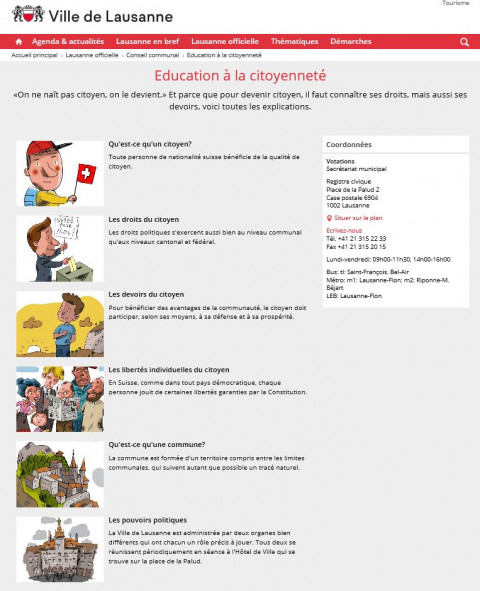 Éducation à la citoyenneté Corporate author: Ville de Lausanne «On ne naît pas citoyen, on le devient.» Et parce que pour devenir citoyen, il faut connaître ses droits, mais aussi ses devoirs, voici toutes les explications.
 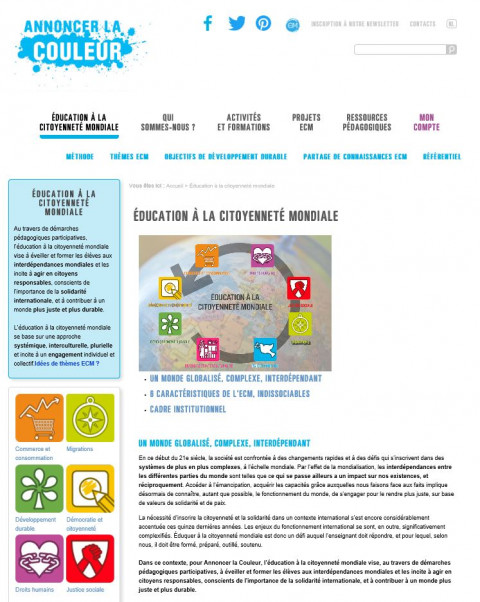 Éducation à la citoyenneté mondiale Corporate author: Annoncer la Couleur (ALC) En ce début du 21e siècle, la société est confrontée à des changements rapides et à des défis qui s'inscrivent dans des systèmes de plus en plus complexes, à l'échelle mondiale. Par l’effet de la mondialisation, les interdépendances entre les différentes parties du monde sont telles que ce qui se passe ailleurs a un impact sur nos existences, et réciproquement. Accéder à l’émancipation, acquérir les capacités grâce auxquelles nous faisons face aux faits implique désormais de connaître, autant que possible, le fonctionnement du monde, de s'engager pour le rendre plus juste, sur base de valeurs de solidarité et de paix.La nécessité d’inscrire la citoyenneté et la solidarité dans un contexte international s’est encore considérablement accentuée ces quinze dernières années. Les enjeux du fonctionnement international se sont, en outre, significativement complexifiés. Éduquer à la citoyenneté mondiale est donc un défi auquel l’enseignant doit répondre, et pour lequel, selon nous, il doit être formé, préparé, outillé, soutenu.Dans ce contexte, pour Annoncer la Couleur, l’éducation à la citoyenneté mondiale vise, au travers de démarches pédagogiques participatives, à éveiller et former les élèves aux interdépendances mondiales et les incite à agir en citoyens responsables, conscients de l'importance de la solidarité internationale, et à contribuer à un monde plus juste et plus durable.
  Éducation à la citoyenneté et à la solidarité Corporate author: Centraider L'ECSI vise à contribuer, à tout âge, à la construction personnelle de citoyens informés, conscients de la complexité des mécanismes d'interdépendance mondiaux, responsables, capables de faire et d'assumer des choix individuels et collectifs.
 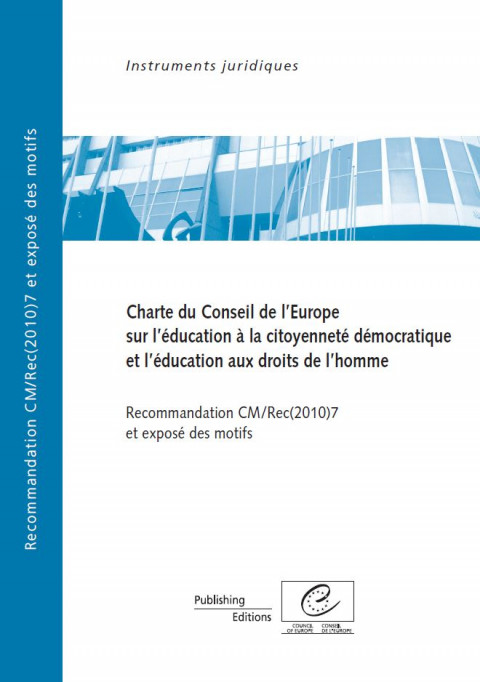 Charte du Conseil de l’Europe sur l’éducation à la citoyenneté démocratique et l’éducation aux droits de l’homme : Recommandation CM/Rec(2010)7 et exposé des motifs Year of publication: 2011 Corporate author: Conseil de l’Europe L’éducation joue un rôle essentiel dans la promotion des valeurs fondamentales du Conseil de l’Europe que sont la démocratie, les droits de l’homme et l’Etat de droit, ainsi que dans la prévention des violations des droits de l’homme. Par ailleurs, l’éducation est de plus en plus considérée comme un moyen de combattre la montée de la violence, du racisme, de l’extrémisme, de la xénophobie, de la discrimination et de l’intolérance.Cette prise de conscience croissante se traduit par l’adoption de la Charte du Conseil de l’Europe sur l’éducation à la citoyenneté démocratique et l’éducation aux droits de l’homme (ECD/EDH) par les 47 Etats membres de l’Organisation, dans le cadre de la Recommandation CM/Rec(2010)7. Elaborée à la suite de consultations étendues sur plusieurs années, la Charte n’est pas de nature contraignante. Elle servira de référence importante à tous ceux qui s’occupent d’éducation à la citoyenneté et aux droits de l’homme. Son application devrait inciter les Etats membres à prendre des mesures dans ce domaine et, ce faisant, à diffuser de bonnes pratiques et à améliorer la qualité de l’enseignement en Europe et au-delà.
 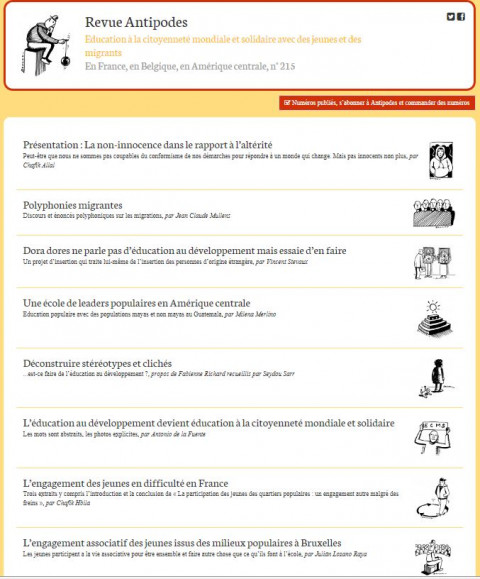 Revue Antipodes: Education à la citoyenneté mondiale et solidaire avec des jeunes et des migrants Year of publication: 2016 Corporate author: Centre de formation pour le développement et la solidarité internationale Dans le milieu de l’éducation au développement, à la citoyenneté mondiale et solidaire, tout comme d’autres questions sociétales liées à la mixité des groupes ou des tribus (comme on dit parfois dans la novlangue urbaine), les questions à l’origine des articles du présent numéro d’Antipodes existent depuis longtemps ; elles ont rarement été considérées comme prioritaires. La mixité des groupes reste une bonne intention, espérée, défendue ou imaginée, ici et là, mais rarement on a réussi à construire des dispositifs la facilitant.Evidemment que beaucoup d’ONG et d’associations aimeraient avoir des groupes avec une présence de jeunes d’origine populaire et de migrants, en même temps que le public actuel. On a pu néanmoins constater que dans le contexte actuel, en Belgique, ça reste rare d’y arriver. Si personne n’est coupable d’une telle situation, personne n’est innocent non plus . Nous laissons faire, nous consacrons peu de temps, ou en tous cas pas suffisamment pour aller construire avec eux des dispositifs qui intègrent, intéressent, amènent des publics hétérogènes. La « diversité » des processus s’en trouve affectée, et nous nous retrouvons à « parler de », « dire au nom de », « défendre les » sans avoir leur avis, leur point de vue politique, ni leur contribution.Ce numéro d’Antipodes présente succinctement les polyphonies d’une recherche, d’un début de quelque chose qui est plus ouvrant que donné sous forme de résultats. Parce que cette histoire est compliquée et nous refusons de la simplifier. Nous avons arpenté des chemins nouveaux pour pouvoir faire face à nos faiblesses et nos insuffisances en toute humilité et tenter de comprendre pourquoi les jeunes des classes populaires et les migrants sont peu présents à nos formations.