
Resources
Explore a wide range of valuable resources on GCED to deepen your understanding and enhance your research, advocacy, teaching, and learning.
3,229 Results found
 种族·文化·制度: 新加坡双语政策中的国家认同构建 (社会科学前沿; vol. 10, no. 4) Year of publication: 2021 Author: Zhang Lifang 本文介绍了新加坡的双语教育政策,并探讨了相关政策与国家认同建构的关系。
  Increasing the Relevance of Education to Sustainability: Teaching Values, Competencies, Skills and Knowledge to Shape the Future Responsibility (Advances in Education; no. 4) Year of publication: 2014 Author: Qing Tian This paper introduces about using ecological education to promote sustainability development, and discusses how the education system can be changed to achieve such goals. 增强教育与可持续发展的关联: 通过价值观、能力、技能和知识的教育塑造对未来的责任 (教育进展; no. 4) Year of publication: 2014 Author: Qing Tian 本文介绍如何开展环境教育以促进可持续发展,并探索教育制度的改变如何促使这一目标得到实现。
  Transforming Our World: The 2030 Agenda for Sustainable Development Year of publication: 2015 Corporate author: United Nations (UN) This Agenda is a plan of action for people, planet and prosperity. It also seeks to strengthen universal peace in larger freedom. We recognize that eradicating poverty in all its forms and dimensions, including extreme poverty, is the greatest global challenge and an indispensable requirement for sustainable development. All countries and all stakeholders, acting in collaborative partnership, will implement this plan. We are resolved to free the human race from the tyranny of poverty and want and to heal and secure our planet. We are determined to take the bold and transformative steps which are urgently needed to shift the world on to a sustainable and resilient path. As we embark on this collective journey, we pledge that no one will be left behind. The 17 Sustainable Development Goals and 169 targets which we are announcing today demonstrate the scale and ambition of this new universal Agenda. They seek to build on the Millennium Development Goals and complete what they did not achieve. They seek to realize the human rights of all and to achieve gender equality and the empowerment of all women and girls. They are integrated and indivisible and balance the three dimensions of sustainable development: the economic, social and environmental. The Goals and targets will stimulate action over the next 15 years in areas of critical importance for humanity and the planet. 变革我们的世界:2030年可持续发展议程 Year of publication: 2015 Corporate author: United Nations (UN) 该文件是联合国为了实现人类的可持续发展所制定的行动议程,包含17个可持续发展目标及169个具体目标。
 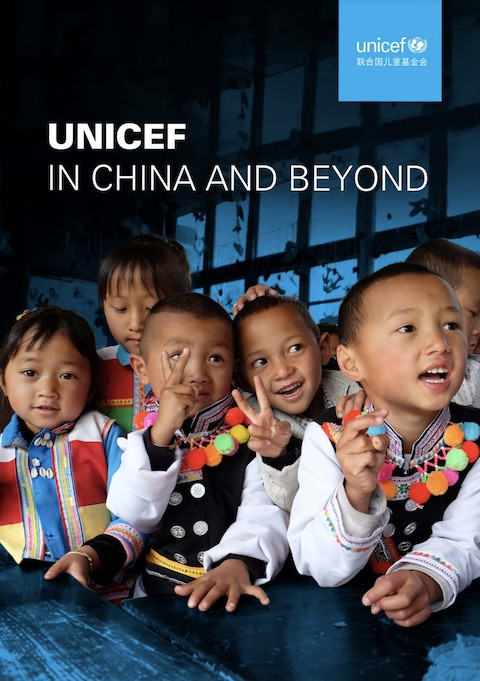 UNICEF in China and Beyond Year of publication: 2019 Corporate author: United Nations Children's Fund (UNICEF) This report seeks to give an overview of UNICEF’s work in China and, through these experiences, provide a global perspective on the major development areas relevant to children today. This includes child-friendly spaces, poverty reduction and early childhood education. The publication presents a snapshot of the issues, challenges and accomplishments in health, education, child protection, and social policy and reform sectors in China. 中国经验 全球视角:联合国儿童基金会在华合作项目概览 Year of publication: 2019 Corporate author: United Nations Children's Fund (UNICEF) 该报告概述了联合国儿童基金会在中国所开展的项目,并通过这些项目的经验,为关乎儿童利益的主要发展领域提供全球视角,包括儿童友好家园、减贫与儿童早期教育等。这份报告还简要介绍了合作项目在卫 生保健、教育、儿童保护、社会政策与改革等领域所关注的重点、取得的成果与面临的挑战。
  L'introduction de services-learnings dans l'enseignement universitaire de Belgique francophone, un instrument d'éducation à la citoyenneté mondiale et solidaire? Year of publication: 2019 Author: Frédérique Marsin Corporate author: Université de Liège Née d’une remise en question de l’éducation à la citoyenneté mondiale et solidaire (ECMS) dans les universités belges francophones, l’ambition de ce travail était de déceler l’influence que pourrait avoir sur celles-ci l’instauration des services-learnings comme pédagogie universitaire. Une telle interrogation nous a amené à nous questionner sur l’universalité de l’ECMS. Considérant qu’elle devrait être accessible à tous au regard de son essence même, cela n’est pourtant pas le cas, notamment du fait qu’elle est réservée à un public limité, à savoir aux élèves de l’enseignement fondamental et du secondaire ainsi qu’une portion infime d’étudiants universitaires, déjà sensibilisés aux thématiques de l’ECMS (SONECOM, 2018 ; cfr. annexe). Dès lors, nous questionnons l’efficacité des activités actuelles d’ECMS, organisées à l’université, grâce à une grille d’analyse adaptée des travaux de GÉRARD, psychopédagogue. Cette dernière nous permet de dresser l’état des lieux de l’ECMS, pouvant être résumé de la sorte : les activités d’ECMS actuelles à l’Université sont réservées, presqu’exclusivement, à des étudiants de master, sensibilisés par les enjeux globaux, issus de filières plutôt humanistes, comme les sciences sociales (SONECOM, 2018 ; Pirotte et Fettweis, 2018). Pourtant, le large pourcentage des étudiants restants n’est pas contre l’expression d’une citoyenneté plus active ; beaucoup y sont même très favorables mais expliquent leur inaction par un manque d’opportunités (SONECOM, 2018 ; cfr. annexe). Ne doutant pas pour autant de la qualité des activités d’ECMS, nous nous demandons quelle est la capacité pour ces acteurs de capter de nouveaux publics. Afin de pallier à ce manque de visibilité, nous proposons aux étudiants de s’essayer à l’ECMS, grâce à une application contraignante de la pédagogie des services-learnings.
  Systèmes éducatifs africains et orientations internationales pour l’éducation au XXIe siècle (Revue internationale d’éducation de Sèvres; no. 77) Year of publication: 2018 Author: Abdeljalil Akkari Corporate author: France Education International L’agenda Éducation 2030 fait partie des 17 objectifs de développement durable des Nations unies. Tout d’abord, questionnons l’utilité des déclarations internationales en matière d’éducation. On observe en effet que les objectifs ambitieux sont repris d’une conférence internationale à l’autre. En réalité, il faut souligner le caractère à la fois utopique mais aussi mobilisateur de ces orientations. Leur intérêt se situe essentiellement dans leur capacité à mobiliser ressources (notamment financières). Sur le plan national, un agenda international porté par les Nations Unies a une valeur symbolique forte. Il marque un cap, un horizon vers lequel la communauté éducative internationale veut tendre. La nouveauté de l’agenda 2030 est qu’il a pour ambition de réunir l’ensemble des nations sur des objectifs similaires et universels.2Il est utile de se demander ce que les États membres de l’ONU font d’un agenda international. La réponse à cette question dépend de la puissance des États et de leur place dans la géopolitique mondiale. Pour les États les plus puissants, l’agenda exerce une influence relativement limitée sur leurs politiques éducatives domestiques, en dehors du choc ponctuel lié à la publication des résultats des études comparatives internationales. En revanche, pour les États les plus dépendants de l’aide internationale à l’éducation, la conformité avec les orientations d’un agenda international peut leur permettre d’accéder à des financements indispensables pour le développement ou simplement le maintien de leurs systèmes éducatifs.
  المشكلات الاجتماعية للتلوث البيئي في المجتمع الحضري: دراسة اجتماعية ميدانية في مدينة الديوانية Year of publication: 2014 Author: Ikhlas Mahmoud Sultan Corporate author: University of Al-Qadisiyah يركز هذا البحث على تقصي المشكلات الاجتماعية الناتجة عن التلوث البيئي في المجتمع الحضري. يستخدم البحث دراسة الحالة بالتركز على مدينة الديوانية. وتبحث الدراسة في الأسباب والأثار. وتنتهي الدراسة بوضع توصيات وحلول لهذه المشكلة.