
Resources
Explore a wide range of valuable resources on GCED to deepen your understanding and enhance your research, advocacy, teaching, and learning.
2,661 Results found
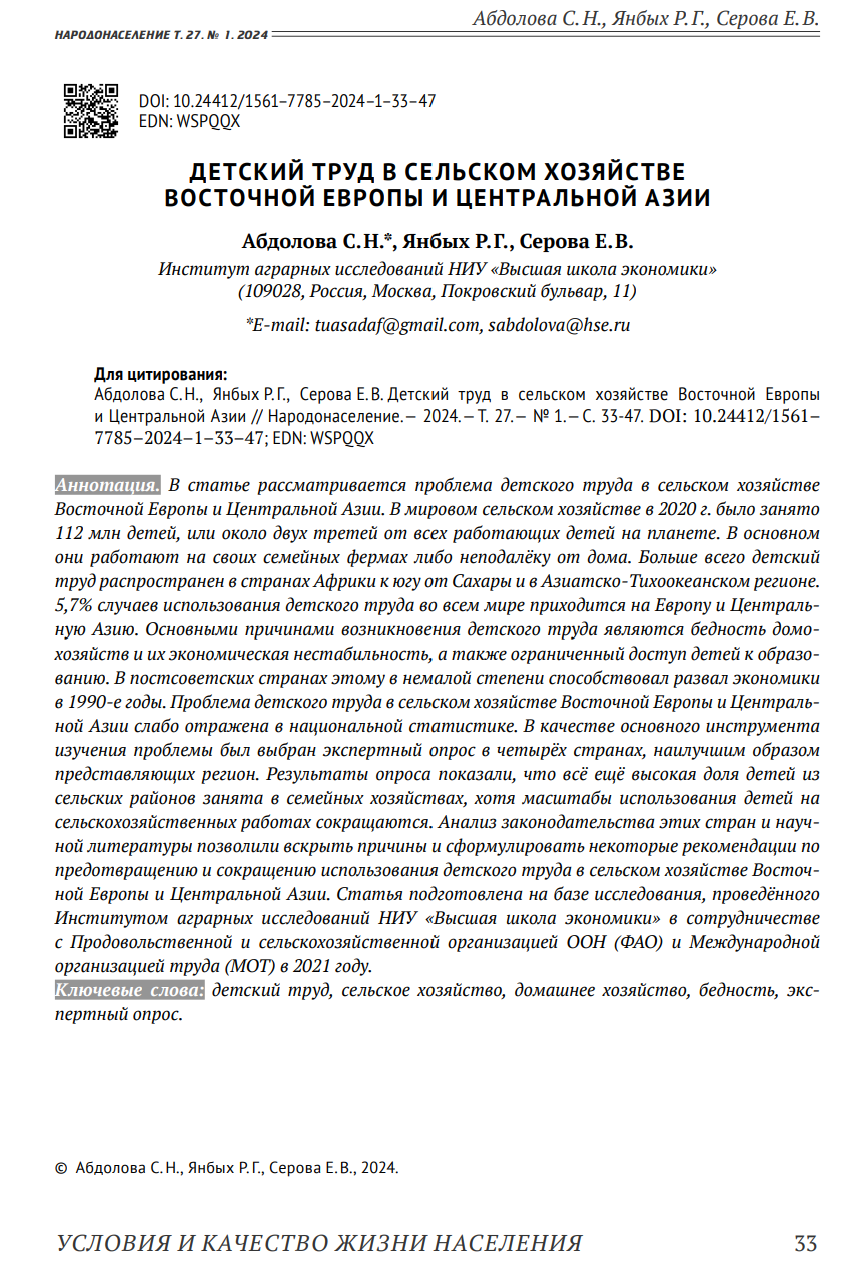 Research on Child Labour in Agriculture in Eastern Europe and Central Asia Year of publication: 2024 Author: Абдолова Садаф | Янбых Рената | Серова Евгения Corporate author: Народонаселение The article deals with the problem of child labor in agriculture in Eastern Europe and Central Asia. An analysis of the legislation of these countries and scientific literature allowed us to uncover the causes and formulate some recommendations for preventing and reducing the use of child labor in agriculture in Eastern Europe and Central Asia. The article was prepared on the basis of a study conducted by The Institute of Agricultural Research of the Higher School of Economics in cooperation with the Food and Agriculture Organization of the United Nations (FAO) and the International by the International Labour Organization (ILO) in 2021. Детский труд в сельском хозяйстве Восточной Европы и Центральной Азии Year of publication: 2024 Author: Абдолова Садаф | Янбых Рената | Серова Евгения Corporate author: Народонаселение В статье рассматривается проблема детского труда в сельском хозяйстве Восточной Европы и Центральной Азии. Анализ законодательства этих стран и научной литературы позволили вскрыть причины и сформулировать некоторые рекомендации по предотвращению и сокращению использования детского труда в сельском хозяйстве Восточной Европы и Центральной Азии. Статья подготовлена на базе исследования, проведённого Институтом аграрных исследований НИУ «Высшая школа экономики» в сотрудничестве с Продовольственной и сельскохозяйственной организацией ООН (ФАО) и Международной организацией труда (МОТ) в 2021 году.
 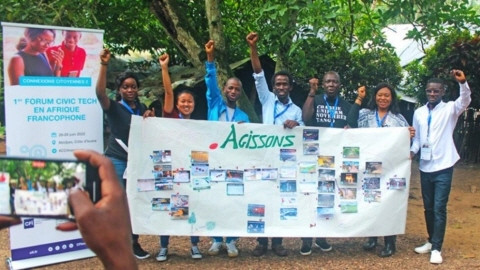 Civic Tech in Africa: When Citizen’s Connections Work for Democracy Year of publication: 2022 Author: Raphaëlle Constant Corporate author: Radio France International (RFI) The first civic tech forum in French-speaking Africa was held at the end of June in Abidjan, Côte d'Ivoire, at the initiative of CFI. For "L'atelier des médias", Raphaëlle Constant spoke to the people who are developing digital initiatives in several African countries to improve the flow of information and mobilise citizens to influence public debate. Civic tech en Afrique: Quand des connexions citoyennes œuvrent pour la démocratie Year of publication: 2022 Author: Raphaëlle Constant Corporate author: Radio France International (RFI) Le premier forum civic tech en Afrique francophone s’est tenu fin juin à Abidjan, en Côte d’Ivoire, à l'initiative de CFI. Pour L’atelier des médias, Raphaëlle Constant y a tendu son micro à celles et ceux qui développent des initiatives numériques dans plusieurs pays africains pour améliorer la circulation de l’information et déclencher des mobilisations citoyennes pour peser dans le débat public.
  The “Hate Speech” Policies of Major Platforms during the COVID-19 Pandemic Year of publication: 2021 Corporate author: UNESCO Montevideo This document reports an increase in so-called “hate speech” posts on Facebook, Twitter, and YouTube after the onset of the COVID-19 pandemic. Although dissimilar, such an increase can be observed in the transparency reports of the different platforms and the surge in content moderation since March 2020.During the same period—as a result of the lockdown measures adopted in most countries around the world—platforms increased the use of AI tools for content moderation. Therefore, we can’t fully say whether the interannual growth is linked to increased posts or changes in monitoring systems. Las políticas de las grandes plataformas sobre discurso de odio durante el Covid-19 Year of publication: 2021 Corporate author: UNESCO Montevideo Este documento da cuenta de un aumento de posteos considerados discurso de odio a partir de la llegada de la pandemia COVID-19 en Facebook, Twitter y YouTube. Aunque dispar, ese aumento puede establecerse a partir de los informes de transparencia de las distintas plataformas y los crecimientos registrados en la moderación de esos contenidos a partir de marzo de 2020.Dado que en ese mismo período, y como consecuencia de las medidas de aislamiento tomadas ven la mayoría de los países del mundo, las plataformas tomaron la decisión de aumentar el uso de herramientas de inteligencia artificial en sus procesos de moderación no es posible asegurar a ciencia cierta que ese crecimiento se haya registrado por un aumento en la creación y publicación de mensajes o a partir de un cambio en los sistemas de detección que afectó los resultados entre un año y otro.
  Rethinking Learning: Exploring Different Pedagogical Approaches to Transform Education for Humanity (The Blue Dot Issue 7, 2018) Year of publication: 2018 Corporate author: Mahatma Gandhi Institute of Education for Peace and Sustainable Development (MGIEP) In the seventh issue of the Blue Dot, we focus on Rethinking Learning. The Issue includes a foreword by the Former Minister of Education of Mali, H.E. Adama Samassékou on how education systems need to be re-looked at to incorporate personalised learning and technology as an enabler and our Cover Story, which focuses on the importance of socio-emotional learning.Additionally, we feature opinions by specialists from academia, research, policymaking and the industry on the need to relook at education systems for the future. Amongst various experts, we hear from Andreas Schleicher, Director of Education and Skills and Special Advisor on Education Policy to the Secretary-General at the Organisation for Economic Co-operation and Development (OECD); Anneli Rautiainen from the Finnish National Agency for Education as well as Pratik Mehta, Head of Education & Skills, Microsoft India.Further, we present short blogs from the youth about what future education systems mean to them and we hear from Nobel Laureate, Ms Tawakkol Karman on the importance of education for peace.
 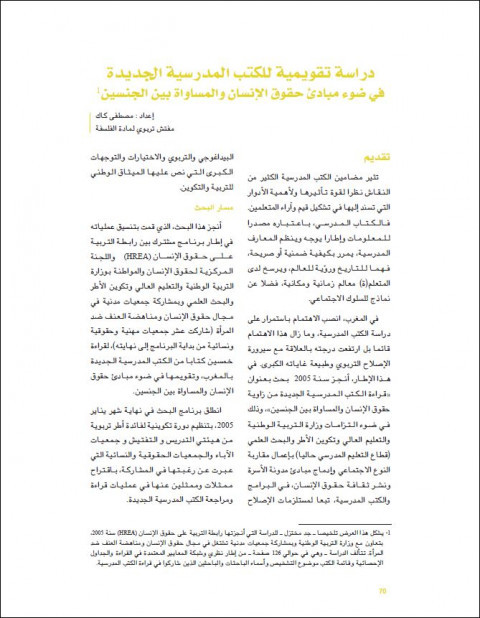 دراسة تقويمية للكتب المدرسية الجديدة في ضوء مبادئ حقوق الانسان والمساواة بين الجنسين Year of publication: 2010 Author: كاك، مصطفى Corporate author: Conseil Supérieur de l'éducation, de la Formation et de la Recherche Scientifique تتناولت هذه الورقة مضامين الكتب المدرسية نظرا لما تثيره من نقاش لقوة تأثيرها ولأهمية الأدوار التي تسند إليها في تشكيل قيم وآراء المتعلمين. وقد أنجزت هذه الدراسة في إطار برنامج مشترك بين رابطة التربية على حقوق الإنسان واللجنة المركزية لحقوق الإنسان والمواطنة بوزارة التربية الوطنية والتعليم العالي وبمشاركة جمعيات مدنية في مجال حقوق الإنسان ومناهضة العنف ضد المرأة، لقراءة خمسين كتابا من الكتب المدرسية الجديدة بالمغرب وتقويمها في ضوء مبادئ حقوق الإنسان والمساواة بين الجنسين. وقد انطلق الفريق من إشكالية محددة هي: هل تغيرت فعلا وضعية الكتاب المدرسي من الكتاب الواحد، الذي لا يهتم سوى بالمضامين، إلى تعدد الكتب، وفق هندسة بيداغوجية حديثة متمركزة حول حاجات المتعلمين ومراعاة مستوياتهم الفكرية واللغوية وسيرورات تعلمهم، بهدف تنمية ردود أفعال ديمقراطية نابعة من قيم المواطنة وحقوق الإنسان؟ وقد تمحورت نتائج الدراسة حول ثلاثة مستويات: صورة المرأة في الكتاب المدرسي، المساواة بين الجنسين في مجموعة من الحقوق الأساسية، مبادئ حقوق الإنسان التي ينشرها الكتاب المدرسي. An Evaluation Study of the New School Books in Light of Human Rights Principles and Gender Equality Year of publication: 2010 Author: كاك، مصطفى Corporate author: Conseil Supérieur de l'éducation, de la Formation et de la Recherche Scientifique The study was part of a joint program between the Association of Education on Human Rights in Morocco and the Central Committee for Human Rights at the Ministry of National Education and Higher Education, with the participation of civil organizations active in the fields of human rights and combatting violence against women. The program consisted of reading fifty school books and evaluating them regarding human rights and gender equality. The team started from the specific assumption: Has the situation of the school book actually changed from a single book that is solely concerned with contents to multiple books according to a modern pedagogical engineering that is centered around the teachers’ needs and respecting their mental and linguistic levels and their learning processes, with the objective of developing democratic reactions arising from citizenship values and human rights? The outcomes of the study came in three levels: The image of women in school books, gender equality in some of the fundamental human rights and the principles of human rights that the school book promotes.
  تطوير وحدات تعليمية في ضوء منظومة القيم الديمقراطية لمبحث التربية الوطنية والمدنية وأثره في المشاركة السياسية والمدنية ومهارات السلام لدى طالبات المرحلة الأساسية العليا في الأردن Year of publication: 2015 Author: حداد، نهلا أمجد Corporate author: Al-Quds Open University تهدف هذه الدراسة إلى الوقوف على تطوير وحدات تعليمية في ضوء منظومة القيم الديمقراطية لدى الطلبة في مديرية تربية قصبة المفرق، واستقصاء أثره في تنمية المشاركة السياسية والمدنية ومهارات السلام لدى طالبات الصف التاسع الأساسي، ومهارات السلام لدى ولهذه الغاية وضع الباحثان قائمة لمنظومة القيم الديمقراطية وتطوير ثلاث وحدات تدريسية في ضوء هذه المنظومة والتأكد من صدقها، ومنظومة القيم الديمقراطية التي اعتمد عايها كانت لتطوير المشاركة المدنية لدى طالبات الصف العاشر الأساسي، والمشاركة السياسية لدى طالبات الصف التاسع الأساسي, ومهارات السلام لدى طالبات الصف الثامن الأساسي، وأعدت ثلاثة اختبارات وتأكد الباحثان من صدقها وثباتها. وطُبقت الاختبارات - قبل تطبيق الوحدات التدريسية وبعد تطبيقها- على عينة الدراسة التي تكونت في الصف الثامن من 87 طالبة قُسمن إلى مجموعتين (46 ضابطة و41 تجريبية)، وعينة الصف التاسع تكونت من 74 طالبة قُسمن إلى مجموعتين (37 ضابطة و37 تجريبية)، وعينة الصف العاشر تكونت من 86 طالبة قُسمن إلى مجموعتين (42 ضابطة و44 تجريبية)، وبعد معالجة البيانات إحصائياً بوساطة اختبار تحليل التباين المصاحب (ANCOVA) وجود فروق ذات دلالة إحصائية عند مستوى الدلالة ( a ≤ 0.05 ) تعزى لمتغير المجموعة في جميع الاختبارات وكانت الفروق لصالح المجموعات التجريبية الثلاث التي تلقت الوحدات المطورة في الصفوف الثلاثة. وفي ضوء هذه النتائج وضعت مجموعة من التوصيات من أبرزها الاعتماد على منظومة القيم الديمقراطية في تطوير المشاركة السياسية والمدنية ومهارات السلام لطلبة المرحلة الأساسية العليا.