
Resources
Explore a wide range of valuable resources on GCED to deepen your understanding and enhance your research, advocacy, teaching, and learning.
3,229 Results found
 Carbon Inequality Kills: Why Curbing the Excessive Emissions of an Elite Few Can Create a Sustainable Planet for All; Executive Summary Year of publication: 2024 Author: Mira Alestig | Nafkote Dabi | Abha Jeurkar | Alex Maitland | Max Lawson | Daniel Horen Greenford | Corey Lesk | Ashfaq Khalfan Corporate author: Oxfam International The only way to beat climate breakdown and deliver social justice is to radically reduce inequality. This briefing paper reveals the catastrophic climate impacts of the richest individuals in the world, and proposes taking urgent action to protect people and the planet. What little carbon dioxide we can still safely emit is being burned indiscriminately by the super-rich. We share new evidence of how the yachts, jets and polluting investments of the 50 richest billionaires are accelerating the climate crisis. Oxfam’s research shows that the emissions of the world’s super-rich 1% are causing economic losses of trillions of dollars; contributing to huge crop losses; and leading to millions of excess deaths. As global temperatures continue to rise, risking the lives and livelihoods of people living in poverty and precarity, we must act now to curb the emissions of the super-rich and make rich polluters pay. LA Desigualdad de las emisiones de carbono MATA: Limitar el exceso de emisiones de una reducida élite para lograr un mundo más sostenible para todas las personas; RESUMEN EJECUTIVO Year of publication: 2024 Author: Mira Alestig | Nafkote Dabi | Abha Jeurkar | Alex Maitland | Max Lawson | Daniel Horen Greenford | Corey Lesk | Ashfaq Khalfan Corporate author: Oxfam International La única manera de evitar el colapso climático y garantizar la justicia social es reducir drásticamente las desigualdades. El presente informe pone de manifiesto las nefastas consecuencias que el estilo de vida de las personas más ricas del mundo tiene sobre el cambio climático, y plantea la adopción de medidas urgentes que permitan proteger a las personas y el planeta. Son los más ricos quienes están consumiendo, indiscriminadamente, la limitada cantidad de dióxido de carbono que aún podemos emitir de forma segura. En este estudio se publican nuevos datos que demuestran que los yates, los aviones privados y las contaminantes inversiones de 50 de las personas más ricas del mundo están acelerando la crisis climática. La investigación de Oxfam pone de manifiesto que las emisiones generadas por el 1 % más rico de la población mundial están ocasionando perjuicios económicos por valor de billones de dólares, además de contribuir a enormes pérdidas de cosechas y millones de muertes. Mientras tanto, la temperatura global sigue aumentando, lo cual pone en riesgo la vida y los medios de vida de millones de personas en situación de pobreza y precariedad. Por eso, es urgente que se adopten medidas que permitan frenar las emisiones de los más ricos, y lograr que quienes más contaminan asuman el coste. LES INÉGALITÉS CARBONE TUENT: Réduire les émissions excessives d’une élite peut favoriser la durabilité de la planète pour tou·te·s; RÉSUMÉ Year of publication: 2024 Author: Mira Alestig | Nafkote Dabi | Abha Jeurkar | Alex Maitland | Max Lawson | Daniel Horen Greenford | Corey Lesk | Ashfaq Khalfan Corporate author: Oxfam International Pour lutter contre le dérèglement climatique et instaurer une véritable justice sociale, une seule solution s’impose : la réduction drastique des inégalités. En mettant en évidence les répercussions catastrophiques que le mode de vie des plus riches entraîne sur le climat, la présente note d’information propose des mesures urgentes pour protéger l’ensemble de la population et la planète.Le peu de dioxyde de carbone que nous pouvons encore nous permettre de générer sans que cela entraîne des conséquences irréparables est aujourd’hui dilapidé sans discernement par les ultra-riches. Nous offrons ici de nouvelles preuves de la façon dont les yachts de luxe, les jets privés et les investissements polluants de 50 des milliardaires les plus riches au monde accélèrent la crise climatique. Les recherches d’Oxfam montrent que les émissions produites par la frange des 1 % les plus riches de la planète provoquent des pertes économiques estimées à plusieurs milliers de milliards de dollars, contribuent à la destruction d’une énorme quantité de récoltes et entraînent des millions de décès prématurés.Alors que la température de la Terre ne cesse d’augmenter, mettant en péril la vie et les moyens de subsistance des personnes qui vivent dans la pauvreté et la précarité, il nous faut agir sans délai pour endiguer les émissions des ultra-riches et faire payer les riches pollueurs. 생명을 위협하는 탄소 불평등: 소수 엘리트 계층의 과도한 탄소 배출을 억제하면 모두를 위한 지속 가능한 지구를 만들 수 있는 이유: 요약본 Year of publication: 2024 Author: Mira Alestig | Nafkote Dabi | Abha Jeurkar | Alex Maitland | Max Lawson | Daniel Horen Greenford | Corey Lesk | Ashfaq Khalfan Corporate author: Oxfam International 기후붕괴를 막고 사회적 정의를 실현할 수 있는 유일한 방법은 불평등을 근본적으로 완화하는 것이다. 본 보고서에서는 세계에서 가장 부유한 사람들이 기후에 미치는 재앙적인 영향을 밝히고, 인류와 지구를 보호하기 위한 즉각적인 조치를 이행할 것을 제언한다. ‘슈퍼리치’로 불리는 전 세계 최상위 부유층은 우리가 아직 안전하게 배출할 수 있는 제한된 양의 이산화탄소, 다시 말 해 ‘탄소예산(carbon budget)’을 무분별하게 낭비하고 있다. 우리는 세계 상위 50대 억만장자들이 대형 요트, 개인 전용기, 투자 등을 통해 어떻게 기후위기를 가속화하고 있는지에 대한 새로운 증거를 공유하고자 한다. 옥스팜의 연구에 따르면, 전 세계 상위 1% 부유층의 탄소 배출로 인해 수조 달러의 경제적 손실과 막대한 규모의 농작물 손실, 그리고 통상적으로 예상되는 사망자 수준을 넘어서는 ‘초과 사망(excess death)’이 수백만 건 발생하고 있다. 지구 온도가 계속 상승하면서 빈곤하고 불안정한 삶을 살아가는 사람들의 생명과 생계가 위협받고 있다. 우리는 슈퍼리치들의 탄소 배출을 억제하고 환경오염을 유발하는 부유층이 비용을 치를 수 있도록 행동에 나서야 한다.
 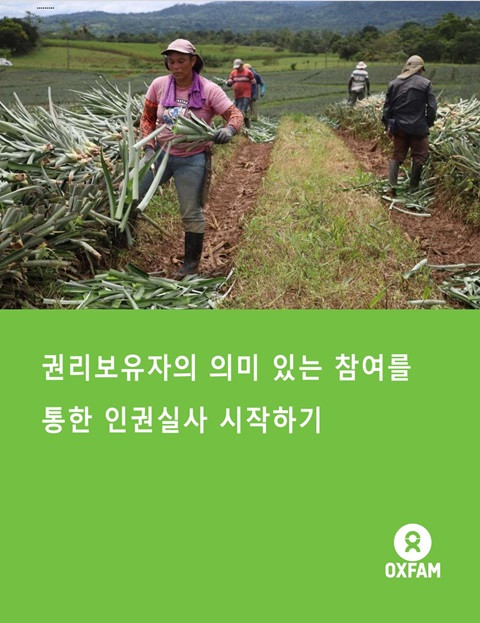 권리보유자의 의미 있는 참여를 통한 인권실사 시작하기 Year of publication: 2024 Author: Caroline Brodeur Corporate author: 옥스팜 기업의 인권 경영, ESG 실천을 위해 ‘의미 있는’ 인권실사는 필수적이다. 하지만 ‘의미 있는’이 정확히 무엇을 말하는지는 비교적 불명확하다. 옥스팜은 오랜 기간 동안 인권 피해를 입은 공동체와 협력하면서 권리보유자들이 실사 과정이나 관련 프로젝트에서 그들의 삶에 영향을 미치는 기업 활동에 대해 발언권을 행사할 수 있도록 지원했다. 이를 통해 옥스팜은 권리보유자 참여는 이런 모습이어야 한다는 명확한 프레임워크를 발전시켜왔다. 이 문서는 기업이 의사결정 실무에 필수적으로 통합시켜야 할 권리보유자 관여에 대한 핵심 원칙들을 제시한다.
  Connections that Matter: How the Quality of Governance Boosts Climate Action; A Systematic Scoping Review of the Literature Year of publication: 2024 Corporate author: United Nations Development Programme (UNDP) | German Institute of Development and Sustainability (IDOS) This report reflects the findings of a systematic literature review jointly undertaken by the UNDP Global Policy Centre for Governance and the German Institute of Development and Sustainability. The report offers aggregated empirical insight from across the globe about how inclusive, effective and accountable governance systems produces positive effects on climate action. The report aims to galvanize development actors and stakeholders to invest in SDG 16 and the strengthening of governance systems, and to better identify pathways that raise the ambition and effectiveness of climate action.
  [Executive Summary] Connections that Matter: How the Quality of Governance Boosts Climate Action Year of publication: 2024 Corporate author: United Nations Development Programme (UNDP) | German Institute of Development and Sustainability (IDOS) This is the executive summary of the Connections that Matter: How the Quality of Governance Boosts Climate Action prepared by the UNDP Global Policy Centre for Governance and the German Institute of Development and Sustainability.
 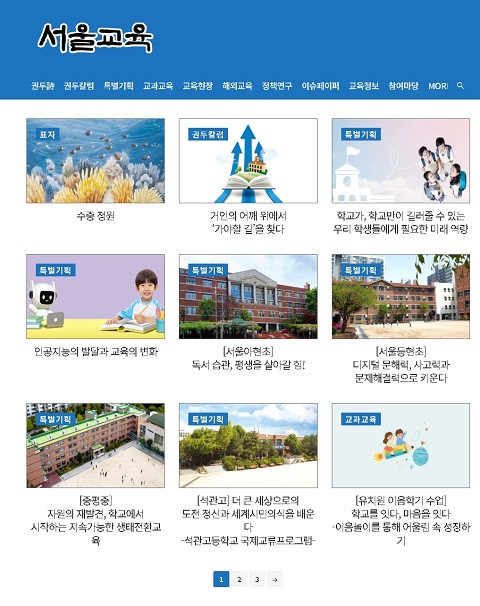 서울교육 2024년 여름호 (제66권 통권 255호) Year of publication: 2024 Corporate author: 서울특별시교육청 교육연구정보원 권두칼럼: 거인의 어깨 위에서 ‘가야할 길’을 찾다 특별기획:- 학교가, 학교만이 길러줄 수 있는 우리 학생들에게 필요한 미래 역량- 인공지능의 발달과 교육의 변화- [서울아현초] 독서 습관, 평생을 살아갈 힘!- [서울등현초] 디지털 문해력, 사고력과 문제해결력으로 키운다- [중평중] 자원의 재발견, 학교에서 시작하는 지속가능한 생태전환교육- [석관고] 더 큰 세상으로의 도전 정신과 세계시민의식을 배운다: 석관고등학교 국제교류프로그램 교과교육:- [유치원 이음학기 수업] 학교를 잇다, 마음을 잇다: 이음놀이를 통해 어울림 속 성장하기- [특수학급 국제 공동 수업] 바다를 넘고 장애를 넘는 특별한 우정 프로젝트- [초등학교 생태전환교육 수업] 기후 위기? 예술로 공존!- [중학교 역지사지 공존형 토론 수업] 경쟁이 아닌 공존을 위한 토론!교과교육- [고등학교 인공지능 활용 수업] 인공지능과 함께 성장하는 수학수업- [학급운영 현장보기] 육개장 사발면반 제자들과의 시간- [체험·문화·예술활동 Ⅰ] 예술의 언어로 소통하며 공동체를 이루다: 중학교 맞춤형 예술 교육- [체험·문화·예술활동 Ⅱ] 나를 발견하게 하고, 나를 표현하게 하는 “예술교육”: 고등학교 협력종합예술활동- [학교현장 미리보기] AI 디지털교과서를 통한 미래교육 엿보기 정책연구: 학교수업 내 에듀테크 활용 정도가 중학생의 교육적 성장에 미치는 영향 분석 정책연구 교육정보:- 2024년 강화된 교육활동 보호 정책, 이것만큼은 꼭 알아두세요- 돌봄과 배움이 공존하는 서울형 늘봄학교- 수업-평가의 연계성 강화를 위한 초 · 중등학교 정보공시(교수학습 및 평가계획 관련) 개정 안내- 메타버스는 정말 끝났을까? 참여마당:- [웹툰] 알찬 여름방학 보내기- [수기] 뮤지컬 배우가 꿈이었던 교사, 학교에서 뮤지컬을 꿈꾸다- [서평] 쉬운 공공의 언어는 인권이다: 이건범 『언어는 인권이다』를 읽고- [후기] 모니터단 2024 ‘봄호’ 후기 갤러리: “어린이·청소년의 미래역량 신장을 위해 노력합니다!”
 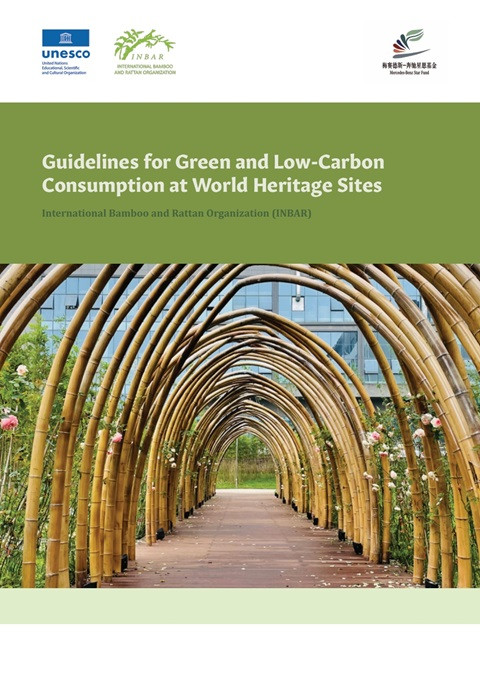 Guidelines for Green and Low-Carbon Consumption at World Heritage Sites Year of publication: 2024 Corporate author: UNESCO Beijing | International Bamboo and Rattan Organization (INBAR) Benefiting from Chishui’s rich tourism resources, such as Chishui Danxia World Heritage site, national nature reserves, and attractive landscapes with bamboo featured, ecotourism is flourishing in Chishui. Since 2018, within the framework of China Youth Development Foundation Mercedes-Benz Star Fund "Conservation and Management of World Heritage Sites in China" project, UNESCO Regional Office for East Asia has been implementing the “Bamboo for Carbon Neutrality in Rural Areas” pilot activity on bamboo handicraft sustainable livelihood and carbon reduction and low-carbon development in collaboration with Chishui World Heritage Administration, Chishui Forestry Administration and International Bamboo and Rattan Organization (INBAR) with the support from the Intangible Cultural Heritage Department of Ministry of Culture and Tourism and the Guizhou Forestry and Grassland Administration. In recent years, the Chinese government has attached great importance to green consumption in implementing the Action Plan for Carbon Dioxide Peak Before 2030 and has achieved remarkable results. However, rigid constraints still exist in several industries, meaning that the long-term mechanism for promoting green consumption and the supporting role of green consumption in high-quality economic development need to be strengthened. In response to this demand, the Guidelines for Green and Low-Carbon Consumption at World Heritage Sites takes the development and utilization of bamboo resources as an entry point to provide systematic guidance for World Heritage sites to implement green and low-carbon concepts in consumer activities, especially in tourism development. 世界遗产地绿色低碳消费指南 Year of publication: 2024 Corporate author: UNESCO Beijing | International Bamboo and Rattan Organization (INBAR) 得益于赤水丰富的竹资源以及丹霞世界遗产地,自然保护区,风景区等旅游资源,近年来赴赤水市生态旅游人次增长迅速,带动和刺激在赤旅游消费。自2018年起,联合国教科文组织东亚地区办事处在CYDF梅赛德斯-奔驰《中国世界遗产地保护和管理》项目框架下,与赤水遗产地管理局、赤水林业局和国际竹藤组织合作,在文化和旅游部非物质文化遗产司和贵州林草局的支持下,在赤水开展 “竹乡碳计” 竹手工艺可持续生计以及世界遗产地减碳和低碳发展试点。近年来,中国政府为贯彻落实《2030年前碳达峰行动方案》,积极在全国范围内推广绿色消费理念,即各类消费主体在消费活动全过程贯彻绿色低碳理念的消费行为,并取得了积极进展。然而绿色消费需求仍待激发和释放,一些领域依然存在浪费和不合理消费,促进绿色消费长效机制尚需完善,绿色消费对经济高质量发展的支撑作用有待进一步提升。为回应这一需求,《世界遗产地绿色低碳消费指南》将以竹资源的开发和利用为切入点,为世界遗产地在消费活动特别是旅游业发展中贯彻绿色低碳理念提供系统性指导。