
Resources
Explore a wide range of valuable resources on GCED to deepen your understanding and enhance your research, advocacy, teaching, and learning.
730 Results found
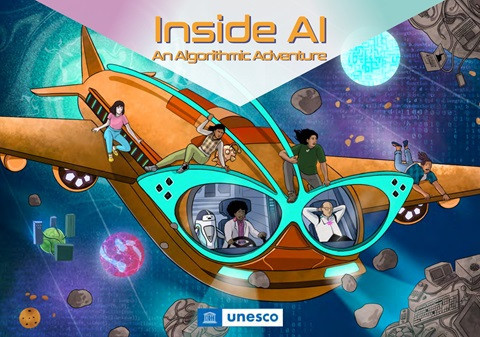 Inside AI - An Algorithmic Adventure Year of publication: 2022 Author: Katherine Evans Corporate author: UNESCO In the framework of UNESCO’s work to harness emerging technologies for sustainable development, this graphic novel for policymakers as well as youth explores the impact of Artificial Intelligence on humankind. Dive into the world of AI and follow the adventures of four characters whose lives are affected by algorithmic hazards: By following characters in four different corners of the globe as they grapple with the limits of AI technologies, the audience jointly embarks on a mission in an algorithmic galaxy called Plethor.A.I.. There, they have but one option: travel across this hidden world behind our screens to learn about the social, technical, ethical and human rights impacts of Artificial Intelligence, and help the characters find a way back to reality.UNESCO’s first graphic novel on Artificial Intelligence (AI) aims at providing an educational media to policymakers, adults and youth who are curious and interested in learning more about AI, its challenges and stakes.
  [Summary] Media and Information Literacy: The Time to Act is Now! Year of publication: 2021 Corporate author: UNESCO UNESCO has developed a comprehensive Curriculum which provides a framework for training teachers. But it is also a foundation that will also be of help to others: to learners, to content providers like internet companies and news media outlets, and to citizens of all ages as they consume, create and use content, including information.The second edition of the learning resource has been significantly expanded since the first publication in 2011. The MIL Curriculum reflects the changing nature of the information landscape. It now includes insight from a broader range of content providers than before, including libraries, archives, museums, media, and digital communications companies.The Curriculum is designed to empower educators and learners in general – from schoolteachers to those involved in training, the media and libraries, governments, and NGOs – to train people to spot misrepresentations and disinformation, and most importantly develop critical thinking competencies.
 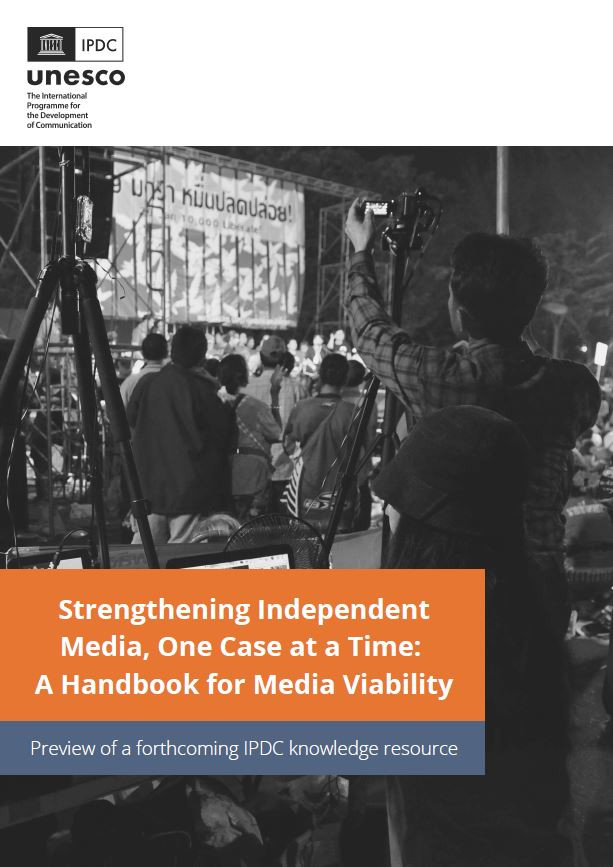 Strengthening Independent Media, One Case at a Time: A Handbook for Media Vability; Preview of a Forthcoming IPDC Knowledge Resource Year of publication: 2021 Corporate author: UNESCO “Strengthening Independent Media, One Case at a Time: A Handbook for Media Viability” will include case studies of innovative ideas from a wide variety of news media companies, mostly in the developing world, that are succeeding in difficult times and have lessons to share with others who are struggling. The handbook project was announced during the 65th meeting of the Bureau of the Intergovernmental Council of the International Programme for the Development of Communication (IPDC).This brochure includes highlights of some of the cases to be included, from community media in South Africa to a pure-play digital success in Indonesia, to a fact-checking network in Brazil to a covid response in Pakistan, and much more. The Handbook will be published in September 2021 and will be available for free on the website of the IPDC.
  Social Media 4 Peace Year of publication: 2021 Corporate author: UNESCO | European Union (EU) The overall objective of the UNESCO project 'Social Media 4 Peace' funded by the European Union is to strengthen the resilience of societies to potentially harmful content spread online, in particular hate speech inciting violence while protecting freedom of expression and enhancing the promotion of peace through digital technologies, notably social media. For more information, please visit:https://en.unesco.org/social-media-4-peace
  평화, 인권, 국제이해, 협력, 기본적 자유, 세계시민성, 지속가능발전을 위한 교육 권고: 해설서 Year of publication: 2024 Corporate author: 유네스코 '평화, 인권, 국제이해, 협력, 기본적 자유, 세계시민성, 지속가능발전을 위한 교육 권고'를 소개하고 교육에 관심이 있는 이해관계자들 대상으로 권고의 내용과 활용을 담은 해설서.
 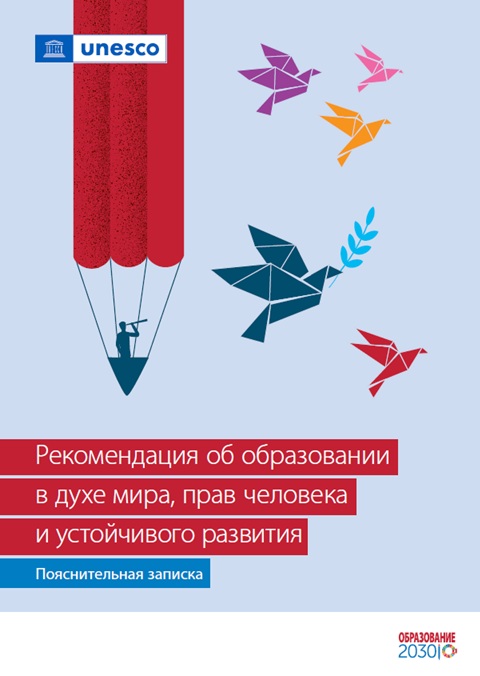 Рекомендация об образовании в духе мира, прав человека и устойчивого развития. Пояснительная записка Year of publication: 2024 Corporate author: UNESCO Данная брошюра знакомит с обновленной Рекомендацией и кратко разъясняет, каким образом сформулированные в ней руководящие принципы могут быть применены на практике и в повседневной жизни различными субъектами деятельности в сфере образования.
  UNESCO Futures of Education Report Explained by Members of the International Commission Year of publication: 2022 Corporate author: UNESCO Initiated by UNESCO, the International Commission on the Futures of Education has prepared a new report on how education can best shape the future of humanity and the planet. In this video, members of the Commission and its chair explain the main recommendations and defining features of their report, Reimagining our futures together: A new social contract for education. The report is part of UNESCO’s Futures of Education initiative which aims to rethink education and shape the future. The initiative is catalyzing a global debate on how knowledge, education and learning need to be reimagined in a world of increasing complexity, uncertainty, and precarity.
 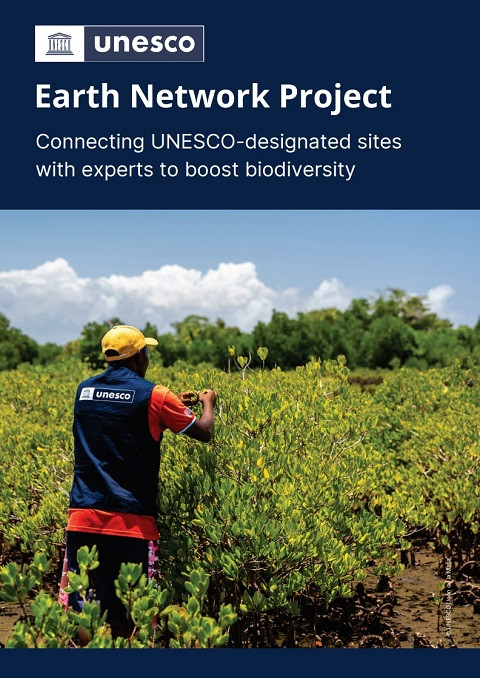 Earth Network Project: Connecting UNESCO-Designated Sites With Experts to Boost Biodiversity Year of publication: 2024 Corporate author: UNESCO The Earth Network project was launched in 2021 with the support of the Government of Italy. It brings together over 380 experts from more than 60 countries, encompassing diverse biodiversity-related fields that include land restoration, environmental management and environmental law. The specialists volunteer to put their unique skillsets and knowledge at the disposal of sites designated by UNESCO which request their assistance. The Earth Network covers all scientific domains and proudly combines different forms of knowledge: scientific, practitioner, local and indigenous. On the ground, these experts provide technical advice, collect data, build partnerships, and provide training tailored to the specific needs and priorities of each UNESCO-designated site.
 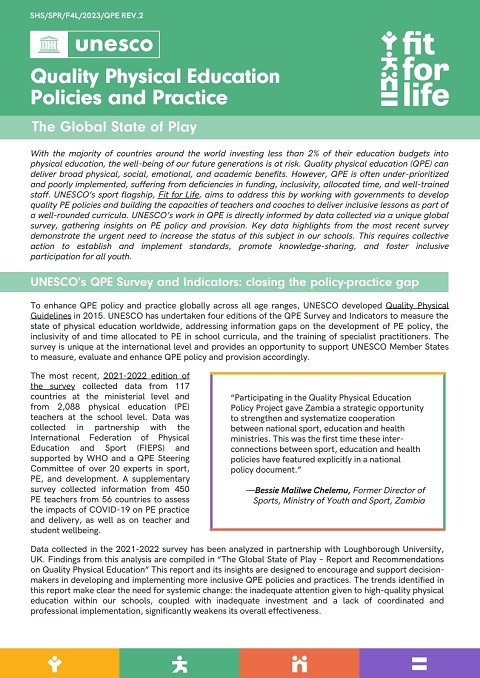 Quality Physical Education Policies and Practice: The Global State of Play Year of publication: 2023 Corporate author: UNESCO With the majority of countries around the world investing less than 2% of their education budgets into physical education, the well-being of our future generations is at risk. Quality physical education (QPE) can deliver broad physical, social, emotional, and academic benefits. However, QPE is often under-prioritized and poorly implemented, suffering from deficiencies in funding, inclusivity, allocated time, and well-trained staff. UNESCO’s sport flagship, Fit for Life, aims to address this by working with governments to develop quality PE policies and building the capacities of teachers and coaches to deliver inclusive lessons as part of a well-rounded curricula. UNESCO’s work in QPE is directly informed by data collected via a unique global survey, gathering insights on PE policy and provision. Key data highlights from the most recent survey demonstrate the urgent need to increase the status of this subject in our schools. This requires collective action to establish and implement standards, promote knowledge-sharing, and foster inclusive participation for all youth.
  High Level Ministerial Dialogue on Education for Peace Year of publication: 2023 Corporate author: UNESCO This High-level event brought together voices from around the world to discuss what quality and relevant education needs to look like today to bring about real and lasting peace.