
Resources
Explore a wide range of valuable resources on GCED to deepen your understanding and enhance your research, advocacy, teaching, and learning.
950 Results found
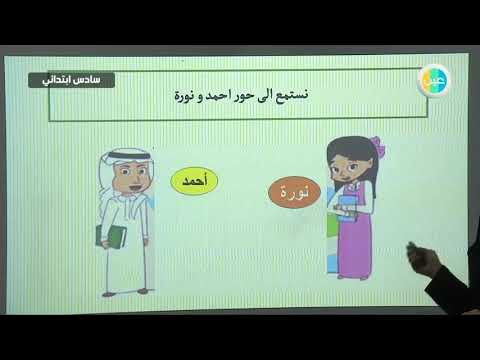 iEN Social Studies and Citizenship Lessons: Personality Enhancement Program - Sixth Primary Year of publication: 2020 Author: Fawzia Alghamdi Corporate author: iEN National Education Portal The teacher explains a sixth grade lesson on character development and enhancement. The lesson for students of the Kingdom of Saudi Arabia in a social studies course. With the Coronavirus pandemic, lessons explaining across platforms have emerged. دروس عين الدراسات الاجتماعية والمواطنة– برنامج تعزيز الشخصية - سادس ابتدائي Year of publication: 2020 Author: Fawzia Alghamdi Corporate author: iEN National Education Portal تقوم المعلمة بشرح درس للصف السادس الابتدائي في تنمية وتعزيز الشخصية. الدرس لطلاب المملكة العربية السعودية في مقرر الدراسات الاجتماعية. لقد ظهرت الدروس التي تشرح عبر المنصات مع جائحة كورونا.
  The Role of the Mother Tongue in Learning Standard Arabic at the Primary Stage in the Algerian School Year of publication: 2012 Author: Khaled Abdel Salam Corporate author: Farhat Abbas Setif University Our study has two mean objectives: To determine the first language consequences, whatever they are general, Arabic, or Kabyle, in the learning of school language at different vocabulary, singular, grammar, and, conjugation structures, therefore, exploring if they are helping factors in the learning process or hampering it. To identify the cognitive strategies used by the novices in their learning process in relation to their language performance and errors made in the oral and written expression. In order to deal with this situation, we utilized the descriptive analytical method, in which we had chosen randomly two samples composed of 90 scholars (45 scholars speaking general Arabic language, and 45 scholars speaking Kabyle language), on which we administered two tests, one in the form of an interview about personal and health informations, and the other one about the environment conservation. After, we had analysed the content of the responses, via the extraction of the language errors expanded, and categorising them to different styles or patterns, and computing their frequencies, and explaining them, we founded the following results: Whatever, the first language is general, Arabic or Kabyle, it has a big consequence over all the language structures, therefore, making the scholars language not different from them. According to these results, we can conclude that these factors are not considered as helping factors in the learning process. There is a tendency for the novices to utilize more, both of the revising strategies of courses and the deduction strategy compared to the others. there are no significant differences between scholars speaking general Arabic language and scholars speaking kabyle language in the vocabulary structure, but, there are significant differences between these two samples on the grammatical and conjugational structures, related to personal, pedagogical and familiar factors. According to these results, we can conclude that the language level of the novices on both samples is not related to the abilities required by the school system. دور اللغة الأم في تعلم اللغة العربية الفصحى في المرحلة الابتدائية بالمدرسة الجزائرية Year of publication: 2012 Author: Khaled Abdel Salam Corporate author: Farhat Abbas Setif University تهدف دراستنا إلى التعرف على تأثيرات اللغة األولى سواء كانت عامية عربية او قبائلية في تعلم اللغة المدرسية في مختلف البنيات اللغوية الصوتية والمفرداتية والتركيبية والنحوية والصرفية. وبالتالي الكشف إن كانت ،عامال ميسرا في التعلم أو معرقال. و التعرف على االستراتيجيات المعرفية التي يستعملها المتعلمون في تعلمهم وعالقتها بأدائهم اللغوي في التعبيرين الشفوي والكتابي. ولتحقيق ذلك استعملنا المنهج الوصفي التحليلي، فاخترنا عينتين بمجموع 90 تلميذا (45 ناطقا بالعامية العربية و45 ناطقا بالقبائلية). فطبقنا عليهما ثالث اختبارات، أحدهما شفوي على شكل مقابلة حول معلومات شخصية وصحية واآلخر كتابي حول المحافظة على البيئة، ومقياس حول ،استراتيجيات التعلم. ولما حللنا محتوى االجابات واستخرجنا األخطاء اللغوية المنتشرة وصنفناها إلى مختلف األنماط وبعد حسابنا لتكراراتها و تحليلنا وتفسيرنا لها، توصلنا إلى النتائج اآلتية: ـ أن اللغة األولى سواء كانت عامية عربية او قبائلية قد أثرت بشكل كبير في كل بنيات اللغة الصوتية، التركيبية، النحوية والصرفية بشكل كبير حتى أصبحت .لغة التعليم ال تختلف كثيرا عنها. لذلك استنتجنا أنه ال يمكن اعتبارها عامال ميسرا في التعلم .ـ أن المتعلمين يستخدمون كثيرا استراتيجيات المراجعة للدروس واالستنباط أكثر من االستراتيجيات األخرى .ـ أنه ال توجد عالقة بين االستراتيجيات المستعملة وأداء المعلمين باللغة المدرسية شفويا وكتابيا ـ وأنها ال توجد فروق ذات داللة إحصائية بين الناطقين بالعامية العربية و الناطقين بالقبائلية في البنية الصوتية لكن هناك فروقا دالة إحصائيا بينهما في البنيتين النحوية والصرفية لكنها تعود إلى عوامل اخرى ذاتية وبيداغوجية .وأسرية .واستنتجنا ان مستوى المتعلمين من العينتين بلغة التعليم لم يرتق إلى الكفاءات المنشودة في المنهاج المدرسي.
  Multicultural Education between Theoretical Modeling and Problematic Practices: A Comparative Study between Egypt, France, and Japan Year of publication: 2006 Author: Ahmed Aidrous | Mohammed Awad Corporate author: Zagazig University This paper focuses on studying multiculturalism as a concept, theories, frameworks and associated applied models. The study reviews the experience of France, Japan and Egypt, and makes comparisons between them. The study ends with a proposed vision for multicultural education in light of the experiences presented.
  Regional workshop on enhancing teachers' competencies in education for sustainable development, Alexandria, Egypt, 7-9 May 2007: final report Year of publication: 2007 Corporate author: UNESCO Beirut | University of Alexandria In the framework of the UN decade of education for sustainable development, the UNESCO offices in the Arab region held their first workshop in September 2005 on the role of education and training for sustainable development. This second workshop was inaugurated in May 2007 on Enhancing Teachers’ Competencies in Education for sustainable Development. The choice of the teacher to be at the center of this workshop stresses the role teacher plays in development programs. Atelier régional sur le renforcement des compétences des enseignants en matière d'éducation pour le développement durable, Alexandrie, Égypte, 7-9 mai 2007: rapport final Year of publication: 2007 Corporate author: UNESCO Beirut | University of Alexandria Dans le cadre de la Décennie des Nations Unies pour l'éducation au développement durable, les bureaux de l'UNESCO dans la région arabe ont tenu leur premier atelier en septembre 2005 sur le rôle de l'éducation et de la formation pour le développement durable. Ce deuxième atelier a été inauguré en mai 2007 sur le renforcement des compétences des enseignants en éducation pour le développement durable. Le choix de l'enseignant à être au centre de cet atelier met l'accent sur le rôle que l'enseignant joue dans les programmes de développement.
  Reimagining Life Skills and Citizenship Education in the Middle East and North Africa: A Four-Dimensional and Systems Approach to 21st Century Skills; Conceptual and Programmatic Framework Year of publication: 2017 Corporate author: UNICEF Middle East and North Africa The situation of learning in MENA calls for a holistic, lifelong and rights-based vision of education that maximizes the potential of all children and youth in the region and better equips them to create meaning out of knowledge and to face the transitions from childhood to adulthood, from education to work, and from unreflective development to responsible and active citizenship. This is what drives the MENA Life Skills and Citizenship Education (LSCE) Initiative, kicked off in 2015 with the aim of supporting the countries of the region – conceptually, programmatically and technically – to improve learning and to better invest such learning in individual, social and economic development.The LSCE Conceptual and Programmatic Framework (CPF) puts forth a roadmap to guide policies, strategies and programmes on life skills and citizenship education supporting the region-wide efforts to provide children and youth with opportunities to learn, transition from childhood to adulthood, move from school to work settings, and become responsible and active citizens of their communities.A set of twelve core life skills for MENA has been identified using the four-dimensional learning model: ‘Learning to Know’ (Cognitive Dimension), ‘Learning to Do’ (Instrumental Dimension), ‘Learning to Be’ (Individual Dimension), and ‘Learning to Live Together’ (Social Dimension). The twelve core life skills are life-long, and they build on evidence that underlines the importance of skills acquisition from an early age. Furthermore, the twelve core life skills are acquired and sustained through all forms of learning in a systems approach that recognizes multiple pathways of learning, formal, non-formal and informal. Réimaginer l’éducation aux compétences de vie et à la citoyenneté au Moyen-Orient et en Afrique du Nord : Une approche à quatre dimensions et systémique des compétences pour le XXIe siècle ; Cadre programmatique et conceptuel Year of publication: 2017 Corporate author: UNICEF Middle East and North Africa L’Initiative pour l’éducation aux compétences de vie et à la citoyenneté de la région MENA (LSCE) représente un effort de collaboration étatique et régional en faveur de la réalisation de l’objectif de développement durable (ODD) 4 – Assurer l’accès de tous à une éducation de qualité, sur un pied d’égalité, et promouvoir les possibilités d’apprentissage tout au long de la vie. Elle cherche à reformuler la compréhension traditionnelle de l’éducation aux compétences de vie et à la citoyenneté dans la région, tout en rappelant les questions fondamentales au sujet du but et du rôle de l’éducation dans le développement sociétal qui sont pertinentes dans le contexte actuel.L’Initiative LSCE se concentre sur trois défis interdépendants :Une société du savoir inaccessible, résultat de la mauvaise qualité de l’éducation, du bas niveau des résultats scolaires et d’une équité et inclusion limitées.Une croissance économique en déclin, résultat d’un manque d’aptitudes à l’employabilité, du haut taux de chômage chez les jeunes, de l’inégalité des sexes face à l’accès au marché du travail, du manque de création d’emplois, et d’un environnement économique faible.Une faible cohésion sociale, résultat de l’escalade de la violence et de la radicalisation tout autant que d’un faible engagement civique.
 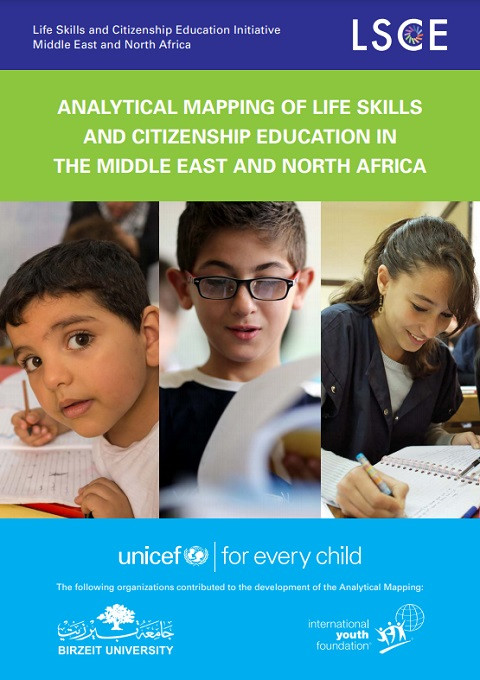 Analytical Mapping of Life Skills and Citizenship Education in the Middle East and North Africa Year of publication: 2017 Corporate author: UNICEF Middle East and North Africa The Analytical Mapping of the Life Skills and Citizenship Education in MENA, published in October 2017, provides a multi-stakeholder view of the status of life skills and citizenship education in MENA and the corresponding vision for the region. It does not evaluate existing interventions, nor is it meant to generate an exhaustive list of all existing life skills programmes in MENA. It rather aims to provide an analytical overview of Life Skills and Citizenship Education (LSCE) related intervention in the region. Through analyzation, it also attempts to highlight general challenges encountered in the programming of LSCE, as well as focus on opportunities for LSCE in MENA national education systems.