
Resources
Explore a wide range of valuable resources on GCED to deepen your understanding and enhance your research, advocacy, teaching, and learning.
1,727 Results found
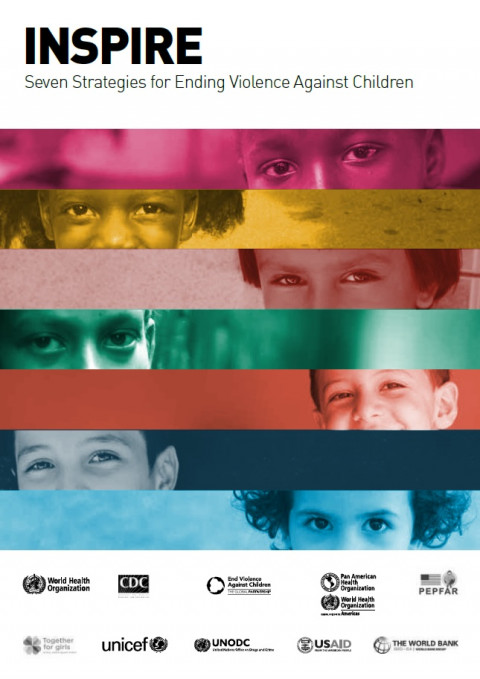 INSPIRE: Seven strategies for Ending Violence Against Children Year of publication: 2016 Corporate author: World Health Organization (WHO) Evidence-based resource for everyone committed to preventing and responding to violence against children and adolescents – from government to grassroots, and from civil society to the private sector. It represents a select group of strategies based on the best available evidence to help countries and communities intensify their focus on the prevention programmes and services with the greatest potential to reduce violence against children. The seven strategies are: Implementation and enforcement of laws; Norms and values; Safe environments; Parent and caregiver support; Income and economic strengthening; Response and support services; and Education and life skills. Additionally, INSPIRE includes two cross-cutting activities that together help connect and strengthen – and assess progress towards – the seven strategies.
  Identity, DNA Typing and Citizenship: Philosophical Reflections Year of publication: 2010 Author: Marie-Hélène Parizeau Corporate author: Sociologie et sociétés In a context of globalization, migratory flows and the hunt for terrorists, how are biometrics, and, more specifically, the notion of the human DNA Typing, changing the individual’s relationship to his or her citizenship ?To try to answer this question, we review some of the theoretical aspects of citizenship and briefly outline the history of identification measures linked to the advent of citizenship. We then examine the current context of the use of biometrics for identification purposes and the reasons for its use as cited by the European Community and the United States. We more particularly look at the case of the human DNA Typing, using examples from Canada and the United States. The genetic footprint is related to personal identity based on Paul Ricoeur’s concept of narrative identity. We show how the ethno-racial criteria used by biometrics, together with the ideology of multiculturalism, are constructing, in the West, a new narration of the Other, of foreigners, which excludes them from the sphere of citizenship. Identité, empreinte génétique et citoyenneté: réflexions philosophiques Year of publication: 2010 Author: Marie-Hélène Parizeau Corporate author: Sociologie et sociétés Dans quelle mesure la biométrie, et plus spécifiquement l’empreinte génétique, dans un contexte de globalisation, de flux migratoires, et de chasse au terrorisme, vient-elle modifier le rapport de l’individu à sa citoyenneté ?Pour tenter de répondre à cette question, nous rappellerons quelques aspects théoriques de la citoyenneté. L’historique des mesures d’encartement liées à l’avènement de la citoyenneté y sera aussi rapidement présenté. Nous évoquerons ensuite le contexte actuel de l’usage de la biométrie à des fins d’identification et les motifs invoqués par la Communauté européenne et les États-Unis. Nous examinerons plus attentivement le cas précis de l’empreinte génétique avec les exemples du Canada et des États-Unis. Finalement, l’empreinte génétique et l’identité personnelle seront mises en relation à partir du concept d’identité narrative de Paul Ricoeur. Nous montrerons comment les critères ethno-raciaux utilisés par la biométrie ; concomitamment avec l’idéologie du multiculturalisme ; construisent une nouvelle narration occidentale de l’Autre, qui l’exclut de la sphère de la citoyenneté.
  Connections Between Environmental Justice, Popular Ecologism and Eco-citizenship Year of publication: 2006 Author: Nayla Naoufal Corporate author: Université du Québec à Montréal (UQAM) | Éditions en environnement VertigO Citizen movements connected to socio-ecological issues are increasing around the world : In the global North and South, people and communities are struggling against mining projects, against mega-projects, for the development of responsible and urban agriculture, against the inequities engendered by climate change, etc. This article examines historic and contemporary citizen movements linked to socio-ecological issues and underscores the evolution in their claims : Initially, environmental justice was exclusively reactive and focused on local cases of disproportional exposure to environmental problems ; today, it is also proactive, increasingly transnational and, in some cases, holistic. I also address the current of popular environmentalism and its links with environmental justice. Then, I probe environmental justice theoretical discourses and identify a framework that is relevant in light of contemporary struggles. Last, I present the concept of ecocitizenship, as well as a typology pertaining to this term, based on an exhaustive review of the scientific literature and on the study of ecocitizenships developed by young community gardeners. It appears that the ecocitizenship that is both critical and participative is of particular interest for environmental justice. Connexions entre la justice environnementale, l’écologisme populaire et l’écocitoyenneté Year of publication: 2006 Author: Nayla Naoufal Corporate author: Université du Québec à Montréal (UQAM) | Éditions en environnement VertigO Les mouvements citoyens liés à des problématiques socio-écologiques prennent de plus en plus d’ampleur à travers le monde : dans les « Nords » et dans les « Suds », des personnes et des communautés luttent contre des projets miniers, contre la construction de mégaprojets, pour le développement d’une agriculture urbaine et responsable, contre les inégalités générées par les changements climatiques, etc. Qu’ils soient historiques ou contemporains, cet article examine ces mouvements en s’attardant à l’évolution de leurs revendications. De réactive et basée sur des cas locaux d’exposition disproportionnelle aux problèmes environnementaux, la justice environnementale est devenue également proactive, de plus en plus transnationale et, dans certains cas, holistique. Je me penche également sur le courant de l’écologisme populaire et sur ses liens avec la justice environnementale. J’explore ensuite les fondements théoriques de la justice environnementale, ce qui permet d’identifier un cadre pertinent en la matière au regard des mobilisations contemporaine. J’analyse enfin le concept d’écocitoyenneté, présentant une typologie en la matière, en me basant sur une recension exhaustive de la littérature scientifique et sur l’étude des écocitoyennetés construites par des apprentis jardiniers en contexte communautaire. Il apparaît que la forme d’écocitoyenneté à la fois participative et critique contribue particulièrement à la justice environnementale.
  Intercultural and Inclusive Teacher Training: The Conceptualization and Operationalization of Professional Skills Year of publication: 2016 Author: Julie Larochelle-Audet | Corina Borri-Anadon | Maryse Potvin Corporate author: Éducation et francophonie In the context of globalization, educational systems, from elementary to university, must take into account the increasingly complex realities they face, especially in terms of skills that teachers need to develop. In this respect, on both political and scientific levels, the importance of training on ethnocultural, religious and linguistic diversity comes up regularly. However, a portrait of teacher training in Québec universities has revealed an overall deficiency in this area (Larochelle-Audet, Borri-Anadon, McAndrew and Potvin, 2013). While a competency-based approach has prevailed since 2001 in teacher training, an inter-university work group has begun to address this gap by enriching the Department of Education’s professional frame of reference on teacher competencies. The work of the group, presented in this article, is based on a critical analysis of the department’s frame of reference, which reveals an absence of tangible considerations on ethnocultural diversity and the objectives of intercultural and inclusive teacher training. The members of the group developed two methods aiming to add intercultural and inclusive competencies to the reference framework: the first proposes the integration of 21 components into the 12 existing professional competencies, and the second favours the addition of a new intercultural and inclusive competency. Their operationalization entails some limitations and risks, which are the subject of a discussion in this article. La formación intercultural e incluyente del personal docente: conceptualización y operacionalización de competencias Year of publication: 2016 Author: Julie Larochelle-Audet | Corina Borri-Anadon | Maryse Potvin Corporate author: Éducation et francophonie En el contexto de la globalización, los sistemas educativos, desde la primaria hasta la universidad, deben tomar en cuenta las realidades cada vez más complejas que les interpelan, sobre todo en lo referente a las competencias que deben desarrollar los docentes. Al respecto, con frecuencia se recuerda la importancia de una formación relacionada con la diversidad etnocultural, religiosa y lingüística, tanto sobre el plano político que científico. Sin embargo, una evocación de dicha formación en las universidades quebequenses muestra que aun es, en su conjunto, incompleta (Larochelle-Audet, Borri-Anadon, Mc Andrew et Potvin, 2013). Si bien desde 2001 prevalece un enfoque por competencias profesionales en la formación magisterial, un grupo de trabajo interuniversitario se dedicó a corregir esa falta enriqueciendo el referencial ministerial de competencias profesionales del personal docente. Los trabajos del grupo, que presentamos en este artículo, se fundan en un análisis crítico de dicho referencial, el cual muestra la ausencia de consideraciones concretas en lo referente a la diversidad etnocultural y a las finalidades de una formación intercultural incluyente en enseñanza. Los miembros del grupo elaboraron dos modalidades con el objetivo de insertar en el referencial las competencias culturales y incluyentes: la primera propone integrar 21 competencias directamente en las 12 competencias profesionales ya existentes y la segunda privilegia la adjunción de una nueva competencia denominada intercultural e incluyente. Su operacionalización comporta algunos límites y ciertos riesgos que constituyen el tema que aquí se discute.
  Rethinking Water in Central Asia: The Costs of Inaction and Benefits of Water Cooperation Year of publication: 2017 Author: Benjamin Pohl | Annika Kramer | William Hull | Sabine Blumstein | Iskandar Abdullaev | Jusipbek Kazbekov | Tais Reznikova | Ekaterina Strikeleva | Eduard Interwies | Stefan Görlitz Corporate author: adelphi | Central Asia Regional Economic Cooperation (CAREC) A joint study conducted by CAREC and adelphi within the framework of the Switzerland’s Blue Peace Central Asia Initiative is published. The publication demonstrates the cost of inaction and benefits of cooperation in the field of water management between the countries of the region.entral Asia is witnessing intense competition over water resources and their use for irrigation and hydropower generation. Despite general political commitment to cooperation, water policies in Central Asia are largely driven by uncoordinated and partly contradicting national strategies. This limited water cooperation, however, entails significant costs and major risks for the future development of the region.“Rethinking Water in Central Asia” analyses these “costs of inaction” – defined here as the difference between the current, limited cooperation and the benefits that would result from full cooperation. Even if only parts of these costs are taken into account, they amount to more than US$ 4.5 billion per year for the whole region and are significant for each of the five countries studied. Due to deteriorating infrastructure, environmental degradation and demographic and economic pressures, these costs will increase if water management remains as it currently is.By raising awareness of these costs of inaction, and by setting out a variety of pathways towards eliminating them in the future, the present report seeks to encourage and support Central Asian policy-makers in strengthening regional water cooperation and improved water governance. The costs of inaction mirror the potential benefits of water cooperation, and their scale hence demonstrates the scale of the benefits and opportunities that better water management and closer cooperation can deliver for Central Asia. Переосмысление водного вопроса в Центральной Азии: Цена бездействия и преимущества водного сотрудничества Year of publication: 2017 Author: Benjamin Pohl | Annika Kramer | William Hull | Sabine Blumstein | Iskandar Abdullaev | Jusipbek Kazbekov | Tais Reznikova | Ekaterina Strikeleva | Eduard Interwies | Stefan Görlitz Corporate author: adelphi | Central Asia Regional Economic Cooperation (CAREC) Исследование «Переосмысление водной проблематики в центральноазиатском контексте: ущерб от бездействия и преимущества водного сотрудничества», проведенное РЭЦЦА совместно с немецким консультационным бюро «adelphi» при поддержке Швейцарского агентства по развитию и сотрудничеству.В работе представлен всесторонний анализ так называемой «цены бездействия» – разницы между преимуществами текущего ограниченного сотрудничества в сфере управления водными ресурсами и вероятными преимуществами полноценного всестороннего сотрудничества. С учетом лишь некоторых соответствующих затрат, общий ущерб из-за недостаточного уровня взаимодействия может составить более $4,5 млрд для стран региона. Таким образом, данный отчет ставит своей целью повысить осведомленность о высокой цене бездействия и представить рекомендации для лиц, принимающих решения по расширению регионального сотрудничества по водным вопросам и улучшению системы управления водными ресурсами.Авторы настоящего отчета надеются, что представленный анализ потерь вследствие бездействия и ряда возможных путей их предотвращения послужит полезным источником информации для лиц, принимающих решения в сфере водного сотрудничества в регионе Центральной Азии, а также будет содействовать совершенствованию системы управления водными ресурсами. Потери от бездействия коррелируют с потенциальными выгодами от сотрудничества, масштаб которых отражает объем преимуществ и возможностей в результате повышения качества управления водными ресурсами и более тесного сотрудничества в данной области.
  Preparing & Supporting Teachers to Meet the Challenges of 21st Century Learning in Asia-Pacific: Transversal Competencies in Education Policies and Practice Year of publication: 2016 Corporate author: Regional Bureau for Education in Asia and the Pacific | UNESCO Bangkok Preparing and supporting teachers to meet the challenges of 21st century learning in Asia-Pacific. Transversal Competencies in Education Policies and Practice. This is a summary of ERI-Net’s Phase III research into transversal competencies in education policy and practice. The regional synthesis report will be published in December 2016.