
Resources
Explore a wide range of valuable resources on GCED to deepen your understanding and enhance your research, advocacy, teaching, and learning.
2,776 Results found
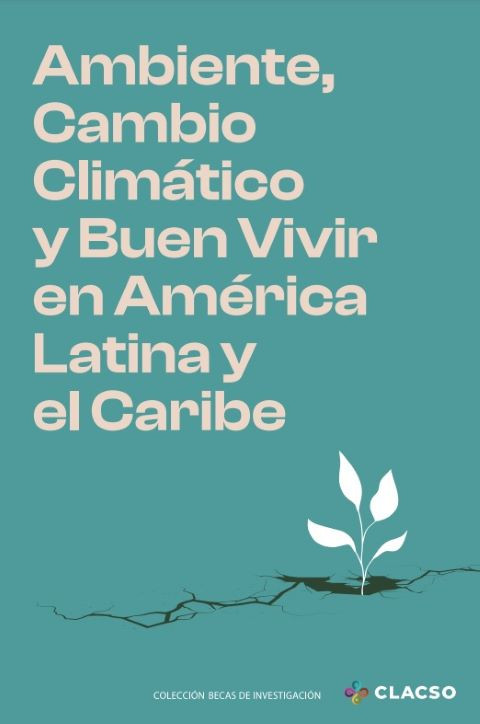 Ambiente, cambio climático y buen vivir en America Latina y el Caribe Year of publication: 2022 Author: Tatiana Cuenca Castelblanco | Letícia Larín | Juan Manuel Delgado Estrada | Luz Carina Durán Solarte | Cindy Vanessa Quintero Ramírez | Manuel Alejandro Henao Restrepo | Sara Latorre | Andrea Bravo | Marisabel García Acelas | Robert Adrián Quintero Leguizamón | Marisela Pilquimán Vera | Stepfanie Ramírez | Clarena Rodríguez Jaramillo | Melisa Argento | Ariel Slipak | Florencia Puente | Sarah Patricia Cerna Villagra | Agustín Carrizosa | María Irene Rodríguez | Stefannia Parrado Morales Corporate author: Latin American Council of Social Sciences (CLACSO) Este libro es el resultado de la convocatoria lanzada por CLACSO en febrero de 2020 para el desarrollo de proyectos de investigación sobre «Ambiente, cambio climático y buen vivir en América Latina y el Caribe». Los ensayos presentados reúnen a más de veinte investigadoras e investigadores de ocho países latinoamericanos, que abordaron las temáticas propuestas desde diferentes perspectivas, considerando los vínculos entre el concepto de "buen vivir" y los fenómenos ambientales y económicos que están ocurriendo en todo el mundo, como el innegable cambio climático, y en particular en los países latinoamericanos, como el modelo extractivista de explotación de la naturaleza.
 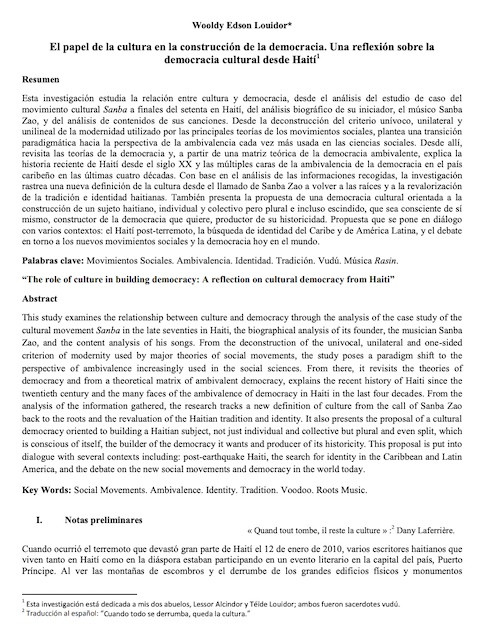 The Role of Culture in the Construction of Democracy: A Reflection on Cultural Democracy From Haiti Year of publication: 2015 Author: Wooldy Edson Louidor Corporate author: Latin American Council of Social Sciences (CLACSO) This research studies the relationship between culture and democracy, from the analysis of the case study of the Sanba cultural movement in the late seventies in Haiti, from the biographical analysis of its initiator, the musician Sanba Zao, and from the analysis of the content of its songs. From the deconstruction of the univocal, unilateral and unilinear criterion of modernity used by the main theories of social movements, it proposes a paradigmatic transition towards the perspective of ambivalence increasingly used in the social sciences. From there, he revisits the theories of democracy and, based on a theoretical matrix of ambivalent democracy, explains the recent history of Haiti since the 20th century and the multiple faces of the ambivalence of democracy in the Caribbean country in the last four years. decades. Based on the analysis of the information collected, the research traces a new definition of culture from Sanba Zao's call to return to the roots and to the revaluation of Haitian tradition and identity. El papel de la cultura en la construcción de la democracia: Una reflexión sobre la democracia cultural desde Haití Year of publication: 2015 Author: Wooldy Edson Louidor Corporate author: Latin American Council of Social Sciences (CLACSO) Esta investigación estudia la relación entre cultura y democracia, desde el análisis del estudio de caso del movimiento cultural Sanba a finales del setenta en Haití, del análisis biográfico de su iniciador, el músico Sanba Zao, y del análisis de contenidos de sus canciones. Desde la deconstrucción del criterio unívoco, unilateral y unilineal de la modernidad utilizado por las principales teorías de los movimientos sociales, plantea una transición paradigmática hacia la perspectiva de la ambivalencia cada vez más usada en las ciencias sociales. Desde allí, revisita las teorías de la democracia y, a partir de una matriz teórica de la democracia ambivalente, explica la historia reciente de Haití desde el siglo XX y las múltiples caras de la ambivalencia de la democracia en el país caribeño en las últimas cuatro décadas. Con base en el análisis de las informaciones recogidas, la investigación rastrea una nueva definición de la cultura desde el llamado de Sanba Zao a volver a las raíces y a la revalorización de la tradición e identidad haitianas.
 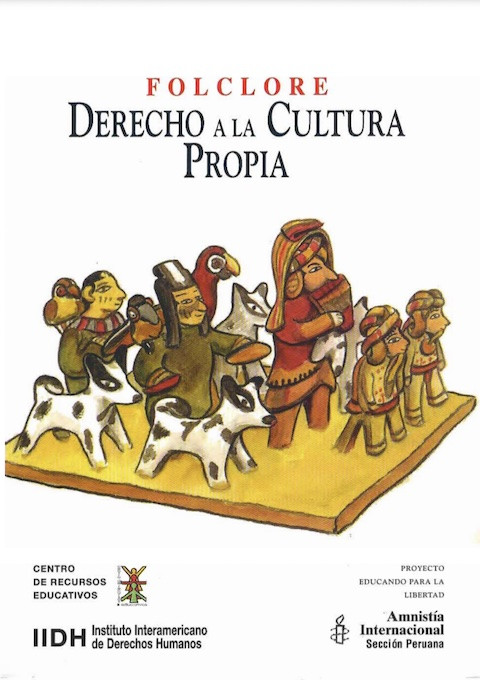 Folklore: Right to Own Culture; Teacher's Guide Year of publication: 1997 Author: William Tamayo Ángeles Corporate author: Instituto Interamericano de Derechos Humanos (IIDH) The traditional popular culture that we call folklore summarizes centuries of our history and the festive art that expresses it, through dance, music and words, is the bearer of a sensitivity that for a long time there has been an attempt to extinguish in the country, despite constitute one of those traits that best identifies us before the world and to be recognized as a nationalizing link of Peruvians. This document offers a guide for teachers and students to learn more about this expression of the continuous life of our people and identify in it their own daily effort of liberation and improvement. Folclore: Derecho a la cultura; Guía para el docente Year of publication: 1997 Author: William Tamayo Ángeles Corporate author: Instituto Interamericano de Derechos Humanos (IIDH) La cultura popular tradicional que llamamos folclore resume siglos de nuestra historia y el arte festivo que la expresa, a través de la danza, la música y la palabra, es portador de una sensibilidad que por mucho tiempo se intentó extinguir en el país, pese a constituir uno de aquellos rasgos que mejor nos identifica ante el mundo y a ser reconocido como vínculo nacionalizante de los peruanos. En este documento se ofrece una guía para que profesores y alumnos conozcan algo más de esta expresión de la vida continua de nuestro pueblo e identifiquen en ella su propio esfuerzo cotidiano de liberación y superación.
  The 2030 Agenda and the Regional Gender Agenda: Synergies for Equality in Latin America and the Caribbean (Asuntos de Género; no. 143) Year of publication: 2017 Author: Nicole Bidegain Ponte Corporate author: UN. Economic Commission for Latin America and the Caribbean (ECLAC) This document analyzes the 2030 Agenda for Sustainable Development and its Sustainable Development Goals (SDGs) in light of the challenges and priorities for gender equality and the rights and autonomy of women in Latin America and the Caribbean. Illustrative examples of the interrelationships between goals and targets of the 2030 Agenda are presented, and it warns about the importance of a comprehensive approach to ensure that progress in some of the SDGs is not made through means that may hinder the achievement of the goals and targets related to gender equality and women's rights. La Agenda 2030 y la Agenda Regional de Género: Sinergias para la igualdad en América Latina y el Caribe (Asuntos de Género; no. 143) Year of publication: 2017 Author: Nicole Bidegain Ponte Corporate author: UN. Economic Commission for Latin America and the Caribbean (ECLAC) En este documento se analiza la Agenda 2030 para el Desarrollo Sostenible y sus Objetivos de Desarrollo Sostenible (ODS) a la luz de los desafíos y prioridades para la igualdad de género y los derechos y la autonomía de las mujeres en América Latina y el Caribe. Se presentan ejemplos ilustrativos sobre las interrelaciones entre objetivos y metas de la Agenda 2030, y se advierte sobre la importancia de un abordaje integral para asegurar que el progreso en algunos de los ODS no se realice a través de medios que puedan obstaculizar el logro de los objetivos y metas vinculados a la igualdad de género y los derechos de las mujeres.
 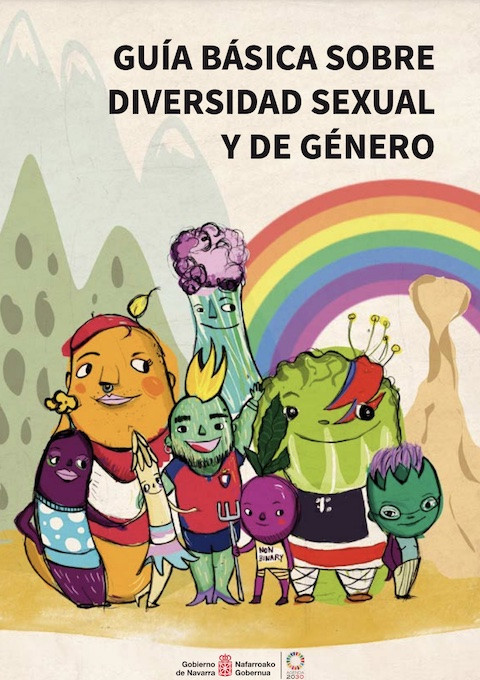 Basic Guide on Sexual and Gender Diversity Year of publication: 2020 Author: Miriam Solá García Corporate author: Navarra Institute for Equality This guide is a tool to learn about affective, sexual and gender diversity and reflect on why all of us have a key role in social change to achieve equality and recognition of LGTBI+ people. Respect for affective, sexual and gender diversity is an element of value and social wealth in whose promotion and experience all citizens are involved. Guía básica sobre diversidad sexual y de género Year of publication: 2020 Author: Miriam Solá García Corporate author: Navarra Institute for Equality Esta guía es una herramienta para conocer la diversidad afectiva, sexual y de género y reflexionar sobre por qué todas las personas tenemos un papel clave en el cambio social para lograr la igualdad y reconocimiento de las personas LGTBI+. El respeto por la diversidad afectiva, sexual y de género es un elemento de valor y de riqueza social en cuya promoción y vivencia está implicada toda la ciudadanía
  Paulo Freire's Contributions to Intercultural Education: A Case Study in Compulsory Secondary Education (Ibero-American Journal of Education; vol.76) Year of publication: 2018 Author: Maria Verdeja Muniz | Xose Anton Gonzalez Riano The general purpose of this research is to synthesize the contributions of Paulo Freire's pedagogy to intercultural education and study the possibilities of application to the educational system. The research is raised from a qualitative perspective and completed with a case study. At first, an analysis of a selected part of Freire's written work was carried out and the basic lines of what his intercultural sensitivity would be established. In another level of analysis, a study of the subjects of the ESO curriculum in Asturias in its intercultural dimension is carried out. The case study in the educational center shows that, in order to carry out true intercultural education proposals, it would be necessary for there to be some previous conditions that are described in the article.