
Resources
Explore a wide range of valuable resources on GCED to deepen your understanding and enhance your research, advocacy, teaching, and learning.
3,441 Results found
 Climate Change Adaptation Policy, 10 years: Tracking Adaptation and Suggesting the Way Forward (Ⅲ) Year of publication: 2021 Author: YoungiI Song | Jiyoung Shin | Jinhan Park | Songmi Park | Mirae Kim Corporate author: Korea Environment Institute (KEI) This study suggested the direction of preparing and wrote the climate change adaptation gap report by sector. This study defined the adaptation gap as the degree of implementation compared to the adaptation goal and evaluated the effect of reducing climate change risk.This study prepared a climate change adaptation gap report through the process of selecting representative indicators, setting adaptation goals, and analyzing national climate change adaptation policies for five sectors: forest/ecosystem, agriculture and fisheries, water, health, and territory/coast.Through the writing of the climate change adaptation gap report, We identified the insufficient climate change adaptation measures and suggested the policy directions to effectively reduce climate change risk and ensure the effectiveness of future climate change adaptation policies.As a result, we emphasized the climate change adaptation efforts are needed, such as establishing climate change adaptation policies directly related to climate change risk, building the data to understand the effectiveness of climate change adaptation measures, and setting goals for climate change adaptation. 기후변화 적응정책 10년: 현주소 진단과 개선방안 모색을 중심으로 (Ⅲ) Year of publication: 2021 Author: 송영일 | 신지영 | 박진한 | 박송미 | 김미래 Corporate author: 한국환경연구원 IPCC 제5차 평가보고서(2013년) 발간 이후 8년만인 올해 발간된 제6차 평가보고서에서는 전 세계 평균기온이 산업혁명 이전보다 1.09℃ 증가한 것으로 발표하였는데, 이는 제5차 보고서 발간 당시 발표한 0.78℃에 비하여 0.31℃가 증가한 것입니다. 전 세계적으로 온실가스 발생을 감축하기 위해 꾸준히 노력해 왔음에도 불구하고 지난 8년 정도의 시간 동안 이와 같은 기온상승이 있었습니다. 이는 기후변화가 우리의 생각보다 빨리 진행되고 있으며 이미 배출된 온실가스만으로도 기후변화가 지속적으로 발생할 수 있다는 사실을 뒷받침합니다. 신 기후체제의 근간이 되는 파리협정에서는 감축과 함께 적응을 중요한 기후변화 대응방안으로 평가하고 있습니다.우리나라에서는 기후변화의 부정적 영향에 대비하고 기후탄력성을 키워 기후 안전 사회를 이루기 위하여 2010년부터 적응정책을 이행하고 있습니다. 지난 10년간 적응정책 이행 과정에서 발생한 성과와 한계를 진단하고 이를 토대로 개선방안을 제시하기 위하여 총 3년에 걸쳐 본 과제가 수행되었습니다. 3년 차인 2021년에는 제도적 측면의 평가와 기후변화 리스크 저감 효과 측면에서 적응정책을 살펴보았습니다. 본 연구에서 도출한 해외주요 국가들과의 적응정책 비교·분석 결과 및 적응목표와 이행 정도에 대한 갭(gap) 분석 결과는 적응정책을 개선하고 실효성을 높이는 데 이바지할 것으로 기대합니다. * 본 저작물은 한국환경연구원에서 '2021'년에 작성하여 공공누리 제'4'유형으로 개방한 ‘기후변화 적응정책 10년: 현주소 진단과 개선방안 모색을 중심으로 (Ⅲ)(작성자: 송영일 외)’를 이용하였으며 해당 저작물은 한국환경연구원 홈페이지(http://www.kei.re.kr)’에서 무료로 다운받으실 수 있습니다.
 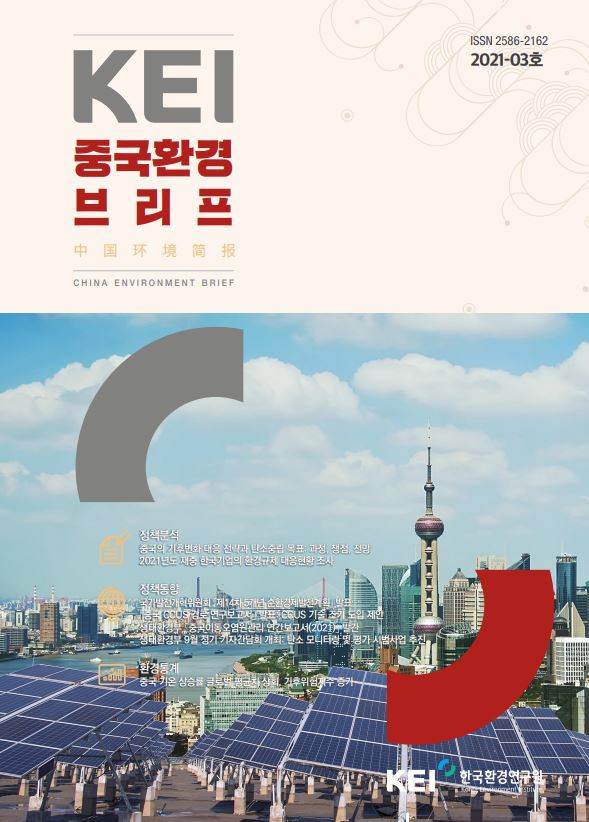 [KEI 중국환경브리프] 2021-03호 Year of publication: 2021 Corporate author: 한국환경연구원 탄소중립이 국제사회의 정책 패러다임으로 주류화, 내재화되는 현 상황 속에서, 세계 최대의 온실가스 배출국이자 G2 리더 중 하나인 중국의 행태는 가장 중요한 사안 중 하나이다. 중국의 탄소중립 추진전략은 중국 국내뿐 아니라 세계 전체가 주목해야 할 사안이라고 말할 수 있으며, 중국의 탄소중립 목표 선언을 전후로 한 중국의 의도와 행태에 대해 심도 있는 연구가 필요한 상황이다.중국의 탄소중립 전략을 상세히 이해하는 일에 앞서 반드시 선행되어야 할 사항은 중국이 탄소중립 목표 선언에 도달하게 된 과정에 대한 고찰이다. 본고에서는 중국이 탄소중립 선언을 하기까지 추진해온 20여 년 간의 기후변화정책을 대내외적인 측면에서 모두 살펴본다. 본 저작물은 한국환경연구원에서 2021년 작성하여 공공누리 제4유형으로 개방한 '[KEI 중국환경브리프] 2021-03호(작성자: 한국환경연구원)'을 이용하였으며, 해당 저작물은 한국환경연구원 홈페이지(https://www.kei.re.kr/)에서 무료로 내려받으실 수 있습니다.
 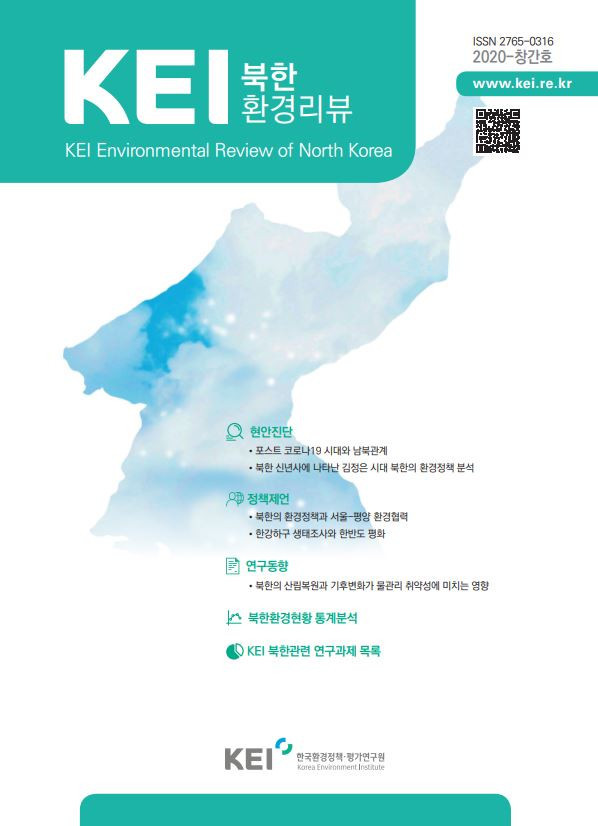 [KEI 북한환경리뷰] 2020-창간호 Year of publication: 2020 Corporate author: 한국환경정책·평가연구원 최근 연구에 따르면 북한 지역도 기후변화의 영향에서 결코 예외는 아니며, 홍수, 가뭄, 수질, 수력발전, 농업용수, 상하수도, 수생태 등과 같이 북한의 물관리 전반에 미치는 기후변화 영향의 진단도 산림복원의 효과와 연계되어 검토되어야 할 중요한 연구 주제이다.위와 같은 배경에서 산림복원과 기후변화가 북한 물관리에 미치는 영향을 진단하고 그 결과를 제공하는 등 물분야 환경 협력 발전방향의 정책적 제언을 도출하는 것은 매우 중요한 정책연구 주제이다. 본 원고에서는 물 관련 문제 해소방안 마련에 기여하고, 북한의 기후변화 적응력 증대를 통한 경제 발전, 주민 삶의 질과 생태환경 개선·보전의 선순환 정책 고리를 묶을 수 있는 공동 노력을 제안하고 있다. 또한 국내에서 최초로 김정은 집권 이후 2012부터 2020년까지 신년사에 나타난 환경관련 정책 내용을 분석하여 북한의 주요 환경정책을 파악하고 이와 관련한 북한의 주요 환경문제를 진단해 보고자 한다. 본 저작물은 한국환경정책·평가연구원에서 2020년 작성하여 공공누리 제4유형으로 개방한 '[KEI 북한환경리뷰] 2020-창간호(작성자:한국환경정책·평가연구원)'을 이용하였으며, 해당 저작물은 한국환경연구원 홈페이지(https://www.kei.re.kr/)에서 무료로 내려받으실 수 있습니다.
  기후변화와 북한인권: 실태 및 협력방안 - SDGs 매개의 남북인권협력 관점에서 - Year of publication: 2022 Author: 이규창 | 김에스라 | 나용우 | 최현아 Corporate author: 통일연구원 글로벌 이슈인 기후변화는 생태계 및 환경뿐만 아니라 건강, 감염병, 경제, 주거, 식수 등 인간 삶의 상당한 영역에 영향을 미치고 있다. 기후변화는 재해‧ 재난의 빈도 및 강도의 증대로 이어져 최근에는 기후위기라는 용어가 회자되고 있으며 더 나아가 기후재앙이라는 용어도 사용되고 있다. 국제사회는 기후변화가 인권에 미치는 영향을 주목하고 이에 대응하기 위하여 노력을 기울이고 있다. 그 모습은 유엔인권최고대표사무소 (OHCHR)의 ‘기후변화와 인권의 관계에 관한 보고서’ 발표, 유엔 인권이사회의 ‘인권과 기후변화’ 결의 채택, ‘기후변화 맥락에서의 인권증진 및 보호에 관한 특별보고관’ 임명 등으로 나타나고 있다. 이 같은 배경에서 본 연구보고서는 기후문제가 북한인권에 미치는 영향과 실태 및 남북협력방안을 연구 내용으로 다루고 있다. 본 저작물은 통일연구원에서 2022년 작성하여 공공누리 제4유형으로 개방한 '기후변화와 북한인권: SDGs 매개의 남북인권협력 관점에서(작성자:이규창 외)'를 이용하였으며, 해당 저작물은 통일연구원 홈페이지(https://www.kinu.or.kr/)에서 무료로 내려받으실 수 있습니다.
 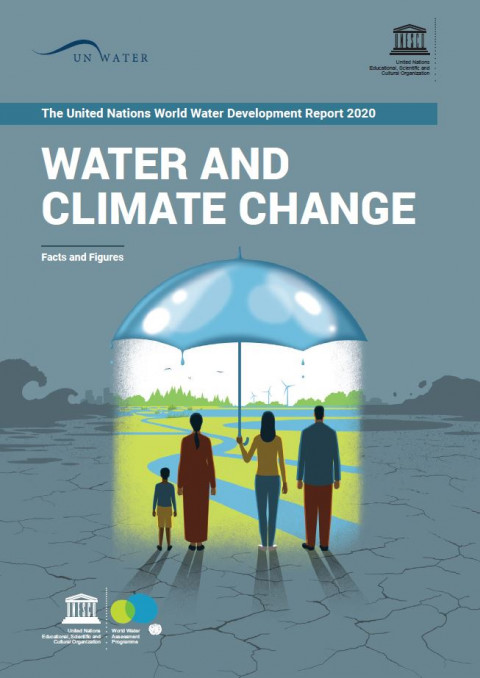 [Facts and Figures] The United Nations World Water Development Report 2020: Water and Climate Change; Facts and Figures Year of publication: 2020 Author: Engin Koncagül | Michael Tran | Richard Connor Corporate author: UNESCO World Water Assessment Programme (WWAP) Since the mid-20th century, changes in the intensity and frequency of extreme weather and climate events have been observed, including a decrease in cold temperature extremes, an increase in warm temperature extremes, an increase in extremely high sea levels and an increase in the number of heavy precipitation events in a number of regions (Min et al., 2011).Climate projections indicate with high confidence that extreme precipitation events will become more intense and frequent in many regions, but also that heatwaves will occur more often and last longer. The former will increase global flood risk (Hirabayashi et al., 2013), while the latter is expected to make droughts more intense (Trenberth et al., 2014). These risks are unevenly distributed geographically, and are generally larger for vulnerable people and communities in countries at all levels of development (IPCC, 2014a). Figure 1. Global water withdrawals throughout the previous centuryFigure 2. Climate change scenario trends in water availabilityFigure 3. Annual baseline water stressFigure 4. Seasonal variabilityFigure 5. World weather-related natural catastrophes by peril, 1980–2018Figure 6. Spatial distribution of water-related disasters (droughts, floods, landslides and storms), 2001–2018Figure 7. Spatial distribution of floods, 2001–2018Figure 8. Spatial distribution of droughts, 2001–2018Figure 9. Electricity consumption in the water sector by process, 2014–2040Figure 10. Number of people living under water stress under the Baseline Scenario [Faits et chiffres] Rapport mondial des Nations Unies sur la mise en valeur des ressources en eau 2020: l'eau et les changements climatiques, faits et chiffres Year of publication: 2020 Author: Engin Koncagül | Michael Tran | Richard Connor Corporate author: UNESCO World Water Assessment Programme (WWAP) Depuis le milieu du 20e siècle, on a observé des changements dans l’intensité et la fréquence des phénomènes météorologiques et climatiques extrêmes, notamment une diminution des extrêmes de température froide et une augmentation des extrêmes de température chaude, des niveaux de mer extrêmement élevés et du nombre de fortes précipitations dans un certain nombre de régions (Min et al., 2011).Les projections climatiques indiquent avec une grande confiance que les précipitations extrêmes deviendront plus intenses et plus fréquentes dans de nombreuses régions, mais aussi que les vagues de chaleur seront plus fréquentes et dureront plus longtemps. Les premières augmenteront le risque d’inondation au niveau mondiale (Hirabayashi et al., 2013), tandis que les dernières devraient rendre les sécheresses plus intenses (Trenberth et al., 2014). Ces risques sont répartis géographiquement de façon inégale et ils sont généralement plus importants pour les personnes et les communautés vulnérables dans les pays à tous les niveaux de développement (GIEC, 2014a). Figure 1. Préèements d’eau dans le monde au cours du 20e sièleFigure 2. Tendances des scéarios de changement climatique en matièe de disponibilitéde l’eauFigure 3. Stress hydrique annuel de référenceFigure 4. VariabilitésaisonnièeFigure 5. Catastrophes naturelles mondiales liées au climat, par risque et par nombre d’événements pertinents,1980–2018Figure 6. Réartition spatiale des catastrophes liés àl’eau (séheresses, inondations, glissements de terrain et tempêes) 2001–2018Figure 7. Répartition spatiale des inondations, 2001–2018Figure 8. Répartition spatiale de sécheresses, 2001–2018Figure 9. Consommation d’électricité dans le secteur de l’eau, par procédé, 2014–2040Figure 10. Nombre de personnes en situation de stress hydrique selon le scénario de référence
 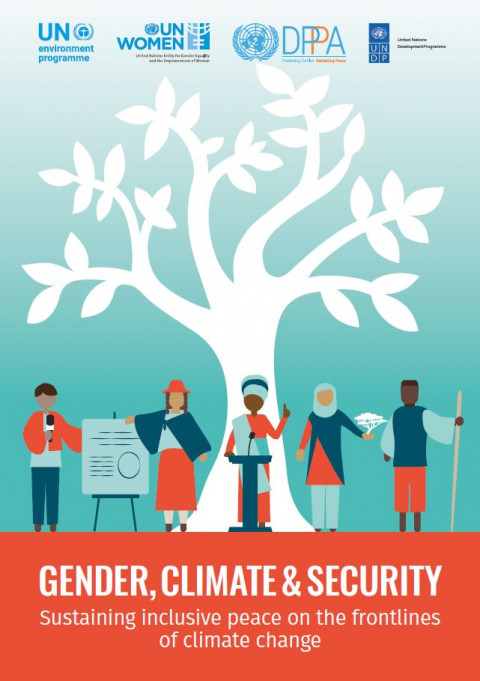 Gender, Climate & Security: Sustaining Inclusive Peace on the Frontlines of Climate Change Year of publication: 2020 Corporate author: United Nations Environment Programme (UNEP) | United Nations Entity for Gender Equality and the Empowerment of Women (UN Women) | United Nations Development Programme (UNDP) Climate change is a defining threat to peace and security in the 21st century – its impacts felt by everyone, but not equally. Gender norms and power dynamics shape how women and men of different backgrounds experience or contribute to insecurity in a changing climate. Grounded in a series of case studies from research and programming experience, this report offers a comprehensive framework for understanding how gender, climate and security are inextricably linked. The report assesses entry points for action across existing global agendas and suggests concrete recommendations for how policymakers, development practitioners and donors can advance three inter-related goals: peace and security, climate action and gender equality.
  Diagnosing and Enhancing Environmental Literacy of Citizens to Raise Green Awareness Year of publication: 2021 Author: Jeongyoon Yeom | Namsoo Kim | Haengwoon Jeong | Woohyeon Jeong Corporate author: Korea Environment Institute (KEI) 1. Research purposeA nationwide consensus on the understanding on and necessity of the environmental policy is needed in order to successfully achieve the policy objectives.The necessity of environmental education is being highlighted but in reality, there is a lack of objectives and specific indicators to verify its effect.The goal of environmental education should be the expansion of environmental literacy and indicators to measure this should be developed. 2. Research scopeSummarize the concept of environmental literacy and develop the scales for adultsMeasure the level of environmental literacy of citizensConfirm the predictors and consequences of environmental literacyUnderstand citizen types via cluster analysis 시민 인식의 녹색 전환을 위한 환경 리터러시 진단 및 강화 방안 Year of publication: 2021 Author: 염정윤 | 김남수 | 정행운 | 정우현 Corporate author: 한국환경연구원 1. 연구의 필요성 및 목적 환경 정책이 성공적으로 정책 목표를 달성하기 위해서는 정책 이해와 필요성에 대한 범국민적 공감대가 필수 환경교육의 중요성을 강조하고 있지만 실질적으로 교육의 효과를 확인할 수 있는 객관적이고 구체적인 지표가 부재함 환경교육의 목표를 환경 리터러시의 증대로 설정하고 이를 측정할 지표 개발이 필요2. 연구의 범위 환경 리터러시 개념 정리 및 성인 대상의 측정 도구 개발 일반 시민의 환경 리터러시 수준 측정 환경 리터러시의 예측 요인과 결과 요인 확인 군집 분석을 통한 시민 유형 파악* 본 저작물은 한국환경연구원에서 '2021'년에 작성하여 공공누리 제'4'유형으로 개방한 ‘시민 인식의 녹색 전환을 위한 환경 리터러시 진단 및 강화 방안(작성자: 염정윤)’을 이용하였으며 해당 저작물은 한국환경연구원 홈페이지(http://www.kei.re.kr)’에서 무료로 다운받으실 수 있습니다.