
Resources
Explore a wide range of valuable resources on GCED to deepen your understanding and enhance your research, advocacy, teaching, and learning.
2,161 Results found
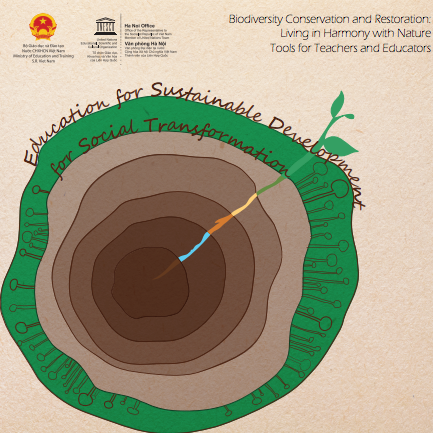 Education for sustainable development for social transformation Year of publication: 2017 Corporate author: UNESCO Hanoi | Viet Nam. Ministry of Education and Training This course on Education for Sustainable Development for Social Transformation explains the connection between sustainable development, education and the successful implementation of national and international policies and initiatives on Sustainable Development, such as the Education for Sustainable Development Framework, Global Citizenship Education and the post-2015 Development Agenda. A particular focus is placed on Viet Nam's implementation of these initiatives, including MOET's Action Plan to Implement the National Strategy on Natural Disaster Prevention, Control and Mitigation in the Education Sector in the 2011-2020 Period.The courses promote creative thinking and a holistic approach to some of our planet's most pressing issues. A contribution to sustainable development will be made by encouraging students, families, schools and communities to be bioliterate.
  지속가능발전교육 지도자료: 초등학교 3~6학년 교사용 안내서 Year of publication: 2020 Corporate author: 서울특별시교육청 교육혁신과 기후위기시대, 생태환경에 대한 인식을 제고하고 감수성을 기르기 위한 《2020 지속가능발전교육 초등학교 교사용 지도자료》로 교과, 동아리, 자유학기 활동 등 학교 생태전환교육에 활용가능하다. 또한 각 단원별로 지속가능발전목표 17개를 적용할 수 있는 내용으로 구성하였다.
  지속가능발전교육 지도자료: 중학교 1~3학년 교사용 안내서 Year of publication: 2020 Corporate author: 서울특별시교육청 교육혁신과 기후위기시대, 생태환경에 대한 인식을 제고하고 감수성을 기르기 위한 《2020 지속가능발전교육 중학교 교사용 지도자료》로 교과, 동아리, 자유학기 활동 등 학교 생태전환교육에 활용가능하다. 또한 각 단원별로 지속가능발전목표 17개를 적용할 수 있는 내용으로 구성하였다.
  교사가 실천하는 지속가능발전교육: 미래 세대와 동행하기 Year of publication: 2011 Author: 최돈형 | 조성화 | 안재정 | 홍현진 | 정국초 Corporate author: 서울특별시교육청 | 유네스코한국위원회 이 책은 21세기 환경교육이 지향해야 할 지속가능발전교육(ESD)을 수행할 수 있는 환경교육 분야의 전문가를 양성하고자 국제적으로 활용되고 있는 유네스코 TLSF 프로그램의 27개 모듈을 한국어로 번안하고, 여기에 한국적 맥락의 사례를 추가해 한국 상황에서의 적합성 및 활용 가능성을 제고했다. 이 책은 27개의 모듈을 교육과정 이론(Curriculum Rationale), 교육과정에서의 지속가능발전(Sustainable Development Across the Curriculum), 현시대 쟁점들(Contemporary Issues), 교수 ․ 학습 전략(Teaching and Learning Strategies) 등 4개의 영역으로 분류, 약 120시간 분량으로 구성되어 있다.
  Environmental Science Course Year of publication: 2021 Author: Ula Madwer | Sakher Ajouz | Ali Alsahyouni Corporate author: University of Hama This document provides an explanation of the initial practical session in the environment science course. The practical part of the environment science course contains a set of practical exercises. It includes the following objectives: Familiarize students with the tools and equipment of the environmental laboratory Determine the types and sources of environmental pollution Air quality standards and measurement units Measurement of carbon dioxide concentration مقرر علم البيئة Year of publication: 2021 Author: Ula Madwer | Sakher Ajouz | Ali Alsahyouni Corporate author: University of Hama يقدم المستند توضيحا للجلسة العملية الأولي في مقرر علم البيئة. ويحتوي الجزء العملي من مقرر علم البيئة على مجموعة من التدريبات العملية. وتتضمن الأهداف التالية: التعرف على أدوات وأجهزة المختبر البيئي تحديد أنواع ومصادر التلوث البيئي معايير جودة الهواء ووحدات القيا س قياس تركيز ثاني أوكسيد الكربون
 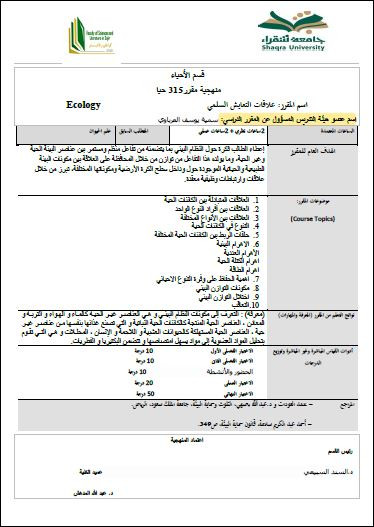 University Course: Relationships of Peaceful Coexistence Year of publication: 2021 Author: Somaya Youssef Al-Arabawy Corporate author: Shaqra University The goal is to give the student an idea about the ecosystem, including the organized and continuous interaction between the elements of the living and non-living environment, and the balance this interaction generates by maintaining the relationship between the components of the natural and living environment around and within the surface of the globe and its various components, which are highlighted through the relationships and complex functional connections. مقرر جامعي: علاقات التعايش السلمي Year of publication: 2021 Author: Somaya Youssef Al-Arabawy Corporate author: Shaqra University الهدف هو اعطاء الطالب فكرة حول النظام البيئي بما يتضمنه من تفاعل منظم ومستمر بين عناصر البيئة الحية وغير الحية، وما يولده هذا التفاعل من توازن من خلال المحافظة على العلاقة بين مكونات البيئة الطبيعية والحياتية الموجودة حول وداخل سطح الكرة الأرضية ومكوناتها المختلفة، تبرز من خلال علاقات وارتباطات وظيفية معقدة.
  Guardians of Planet Earth: Gamification in Early Childhood Education Year of publication: 2020 Corporate author: Instituto Nacional de Tecnologías Educativas y de Formación del Profesorado (INTEF) The project "Inspiring Educational Experiences" is part of the Educational Digital Transformation Plan launched by INTEF, specifically "Guardians of planet Earth" whose main objective is the internalization by students of the importance of caring for our planet around three fundamental axes: recycling and treatment of waste, care of flora and fauna. With this, it intends to impregnate the students and their families with solid values that are internalized and endure over time and for this it uses different methodologies and active and participatory teaching strategies, in turn, favors the development of creativity and imagination in all activity of the project and explains how ICTs are a transversal element, offering the youngest population a variety of opportunities to use and enjoy technology. Guardian@s del planeta Tierra: Gamificación en Educación Infantil Year of publication: 2020 Corporate author: Instituto Nacional de Tecnologías Educativas y de Formación del Profesorado (INTEF) The project "Inspiring Educational Experiences" is part of the Educational Digital Transformation Plan launched by INTEF, specifically "Guardians of planet Earth" whose main objective is the internalization by students of the importance of caring for our planet around three fundamental axes: recycling and treatment of waste, care of flora and fauna. With this, it intends to impregnate the students and their families with solid values that are internalized and endure over time and for this it uses different methodologies and active and participatory teaching strategies, in turn, favors the development of creativity and imagination in all activity of the project and explains how ICTs are a transversal element, offering the youngest population a variety of opportunities to use and enjoy technology.