
Resources
Explore a wide range of valuable resources on GCED to deepen your understanding and enhance your research, advocacy, teaching, and learning.
3,229 Results found
 UNESCO Green Academies: Directives pour la résilience climatique des écoles Year of publication: 2019 Corporate author: UNESCO Bangkok Cette brochure encourage le renforcement des capacités dans les communautés pour faciliter la transition vers la résilience aux changements climatiques. Comme prescrit par le programme l’Homme et la biosphère, il s’agit d’utiliser les connaissances scientifiques pour améliorer les relations entre l’Homme et l’environnement.
  Global Citizenship: Whitepaper About an Emerging Concept Year of publication: 2021 Corporate author: Melton Foundation The Melton Foundation is an active part of a larger community aiming to develop and promote the understanding of global citizenship as an overarching framework for thought and action. In this context, the Melton Foundation has developed this Whitepaper. This material aims to: Familiarize communities with the concept of Global Citizenship and provide an honest, clear picture of it. Analyze the current state of Global Citizenship, evaluate issues preventing its widespread adoption and put forward suggestive remedies.
  A Better Start?: A Progress Check on Donor Funding for Pre-Primary Education and Early Childhood Development Year of publication: 2021 Author: Asma Zubairi | Pauline Rose Corporate author: Theirworld This report focuses on aid trends to pre-primary education using data reported by donors to the Organisation for Economic Cooperation and Development (OECD) as Overseas Development Assistance. It updates our analysis from our 2019 Leaving the Youngest Behind report, which ranked donors’ performance on pre-primary education and looked at data from 2002 to 2016. The new report tracks whether donors are meeting Theirworld’s recommended target of investing at least 10% of their education aid budget on pre-primary education.
  Social and Emotional Learning Training Manual Year of publication: 2020 Corporate author: China. Ministry of Education | United Nations Children's Fund (UNICEF) This material is the training manual of the social and emotional learning training programme organised by the Chinese Ministry of Education and UNICEF. It mainly discusses what is social and emotional learning and its significance, as well as the content of the programme. 社会情感学习培训手册 Year of publication: 2020 Corporate author: China. Ministry of Education | United Nations Children's Fund (UNICEF) 本材料是中国教育部与联合国儿童基金社会情感学习项目系列资源的培训手册的第一册。主要介绍社会情感学习的概念及意义,以及项目实施内容。
 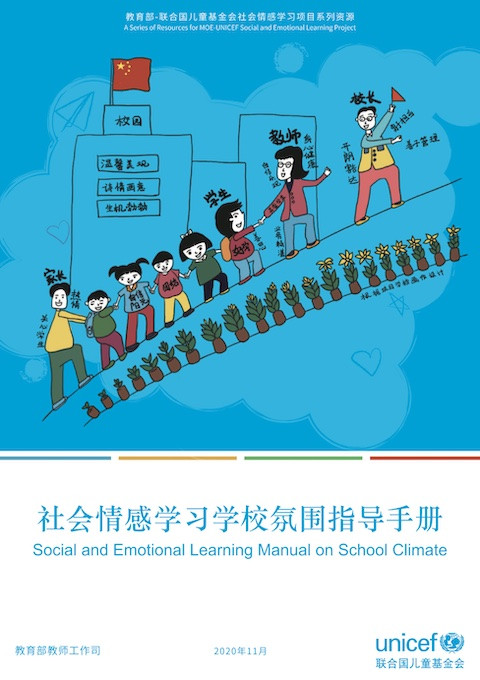 Social and Emotional Learning Manual on School Climate Year of publication: 2020 Corporate author: China. Ministry of Education | United Nations Children's Fund (UNICEF) This material is a guide for school leaders and teachers to promote a positive school climate that supports children's social and emotional learning. It talks about the relationship between school climate and school environment, the key elements of school climates etc. 社会情感学习学校氛围指导手册 Year of publication: 2020 Corporate author: China. Ministry of Education | United Nations Children's Fund (UNICEF) 这份材料是社会情感学习项目中学校氛围指导手册,包括学校氛围的构成要素及作用等,旨在为学校校长和教师在全校范围内推进学校氛围提供针对性的指导和参照。
 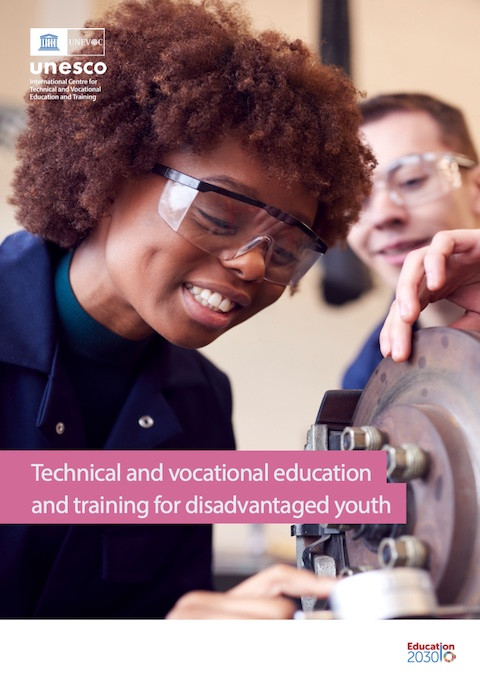 Technical and Vocational Education and Training for Disadvantaged Youth Year of publication: 2021 Corporate author: UNESCO International Centre for Technical and Vocational Education and Training (UNEVOC) Due to its close links to the labour market, technical and vocational education and training (TVET) can play an important role to improve job opportunities and livelihoods for young people, and in particular for disadvantaged youth. However, this potential is not always fully realized, and relatively little research and evidence has been collected about the barriers disadvantaged youth face when accessing to and progressing through TVET.This paper maps some of the main barriers disadvantaged youth face in TVET and examines available evidence on strategies and approaches that are being used or can be used to meet the needs of disadvantaged youth. The paper discusses these barriers using a framework that looks at ‘4As’: availability, accessibility, acceptability, and adaptability. The report is the outcome of a study conducted in collaboration with the University of Nottingham and other members of the UNEVOC Network.
  Introducing the Global Goals Corporate author: United Nations Children's Fund (UNICEF) Learners can explain what the Global Goals for Sustainable Development are, why they are important and how they relate to the learner her/himself.
  The global goals debate Corporate author: United Nations Children's Fund (UNICEF) Learning outcomes: To encourage critical debate about the Global Goals for Sustainable Development, so that young people are aware of the Goals, have critically evaluated them in their own minds and have drawn their own conclusions