
Resources
Explore a wide range of valuable resources on GCED to deepen your understanding and enhance your research, advocacy, teaching, and learning.
1,727 Results found
 التعليم من آجل المشاركه: مدارس الديمقراطية Year of publication: 2015 Corporate author: Civic Education for Participation Project (CEFP) Egyp الفيديو يعرض فكرة مدارس الديمقراطية وما هي مرتكزاتها. الطلبة المستفيدين من هذه المدارس يستطيعون الخوض في التجارب السياسية والديمقراطية. Education for Participation: Democracy Schools Year of publication: 2015 Corporate author: Civic Education for Participation Project (CEFP) Egyp This video shows the idea of democratic schools and their foundations. Students who benefit from these schools can delve into political and democratic experiences.
  L’éducation, levier majeur et point aveugle de la transition vers des sociétés durables Year of publication: 2015 Author: Pierre Calame Corporate author: Alliance pour des Sociétés Responsable et Durables La crise ne met pas seulement en question la gouvernance du monde, l’incapacité politique des Etats à coopérer pour gérer ces relations. Elle trouve son origine dans notre représentation du monde et de la place des sociétés humaines au sein de la biosphère. Elle interpelle notre capacité à comprendre et assumer la complexité, à penser et agir dès lors que les relations entre les êtres et entre les choses deviennent plus importantes que chacun pris séparément. C’est pourquoi l’éducation se retrouve en première ligne.
 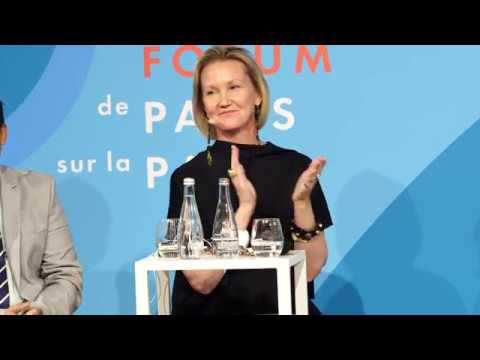 How Can Pluralism Strengthen Peace?: Global Centre for Pluralism at the 2019 Paris Peace Forum Year of publication: 2019 Author: Meredith P. Mcghie | Aung K. Moe | Bojana Dujkovic Corporate author: Global Pluralism Award Many of the most intractable challenges we face today − from entrenched poverty to conflict-driven migration − stem from the exclusion and resentment of groups defined as “the other”.Group-based grievances arising from inequality, exclusion and feelings of injustice increase the risk of instability and conflict. Pluralism is the choice to see diversity contribute to the common good. Making this choice is essential to building more secure, peaceful and resilient societies.Meredith Preston McGhie, the Secretary General of the Global Centre for Pluralism, was joined by two winners of the 2019 Global Pluralism Award to discuss how history education and community-based reconciliation can help strengthen pluralism, sustain peace and prevent conflict in diverse societies. Comment le pluralisme peut-il renforcer la paix?: Centre mondial du pluralisme au Forum de la paix de Paris 2019 Year of publication: 2019 Author: Meredith P. Mcghie | Aung K. Moe | Bojana Dujkovic Corporate author: Global Pluralism Award Plusieurs des épineux défis auxquels nous faisons face aujourd’hui – de l’appauvrissement endémique à la migration causée par des conflits – découlent de l’exclusion de groupes définis comme « l’autre » et du ressentiment à leur égard.Les griefs collectifs résultant de l’inégalité, de l’exclusion et de sentiments d’injustice augmentent le risque d’instabilité et de conflit. Le pluralisme est une option pour que la diversité contribue au bien commun. Il est essentiel de faire ce choix pour bâtir des sociétés plus sécuritaires, pacifiques et résilientes.Meredith Preston McGhie, secrétaire générale du Centre mondial du pluralisme, était accompagnée de deux lauréats du Prix mondial du pluralisme 2019 pour aborder la manière dont l’enseignement de l’histoire et la réconciliation à l’échelle communautaire peuvent aider à renforcer le pluralisme, entretenir la paix et prévenir l’éclatement de conflits dans les sociétés diversifiées.
  Pour mettre en lien des jeunes du monde au coeur de la transition Year of publication: 2017 Author: Maryse Clary | Jacqueline Charron Corporate author: Alliance pour une Éducation à la Citoyenneté Planétaire (AECP) | Les Amis de Circée Ce groupe d’initiative, en tant qu’experts dans le domaine de l’éducation, anime le réseau, conduit le projet de recherche et se veut porte-parole auprès des instances éducatives. Il est intervenu lors du sommet « Climate Chance » à Nantes en septembre 2016 et suite à la COP 21, intervient à Marrakech lors de la journée éducation du 14 novembre 2016. Il a le soutien des autres membres fondateurs, des signataires de la charte et des partenaires que sont le World Environmental Education Congress (WEEC), le réseau Climates et l’Alliance pour les sociétés responsables et durables. Les équipes de 12 pays sont membres actifs du réseau, comme acteurs de terrain. Elles mettent les jeunes au cœur du système éducatif, sont à leur écoute, travaillent en partenariat réel sur des projets concrets en prise directe avec leur territoire. Ensemble, les experts, et les équipes montrent que les résultats de tous ces projets au Nord comme au Sud visent un changement des systèmes éducatifs pour répondre aux défis du développement durable et du changement climatique.Cette publication relate les données d’expériences innovantes, en propose une capitalisation et une analyse afin de permettre des échanges entre équipes en vue d’une amélioration des pratiques. Ce réseau, fort de sa diversité culturelle, du nombre de jeunes impliqués et de son engagement dans les valeurs de citoyenneté planétaire, souhaite jouer un rôle de lobbying auprès des autorités éducatives pour faire évoluer positivement les systèmes éducatifs.
 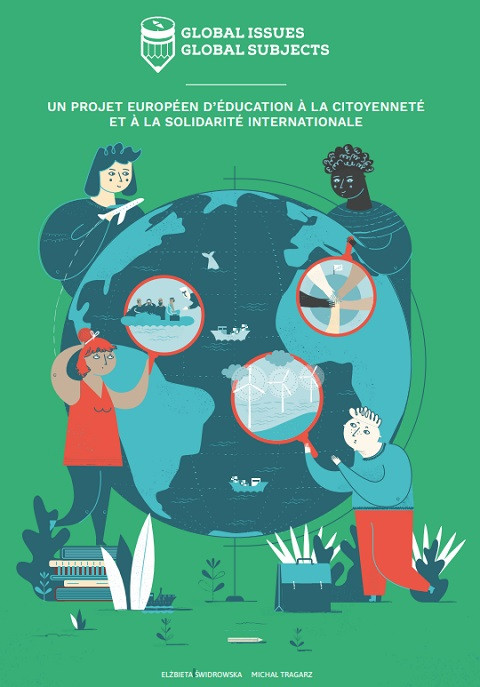 Un projet européen d’éducation à la citoyenneté et à la solidarité internationale Year of publication: 2020 Author: Elżbieta Swidrowska | Michał Tragarz Corporate author: Le Partenariat | Global Issues, Global Subjects (GIGS) | Union européenne Cette brochure nous permet de prendre conscience de l’importance d’une démarche citoyenne ayant pour but de favoriser une solidarité entre les territoires, les générations, les groupes sociaux et d’agir pour la construction d’un monde solidaire.
  Study on measures taken by municipalities and recommendations for further action to challenge racism through education Year of publication: 2006 Author: Klaus Starl Corporate author: European Training and Research Centre for Human Rights and Democracy (Austria) Commitment 8 of the Ten-Point Plan of Action of the European Coalition of Cities against Racism requires the measures “Challenging Racism and Discrimination through Education”. This point aims to improve the access to and enjoyment of all forms of education, as well as the promotion of education in mutual tolerance and understanding. To reach this goal, the members of the coalition have been called to undertake activities, elaborate strategies and establish relevant institutions to influence society and train attitudes, behaviour and skills within the population. They are called to find out causes for racist tendencies among their population and to involve all stakeholders, particularly parents and school officials. As an external expert, the European Training and Research Centre for Human Rights and Democracy in Graz, Austria, (ETC Graz) was commissioned by UNESCO to carry out a study on the measures against racism already in place at a local level and serve as good illustration of “Commitment 8”. A major source of information was the written material provided by the selected cities. Additional or missing information could be obtained through direct exchanges and/or interviews with officers responsible for the municipalities and some NGOs. The material should not to be considered as complete. On the basis of the contributions sent in by the participating cities, the ETC assessed whether these actions/activities meet the objectives of Commitment 8. The authors used the following criteria to make this assessment: Does the action undertaken contribute to a) the improvement of access to education and promote equal opportunities; b) the impact of educational measures on individuals (potential victims and offenders) and on the atmosphere at school and in society. The following recommendations are derived from the eight selected measures documented in Chapter II, and the analysis on their “replicability” in Chapter III. The 12 recommendations explicitly or implicitly refer to the replicable documented measures. Where “replicability” requires specific conditions, or it is recommended to fulfil these conditions firstly, i.e. structural and institutional conditions, these are stated. The 12 recommendations are addressed to municipalities in Europe irrespective of their current membership in the European Coalition of Cities against Racism. As already mentioned the recommendations focus on meeting the requirements of Commitment 8, challenging racism through education.
 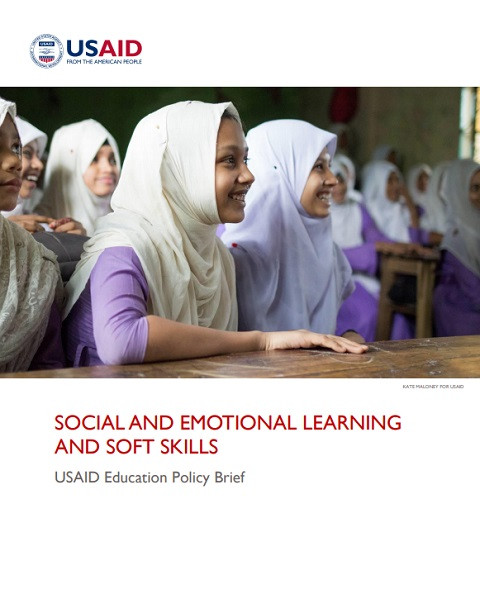 Social and Emotional Learning and Soft Skills: USAID Education Policy Brief Year of publication: 2019 Author: Kalene Resler | Anjuli Shivshanker | Samantha Alvis | Chris Capacci-Carneal | Melissa Chiappetta | Lauren Greubel | Julie Hanson Swanson | Ashley Henderson | Josh Josa | Laura Lartigue | Rebeca Martinez | Leah Maxson | Olga Merchan | Yolande Miller-Grandvaux | Sandy Oleksy-Ojikutu | Rebecca Pagel | Nancy Taggart | Nina Weisenhorn | Wendy Wheaton Corporate author: United States Agency for International Development (USAID) Both the 2018 USG Strategy on International Basic Education and the 2018 USAID Education Policy emphasize the importance of social and emotional skills or soft skills in assuring the long-term success of children and youth. Through the Strategy and Policy, USAID is providing new opportunities to systematically design, measure, implement, and understand the impact of programs that build social and emotional skills or soft skills for children and youth.To support USAID staff and implementing partners in this work, this brief: Provides an introductory understanding of what USAID means by the terms “social and emotional skills” and “soft skills” and how to communicate about them. Specifies the desired outcomes and quality standards for programming that teach social and emotional skills or soft skills. Identifies areas in which evidence and best practices still have gaps, and areas in which we should consider investing in further learning.
  Initial Teacher Education in Citizenship in Latin America: A Comparative Analysis of Six Countries Year of publication: 2017 Corporate author: UNESCO Santiago This document reports on a study of initial teacher education in citizenship education in Latin America undertaken as an initiative of the OREALC-UNESCO Regional Strategy on Teacher Policies. Its purpose is to examine citizenship education in the teacher education curricula of six countries in the region –Argentina, Chile, Colombia, Guatemala, Mexico and Peru – researching the general contents of the programs, their organization, and the topics covered, and analyzing teacher preparation in this crucial dimension of the formative experience provided.