
Resources
Explore a wide range of valuable resources on GCED to deepen your understanding and enhance your research, advocacy, teaching, and learning.
874 Results found
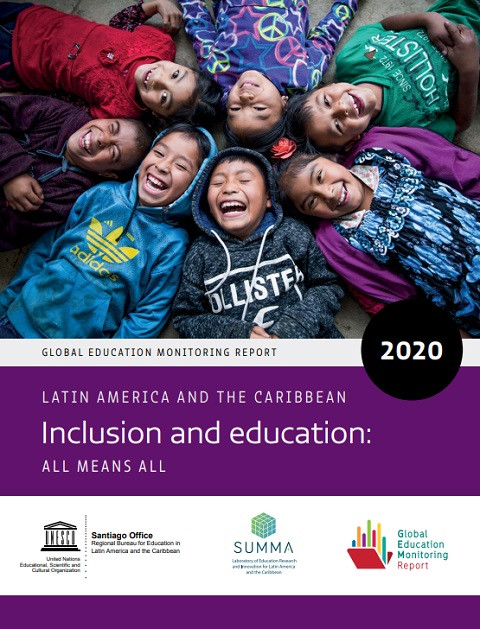 América Latina y el Caribe 2020: Inclusión y educación; Todos y todas sin excepción (Informe de seguimiento de la educación en el mundo) Year of publication: 2020 Corporate author: Global Education Monitoring Report Team | Organización de las Naciones Unidas para la Educación, la Ciencia y la Cultura (UNESCO) | Laboratory of Education Research and Innovation for Latin America and the Caribbean (SUMMA) América Latina y el Caribe es la región con las mayores y más tenaces desigualdades socioeconómicas del mundo. Durante decenios estas desigualdades se han reflejado en sus sistemas educativos. El presente informe examina a quiénes incluyen y a quiénes excluyen estos sistemas y llama la atención sobre las barreras que enfrentan los educandos, especialmente cuando están expuestos a múltiples desventajas. El informe también explora los nuevos retos educativos que plantea la pandemia de la Covid-19 y la necesidad de actuar sin dilación para evitar que se agraven las desigualdades. El informe, elaborado por el equipo del Informe de Seguimiento de la Educación en el Mundo (Informe GEM), en colaboración con la Oficina Regional de Educación para América Latina y el Caribe (OREALC/ UNESCO Santiago) y el Laboratorio de Investigación e Innovación en Educación para América Latina y el Caribe -SUMMA, evalúa algunas de las principales iniciativas emprendidas para mejorar la inclusión, basándose en varios estudios de casos de la región. Analiza en profundidad algunos ejemplos de los grandes desafíos que amenazan la inclusión en la educación: migración y desplazamiento en Colombia y Costa Rica; aislamiento rural en el Brasil y Suriname; discapacidad en Cuba y Nicaragua; discriminación de género en el Perú y Jamaica; orientación sexual e identidad y expresión de género en Chile y México; pobreza en la República Dominicana y Honduras; etnicidad en Bolivia y el Ecuador; y jóvenes en situación de privación de libertad en El Salvador y el Uruguay. Esta edición regional del Informe de Seguimiento de la Educación en el Mundo 2020 concluye que, si bien las leyes y políticas de América Latina y el Caribe demuestran la firme determinación de promover la inclusión, la realidad cotidiana de los alumnos y las alumnas sugiere que la aplicación práctica lleva retraso. Se formulan recomendaciones con el objeto de promover sistemas de educación más inclusivos en beneficio de todos los niños, niñas y jóvenes, sin distinción de origen, identidad o capacidad. Las recomendaciones brindan un marco sistemático que permite identificar y eliminar barreras para las poblaciones marginadas, conforme al principio de que “cada alumno es importante y todos los alumnos importan por igual”.
  Critical and Reflective Digital Literacy: Digital Citizenship Year of publication: 2024 Corporate author: Innovation Center Mineduc Coni helps her grandfather do the online shopping for the house and her grandfather helps her understand how apps work and become more aware of her privacy. Join Coni and her friends to discover what digital citizenship is and how they exercise it from home and school. This is the first of a series of four capsules that introduces us to the dimension of “Critical and reflective digital literacy”, which is understood as the acquisition of knowledge and the development of skills and attitudes to autonomously use, understand and evaluate digital technologies. Alfabetización digital crítica y reflexiva: Ciudadanía digital Year of publication: 2024 Corporate author: Innovation Center Mineduc Coni ayuda a su abuelo a hacer las compras de la casa en línea y su abuelo la ayuda a entender cómo funcionan las apps y a estar más consciente de su privacidad. Acompaña a Coni y a sus amigos y amigas a descubrir lo qué es la ciudadanía digital y cómo la ejercen desde su casa y colegio. Esta es la primera de una serie de cuatro cápsulas nos introduce en la dimensión de la “Alfabetización digital crítica y reflexiva”, la que se entiende como la adquisición de conocimientos y el desarrollo de habilidades y actitudes para usar, comprender y evaluar autónomamente las tecnologías digitales.
  Citizenship and Digital Literacy Plan 2024 Year of publication: 2024 Corporate author: Chile. Ministerio Secretaría General de Gobierno | Chile. Ministerio de Educación The Ministry of the General Secretariat of the Government together with the Ministry of Education have launched the “Citizenship and Digital Literacy” Plan with the aim of addressing the growing challenges, opportunities and risks involved in the use of digital technologies in everyday life. The actions presented in the plan seek to strengthen the skills of citizens in general and also with a focus on educational communities, supported by the frameworks of digital citizenship and media, information and digital literacy. This plan includes three axes: 1.) Training for citizenship and digital literacy; 2.) Incorporation of media literacy and digital citizenship in the national school curriculum; and 3.) Resources and guidelines for strengthening citizenship and digital literacy. Plan ciudadanía y alfabetización digital 2024 Year of publication: 2024 Corporate author: Chile. Ministerio Secretaría General de Gobierno | Chile. Ministerio de Educación El Ministerio Secretaria General de Gobierno junto al Ministerio de Educación han lanzado el Plan “Ciudadanía y Alfabetización Digital” con el objetivo de abordar los crecientes desafíos, oportunidades y riesgos que implica el uso de tecnologías digitales en la vida cotidiana. Las acciones presentadas en el plan buscan fortalecer las competencias de la ciudadanía en general y también con foco en las comunidades educativas, amparados en los marcos de ciudadanía digital y de alfabetización mediática, informacional y digital. Este plan contempla tres ejes: 1.) Formación para la ciudadanía y alfabetización digital; 2.) Incorporación de la alfabetización mediática y la ciudadanía digital en el currículum escolar nacional; y 3.) Recursos y orientaciones para el fortalecimiento de la ciudadanía y la alfabetización digital.
  Podcast: Learning for the Future; Digital Citizenship; Tools to Prevent and Eradicate Cyberbullying Year of publication: 2022 Author: Alheli Arona | Patricio Romero Corporate author: Chile Foundation | Educarchile One of the dimensions of digital citizenship is protection and security. This includes digital harassment or cyberbullying, a problem that affected more than 22% of students in Chile during the months of October and December 2021, according to the Citizen Participation Survey “Together against cyberbullying and digital violence” applied by the Superintendency of Education. What can we, as teachers, management teams and education professionals, do to prevent and eradicate this type of violence and help our students? Podcast: Aprendizaje para el futuro; Ciudadanía digital; Herramientas para prevenir e irradicar el ciberacoso Year of publication: 2022 Author: Alheli Arona | Patricio Romero Corporate author: Chile Foundation | Educarchile Una de las dimensiones de la ciudadanía digital es la protección y la seguridad. Dentro de esta se encuentra el acoso digital o ciberacoso, un problema que durante los meses de octubre y diciembre de 2021 afectó a más de un 22% de estudiantes en Chile según la Encuesta de Participación Ciudadana “Juntos frente al ciberacoso y la violencia digital” aplicada por la Superintendencia de Educación. ¿Qué podemos hacer las y los docentes, equipos directivos y profesionales de la educación para prevenir y erradicar este tipo de violencia y ayudar a nuestros estudiantes?
  Resource Kit for Working With Families in Digital Citizenship Year of publication: 2024 Corporate author: Chile. Ministry of Education The role of families and guardians is essential to help children and adolescents learn to navigate the digital environment, taking advantage of its opportunities and minimizing its risks. For this reason, it is important that schools work with families and guardians to provide support in the digital environment, safeguarding the rights of children and adolescents and promoting their autonomy in a progressive way, through the development of digital citizenship. This kit is composed of: Capsules for parents/guardians that deal with issues related to the digital environment, Booklets “Recommendations for working with families on their mediating role in the use of mobile devices” and a training module “Digital Citizenship”. Kit de recursos para el trabajo con familias en ciudadanía digital Year of publication: 2024 Corporate author: Chile. Ministerio de Educación El rol de las familias y tutores es fundamental para ayudar a los niños, niñas y adolescentes a aprender a desenvolverse en el entorno digital aprovechando sus oportunidades y minimizando sus riesgos. Por esta razón, resulta importante que desde el espacio escolar se trabaje con las familias y tutores para realizar un acompañamiento en el entorno digital, resguardando la protección de los derechos de niños, niñas y adolescentes y favoreciendo su autonomía de forma progresiva, a través del desarrollo de la ciudadanía digital. Este kit está compuesto por: Cápsulas para apoderados/as que tratan temas relacionados con el entorno digital, Cartillas “Recomendaciones para trabajar con familias su rol mediador en el uso de dispositivos móviles” y un módulo de formación “Ciudadanía Digital”.
 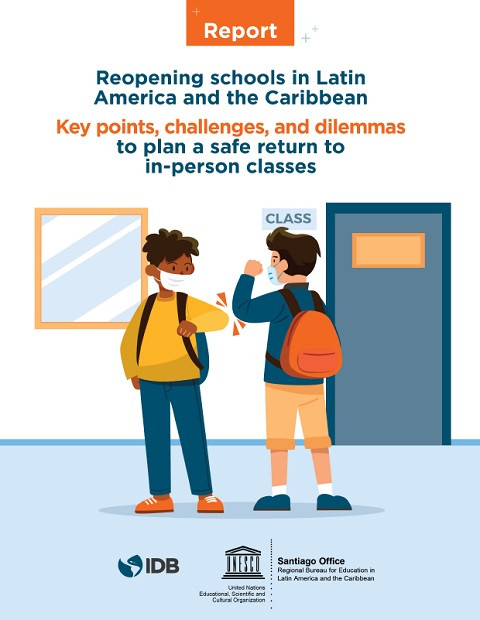 Reopening Schools in Latin America and the Caribbean: Keys, Challenges, and Dilemmas to Plan for a Safe Return to in-Person Classes Year of publication: 2021 Author: Alejandro Vera | Martín Scasso | Alejandro Morduchowicz | Cecilia Berlanga Alessio Robles Corporate author: UNESCO Santiago | Inter-American Development Bank The suspension of in-person classes as a consequence of the COVID-19 pandemic profoundly affected the education systems in Latin America and the Caribbean (LAC) and compromised the achievements reached around the goals established in the SDG4-Education 2030 Agenda. The most vulnerable people have been the most affected by this situation, which widened the preexisting gaps. The countries of the region have carried out great efforts to guarantee the continuity of learning. However, these have been limited by the challenges that this unprecedented crisis brought, aggravated by unequal conditions in access to infrastructure and other resources that affect broad sectors of the population.This report analyzes the possibilities, restrictions and needs that the countries of the region will face during the process of returning to in-person classes, considering five dimensions: (i) safe schools (school infrastructure, access to water and sanitation); (ii) human resources (principals and teachers); (iii) access to ITC and connectivity; (iv) education financing and (v) information and planning.