
Resources
Explore a wide range of valuable resources on GCED to deepen your understanding and enhance your research, advocacy, teaching, and learning.
1,300 Results found
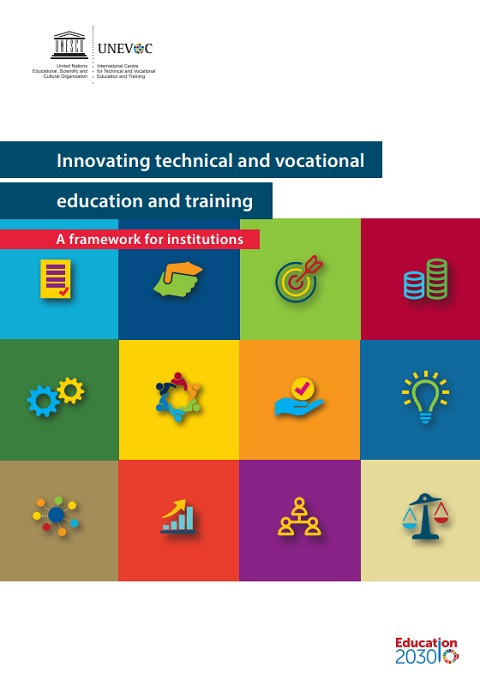 Innovating Technical and Vocational Education and Training: A Framework for Institutions Year of publication: 2020 Corporate author: UNESCO International Centre for Technical and Vocational Education and Training (UNEVOC) Global developments including the transition to greener economies, the application of digital technologies in the world of work, and the COVID-19 pandemic, amongst others, are changing the way we live and work. These developments are driving technical and vocational education and training (TVET) systems to improve their capacity to identify the future skills demands and to expand access to skills development opportunities. As TVET adapts itself to the impacts of significant social, environmental, and economic disruptions, innovative practices emerge with the potential to rejuvenate the future of skills development. Schools, training centres and colleges have the potential to play a leading role to drive innovation in their local skills and innovation ecosystem.This practical guide provides a systematic, institution-wide, measurable and evidence-based methodology that enables TVET institutions to streamline innovation into their strategic planning, products and services, ecosystem engagement, and teaching and learning processes.
  La famille Tout-Écran: Conseils en éducation aux médias et à l’information Year of publication: 2019 Corporate author: Centre pour l’éducation aux médias et à l’information (CLEMI) | Réseau Canopé L’Éducation aux Médias et à l'Information (EMI) devient une exigence républicaine au cœur du Parcours citoyen, un enjeu éducatif et sociétal incontournable dans un environnement où le numérique est omniprésent.Dans un monde globalisé et complexifié, la définition et la compréhension de la source de l’information constituent une priorité pour déjouer les tentatives de manipulation et de désinformation.Les enjeux sociétaux de l’EMI dépassent les murs de l’école et doivent mobiliser tous les acteurs pour renforcer le continuum entre temps scolaire et hors temps scolaire.Ce guide bénéficie de l’expertise des professionnels du CLEMI et de son réseau de pédagogues, de partenaires institutionnels, associatifs et médiatiques. Issu de cette mobilisation, cet ouvrage est le produit d’un groupe de travail dédié aux pratiques informationnelles des jeunes, composé de membres représentant du ministère de l’Éducation nationale et de la Jeunesse, du ministère de la Culture, France Télévisions, Radio France, le CSA, CNRS Images, Ceméa, la Ligue de l’enseignement, la CNAF, Jets d’encre et l’Icem-Pédagogie Freinet.
 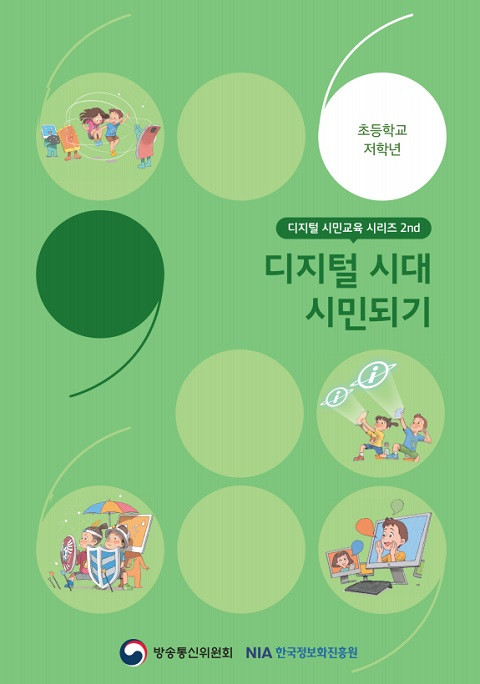 디지털 시대 시민되기: 초등학교 저학년 (디지털 시민교육 시리즈 2nd) Year of publication: 2019 Author: 김양은 | 배은주 | 박정원 | 김영환 | 김형태 | 심성호 Corporate author: 방송통신위원회 | 한국정보화진흥원 본 자료는 초등 저학년(3~4학년) 대상 디지털시민교육을 위한 교육자료이다. 6가지의 역량별로 교수학습지도안과 학생 활동지로 구성되어 있다.
  Ministerial Forum: Global Dialogue on ICT and Education Innovation – Towards Sustainable Development Goal for Education (SDG 4); Proceedings Year of publication: 2019 Corporate author: UNESCO Institute for Information Technologies in Education (IITE) The present publication contains articles based on the outcomes of the Ministerial Forum “Global Dialogue on ICT and Education Innovation – Towards Sustainable Development Goal for Education (SDG 4)”, organized by UNESCO IITE in cooperation with the Ministry of Education and Science of the Russian Federation in Moscow (Russia) on 18-19 March, within the Moscow International Education Fair 2018 (MIEF 2018).The publication covers the flagship topics such as ICT potential for future teachers and future schools, digital pedagogy and OER, collaboration between public and private sectors in the use of ICT in education, digital technologies for quality and equity in education.
  Respuestas de política pública y desafíos para garantizar el bien-estar de la primera infancia en tiempos de COVID-19: Un análisis comparado para américa latina Year of publication: 2021 Author: Ana María Osorio | Ernesto Cárdenas Corporate author: UNESCO IIEP Oficina para América Latina y el Caribe Este documento tiene un doble objetivo. En primer lugar, ofrecer un panorama de la situación de la primera infancia antes de la pandemia en América Latina, que permita identificar vulnerabilidades y riesgos del entorno físico-social que rodea a niños y niñas, y que pueden ser exacerbados por la pandemia y/o por las medidas adoptadas para contenerla. Para esto se presentan indicadores comparables, intentando priorizar al niño y a la niña como unidad principal de análisis. Asimismo, se usa la información más reciente de UNICEF y UNESCO para hacer seguimiento a la niñez en el periodo de afectación por la pandemia de la COVID-19. En segundo lugar, esta publicación busca identificar las principales respuestas de políticas públicas orientadas a garantizar el bien-estar de la primera infancia en la región, enfatizando en las estrategias implementadas por los gobiernos para continuar brindando servicios de cuidado y educación inicial en el contexto de la actual emergencia sanitaria
 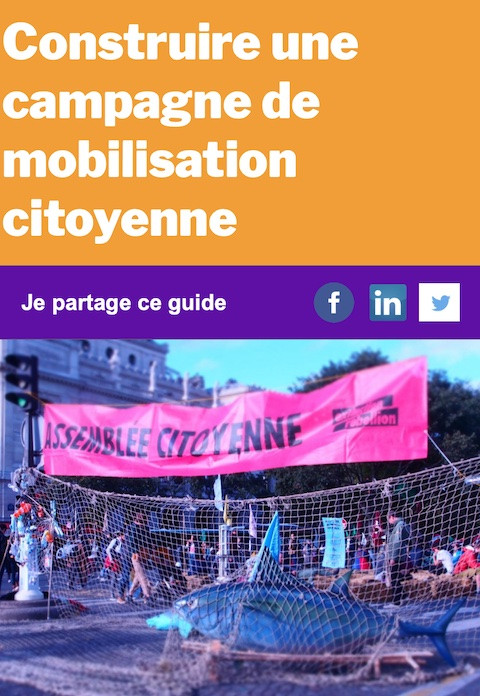 Construire une campagne de mobilisation citoyenne: Je partage ce guide Corporate author: L'accélérateur de la mobilisation (France) Ce kit est pour partager les bases de la création de campagnes de mobilisation citoyenne, générer de l’inspiration et donner l’envie à des groupes de citoyen.ne.s d’aller gagner des victoires concrètes.
  Citoyenneté mondiale: Une définition ignatienne Year of publication: 2019 Corporate author: Educate Magis Sont citoyens du monde ceux qui recherchent en permanence à approfondir leur propre conscience de leur place et de leur responsabilité, localement et globalement, dans un monde de plus en plus interconnecté ; sont citoyens du monde ceux qui sont solidaires des autres dans la poursuite d’une terre durable et d’un monde plus humain, comme véritables compagnons dans la mission de réconciliation et de justice. La Taskforce du Secrétariat sur la Citoyenneté Mondiale offre une définition ignatienne de la citoyenneté mondiale, ainsi que quelques questions directrices et un cadre pour intégrer les PAU et la Charte d’Engagements JESEDU-Rio2017 à les dimensions mondiale dans nos écoles jésuites. Ce travail intègre et s’appuie sur le matériel existant sur la citoyenneté mondiale rassemblé par la communauté mondiale.
 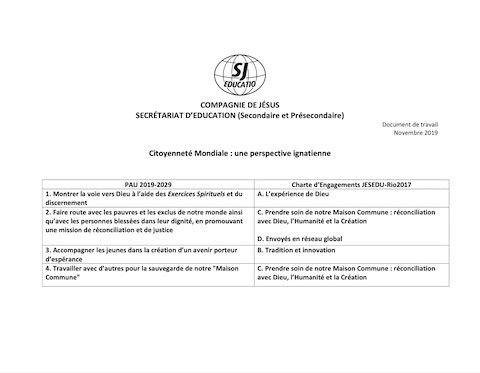 Citoyenneté mondiale: Une perspective ignatienne Year of publication: 2019 Corporate author: Educate Magis Ce tableau suit est un modèle qui présente des suggestions d’activités pour chaque région, province, établissement ou département éducatif, qui peuvent être utilisées comme exemples ou comme guides et qui peuvent être mises en œuvre et développées d’une manière adaptée à chaque situation ou besoin spécifique.
 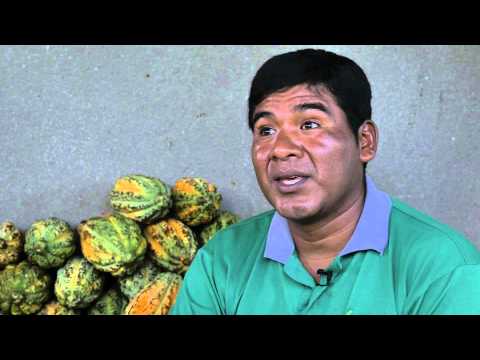 Changeons le commerce, pas le climat Year of publication: 2015 Corporate author: Artisans du Monde Cette vidéo donne la parole aux producteurs, premières victimes des conséquences de la hausse des températures.Cette vidéo est un des supports: de la mallette pédagogique "Le grand voyage d'un chocolat équitable" du kit "Consommer responsable, l'alimentation" co-édité avec CANOPE
 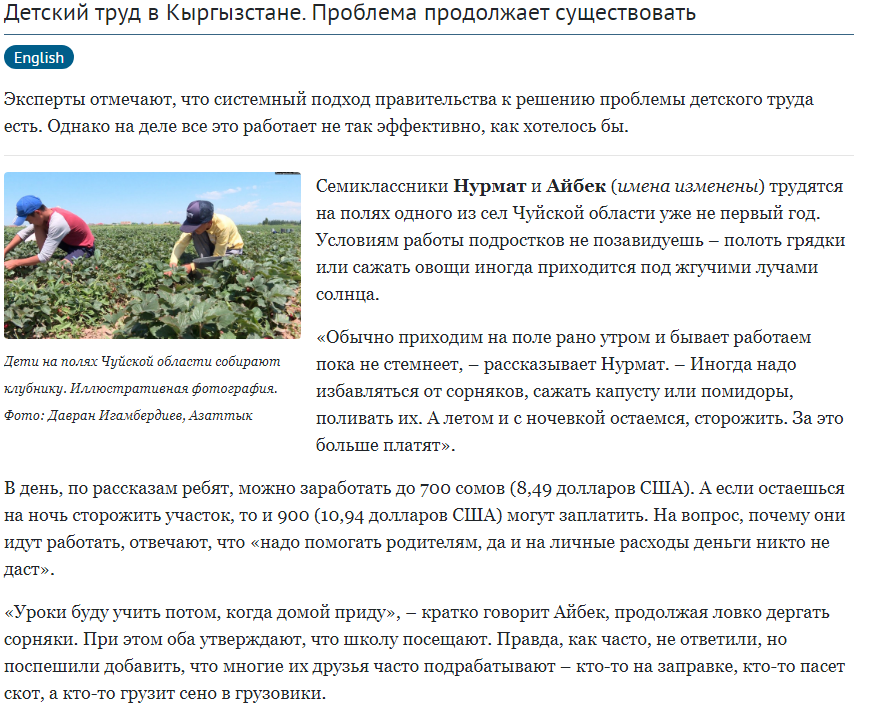 Child Labour in Kyrgyzstan: A Persisting Problem Year of publication: 2022 Corporate author: Central Asian Bureau for Analytical Reporting (CABAR) Experts note that in the presence of a systematic approach of the Kyrgyz Government to solve the problem of child labor, a number of challenges remain in practice. This article examines some of the reasons for the involvement of children in the labor market, including economic instability, mass migration of the population, rising poverty levels, the influence of local customs and traditions. The article also provides an overview of relevant statistical data and some national initiatives aimed at eliminating child labor.