
Resources
Explore a wide range of valuable resources on GCED to deepen your understanding and enhance your research, advocacy, teaching, and learning.
1,448 Results found
 ‘Going Glocal’: A Qualitative and Quantitative Analysis of Global Citizenship Education at a Dutch Liberal Arts and Sciences College (High Education; Vol. 72, No. 3) Year of publication: 2015 Author: Marcin Skald | John Friedman | Eri Park | Barbara Oomen Corporate author: Springer Nature Over the past decades, more and more institutions of higher learning have developed programs destined to educate students for global citizenship. Such efforts pose considerable challenges: conceptually, pedagogically and from the perspective of impact assessment. Conceptually, it is of utmost importance to pay attention to both structural inequalities and intercultural competencies, to emphasize both differences and similarities. In addition, there is the need to increase awareness of the dialectics between the global and the local. Pedagogically, this calls for transformative learning, with an emphasis on attitudes and skills, in addition to knowledge alone. Once objectives have been defined and translated pedagogically, such programs call for an assessment of the degree to which they have been met. In this light, this article describes the conceptualization and pedagogics of an innovative project, Going Glocal, designed at a Dutch liberal arts and sciences college on the basis of these premises and its impact on the university students concerned.
  Citoyen·ne·s, mais pas encore adultes ? Les injonctions à la responsabilité et à la citoyenneté dans les rituels d’accession à la majorité en Suisse Year of publication: 2018 Author: Maxime Felder | Laurence Ossipow | Isabelle Csupor Corporate author: Lien social et Politiques En Suisse, les communes ritualisent le passage à la majorité civile et civique en organisant des promotions dites civiques ou citoyennes. À l’aube de leurs 18 ans, les jeunes reçoivent une invitation des autorités communales à laquelle environ un tiers répond favorablement. Dans les six communes que nous avons étudiées durant trois ans, les autorités invitent les jeunes à participer à une séance du conseil communal, les convient à un repas ou un apéritif, leur organisent une nuit de jeux en plein air, ou encore une soirée de témoignages et de spectacles. Quelle que soit la forme que prennent ces événements, ils font place à des discours dans lesquels des élu·e·s rappellent aux jeunes majeur·e·s les nouvelles responsabilités et les choix qui les attendent à l’orée de l’âge adulte, et les enjoignent à devenir de «bonnes» et «bons» citoyen·ne·s. Ces événements offrent ainsi une opportunité d’étudier empiriquement la «fabrication» (Bénéï, 2005; Gagné et Neveu, 2009) de la citoyenneté juvénile. Dans un premier temps, nous décrirons très brièvement l’approcheméthodologique et les dispositifs mis en place par les six communes étudiées. Puis, nous ferons une analyse des discours qui, outre l’appel au vote, incitent à se battre pour des droits qui permettent à la démocratie de perdurer, mais ne s’arrêtent pas à cette définition restreinte de la citoyenneté. Enfin, nous nous concentrerons sur trois tensions que révèle le croisement de ces injonctions à la citoyenneté, avec ce qu’en disent les jeunes participant·e·s.
 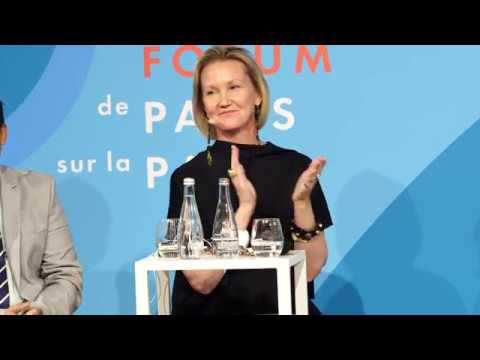 How Can Pluralism Strengthen Peace?: Global Centre for Pluralism at the 2019 Paris Peace Forum Year of publication: 2019 Author: Meredith P. Mcghie | Aung K. Moe | Bojana Dujkovic Corporate author: Global Pluralism Award Many of the most intractable challenges we face today − from entrenched poverty to conflict-driven migration − stem from the exclusion and resentment of groups defined as “the other”.Group-based grievances arising from inequality, exclusion and feelings of injustice increase the risk of instability and conflict. Pluralism is the choice to see diversity contribute to the common good. Making this choice is essential to building more secure, peaceful and resilient societies.Meredith Preston McGhie, the Secretary General of the Global Centre for Pluralism, was joined by two winners of the 2019 Global Pluralism Award to discuss how history education and community-based reconciliation can help strengthen pluralism, sustain peace and prevent conflict in diverse societies. Comment le pluralisme peut-il renforcer la paix?: Centre mondial du pluralisme au Forum de la paix de Paris 2019 Year of publication: 2019 Author: Meredith P. Mcghie | Aung K. Moe | Bojana Dujkovic Corporate author: Global Pluralism Award Plusieurs des épineux défis auxquels nous faisons face aujourd’hui – de l’appauvrissement endémique à la migration causée par des conflits – découlent de l’exclusion de groupes définis comme « l’autre » et du ressentiment à leur égard.Les griefs collectifs résultant de l’inégalité, de l’exclusion et de sentiments d’injustice augmentent le risque d’instabilité et de conflit. Le pluralisme est une option pour que la diversité contribue au bien commun. Il est essentiel de faire ce choix pour bâtir des sociétés plus sécuritaires, pacifiques et résilientes.Meredith Preston McGhie, secrétaire générale du Centre mondial du pluralisme, était accompagnée de deux lauréats du Prix mondial du pluralisme 2019 pour aborder la manière dont l’enseignement de l’histoire et la réconciliation à l’échelle communautaire peuvent aider à renforcer le pluralisme, entretenir la paix et prévenir l’éclatement de conflits dans les sociétés diversifiées.
  Pour mettre en lien des jeunes du monde au coeur de la transition Year of publication: 2017 Author: Maryse Clary | Jacqueline Charron Corporate author: Alliance pour une Éducation à la Citoyenneté Planétaire (AECP) | Les Amis de Circée Ce groupe d’initiative, en tant qu’experts dans le domaine de l’éducation, anime le réseau, conduit le projet de recherche et se veut porte-parole auprès des instances éducatives. Il est intervenu lors du sommet « Climate Chance » à Nantes en septembre 2016 et suite à la COP 21, intervient à Marrakech lors de la journée éducation du 14 novembre 2016. Il a le soutien des autres membres fondateurs, des signataires de la charte et des partenaires que sont le World Environmental Education Congress (WEEC), le réseau Climates et l’Alliance pour les sociétés responsables et durables. Les équipes de 12 pays sont membres actifs du réseau, comme acteurs de terrain. Elles mettent les jeunes au cœur du système éducatif, sont à leur écoute, travaillent en partenariat réel sur des projets concrets en prise directe avec leur territoire. Ensemble, les experts, et les équipes montrent que les résultats de tous ces projets au Nord comme au Sud visent un changement des systèmes éducatifs pour répondre aux défis du développement durable et du changement climatique.Cette publication relate les données d’expériences innovantes, en propose une capitalisation et une analyse afin de permettre des échanges entre équipes en vue d’une amélioration des pratiques. Ce réseau, fort de sa diversité culturelle, du nombre de jeunes impliqués et de son engagement dans les valeurs de citoyenneté planétaire, souhaite jouer un rôle de lobbying auprès des autorités éducatives pour faire évoluer positivement les systèmes éducatifs.
  Shifting the Agenda on Education & Extremism Year of publication: 2018 Corporate author: Think Global This research report aims to build an understanding of young people’s idea of diversity, identity and extremism as well as how schools and young people can be better supported to promote social cohesion and engage in active citizenship opportunities.
  Récits du quotidien après la sortie de carrière: Quelles expériences du vieillir « actif » et quels enjeux de citoyenneté ? Year of publication: 2016 Author: Isabelle Marchand | Oscar Firbank Corporate author: Politique et Sociétés (Canada) | Société québécoise de science politique Dans le contexte mondial du vieillissement de la population, le vieillissement actif s’impose dorénavant comme cadre référentiel guidant l’action publique afin de susciter « l’activation » du citoyen-retraité face à sa trajectoire du vieillir. Celui-ci est de plus en plus enjoint, d’une part, à rester le plus longtemps possible sur le marché du travail et, d’autre part, à participer à la vie de la cité, surtout après la sortie de carrière. Pourtant, dans nos sociétés salariales, l’individu actif est généralement celui qui contribue au marché du travail. Au regard de la prédominance du travail rémunéré sur tout autre champ du social, comment pouvons-nous comprendre et interpréter le caractère actif de l’activité post-carrière des retraités, en l’occurrence celle des femmes, longtemps considérées comme « inactives » en raison du travail fantôme accompli dans le domaine du privé ? Au regard de résultats d’une recherche menée dans une perspective qualitative et privilégiant la méthode des récits de vie, nous nous sommes intéressés aux pratiques « actives » du vieillir dans la vie quotidienne de femmes ayant quitté le marché de l’emploi. Nous avons regroupé ces pratiques sous divers « pôles d’activation » et nous discuterons d’abord celles logées sous le pôle du care et, par la suite, les pratiques liées à la participation sociale, et ce, en tentant de cerner leur déplacement dans la transition biographique qu’amènent la sortie de carrière et l’entrée dans la retraite. Ces résultats nous amèneront, en conclusion, à réfléchir aux enjeux sociopolitiques, dont ceux liés aux rapports de genre que soulèvent les perspectives d’une citoyenneté « active » du vieillissement.
  The Legitimacy of Diversity in Education: A Reflection on Inclusion Year of publication: 2011 Author: Luc Prud’homme | Raymond Vienneau | Serge Ramel | Nadia Rousseau Corporate author: Éducation et francophonie | Association canadienne d’éducation de langue française The objective of this article is to explore the theme of diversity in the classroom from the perspective of scholastic inclusion, or its alternative, scholastic and social exclusion. The article examines concepts that foster the positive and constructive recognition of diversity in the school setting, along with the social and cultural dimension of inclusion and the pedagogy of inclusion. La légitimité de la diversité en éducation : réflexion sur l’inclusion Year of publication: 2011 Author: Luc Prud’homme | Raymond Vienneau | Serge Ramel | Nadia Rousseau Corporate author: Éducation et francophonie | Association canadienne d’éducation de langue française Le présent texte a pour objectif de proposer une réflexion sur le thème de la diversité à l’école, et ce, sous l’angle de l’inclusion scolaire ou de son alternative, l’exclusion scolaire et sociale. Le texte examine ainsi certaines conceptions favorisant une reconnaissance positive et constructive de la diversité en contexte scolaire. Ensuite, il explore la dimension sociale et culturelle de ce phénomène pour enfin traiter la question de l’inclusion et de la pédagogie de l’inclusion.
 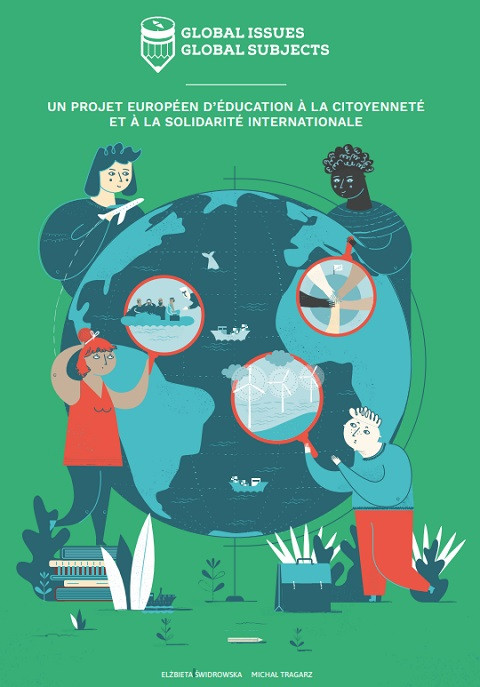 Un projet européen d’éducation à la citoyenneté et à la solidarité internationale Year of publication: 2020 Author: Elżbieta Swidrowska | Michał Tragarz Corporate author: Le Partenariat | Global Issues, Global Subjects (GIGS) | Union européenne Cette brochure nous permet de prendre conscience de l’importance d’une démarche citoyenne ayant pour but de favoriser une solidarité entre les territoires, les générations, les groupes sociaux et d’agir pour la construction d’un monde solidaire.