
Resources
Explore a wide range of valuable resources on GCED to deepen your understanding and enhance your research, advocacy, teaching, and learning.
950 Results found
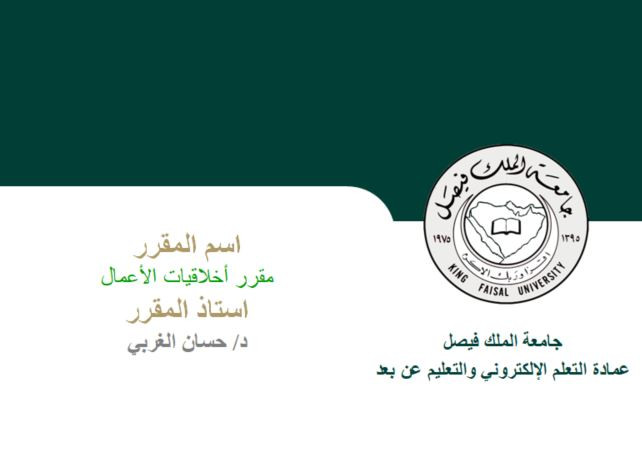 Fourth Lecture: Corporate Social Responsibility Year of publication: 2021 Author: Hassan Al Gharbi Corporate author: King Faisal University A PowerPoint file in which the lecturer reviews the concept of corporate social responsibility. This lecture is part of the Business Ethics course at King Faisal University. المحاضرة الرابعة المسؤولية الاجتماعية لمنظمات الأعمال Year of publication: 2021 Author: Hassan Al Gharbi Corporate author: King Faisal University ملف باوربوينت يستعرض فيه المحاضر مفهوم المسؤولية الاجتماعية للمنظمات. هذه المحاضرة ضمن مقرر أخلاقيات الأعمال بجامعة الملك فيصل.
 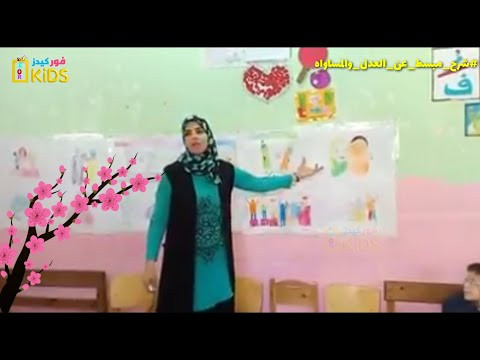 Justice and Equality Year of publication: 2019 Corporate author: For kids In this video, the teacher demonstrates through a mural the values of justice and equality. The video is directed as part of the preschool education curriculum. The teacher interacted through the murals with the students to illustrate the value of justice and equality. العدل والمساواة Year of publication: 2019 Corporate author: For kids في هذا الفيديو، تستعرض المعلمة من خلال لوحة جدارية قيم العدل والمساواة. الفيديو موجه كجزء من منهج تعليم الأطفال قبل المدرسة. تفاعلت فيه المعلمة من خلال الرسومات الجدارية مع الطلبة لتوضيح قيمة العدل والمساواة.
 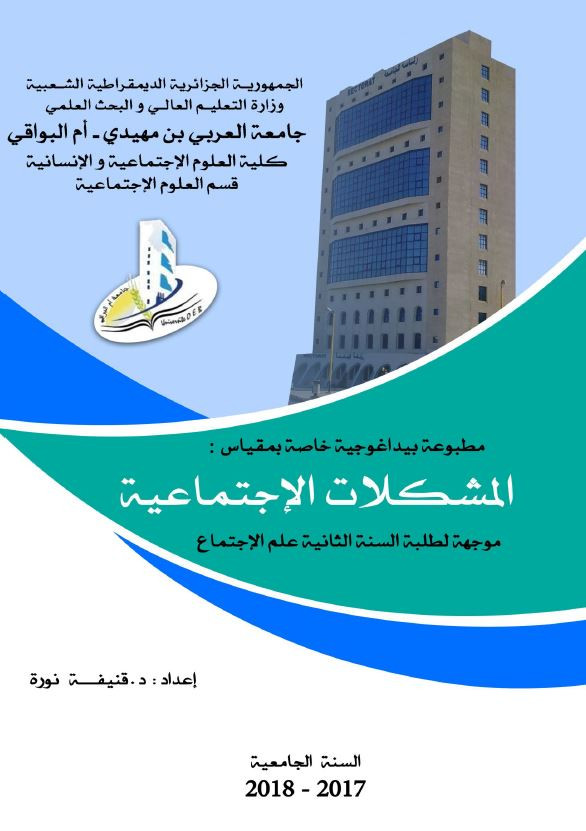 Pedagogical Publications on the Scale: Social Problems Year of publication: 2018 Corporate author: Ghardaïa University. Faculty of Social and Human Sciences The document introduces and analyzes the axes of the scale of social problems. This publication is directed to students of the second year of specialization in sociology. The publication includes the knowledge content and theoretical aspects in a group of lectures. In general, the publication contains a set of objectives that highlight the role of sociology in presenting, analyzing and treating social problems. مطبوعات بيداغوجية خاصة بمقياس: المشكلات الاجتماعية Year of publication: 2018 Corporate author: Ghardaïa University. Faculty of Social and Human Sciences يقدم المستند ويحلل محاور مقياس المشكلات الاجتماعية. وهذا المطبوع موجه لطلبة السنة الثانية من تخصص علم الاجتماع. ويتضمن المطبوع المضمون المعرفي والجوانب النظرية في مجموعة من المحاضرات. عموما المطبوع يحتوي على مجموعة من الأهداف تبرز دور علم الاجتماع في طرح وتحليل ومعالجة المشكلات الاجتماعية.
 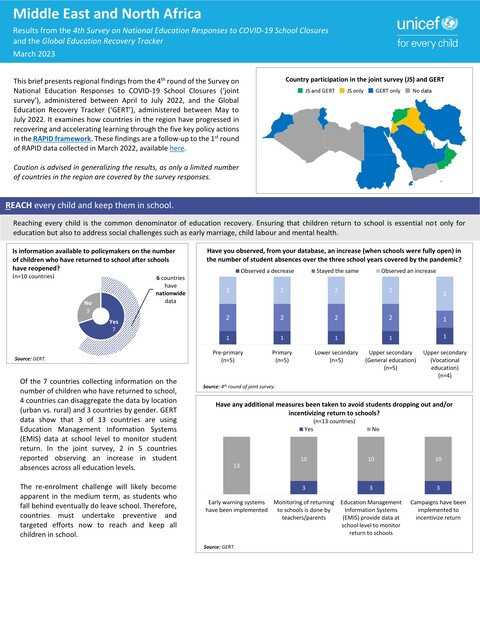 Education in a Post-COVID World: Towards a Rapid Transformation; Middle East and North Africa; Regional Brief Year of publication: 2023 Corporate author: United Nations Children's Fund (UNICEF) On March 11, 2020, the World Health Organization declared COVID-19 a global pandemic, resulting in disruptions to education at an unprecedented scale. In response to the urgent need to recover learning losses, countries worldwide have taken RAPID actions to: Reach every child and keep them in school; Assess learning levels regularly; Prioritize teaching the fundamentals; Increase the efficiency of instruction; and Develop psychosocial health and wellbeing. This brief presents regional findings from the 4th round of the Survey on National Education Responses to COVID-19 School Closures (‘joint survey’), administered between April to July 2022, and the Global Education Recovery Tracker (‘GERT’), administered between May to July 2022. It examines how countries in the region have progressed in recovering and accelerating learning through the five key policy actions in the RAPID framework. These findings are a follow-up to the 1st round of RAPID data collected in March 2022.
 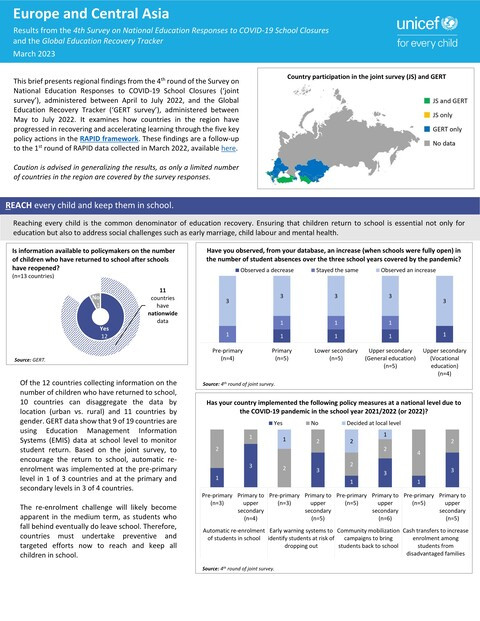 Education in a Post-COVID World: Towards a Rapid Transformation; Europe and Central Asia Regional Brief Year of publication: 2023 Corporate author: United Nations Children's Fund (UNICEF) On March 11, 2020, the World Health Organization declared COVID-19 a global pandemic, resulting in disruptions to education at an unprecedented scale. In response to the urgent need to recover learning losses, countries worldwide have taken RAPID actions to: Reach every child and keep them in school; Assess learning levels regularly; Prioritize teaching the fundamentals; Increase the efficiency of instruction; and Develop psychosocial health and wellbeing. This brief presents regional findings from the 4th round of the Survey on National Education Responses to COVID-19 School Closures (‘joint survey’), administered between April to July 2022, and the Global Education Recovery Tracker (‘GERT survey’), administered between May to July 2022. It examines how countries in the region have progressed in recovering and accelerating learning through the five key policy actions in the RAPID framework. These findings are a follow-up to the 1st round of RAPID data collected in March 2022.
  Education for citizenship in the Arab World: key to the future Year of publication: 2011 Author: Muhamman Faour | Marwan Muasher Corporate author: Carnegie Middle East Center Reforming education to foster citizenship is urgently needed if democracy is to take hold in the Arab world. Under authoritarian rule, students were primarily taught to be docile subjects of the state—creative thinking was discouraged and information was treated as indisputable. Instead, students must learn from a very early age what it means to be citizens who seek and produce knowledge, question, and innovate. Only by teaching youth to think critically and respect different points of view will Arab countries become economically competitive and reliably democratic.
  Education for citizenship in the Arab World: key to the future Year of publication: 2011 Author: Muhamman Faour | Marwan Muasher Corporate author: Carnegie Middle East Center Reforming education to foster citizenship is urgently needed if democracy is to take hold in the Arab world. Under authoritarian rule, students were primarily taught to be docile subjects of the state—creative thinking was discouraged and information was treated as indisputable. Instead, students must learn from a very early age what it means to be citizens who seek and produce knowledge, question, and innovate. Only by teaching youth to think critically and respect different points of view will Arab countries become economically competitive and reliably democratic.