
Resources
Explore a wide range of valuable resources on GCED to deepen your understanding and enhance your research, advocacy, teaching, and learning.
2,772 Results found
 Policy Brief: The Impact of Covid-19 on Women Year of publication: 2020 Corporate author: United Nations Entity for Gender Equality and the Empowerment of Women (UN Women) | United Nations (UN) The year 2020, marking the twenty-fifth anniversary of the Beijing Platform for Action, was intended to be ground-breaking for gender equality. Instead, with the spread of the COVID-19 pandemic, even the limited gains made in the past decades are at risk of being rolled back. The pandemic is deepening pre-existing inequalities, exposing vulnerabilities in social, political and economic systems which are in turn amplifying the impacts of the pandemic.Across every sphere, from health to the economy, security to social protection, the impacts of COVID-19 are exacerbated for women and girls simply by virtue of their sex.This policy brief by the UN Secretary-General explores how women and girls’ lives are changing in the face of COVID-19, and outlines suggested priority measures to accompany both the immediate response and longer-term recovery efforts.
 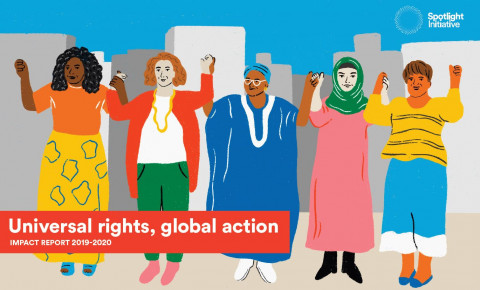 Universal Rights, Global Action: Impact Report 2019-2020 Year of publication: 2020 Corporate author: Spotlight Initiative Universal rights, global action is a shortened, visual adaptation of the 2019 Global Annual Narrative Progress Report. The Spotlight Initiative is a global, multi-year partnership between the European Union and the United Nations to eliminate all forms of violence against women and girls by 2030. This report outlines the Spotlight Initiative’s key signature results from 2019.The 32-page document highlights the ways the Spotlight Initiative country and regional programmes have meaningfully reached women and girls, including those facing multiple and intersecting forms of discrimination.
 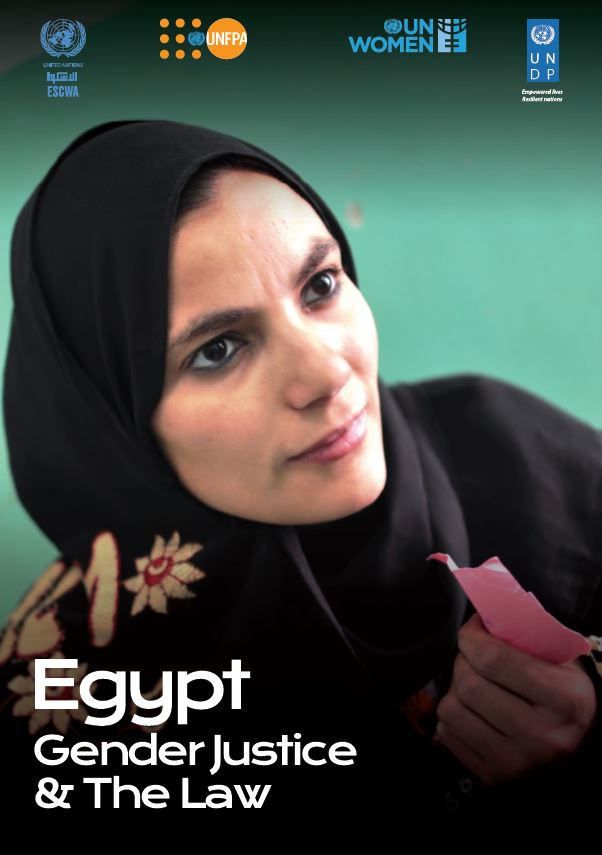 Egypt: Gender Justice and the Law Year of publication: 2018 Corporate author: United Nations Development Programme (UNDP) The United Nations Development Program, in cooperation with UN Women, the United Nations Population Fund and the Economic and Social Commission for Western Asia (ESCWA), has conducted a study on gender justice and the law. The study aims to provide an integrated assessment of laws and policies affecting gender justice and protection from gender-based violence. Gender in the Arab States Region This file focuses on Egypt. مصر: عدالة النوع الاجتماعي والقانون Year of publication: 2018 Corporate author: United Nations Development Programme (UNDP) قام برنامج الأمم المتحدة الإنمائي – بالتعاون مع هيئة الأمم المتحدة للمرأة وصندوق الأمم المتحدة للسكان واللجنة الاقتصادية والاجتماعية لغرب آسيا )الإسكوا( بإجراء دراسة حول عدالة النوع الاجتماعي والقانون. وتهدف الدراسة إلى تقديم تقييم متكامل للقوانين والسياسات المؤثرة على عدالة النوع الاجتماعي والحماية من العنف القائم على النوع الاجتماعي في منطقة الدول العربية. هذا الملف يركز على مصر.
 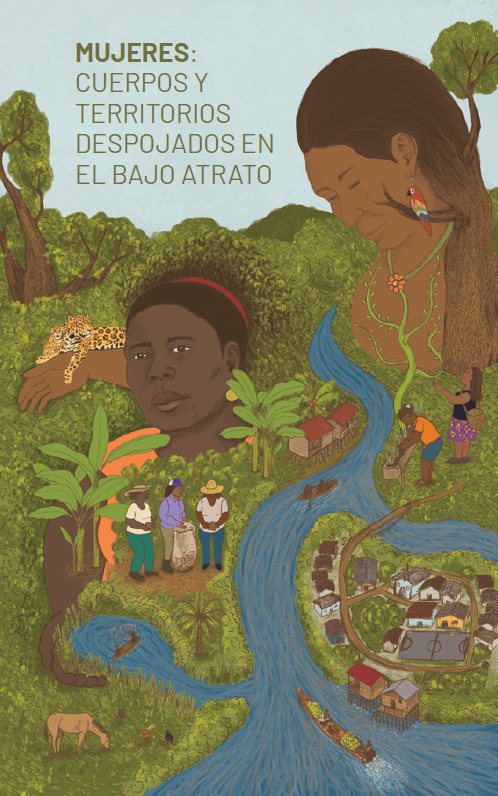 Women: Dispossessed Bodies and Territories in the Bajo Atrato Year of publication: 2022 Author: Magda Rocio Martínez Montoya Corporate author: Centro de Investigación y Educación Popular (CINEP) The violence exerted against the bodies of women is also a violence exerted against the territories. For the black, indigenous and mestizo women of the Bajo Atrato, their bodies are a substantive part of the territories and, from there, they have built and defended it. The rivers, swamps and streams are the extension of their arms and legs, waters in which they remain submerged carrying out daily tasks together with other women, their sons and daughters. In said construction and defense, their body-territories have been severely dispossessed and violated. However, they have fought and resisted, and continue to do so despite enormous risks, serious human rights violations and state abandonment. In Women: dispossessed bodies and territories in the Bajo AtratoAnalytical and contextual elements are presented that help to understand the complex relationship between gender-based violence and the processes of defending the rights to land and territory. With the delivery of this report to the Special Jurisdiction for Peace (JEP), the CINEP/PPP and the Inter-Church Commission for Justice and Peace, within the framework of the Vamos por la Paz project, provide relevant information to case 004, which prioritizes the events that occurred in the region of Urabá, Bajo Atrato and Darién. Mujeres: cuerpos y territorios despojados en el Bajo Atrato Year of publication: 2022 Author: Magda Rocio Martínez Montoya Corporate author: Centro de Investigación y Educación Popular (CINEP) La violencia ejercida contra los cuerpos de las mujeres también es una violencia ejercida contra los territorios. Para las mujeres negras, indígenas y mestizas del Bajo Atrato sus cuerpos son parte sustantiva de los territorios y, desde allí, lo han construido y defendido. Los ríos, ciénagas y quebradas son la extensión de sus brazos y sus piernas, aguas en las que permanecen sumergidas desarrollando labores cotidianas junto a otras mujeres, sus hijos e hijas. En dicha construcción y defensa, sus cuerpos-territorios han sido fuertemente despojados y violentados. Sin embargo, ellas han luchado y resistido, y lo siguen haciendo a pesar de los enormes riesgos, las graves violaciones a los derechos humanos y el abandono estatal. En Mujeres: cuerpos y territorios despojados en el Bajo Atrato se presentan elementos analíticos y contextuales que ayudan a comprender la compleja relación entre las violencias basadas en género y los procesos de defensa de los derechos a la tierra y el territorio. Con la entrega de este informe a la Jurisdicción Especial para la Paz (JEP), el Cinep/PPP y la Comisión Intereclesial de Justicia y Paz, en el marco del proyecto Vamos por la Paz, aportan información relevante al caso 004, que prioriza los hechos ocurridos en la región de Urabá, Bajo Atrato y Darién.
  Gender Violence in Childhood and Adolescence: Challenges and Realities Year of publication: 2022 Corporate author: Red Papaz In this space, the guests talk about the challenges that girls face in their daily lives and how the school and the family together can build strategies to respond to them. In addition, they will invite us to reflect on the important role of boys and men in the consolidation of protective environments free of gender-based violence. Las violencias de género en la infancia y la adolescencia: retos y realidades Year of publication: 2022 Corporate author: Red Papaz En este espacio los invitados conversan sobre los retos a los que se enfrentan las niñas en sus cotidianidades y cómo la escuela y la familia en conjunto pueden construir estrategias para responder ante ellos. Además, nos invitarán a reflexionar sobre el papel importante de los niños y hombres para la consolidación de entornos protectores libres de violencias de género.
  Education, Identity and Rising Extremism: From Preventing Violent Extremism to Promoting Peace, Resilience, Equal Rights and Pluralism (PREP) Year of publication: 2017 Author: Sanam Anderlini Corporate author: International Civil Society Action Network In November 2016, during ICAN’s fifth annual Women, Peace and Security forum, members of the Women’s Alliance for Security Leadership (WASL) and other women-led organizations in over 30 countries analyzed the role of formal and informal education in contributing to enabling conditions and mitigating extremist violence. They also highlighted their own practical experiences and lessons learnt in providing education to prevent violent extremism by fostering peace, resilience, equal rights and pluralism (PREP) in formal and informal spaces, including through the teachings of alternative religious narratives. Their experiences, combined with desk research on the state of current policy and practice, and the first multi-stakeholder Global Solutions Exchange (GSX) meeting on the nexus of education, gender and extremism held at the UNESCO headquarters in Paris in March 2017, inform the findings of this report. التعليم والهوية ومنع التطرف: من منع التطرف العنيف إلى تعزيز السالم والصمود والمساواة في الحقوق والتعددية )PREP) Year of publication: 2017 Author: Sanam Anderlini Corporate author: International Civil Society Action Network فـي تشـرين الثانـي / نوفمبـر 2016 ، خـال منتـدى ايـكان ICAN السـنوي الخامـس للمـرأة والسـام واألمـن ، قــام أعضــاء التحالــف النســائي مــن أجــل القيــادة األمنيــة )وصــل( وغيرهــا مــن المنظمــات التــي تقودهــا النســاء فــي أكثــر مــن 30 دولــة بتحليــل دور التعليــم الرســمي وغيــر الرســمي فــي المســاهمة فــي تمكيــن الظـروف و تخفيـف العنـف المتطرف.كمـا قامـوا بتسـليط الضـوء علـى تجاربهـم العمليـة الخاصـة والـدروس المســتفادة مــن توفيــر التعليــم لمنــع التطــرف العنيــف مــن خــال تعزيــز الســام والصمــود والمســاواة فــي الحقـوق والتعدديـة )PREP )فـي المسـاحات الرسـمية وغيـر الرسـمية، بمـا فـي ذلـك مـن خـال تعاليـم بديلـة إلـى جنـب مع األبحـاث المكتبيـة حـول حالـة السياسـات والممارسـات للروايـات الدينيـة.إن تجاربهـم، جنبـا الحاليــة، وأول اجتماع للمنصــة العالميــة لتبــادل الحلــول )GSX ) حــول العالقــة بيــن التعليــم والجنــدر والتطـرف الـذي عقـد فـي مقـر اليونسـكو فـي باريـس فـي مـارس 2017 ، تقـوم بإبـاغ نتائج هـذا التقريـر .